

Language proficiency levels are standardized benchmarks used to evaluate a person's ability to understand, speak, read, and write in a language. Educational institutions, employers, and language training organizations commonly use these levels to assess communication skills.
Proficiency levels help learners:
- Track language progress
- Identify strengths and weaknesses
- Set realistic learning goals
- Choose appropriate learning materials
- Prepare for language exams or job requirements
Several frameworks exist worldwide, including the Common European Framework of Reference for Languages (CEFR), the Interagency Language Roundtable (ILR), and ACTFL proficiency guidelines. While the terminology may vary slightly, most systems classify learners into four broad categories.





The 4 Levels of Language Proficiency
Understanding the four major stages of language learning can help learners recognize their current abilities and determine what they need to improve.
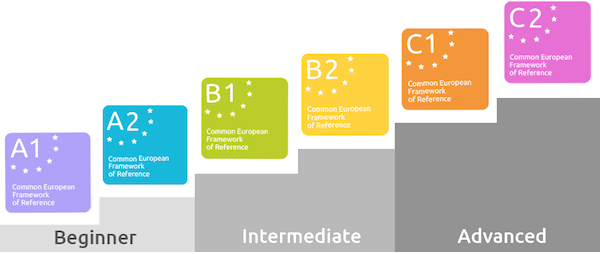
1. Beginner Level
At the beginner stage, learners have a limited vocabulary and a basic understanding of grammar and sentence structure. Communication is often restricted to simple phrases and memorized expressions.
Typical beginner abilities include:
- Introducing oneself
- Asking simple questions
- Understanding basic greetings
- Reading short and familiar words
- Using common everyday expressions
Learners at this stage often focus on pronunciation, vocabulary building, and sentence formation.
Challenges Beginners Face
Many beginners struggle with:
- Fear of speaking incorrectly
- Limited listening comprehension
- Difficulty remembering vocabulary
- Translating directly from their native language
Language exchange programs can be especially helpful at this stage because learners gain exposure to authentic speech patterns and conversational practice in a low-pressure environment.
2. Intermediate Level
Intermediate learners can communicate more effectively in everyday situations. They understand commonly used expressions and can participate in conversations about familiar topics.
Typical intermediate abilities include:
- Holding basic conversations
- Describing experiences and opinions
- Understanding simple articles and videos
- Writing short paragraphs or emails
- Using more complex sentence structures
At this stage, learners begin transitioning from memorization to active communication.
How Language Exchange Helps Intermediate Learners
Intermediate learners benefit significantly from language exchange platforms because they provide opportunities for spontaneous conversation. This helps learners:
- Improve fluency
- Develop listening comprehension
- Learn natural expressions and slang
- Gain cultural knowledge
- Build speaking confidence
Regular interaction with native speakers allows learners to practice language in realistic contexts instead of relying solely on textbooks.
3. Advanced Level
Advanced learners can communicate clearly and effectively in both professional and social situations. They understand nuanced language and can express complex ideas with greater accuracy.
Typical advanced abilities include:
- Participating in detailed discussions
- Understanding complex texts and media
- Writing structured essays or reports
- Speaking with improved pronunciation and fluency
- Adapting language for different situations
At this level, learners focus on refining grammar, expanding vocabulary, and improving natural communication.
Why Real Conversations Matter at the Advanced Stage
Even advanced learners may struggle with:
- Cultural references
- Idiomatic expressions
- Fast-paced conversations
- Regional accents
Participating in language exchange programs provides exposure to authentic communication styles and helps learners sound more natural.
4. Fluent or Near-Native Level
Learners at the fluent level can communicate almost effortlessly in academic, professional, and social settings. They understand subtle meanings, humor, and cultural nuances.
Typical fluent-level abilities include:
- Speaking naturally and confidently
- Understanding native-speed conversations
- Reading advanced literature and technical content
- Writing professionally and persuasively
- Switching communication styles depending on context
Although fluency represents a high level of mastery, continued practice remains essential for maintaining and improving language skills.
Enhancing Skills Through Language Exchange
The way we learn language and communicate has changed. For many learners, one of the most enriching experiences is engaging in a language exchange. A language exchange, often referred to as language tandem or language partnership, is a unique approach that brings together individuals looking to improve their language skills by conversing with native speakers of the language they are learning, and in the modern age of Zoom calls, forums, and online socialising, it is becoming easier to set up a language exchange, which can help both people trying to learn.
The proficiency levels above can be key in choosing a partner, too.
Improve fluency from home with an English tutor online.
What is a Language Exchange?
A language exchange is a mutual arrangement between two individuals who want to learn each other's languages.

This method of learning languages typically involves two partners, each fluent in a different language, who come together to practise and enhance their language skills through conversation. The primary goal is to create a reciprocal learning environment where both participants benefit from exposure to a native speaker.
Master the art of formal letter writing.
Sites and apps are helping people to link together and find ways to talk as pen pals and improve their skills together. People can choose to have more than one language partner, of course.
One study on those learning English as a foreign language showed that there was a big advantage in having a learning partner who speaks the language, assisting people in hitting their goals.
How Language Exchanges Can Work
Language exchanges can vary, of course. They don’t all look the same, and the distance between the countries can make things more tricky, especially if there aren’t great digital connections.
Pairing Up
Participants seek language exchange partners through language exchange platforms, community meet-ups, language schools, or online forums. The pairing is often based on the languages each partner wants to learn, as well as the proficiency levels explained.
Reciprocal Learning
Language exchanges are built on the principle of reciprocity. Each participant takes turns speaking and practising their target language while providing support and corrections to their partner. For instance, if you are getting words like "either" and "neither" mixed up.
Structured Sessions
Partners may choose to structure their sessions based on specific topics, themes, or language proficiency levels. This ensures a focused and constructive learning environment.
Flexibility and Informality
Unlike formal language classes, exchanges are often informal and flexible. Participants can tailor their conversations to their interests, making the learning experience more engaging. They may also find out things like abbreviations, slang, and other grammar tips they wouldn’t get from textbooks or language apps.
Cultural Exchange
Language exchanges naturally incorporate cultural elements, allowing participants to gain insights into each other's cultures, customs, and traditions. This cultural exchange enhances language learning by providing context and depth to the conversations.
If you have a short browse of the internet for an English tutor near me, you will discover affordable options for improving your language proficiency.
Benefits of Language Exchanges
Now that we know how they work, let’s dive into some of the practical benefits of these types of language exchanges and why they’re so useful for learners.
Real-life Conversational Practice
Language exchanges offer an invaluable opportunity for learners to practise real-life conversational skills. Engaging in authentic conversations with native speakers helps learners develop fluency, improve pronunciation, and gain confidence in using the language in various contexts.
Immediate Feedback and Corrections
Having a native speaker as a language partner allows for immediate feedback and corrections. Whether it's refining grammar, pronunciation, or vocabulary usage, learners benefit from real-time guidance, helping them avoid common mistakes and reinforcing correct language usage.
Personalised Learning
Language exchanges allow participants to tailor their learning experience based on their interests and goals. Whether discussing specific topics or focusing on particular language skills, the flexibility of exchanges caters to individual learning preferences. If the native speaker heard you using who or whom incorrectly or choosing the wrong pronouns, then this can be a chance for them to be corrected.
Increased Exposure to Native Pronunciation
Exposure to native pronunciation is crucial for language learners. Through a language exchange, learners not only hear correct pronunciation but also have the opportunity to mimic native speech patterns, contributing to improved listening and speaking skills. When we learn online or through an app, it can sometimes be tough to know exactly how things are said. We can also learn about other conversational factors like passive-aggressive language.
Expanded Vocabulary
Engaging in conversations with native speakers exposes learners to colloquial expressions, idioms, and vocabulary used in everyday language. This enriches their vocabulary and provides a more comprehensive understanding of the language, as well as the right use of certain words in the language.
Revise grammar and writing with an experienced English teacher.
Conclusion
There are lots of different approaches to learning languages, but whichever you take, it is a good idea to keep track of your proficiency levels. Language exchange alone can leave gaps in knowledge; you need to understand how to spell and use the right terms like "too" instead of "to". If you’re learning for practical reasons, this can help you to prove your abilities or show the level of language use you have. On top of that, a language exchange partner can be a great way to learn the language from a local and enhance things like pronunciation.
Summarise with AI:
Did you like this article? Leave a rating!

 Loading...
