
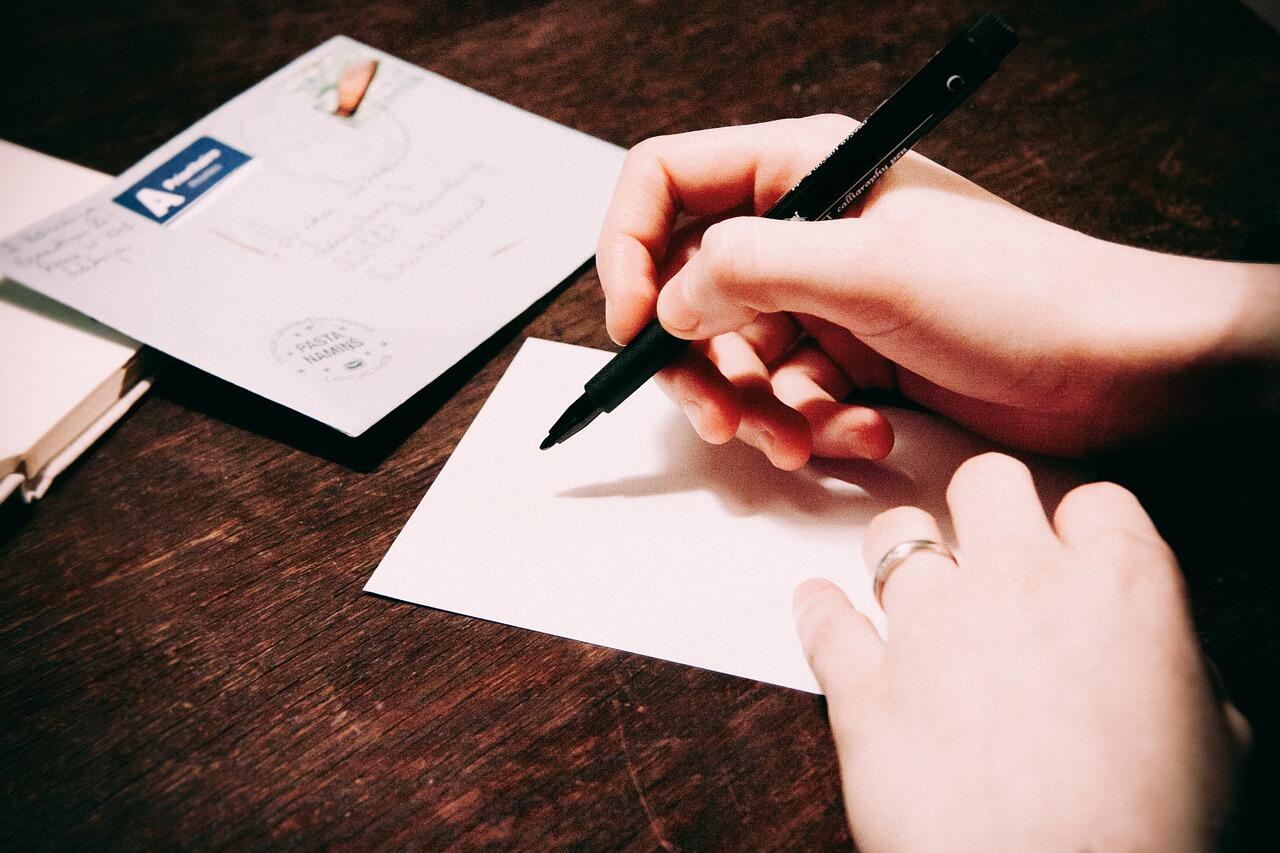

Formal letters are used for professional, academic, and official communication. They follow a structured format and maintain a polite, respectful tone. Whether writing to a school principal, employer, bank manager, or government office, understanding the correct formal letter format helps create a clear and professional impression.





Main Parts of a Formal Letter
A formal letter usually includes the following sections:
- Sender’s address
- Date
- Receiver’s address
- Subject line
- Salutation
- Body of the letter
- Closing statement
- Signature and name
Using the correct format of formal letter writing ensures the message is easy to understand and professionally presented.
Guide to Writing Formal Letters

Let’s go through the steps of how to write a formal letter.
- Sender's Address
Your address should be at the top right corner of the page, allowing the recipient to know how they can contact you. You may also include other details like an email address or telephone number if appropriate.
- The Date
Leave a line or two below your address and write the date in UK date format, which means day-month-year.
- Receiver's Address
Skip a line below the date and write the recipient's address on the left-hand side.
- Salutation: Dear (Recipient's Name)
Begin the letter with a formal salutation. If you know the recipient's name, use "Dear Mr./Ms./Dr. [Last Name]." If you don't know the name, use a generic salutation such as "To Whom It May Concern." This is one of the main uses of the term whom, which we have explained in more detail here.
- Opening Paragraph
Introduce yourself and explain the purpose of the letter. “I am writing to inquire about…”
- Details
Expand on the details and use a formal tone for your letters. This is where you can get to the bottom of the reasons you’re getting in touch and include much more detail. It can be considered the “meat” of the letter.
- End Salutation
The closing Salutation is where some people definitely get confused when they are writing letters, as there are certain conventions.
Use "Yours sincerely" if you know the recipient's name, and "Yours faithfully" if you don't.
- Signature
Leave a few lines for your handwritten signature, then type your name underneath so that there is no confusion about what your signature says.
All of this adds up to a formal letter that fits the conventions. Search online for English tutors near me and discover a range of qualified professionals in your area.
Understand the differences between the usage of "neither" and "either".
Examples of a Formal Letter
Let’s dive into an example of a formal letter. This scenario will cover a job application scenario.
School Formal Letter Format
A school formal letter format is commonly used for leave applications, permission requests, and certificates.
Example: School Leave Application
A student may write a formal letter to the principal requesting leave for illness or personal reasons.
Example topics include:
- Sick leave application
- Request for transfer certificate
- Permission for school event participation
25 Lake Road
Kolkata – 700029
21 May 2026
The Principal
ABC Public School
Kolkata – 700001
Subject: Application for Sick Leave
Respected Sir/Madam,
I am a student of Class 8A in your school. I am suffering from a fever, and the doctor has advised me to rest for three days.
Kindly grant me leave from 21 May 2026 to 23 May 2026. I will complete all missed classwork after returning to school.
Thank you.
Yours obediently,
Rahul Sharma
Class 8A
This format teaches students proper professional communication from an early stage.
Bank Letter Example
Formal letters are commonly used in banking communication.
Example: Letter to Bank Manager
Customers may write letters for:
- Account closure requests
- ATM card issues
- Address change requests
- Loan-related inquiries
45 MG Road
Mumbai – 400001
21 May 2026
The Bank Manager
State Bank of India
Mumbai Main Branch
Mumbai – 400001
Subject: Request for Address Change in Bank Account
Dear Sir/Madam,
I am holding a savings account in your branch with account number XXXXXXXX1234. I recently shifted to a new residence and would like to update my address in the bank records.
I request you to kindly update my new address in my account. I have attached copies of my Aadhaar card and electricity bill as proof of address.
Thank you for your assistance.
Yours faithfully,
Amit Verma
Bank letters should remain polite, clear, and factual.
It is important to keep in mind that certain aspects might change based on details like whether you know the name of the person you’re contacting. If not, you need to sign off with “yours faithfully” rather than “yours sincerely”.
A formal letter can be a great way to make a good first impression, but only if it is done correctly. Be sure to check for spelling and grammar errors, the correct use of terms like to and too, or has and have.
Practise formal writing with an English tutor online.
Identifying Passive-Aggressive Examples
Passive aggression is considered detrimental in the workplace or in pretty much any other walk of life. Even in scenarios where an issue crops up and needs to be dealt with, this is not the way to go about it. Instead, it is important to address issues through the proper channels.
If you're learning the language, you might not even understand what someone means by their passive-aggressive language.
Passive aggression does very little to solve problems and can actually make people upset or angry in the workplace. It can undermine trust, which is crucial in a work environment. Passive-aggressive behaviour can erode trust because it creates an atmosphere of uncertainty and makes it challenging for colleagues to rely on each other.
Passive aggression can even be the root of humour due to its relatability. We all know somebody like this in the workplace.
Let’s look at some examples of this type of language to help you to identify it better, whether it is in the form of a letter or an email.
Preply did a study on the most passive-aggressive terms that were used in the workplace and found these to be the worst culprits:
“As you no doubt are aware…”
“For future reference...”
“Friendly reminder..”
“CC’ing [my boss] for visibility...”
“Per my last email...”
Most of these terms hint at some sort of disappointment or annoyance without actually addressing it.
Further examples have been included below.

Subject: Follow-Up on the Task
"Just wanted to remind you about that task you promised to complete ages ago."
This has an accusatory tone; “you promised” means that they were expecting the task to be finished.
Requesting Confirmation or Communication
"I hope everything is going well on your end. I assume you received my email last week, but I haven't heard back yet."
It is easy to get frustrated when somebody hasn’t responded. Patience is a virtue, as the saying goes. If there are issues with somebody’s communication, this may cause a problem, but they could also be on holiday.
Assigning Blame
"It seems some people forgot to submit their tasks, but I'm sure we can figure out who."
This is very accusatory. Though sometimes things are an individual’s fault, it helps to provide a more teamwork-based approach and take responsibility for a project together, not to single out individuals.
Expressing Doubt
"Your idea is certainly unique,” or “I’m not sure about the approach that you’ve taken here.”
There are far superior ways to get the message across if you don’t necessarily agree with an idea. A healthy workplace should give employees the chance to provide their feedback. Passive aggression shouldn’t be part of it.
Not Taking Responsibility
"I may have misunderstood your instructions, resulting in a slight error. Apologies if that caused any inconvenience."
This is just one example of a way that somebody might try to either shift blame or refuse to take full responsibility for an error they have made.
Prepare for English tests with English coaching classes Bangalore.
Avoiding Passive Aggression in the Workplace
Passive-aggressive behaviour can strain professional relationships. Colleagues may become hesitant to collaborate, and managers may find it challenging to lead effectively.
A work environment marked by tension and conflict is likely to be less productive. Team members may spend more time navigating interpersonal issues than focusing on their tasks and responsibilities.
Avoiding passive-aggressive behaviour in the workplace is essential for maintaining a healthy and productive work environment. Here are some strategies to help prevent and address passive-aggressive behaviour:
- Promote Open Communication. Encourage a culture of open and transparent communication. Create an environment where employees feel comfortable expressing their thoughts, concerns, and ideas directly and respectfully.
- Provide Clear Expectations. Clearly communicate expectations regarding tasks, deadlines, and responsibilities. This reduces the likelihood of misunderstandings and frustration that can lead to passive-aggressive behaviour.
- Offer Constructive Feedback. Provide feedback in a constructive and specific manner. Focus on the behaviour or issue at hand, rather than making personal attacks. Frame feedback in a way that promotes improvement rather than assigning blame.
- Encourage Conflict Resolution. Train employees and managers in conflict resolution skills. Provide resources and support for resolving conflicts in a constructive manner, emphasising the importance of addressing issues directly and respectfully.
- Model Positive Behaviour. Leaders should model positive and direct communication. When team leaders consistently exhibit open and honest communication, it sets a standard for the entire team.
- Establish Clear Channels for Feedback. Create formal channels for feedback, such as regular performance reviews or team meetings. This provides a structured and appropriate platform for discussing concerns and improvements.
Prepare for school English with an English teacher.
Conclusion
It is important to be able to structure a letter and communicate effectively while following the conventions of language. On top of this skill, it is important to be able to identify passive-aggressive language in letters as well as in other forms of communication, including digital communications like emails. People who have only just started learning the language or have basic proficiency may accidentally use language that comes across in the wrong way.
Summarise with AI:
Did you like this article? Leave a rating!

 Loading...
