

According to Ethnologue, a database of world languages, approximately 379 million people speak English as their first language. However, it's important to note that English is also a widely spoken second language, with an estimated 1.5 billion speakers worldwide.
English is the first taught language worldwide, it is an official language in 53 countries, for almost 1.5 billion people. Although, as their mother tongue, more people speak Chinese, English is close behind.
Nowadays, more and more people wish to learn English for job-related reasons, in particular in the digital sector.
The English language has been around since approximately 700AD. Its development from modern English to old English is often explained through a timeline of major stages, showing how English changed through migration, conquest, cultural shifts, and global expansion:
- Old English (c. 450–1100): English began with Germanic-speaking settlers in England, with early vocabulary influences from Celtic communities and Latin through religion and learning.
- Middle English (c. 1100–1500): After the Norman Conquest in 1066, French became the language of the ruling class, and English absorbed many French words—especially in law, government, and everyday life—while its grammar gradually simplified.
- Early Modern English (c. 1500–1700): Pronunciation shifted significantly (including changes often linked to the Great Vowel Shift), and printing helped standardise written English as vocabulary expanded through literature, trade, and new ideas.
- Late Modern English (c. 1700–present): Industrial and scientific progress drove the creation of new terms, while English borrowed widely from other languages, including Greek and Latin roots for academic and technical vocabulary.
- Modern-day Global English (20th century–present): English spread globally through education, media, and technology; today it continues to evolve rapidly—especially online—and exists in many recognised varieties such as British English, American English, and Indian English.
This is a summary of the rich history of the English language, which has been shaped by many factors over many centuries.





Old English: A History of The English Language
Before 700 AD: Migration into Britannia
Before 700 AD, Germanic tribes fought for territory and began settling in Great Britain (then called Britannia). As they expanded, Celtic tribes were pushed into other regions, and some fled to Armorica (modern-day Brittany, France).
Germanic Roots of English
These settlers spoke Germanic languages and dialects such as Frisian, Saxon, Anglian, Frankish, and Old Norse, early relatives of what would later become English.
Old English Begins (c. 700–1100)
Old English formed through the settlement of the Angles, Saxons, Jutes, and Frisians. The Angles influenced the names “England” and “English.”
Old English was first written in runes, then later in the Latin alphabet. Linguistically, it was close to Old Frisian, sometimes grouped as Anglo-Frisian, and it contributed basic words and pronouns still used today (such as forms related to he/him).
Vikings and Old Norse (8th–9th centuries)
In the 8th and 9th centuries, Viking invasions brought Old Norse into contact with Old English. This added common words still used today, such as take, give, and skin, and influenced grammar, especially pronouns like they, them, their, and patterns linked to the third-person singular “-s.”
Find out how to learn English with our Great Selection of Anglophile News Outlets.
Middle English
Middle English After 1066
The English language changed significantly from the 11th century, especially after the Norman Conquest (Battle of Hastings, 1066) and the growing influence of the Catholic Church.
The Norman Conquest and a New “Language of Power”
After William the Conqueror took the throne, Norman French became the language of the court, law, and nobility, while English remained the language of most people. This split pushed English to absorb large amounts of French vocabulary and develop a more layered “formal vs everyday” style.
Middle English: A Mixed Linguistic System
Middle English kept a Germanic base, but it was heavily shaped by contact with Norman French (Latin-based vocabulary) and Old Scandinavian (Germanic influence). This affected:
- Vocabulary (the biggest change)
- Spelling (through Norman scribes)
- Some syntax and word order patterns
Two Words for One Thing
Often, English ended up with two terms for the same item—one used by common people and one by the elite. Examples:
- pig (Old English) vs pork (Norman French)
- ox vs beef
French Words That Entered English
Norman French introduced many words still used today, such as: authority, government, pardon, battle, cream, vinegar, anatomy, nature, table, honour.
Spelling Changes and “th”
After 1066, English texts were often written by Norman scribes, who popularised spellings like ch, sh, gh, and expanded the use of w. Older Old English letters such as þ and ð gradually fell out of use because they were unfamiliar to many scribes.
The Hundred Years’ War and English Identity
During the Hundred Years’ War (1337–1453), English identity strengthened. In 1362, Parliament recognised English as the language of the courts, and over time official documents increasingly shifted from French to English.
Get information about English speaking classes on Superprof, and learn how to improve your English with a passionate teacher.
Modern English
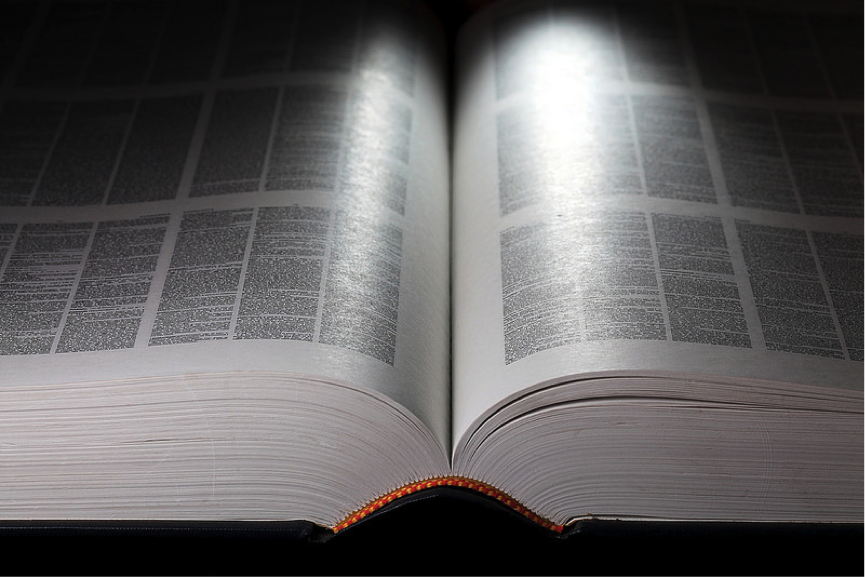
From the 16th century onwards, Modern English began to develop and it is still evolving today. We seperate Modern English into two periods: Early Modern English, marked by the Renaissance from 1500-1750 and Late Modern English from the 19th century and the 20th century. Nowadays, we talk of Contemporary English, Basic English, and Business English.
Early Modern English marks the structure of spelling and grammar, which allows us to understand texts written by William Shakespeare. It is marked by the increasing presence of vowels.
English continues to evolve with the influence of Latin and Greek. English authors write literary texts, whereas scientific research (medicine and certain law texts) are written in Latin. This is why that words, such as, “maternity, atmosphere or skeleton” have been borrowed from Latin. Greek has equally left its mark with words, such as, “anthropology, archaeology, and geography”.
During the Renaissance, the perception of the Latin language was superior to some words, which originated from Anglo-Saxon and Germanic. The growth and importance of other European countries, such as Italy during the Renaissance left it's mark with words such as “opera, carnival, and tarot”. Spanish has not been left behind either as Elisabeth I spoke this language.
The age of European exploration and continued colonialism thereafter was marked by significant trade and travel. English began borrowing words from a variety of languages around the world:
- Dutch words such as, “yacht or wagon”
- Arabic words such as, “admiral, alembic, cotton, elixir, alcohol, algebra, and apricot”
- Hindi words such as, “curry” or “arsenic”
- Persian words such as, “bazaar” and
- Turkish words like “coffee and caviar”
- Native American words such as, “canoe, lama, manioc, tobacco, and chocolate”
Old English, also known as Anglo-Saxon, was spoken between the 5th and 11th centuries. Middle English was spoken from the 11th to the late 15th century. Early Modern English was spoken from the late 15th to the late 17th century. Modern English is the form of the English language spoken since the late 17th century. Here are some examples of how vowel sounds have changed over time:
- The Old English "??" sound evolved into "??" in Middle English, then into "o?" in Early Modern English, and finally into "o?" in Modern English.
- The Old English "æ?, æ??" sound evolved into "??" in Middle English, then into "e?" in Early Modern English, and finally into "i?" in Modern English.
- The Old English "e?, e?o" sound evolved into "e?" in Middle English, then into "i?" in Early Modern English, and finally into "ee, -e" in Modern English.
And so on for the other vowel sounds. This shows how the pronunciation of vowels has changed over time in the English language.
Over the 18th and 19th centuries, Late Modern English was marked by the growing contribution of Latin. Why? Well, more technical and scientific vocabulary was used during this industrial period and technical advances, such as “album, minimum, status, stimulus, insomnia, maximum, ultimatum, detritus, duplex, and sanatorium”.
The extension of English was marked by colonization and the growth of the British Empire. The English language extended into Ireland, where half the population at the end of the 18th century still spoke Irish. Nowadays, 98% of Irish people use English as their mother tongue.
In North America (Canada and the United States), English witnessed real expansion throughout colonisation. British English evolved into American English, with different pronunciations and different lexicon. We can witness these differences in Anglophone media, film and literature.
The colonization of South Africa and Australia led to the introduction of English, by convicts who borrowed a few words from the aboriginal language, such as “boomerang, kangaroo, and wombat”.
And English is the language most spoken worldwide! Discover the weird and wonderful world of British cuisine.
Interesting Facts About The History Of The English Language
Here are a few interesting facts about the history of the English language:
- English is a Germanic language, which means it evolved from a group of languages spoken by the Germanic tribes that settled in England during the 5th and 6th centuries.
- The English language as we know it today has been heavily influenced by other languages, including Latin, French, and Scandinavian languages.
- Old English, which was spoken in England between the 5th and 12th centuries, is quite different from modern English. For example, it had complex grammatical inflections, and some words that were common in Old English are no longer used today.
- The Norman conquest of England in 1066 had a significant impact on the English language. French became the language of the ruling class, and many French words were adopted into the English language.
- The Great Vowel Shift, which occurred in the 14th, 15th, and 16th centuries, changed the way the vowels in English were pronounced. This shift is one of the reasons that English is so difficult for non-native speakers to learn.
- William Shakespeare was a major influence on the English language. He introduced many new words and phrases, many of which are still used today.
- English has also been influenced by many other languages and cultures, as it was taken as a language of trade and colonization and it's currently spoken all over the world.
- The English language has been shaped by technological advancements, the internet and social media have had a significant impact on the way we use and understand the English language.
In the 20th century, George Orwell had a strong influence on the English language through his essays and novels. His writing style, known for its clarity and precision, helped shape modern English prose and the way people discuss politics, power, and society.
Moreover, Orwell inspired many famous English quotations, for example,
In a time of deceit telling the truth is a revolutionary act.
George Orwell
Nowadays and since the start of the 20th century, we speak Contemporary English with a lexical field of nearly one million words.
Its international influence is such that English has become both the reference language for business and culture.
Summarise with AI:
Did you like this article? Leave a rating!

 Loading...
Hello Jon I am from Nigeria and I would love to share some knowledge with you based on some subjects you listed. Thank you
You can teach through Superprof Nigeria. Connect with the team at hello@superprof.com
Main bhi English sikhna sahta ho .khaskar talking English.
Aap Superprof pe english teacher se english seekh sakte hai :)