
Automatic cars are growing rapidly in popularity across Indian cities, and it is easy to understand why. When you are navigating the stop-and-go traffic of Bengaluru's Outer Ring Road, Mumbai's Western Express Highway during peak hours, or the crowded inner lanes of Old Delhi, not having to operate a clutch makes the entire experience significantly less tiring. For new drivers in particular, an automatic car allows you to focus on what actually matters on Indian roads — awareness, anticipation, and staying safe.
This step-by-step guide explains everything a beginner needs to know about how to drive an automatic car in India, from understanding the gear system to handling real conditions like speed breakers, slopes, and chaotic city intersections.


How to Drive an Automatic Car – 7 Key Steps at a Glance
Before diving into the detail, here is a quick overview of the core steps every beginner should master:
- Understand the automatic car gear system – know what P, R, N, D (and L/S) mean and when to use each
- Adjust your seat, mirrors, and seatbelt before starting the engine
- Start the engine correctly – foot on brake, gear in P, then ignition
- Move off smoothly – shift to D, release brake gently, apply accelerator gradually
- Brake progressively and anticipate stops – especially at traffic signals, zebra crossings, and speed breakers
- Reverse safely – use reverse camera if available, check all mirrors, go slow
- Park correctly – come to a full stop, engage P, apply handbrake, switch off engine
Understanding the Automatic Car Gear System
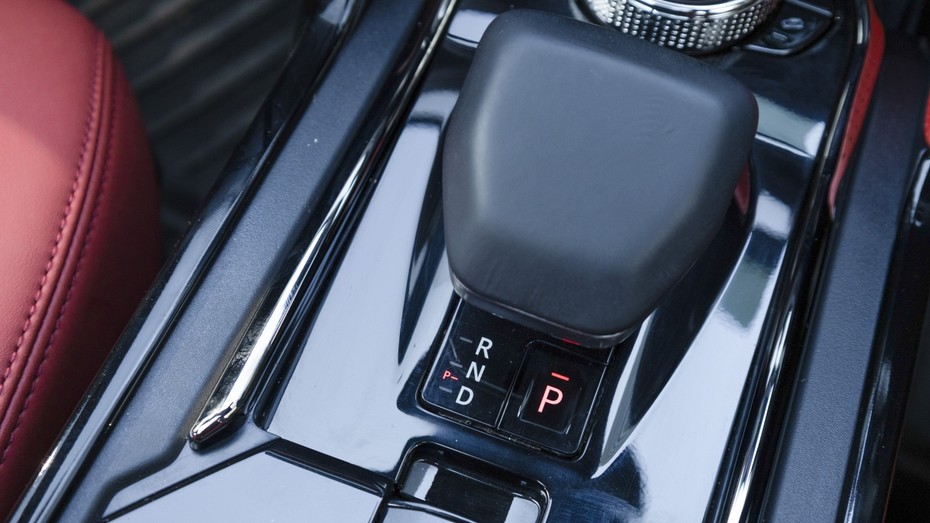
The first thing every beginner must do is familiarise themselves completely with the gear selector — the lever or dial that controls the transmission mode. Unlike a manual car with five or six gear positions, an automatic car has a much simpler set of positions:
P – Park This locks the transmission and prevents the car from rolling. Always shift to P when you are parked and switching off the engine. Never engage P while the car is still moving.
R – Reverse Shifts the car into reverse gear for backing up. Only select R when the car is completely stationary. In India, where parking spaces and building society gates often require tight reversing manoeuvres, getting comfortable with R is essential.
N – Neutral Disconnects the engine from the wheels. The car can roll freely in Neutral. You may use N briefly if you are stationary for a very long time — such as at a long railway crossing — to reduce strain on the transmission. However, always keep your foot on the brake when in N.
D – Drive The primary driving mode. Select D to move forward. The car automatically selects the appropriate gear as speed increases or decreases. In D, you only need to manage the accelerator and brake.
L or S (Low / Sport) — if available Some automatic cars, particularly older models or SUVs, have an L (Low) mode that keeps the car in lower gears for better engine braking — useful on steep ghat roads or when driving through flooded stretches during monsoon. S (Sport) mode holds gears longer for sharper acceleration, but uses more fuel.
💡 Beginner tip: In your early driving sessions, stay in D for all forward driving. You will rarely need any other mode until you are fully comfortable behind the wheel.
Learn automatic driving with driving classes near me in Nagpur.
Getting Into the Car – Pre-Drive Checklist
Good driving habits begin before you turn the key. Work through this checklist every time you get behind the wheel:
- Seat position — Adjust so your right foot reaches the brake and accelerator comfortably with a slight bend at the knee. Your back should be straight, not stretched forward.
- Steering wheel — Adjust height and tilt so it sits comfortably in front of your chest. Grip lightly at the 9-and-3 o'clock positions — not tight-fisted, which tires your arms quickly.
- Mirrors — Adjust the interior rearview mirror to frame the full rear window. Adjust both side mirrors to show a thin strip of your car's body and maximum road visibility behind and to the sides.
- Seatbelt — Always buckle up before starting. The diagonal strap should cross your shoulder and chest, not your neck.
- Surroundings — Before starting, quickly check around the car for pedestrians, two-wheelers, children, or animals — particularly relevant in residential colonies, market areas, and housing society parking lots where movement can be unpredictable.
- Phone — Mount your phone on a dashboard holder if using navigation. Do not hold or use your phone while driving. Under Indian Motor Vehicles Act rules, using a handheld phone while driving attracts a fine.
Driving a pickup truck or a U-Haul is much different from driving a compact car, and vice versa. Different size/length vehicles may require adjusted driving styles.
Step 1: How to Start an Automatic Car
Starting an automatic car correctly is a simple process once you know the order:
- Make sure the gear selector is in P (Park)
- Press and hold the brake pedal with your right foot
- Insert the key and turn it forward — or press the Start/Stop button if your car has one (common in modern automatic cars like the Maruti Suzuki Baleno, Hyundai i20, and Tata Nexon)
- The engine will start. Check the dashboard — warning lights may flash briefly and then go off. This is normal. If any light stays on (especially the engine warning or battery light), do not proceed until you know what it means
- Keep your foot on the brake until you are ready to move
Note: Most automatic cars will not start unless the brake pedal is pressed. This is a built-in safety feature.
Step 2: Moving Off Smoothly
Once the engine is running and you are ready to move:
- Keep your foot firmly on the brake
- Release the handbrake (if engaged)
- Shift the gear selector from P to D
- Check your mirrors and surroundings one final time
- Slowly lift your foot off the brake — the car will begin to creep forward on its own. This is normal behaviour for an automatic.
- Gently press the accelerator to increase speed gradually
The most common beginner mistake here is pressing the accelerator too hard immediately, causing a sudden lurch forward. In Indian urban areas where pedestrians, cyclists, and two-wheelers appear unexpectedly, smooth and gradual acceleration is not just good technique — it is a safety essential.
Step 3: Steering and Lane Discipline
Indian roads present unique steering challenges that new drivers must be prepared for:
Stay in your lane. Road markings are present on most national and state highways and urban arterial roads. Use them as your guide and resist the temptation to straddle lane dividers, a common habit that makes driving unpredictable for others.
Anticipate two-wheelers. Motorcycles and scooters often appear from blind spots, squeeze between lanes, and change direction suddenly. Always leave adequate buffer space on either side.
Signal before turning. Use your indicator at least 30 metres before turning or changing lanes. In busy intersections — common at signals in cities like Pune, Chennai, and Kolkata — clear signals make your intentions readable to other drivers and reduce the risk of side collisions.
Pedestrian crossings. At zebra crossings, slow down well in advance. Pedestrians in Indian cities do not always wait for gaps in traffic, and coming to a smooth, early stop is far safer than a sudden last-minute brake.
Step 4: Braking and Stopping Correctly
Smooth braking is one of the most important skills in any driving environment, but particularly in India where sudden stops are frequent.
Progressive braking: As you approach a traffic signal, speed breaker, or junction, ease off the accelerator first and allow the car to slow naturally. Then apply the brake gradually — press it gently at first, increasing pressure as needed to come to a smooth stop.
Anticipate traffic signals: On roads with visible signals ahead, begin braking early rather than rushing to the line and stopping hard. This protects the passengers in your car, reduces wear on your brake pads, and prevents the vehicles behind you from rear-ending you.
At traffic signals: Keep the gear in D and your foot on the brake while waiting. For very long stops — at railway level crossings or extended red lights — shift to N to reduce strain on the transmission, but keep the brake applied.
Emergency braking: In a sudden hazard situation — a dog crossing, a child running into the road, or a vehicle cutting across — press the brake firmly and hold it. Modern automatic cars with ABS (Anti-lock Braking System) will prevent wheel lock, allowing you to maintain steering control even under hard braking.
Always familiarize yourself with a vehicle. The first time you get in, read the owner’s manual to find out if there are any unusual or unique features to know about the car, like if it has an ABS braking system, headlights that automatically turn on and off, eco-mode, etc.
Physically locate the wiper controls, headlight controls, indicator controls, shifting mechanism, radio controls, and handbrake or emergency brake.
Step 5: Handling Indian Road Conditions
Speed Breakers
Speed breakers (bumps) are one of the most frequently encountered obstacles on Indian roads — in residential colonies, near schools, at toll plazas, and on state highways. Approach every speed breaker by:
- Reducing speed well before reaching it — aim for 10–15 km/h or less
- Releasing the accelerator and letting the car slow naturally, then applying light brake pressure
- Crossing at a slow, steady pace — do not accelerate mid-bump
- Resuming normal speed gradually after clearing the bump fully
Hitting speed breakers at speed causes suspension damage over time and is uncomfortable for passengers.
City Traffic and Congestion
In stop-and-go traffic — on stretches like Delhi's NH-44, Mumbai's Andheri junction, or Bengaluru's Silk Board flyover — an automatic car is at its most comfortable. To manage congestion effectively:
- Keep the car in D and manage movement using only the brake and accelerator
- Maintain a safe following distance — at least 2–3 car lengths from the vehicle ahead, even in slow traffic
- Avoid constantly shifting between D and N at signals — this adds unnecessary wear
- Be patient with two-wheelers filtering through gaps; aggressive acceleration in dense traffic raises collision risk significantly
- Use your air conditioning judiciously — running full AC in slow traffic does increase fuel consumption
Get practical road training with driving classes near me in Hyderabad.
Driving on Slopes and Hills
Slopes present specific challenges for automatic car beginners. The key points:
Going uphill at a standstill: When stopped on a slope — at a traffic signal on a flyover or approach ramp — keep firm pressure on the brake. Do not rely on the gear alone to hold the car. Many modern automatics have hill-hold assist (available in cars like the Tata Nexon, Kia Sonet, and Hyundai Creta) that prevents rollback for 2–3 seconds as you move from brake to accelerator. If your car has this feature, trust it — but practise the timing on a quiet road first.
Going downhill: Ease off the accelerator and let engine braking slow the vehicle. Avoid resting your foot continuously on the brake on long descents — this overheats the brake pads. If your car has an L mode, engage it on steep ghat roads to use engine braking more effectively.
Monsoon and Wet Road Conditions
During India's monsoon season — particularly in cities like Mumbai, Kochi, and Chennai that experience heavy rainfall — driving conditions change significantly:
- Reduce speed substantially on wet roads; stopping distances increase
- Avoid driving through waterlogged stretches where the depth is unclear — water damage to an automatic transmission is expensive and not always covered by standard insurance
- Increase following distance to at least 4–5 car lengths in rain
- Use headlights and fog lights where required for visibility
Practise safe driving with driving classes near me in Surat.
Step 6: Reversing Safely
Reversing in India requires particular care given the density of activity in parking areas, market zones, and housing society driveways.
- Come to a complete stop with the car in D
- Check all mirrors and look physically over your shoulder
- Shift to R — only when fully stationary
- Use the reverse camera display if your car has one (standard in most modern Indian automatic cars)
- Release the brake gently — the car will begin to creep backward on its own
- Apply very gentle accelerator pressure only if needed; in most Indian parking situations, creep speed is sufficient
- Steer smoothly in the desired direction — remember that when reversing, the rear of the car moves in the direction you turn the wheel
- When done, come to a full stop and shift back to D or P as needed
Step 7: The Automatic Car Parking System
Parking an automatic car correctly is straightforward but must always follow the right sequence:
- Find your parking spot and approach it slowly in D
- Manoeuvre into position — use R and D in small increments as needed for tight spots
- Once positioned, bring the car to a complete stop
- Apply the handbrake (also called parking brake or emergency brake)
- Shift the gear selector to P
- Switch off the engine
- Exit only after confirming the handbrake is fully engaged and the car is stable
💡 Always engage the handbrake before shifting to P. In P, a locking pin engages the transmission — but on a slope, the car's weight can press this pin hard, making it difficult to shift out of P later. Applying the handbrake first takes the stress off the transmission pin.
Start learning with expert driving classes near me in Jaipur.
Common Mistakes Beginners Make – And How to Avoid Them
| Mistake | Why It Happens | How to Avoid It |
|---|---|---|
| Pressing accelerator too sharply | Anticipating manual clutch release | Apply accelerator slowly and progressively |
| Using left foot on brake | Habit from sitting in a manual | Keep left foot resting; right foot only on pedals |
| Shifting to P while moving | Panic or habit | Always come to a complete stop before engaging P |
| Forgetting handbrake on slopes | Assuming D holds the car | Always apply handbrake when stopped on any incline |
| Driving through deep water | Underestimating flood depth | Stop and assess; automatic transmissions are vulnerable to water damage |
| Harsh braking at speed breakers | Not anticipating early enough | Begin braking 20–30 metres before every bump |
| Using N at signals habitually | Thinking it saves fuel | Stay in D with foot on brake for short stops |
Cheapest Automatic Car in India – Where to Start
If you are considering purchasing an automatic car to practise on or for daily use, here are some of the most affordable options available in the Indian market in 2026:
- Maruti Suzuki Alto K10 AMT – one of India's most affordable automatic entry points
- Tata Tiago AMT – reliable, city-friendly, and widely serviced
- Maruti Suzuki Celerio AMT – lightweight and fuel-efficient for urban driving
- Hyundai Grand i10 Nios AMT – popular among new drivers for its forgiving nature
- Renault Kwid AMT – compact and budget-friendly for tight city roads
AMT (Automated Manual Transmission) variants are the most accessible automatic option in the Indian budget segment, typically adding ₹50,000–₹80,000 over the manual variant price.
Learning to Drive an Automatic Car in India
The best way to build genuine confidence behind the wheel is through structured, supervised practice. A qualified driving instructor can guide you through real traffic conditions, help you develop safe habits from the start, and prepare you for the Indian driving licence test.
Find verified driving instructors across India on Superprof and book your first lesson today.
Conclusion
Driving an automatic car in India is genuinely more manageable than many beginners expect — once you understand the gear system, practise smooth acceleration and braking, and develop the situational awareness that Indian roads demand. The absence of a clutch removes one layer of complexity, letting you invest your full attention in reading traffic, anticipating speed breakers, managing pedestrian crossings, and navigating the unpredictable but vibrant reality of driving in this country. Start slowly, practise consistently, and the confidence will follow.
Summarise with AI:
Did you like this article? Leave a rating!

 Loading...