



What Is Contemporary Dance?
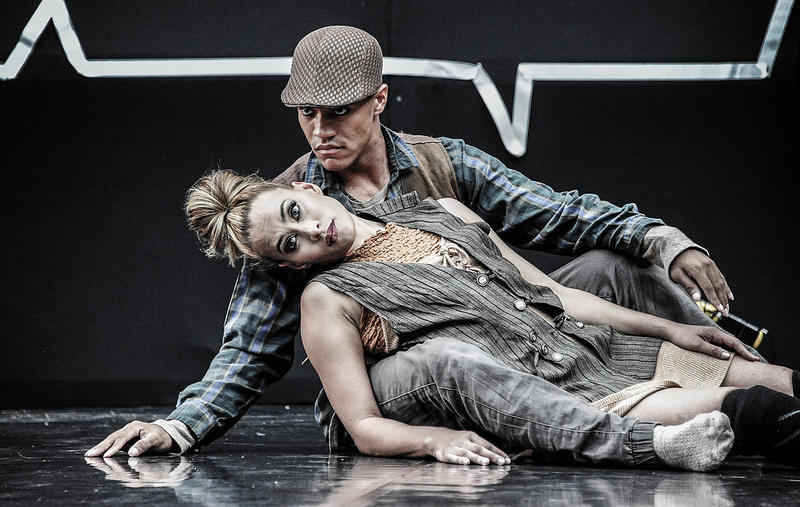
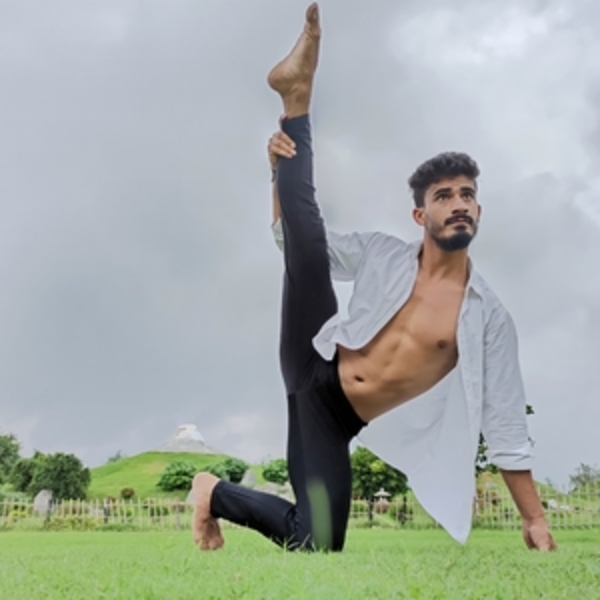
Contemporary dance is a free-flowing, expressive style of performance dance that breaks away from the rigid rules of classical forms like ballet, Bharatanatyam, or jazz. Unlike classical dance, which follows fixed positions, codified gestures, and strict postural conventions passed down over generations, contemporary dance prioritises personal expression, fluid movement, and emotional storytelling. It blends elements from ballet, modern dance, jazz, lyrical, and various world dance traditions, while encouraging dancers to use the full range of the body — including the floor — in ways that classical forms typically do not.
For beginners, the simplest way to think about it is this: classical dance asks "how should this movement look?", while contemporary dance asks "what is this movement trying to say?" There is still strict technical training involved — contemporary dancers train hard for years — but the goal is expression rather than conformity to a fixed vocabulary.
Origin and History of Contemporary Dance
Contemporary dance is a genre of new dance that emerged during the middle of the 20th century. It has taken elements from various other styles of dance (classical ballet, urban dance, country line dancing, folk dancing, ...) and brought them up to date. Not to be confused with Modern dance, Contemporary dance master classes are similar in terms of style and technique but from a slightly different perspective.
Prospective new students should also note that Contemporary dancing is not a form of freestyle showcase dancing; precise placement and technical movements are combined to create strong and controlled legs, feet, arms, torso and hip work. So if you thought this dance program suited you because you could just go in the door and let yourself go, doing what the music tells you to do, you were wrong! That said, the broad and expressive nature of dance moves in Contemporary dance does mean that you can be more liberal and inventive with your dance choreography.
If you watch renowned reality talent shows like Britain's Got Talent, you will no doubt have noticed a rise in popularity in dance acts, many of whom perform Contemporary dances to modern music. If you take the time to listen to their stories, it will be revealed that they show huge amounts of commitment to their art form, spending hours of their day rehearsing and perfecting each and every move in their lyrical dance, no matter how free and uplifting their performance looks on the day.
Contemporary dancers can be solo artists however many choose to perform alongside others and become a resident member of a dance act partnership or group, as it offers more opportunities to impress their audience with lifts and other tricks which rely on other bodies.
History: Where Did Contemporary Dance Come From?
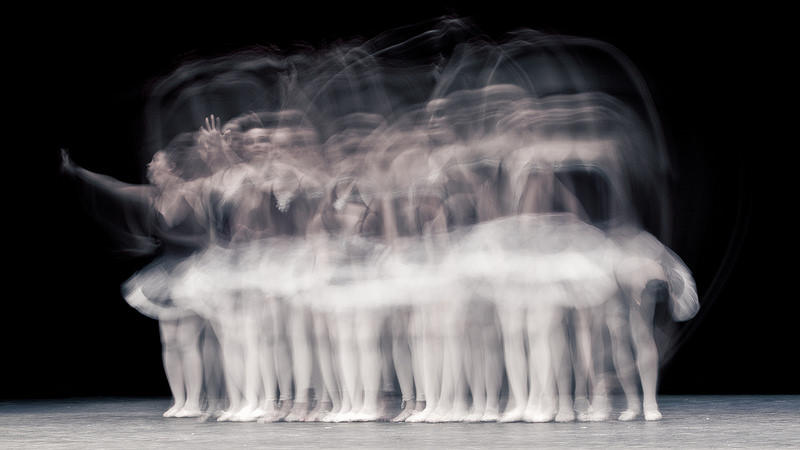
Contemporary dance is particularly popular in Europe and America, with American dancer Merce Cunningham being the first dance choreography expert to become set on developing a modern dance idea.
Moving away from the linear elements and traditions that seemed to confine dancers to certain movements, Cunningham and his followers used everything in the performance - sounds and light as a means of expression and unpredictable changes in speed, rhythm and direction to get the emotional message across - to characterise this newfound dancing style.
Contemporary dance broke free from Western traditions by drawing on African dance (with its grounded, bent-knee movements) and Japanese forms like Butoh (with their slow, deeply internal style) — turning it into a truly international art form.
Cunningham set up his own dance company, the Merce Cunningham Dance Company, in the mid-twentieth century and went on to choreograph in excess of 150 works which have been seen performed on stage by ballet dance companies and modern dance troupes, a major achievement for the experimental dancer and a great way to raise continuing awareness of the groundbreaking dance technique.
While Merce Cunningham and Martha Graham are often the most recognised names, contemporary dance was built on the work of many pioneering choreographers and movement theorists, including:
Ruth St. Denis — early modern dance pioneer known for spiritual and exotic-themed works
Doris Humphrey — developed the "fall and recovery" technique
Mary Wigman — leading figure of German Expressionist dance
François Delsarte — created a system linking gesture to emotion
Émile Jaques-Dalcroze — founder of eurhythmics, linking movement to music
Paul Taylor — choreographer celebrated for blending grace and athleticism
Rudolf von Laban — developed Laban Movement Analysis, still used today
Loïe Fuller — innovator of theatrical lighting and fabric in dance
José Limón — built on Humphrey's work to create the Limón technique
Marie Rambert — founded one of the earliest contemporary dance companies in Britain
Each of them contributed a piece of the vocabulary, philosophy, or technique that contemporary dancers still draw on today.
Since the mid-1900s, and more so than ever in the present moment, Contemporary dance has grown in popularity and is being performed in a variety of clubs, venues, nightclubs, stage performances, online videos, talent shows and competitions as well as featuring in many modern dancing films.
Contemporary dance has much in common with rock n' roll dance styles.
Key Characteristics of Contemporary Dance
Contemporary dance has several defining traits that distinguish it from other styles:
- Fluid, continuous movement: Phrases flow into each other rather than stopping at fixed poses.
- Use of the floor: Dancers regularly drop, roll, and move along the ground — something rare in ballet or classical Indian forms.
- Emotional and narrative expression: Choreography often tells a story or expresses a feeling, but does so through abstract movement rather than literal gestures.
- Improvisation: Many works incorporate moments where dancers respond instinctively rather than following set steps.
- Contrast in dynamics: Sharp, explosive movements are deliberately mixed with soft, sustained ones to create visual tension.
- Bare feet: Most contemporary dance is performed barefoot, allowing direct contact with the floor.
Techniques And Principles Of Contemporary Dance
Although contemporary dance looks free, it is built on serious technical foundations. Dancers train in several established techniques, each developed by influential choreographers:
- Graham technique: Built on the principle of contraction and release — the body initiates movement from the breath and the core.
- Humphrey-Weidman technique: Centred on the idea of fall and recovery — using gravity and the loss and regaining of balance as a source of movement.
- Cunningham technique: Focuses on clarity of shape, isolated body parts, and unpredictable use of space.
- Limón technique: Combines weight, breath, and momentum, building on Humphrey's principles.
- Release technique: A more recent approach that emphasises efficient, unforced movement and the release of unnecessary muscle tension.
Most contemporary dancers also draw on supporting practices like yoga, Pilates, floor work, and improvisation training. These build the strength, flexibility, body awareness, and creative responsiveness the style demands.
Search for dance classes in Mumbai here.
Music, Costumes, and Performance Setting
Music in contemporary dance is far more flexible than in classical forms. Choreographers may use orchestral pieces, electronic music, ambient sound, spoken word, or even silence. The choice depends entirely on what the work is trying to express.
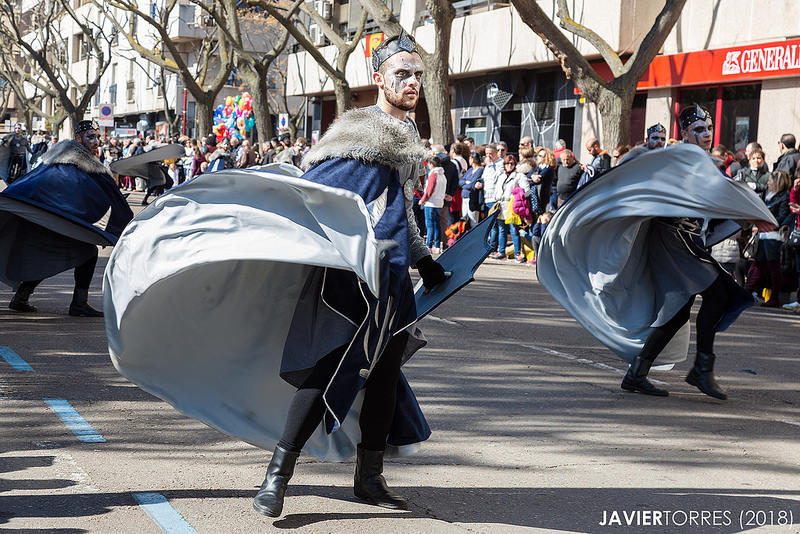
Contemporary dance costumes are equally functional and expressive. Rehearsals are usually done in a leotard with leggings or spandex shorts, or in yoga pants and a fitted top — anything that allows full freedom of movement. Performance costumes vary widely: flowing chiffon for romantic or fluid pieces, structured fabrics for sharp choreography, or even simple unitards designed to make the body's lines fully visible. The costume is treated as part of the choreography itself, shaping how movement reads on stage.
Famous Contemporary Dancers
Just like Fred Astaire and Ginger Rogers were masters of the Ballroom and tap dance floors, Contemporary dance has its own collection of megastars who have found fame internationally in the twentieth century or afterwards.
Isadora Duncan (1877-1927) is a great example of one of these strong female figures in Contemporary dance. One of the most recognised dancers in the history of Contemporary dance, Duncan threw out the rule book when it came to classical dance and stood out in her modern approach and innovation to create a new unique style. She was greatly influenced by Greek culture and admired their natural movements and expression from within. Today, she is known as the 'mother of modern dance' and has taught many a beginner to dream big.
Martha Graham (1894-1991) is another important figure in this dancing discipline, A dancer, a choreographer and a teacher of modern Contemporary dance, she created movements based on emotions, using contracting and releasing with sharp and angular movements to portray a feeling. The Martha Graham Dance Academy (also known as the Martha Graham Academy of Dance) is still operating in America today, one of the oldest dance schools of the country.
There were and are, of course, many more dancers who influenced and continue to develop the Contemporary dance tradition, with just some of these contributors being: Martha Clarke, Virginia Tanner, Travis Wall, Dada Masilo, Terence Lewis, Sang Jijia and Tadashi Endo, Dominique Bagouet, Neerav Bavlecha, Jérôme Bel, Sérgio Benvindo Júnior, Charlie Bruce and Claude Brumachon.
Why People Take Up Contemporary Dance
Contemporary dance has grown rapidly in India and globally because it suits how modern audiences and learners think about movement — as a personal, expressive language rather than a fixed inherited form. It builds full-body strength, flexibility, balance, and creative confidence, and it welcomes adult beginners far more easily than ballet or Indian classical forms typically do. For anyone drawn to dance as both a physical practice and an emotional outlet, it remains one of the most rewarding styles to learn.
Check for online dance classes here.
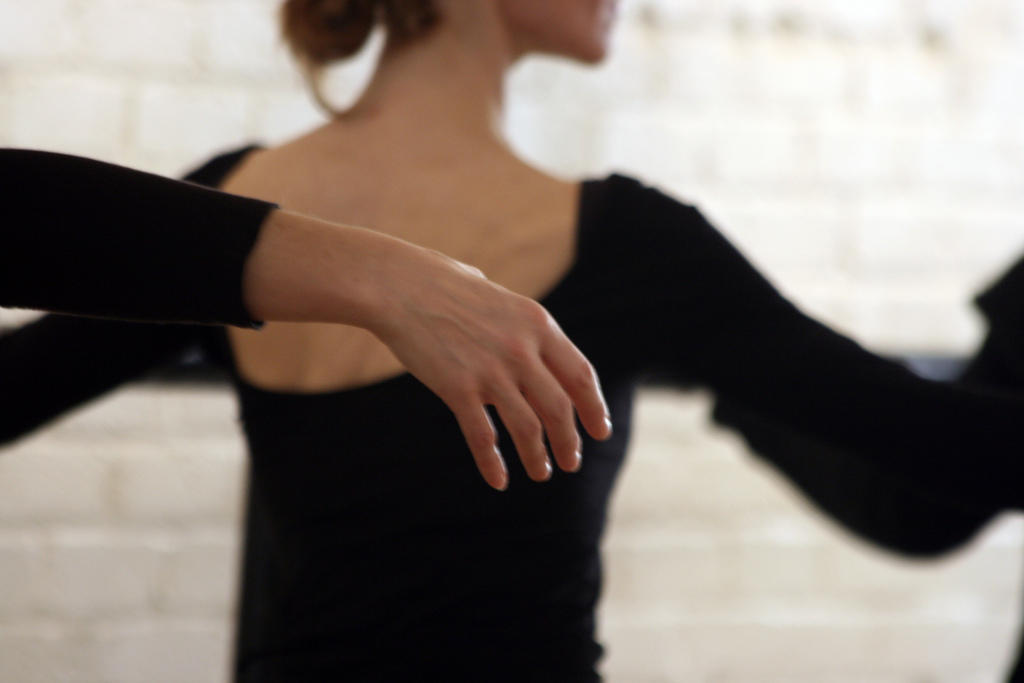
Contemporary dance is, at its heart, a conversation between the body and everything it has to express — feeling, story, breath, gravity, silence, and stillness. It draws on the discipline of classical training but refuses to be bound by it, which is exactly what makes it one of the most exciting dance forms to learn today. Whether you are drawn to it for the physical challenge, the creative freedom, or simply the chance to move in ways no other style allows, contemporary dance offers a genuinely personal artistic journey.
For beginners in India, there has never been a better time to start. With dedicated training centres in major cities, online classes that connect you with experienced choreographers across the country, and a growing community of contemporary dancers performing on Indian stages and screens, the style is more accessible than ever. You don't need a classical background, a particular body type, or years of prior training to begin — you simply need the willingness to explore movement honestly.
If you're curious to take your first step, find a qualified contemporary dance teacher on Superprof, book your first lesson, and let your body discover what it has to say.
If you found this article helpful, why not check out our blog on salsa?
Summarise with AI:
Did you like this article? Leave a rating!

 Loading...