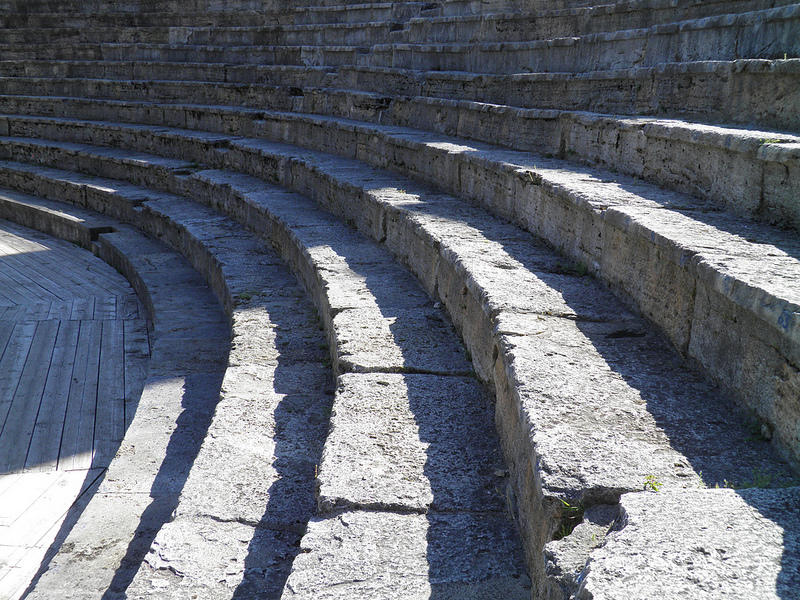

Drama is one of the oldest forms of human expression, stretching back long before written scripts existed. What began as ritual and storytelling around a fire grew into the Greek amphitheatres, the Sanskrit stages of ancient India, the mystery plays of medieval Europe, and the crowded playhouses of Shakespeare's London. This guide walks through the full history of theatre in a clear, chronological order, and includes a dedicated look at Indian theatre history too.


A Quick List: Movements and Forms of Drama and Theatre
Before we move through the timeline, here is a simple overview of the major movements and forms of drama and theatre you will meet in this article:
- Ancient ritual and religious performance
- Classical Greek theatre (tragedy, comedy, satyr play)
- Roman theatre
- Sanskrit theatre in ancient India
- Medieval drama (mystery, miracle and morality plays)
- Renaissance and Elizabethan theatre
- Neoclassical and Restoration drama
- Romanticism
- Melodrama
- Realism and Naturalism
- Symbolism
- Expressionism
- Epic theatre (Brechtian)
- Theatre of the Absurd
- Modern and contemporary theatre
- Musical theatre
- Indian folk theatre (Jatra, Nautanki, Tamasha, Yakshagana and more)
- Nukkad Natak (Indian street theatre)
The History of Theatre: From Ancient Ritual to the Modern Stage
Western drama has been shaped by a number of influences over the centuries. To understand the evolution of drama, it helps to start right at the beginning, long before the first purpose-built theatres existed.
Ancient Ritual Performance
The very earliest theatre did not happen in a building at all. Across ancient cultures, performance grew out of religious ritual, seasonal festivals, hunting dances, and storytelling. Communities would act out myths, honour their gods, mark harvests, and pass on shared history through movement, chant, and impersonation. These ritual roots are important because they explain why so much early drama, in both Europe and Asia, is tied so closely to religion. Drama began as something sacred and communal before it became entertainment.
Earliest Classical Greek Influences
The term 'drama' comes from an ancient Greek verb meaning 'to do' or 'to act', and this is when it all began for the Western tradition. The literal meaning of the word is very apt in describing the activity, yet the word has evolved over time to offer different meanings since its beginning. For example, in today's world, the word 'drama' is normally associated with situations that involve a conflict of emotions.
Greek theatre flourished around the 5th and 4th centuries BC, growing out of festivals held in honour of Dionysus, the god of wine and fertility. There were originally thought to be two main types of drama: comedy and tragedy. A third genre produced by ancient Greece was the satyr play, a short, bawdy piece performed alongside tragedies.
Ancient Greek theatre was highly stylised and almost like a pantomime, consisting of a Greek chorus, costumes, theatrical masks, and other ritual characteristics, all of which would have been staged in an open air setting. If you have read a Greek tragedy, you will be familiar with the chorus, the group of performers who commentate on the story as it unfolds.
The most significant playwrights of Greek theatre are Aeschylus, Sophocles, Euripides, Aristophanes and Menander. The first three are commonly referred to as tragedians, whilst the two latter writers were seen as comic writers. Plays such as Oedipus the King, Antigone and Lysistrata still draw on Greek mythology, the gods, and the culture and politics of the Greek world.
Roman Theatre
Rome was introduced to Greek drama around 250 BCE, and many Romans reworked the original plays, dividing the stories into episodes, removing the choruses and replacing them with a musical element like an orchestra, or having performers sing. Roman theatre was still influenced by Greek gods and mythology, but it was equally expressive of themes significant to Rome and society in Italy, as well as classical literature and religious rites. Roman playwrights such as Plautus, Terence and Seneca became influential in their own right, and Roman comedy in particular would later shape European drama.
Medieval Drama
Hundreds of years after the first creations of tragedy and comedy, medieval drama brought something totally new to theatre, in a move away from reworking older styles. With the Christian Church originally opposing theatre and seeing it as controversial, religious holiday stories and scenarios from the Bible naturally started to be performed by leaders of the churches. Eventually these performances became more elaborate and moved out of the church and into other parts of the community.
This gave rise to the great cycles of medieval drama: mystery plays that dramatised Bible stories, miracle plays about the lives of the saints, and morality plays that taught lessons through allegorical characters. These plays were often performed in the streets and marketplaces, sometimes on movable pageant wagons, making theatre a truly public event again.
Renaissance and Elizabethan Theatre
Elizabethan drama developed during the Renaissance period thanks to a rejuvenated celebration of all types of art. The first Elizabethan playhouses opened around this time, and plays by famous playwrights, like the acclaimed William Shakespeare of course, were performed regularly across the country. His plays were more structural than had ever been seen before, and combined comedy and tragedy to give well-rounded performances offering something for everyone. Alongside Shakespeare, writers such as Christopher Marlowe and Ben Jonson helped make this one of the richest periods in the history of English drama.
Neoclassical, Restoration and 18th Century Drama
Classes were very much divided in the 18th century, and writers drew on this in their texts. Many plays were written for and about the middle class, moving away from the older themes covered by Shakespeare and his peers. Restoration comedy in particular played on the battle of the sexes and was witty and humorous. Across Europe, neoclassical ideals also took hold, with French dramatists such as Molière, Racine and Corneille shaping a more formal, rule-bound style of theatre.
Romanticism and the 19th Century
In the 19th century, Romanticism in Western Europe was born and focused on emotion and spiritualism, heavily influencing drama of the period. Romantic plays began to dominate the continent, with writers like Johann Wolfgang von Goethe, author of Faust, becoming hugely popular. This was also the great age of melodrama, with sensational plots and clear moral contrasts drawing large popular audiences.
Realism and Naturalism
By the later 19th century, playwrights began to turn away from Romantic excess and towards realistic drama that mirrored everyday life. Realism aimed to show ordinary people and real social problems on stage, using natural dialogue and believable settings. A great example from this period is Ibsen's A Doll's House, which has subsequently been directed and performed by many theatre groups and studied as part of literature courses in secondary school and at university. Naturalism pushed this even further, treating the stage almost like a scientific study of human behaviour.
Modernism: Symbolism, Expressionism and Epic Theatre
Modern drama is what we would call many of the plays that emerged from the late 19th and 20th centuries onwards, which developed due to further experimentation. For some, realism seemed a step too far from the origins of drama and theatre, and they wanted the art to be revitalised once more.
This made way for a Symbolist movement, particularly in France, in the 1880s. Texts became suggestive and almost dream-like. Chekhov and Ibsen are good examples of masters of strong dramatic writing in this era. The Expressionist movement came about in the early 1900s and was darker and more grotesque, exploring the depths of the human psyche and turning stage shows into something more like nightmares.
Other forms of theatre, pioneered for example by Bertolt Brecht in Germany, sought to disassociate viewers from the emotions of the characters so that they could focus on the theme of the play. This approach, known as epic theatre, would go on to influence political and protest theatre around the world, including in India.
Contemporary Theatre
After the Second World War, the Theatre of the Absurd, associated with writers such as Samuel Beckett and Eugène Ionesco, questioned meaning and language itself. Contemporary playwrights of the 1960s and 70s then began to focus more heavily on language and dialogue, with Tom Stoppard being a very important writer of the time. This brings us to the 21st century, and theatre as we know it today.
There are numerous 21st century dramatists and playwrights actively writing today, yet many stage actors are still representing characters from classical plays, at times with a modern twist. Musical theatre is also a very prominent scene. In a world that is obsessed with fantasy, many dramas that are turned into TV adaptations are linked to escapism, yet we are all just as interested in the realism of other people's lives, which is why reality television is so popular in modern society. The variety of different types of drama in modern times means that there is also a lot of room for different styles of acting.
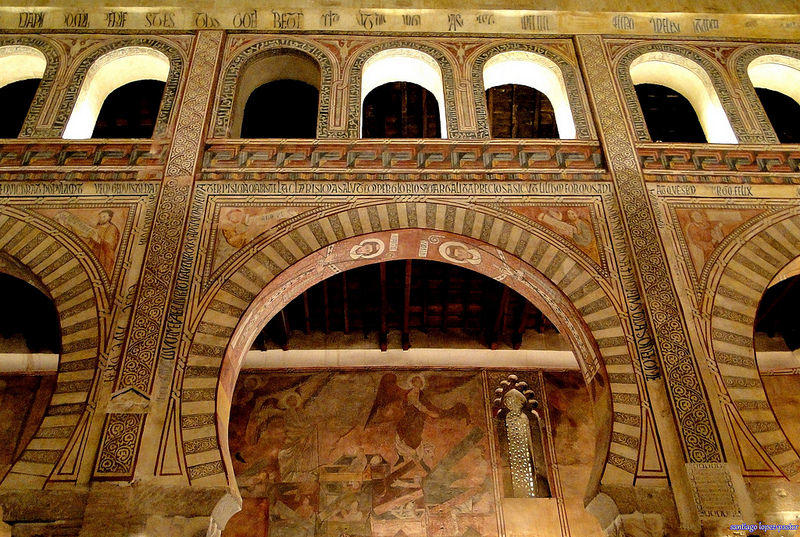
Indian Theatre History: Sanskrit Drama, Folk Forms and the Modern Stage
The history of drama is not only a Western story. India has one of the oldest and richest theatrical traditions in the world, running in parallel with the Greek and Roman stage and continuing in living form right up to today.
Sanskrit Theatre and the Natyashastra
Like its Greek counterpart, Indian theatre owes much of its origin to religion, ritual and the great epics, the Ramayana and the Mahabharata. Classical Indian drama was written in Sanskrit, and its golden age is generally said to have lasted until around the 5th century AD.
At the heart of Indian theatre history sits the Natyashastra, a vast treatise on the performing arts attributed to the sage Bharata Muni. Most scholars date its compilation to somewhere between 200 BCE and 200 CE. Written in Sanskrit and running to thousands of verses across around 36 chapters, it is regarded as the oldest surviving text on stagecraft in the world. It covers acting, dance, music, stage design, make-up, costume, and the theory of rasa, the emotional flavour a performance is meant to create in its audience. It is sometimes called the fifth Veda, and it still underpins Indian classical dance forms such as Bharatanatyam and Odissi. The great Sanskrit dramatist Kalidasa, author of Abhijnanashakuntalam (The Recognition of Shakuntala), remains the most celebrated playwright of this classical era.
Regional Folk Traditions
After the decline of Sanskrit drama, India's performance traditions did not disappear. They thrived through dancers, musicians, singers and storytellers, and evolved into a huge variety of regional folk theatre forms. These include Jatra in Bengal, Nautanki in North India, Tamasha in Maharashtra, Yakshagana in Karnataka, Bhavai in Gujarat, Ramlila and Raslila in the Hindi-speaking regions, and Kutiyattam and Kathakali in Kerala. These forms typically blend music, dance, colourful costume and dialogue, and many are still performed today, keeping centuries-old stories alive in villages and towns across the country.
Colonial and Modern Indian Theatre
During the colonial period, contact with British and European drama introduced the proscenium stage and Western-style playwriting to India, giving rise to modern Indian theatre in languages such as Bengali, Marathi and Hindi. Theatre also became a tool of the independence movement, using the stage to comment on society and politics.
After independence, this energy fed into one of India's most distinctive modern forms: Nukkad Natak, or street theatre. Drawing on folk roots and on Bertolt Brecht's epic theatre, groups such as Jana Natya Manch (JANAM), led by Safdar Hashmi, took performance directly to markets, factory gates and street corners in the 1970s and 1980s to raise awareness of issues like workers' rights, women's safety and social injustice. Hashmi's birthday, 12 April, is now observed in India as National Street Theatre Day. Alongside this, playwrights such as Girish Karnad, Vijay Tendulkar, Badal Sircar and Mohan Rakesh gave modern Indian drama a powerful literary voice that continues to shape the stage today.
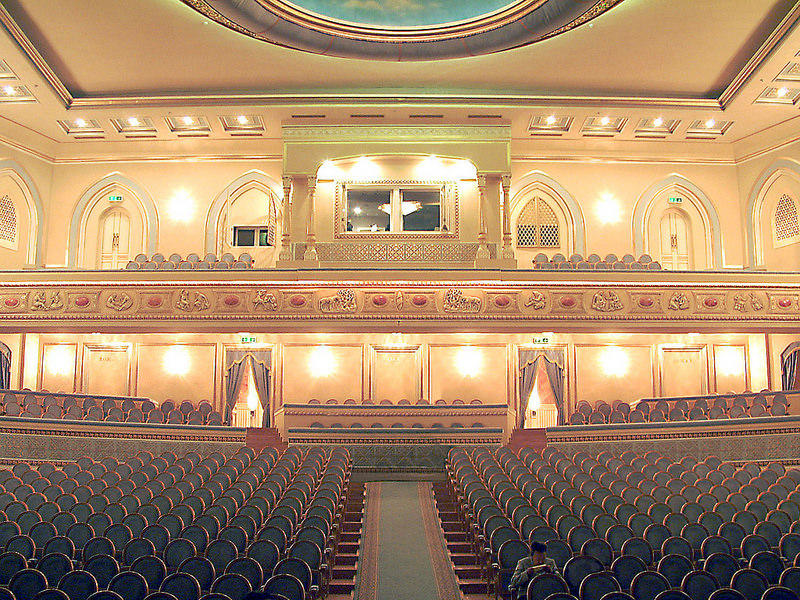
Drama On The Curriculum
In the UK, children up to the age of five are taught using methods that involve play, thus Drama is taught within the English curriculum at this early stage and through to Key Stage 4 as part of Speaking and Listening elements. The Spoken language section of the curriculum states that:
All pupils should be enabled to participate in and gain knowledge, skills and understanding associated with the artistic practice of drama. Pupils should be able to adopt, create and sustain a range of roles, responding appropriately to others in role. They should have opportunities to improvise, devise and script drama for one another and a range of audiences, as well as to rehearse, refine, share and respond thoughtfully to drama and theatre performances.
This means, therefore, that Drama is part of the statutory National Curriculum, yet many in the industry feel that this art should have more weight and be taught as a mandatory subject through to Year 11.
All pupils should be enabled to participate in and gain knowledge, skills and understanding associated with the artistic practice of drama. Pupils should be able to adopt, create and sustain a range of roles, responding appropriately to others in role. They should have opportunities to improvise, devise and script drama for one another and a range of audiences, as well as to rehearse, refine, share and respond thoughtfully to drama and theatre performances.
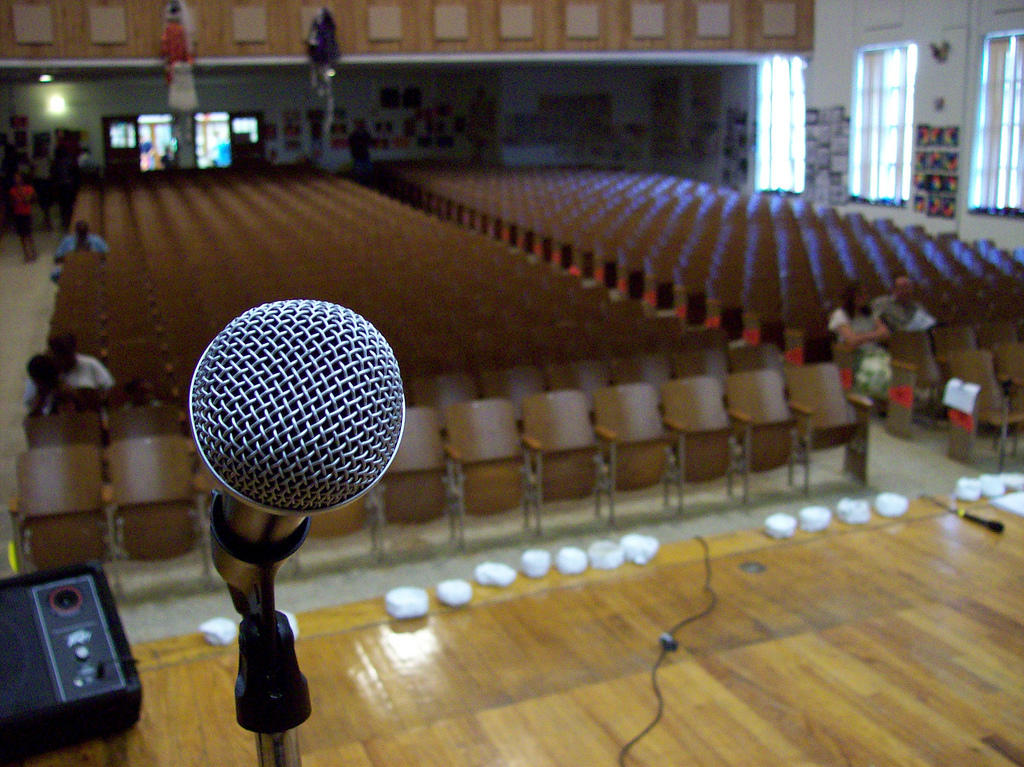
The above makes it clear that Drama plays a key role in learning, and that children should be enabled to express themselves through theatre and performance. With no Drama facilities and otherwise usable budgets being spent in other areas of schools, this means that centres which don't offer Drama aren't giving their pupils the opportunities they require and are promised by the Department of Education to learn through role-play, understanding how to put together performances on a stage and standing up in front of an audience.
Many secondary schools do also offer Drama as a discrete subject from Year 7 and then as a subject choice at GCSE, but with numbers dropping for the arts, many have removed the option altogether. This, teamed with top universities discouraging pupils from taking what they call 'soft' subjects, has resulted in many pupils avoiding Drama or simply missing out on the benefits of the subject through no choice of their own.
Are you a Drama teacher struggling to find a position in a school? Like many others, you are probably urging decision-makers in schools to buck up their ideas about the creative arts, not only to help you find work but also to prevent all of those generations of pupils being denied an opportunity to learn about Drama.
Begin acting classes near me today with a private tutor from Superprof.
Summarise with AI:
Did you like this article? Leave a rating!


 Loading...