
Independence Day is celebrated every year on 15 August to mark India’s freedom from British rule in 1947. It is an occasion that evokes feelings of both pride and introspection. This is a chance to pay tribute and commemorate the selfless acts of numerous individuals who fought for the independence of India. The celebrations and events on this day allow us to acknowledge and value the independence achieved with great effort and the advancements our nation has made since that time.
Indian Independence Day is a momentous occasion where the citizens of India gather to commemorate our well-earned liberty, solidarity, and the vibrant essence of our nation. India prepares for the 80th Independence Day on August 15th, 2026. During Independence Day, individuals around India participate in several festivities. The day commences with flag-hoisting rituals, prominently exhibiting the national flag. In addition, there are parades and cultural activities that exhibit India's abundant past and solidarity.





History of India Independence Day
Out of the many events, movements, and sacrifices that shaped India’s freedom struggle, a few moments had a particularly lasting impact on the fight against British rule.
These events not only united people across the country but also strengthened the demand for independence.
Formation of the Indian National Congress (1885)
Indian National Congress was founded on 28 December 1885.
The organisation emerged after a meeting led by British civil servant Allan Octavian Hume along with several educated Indian leaders.
Why it mattered
- Created a political platform for Indians
- Allowed discussions with the British government
- Encouraged political awareness and unity
Over time, the INC evolved from a discussion forum into the leading force of the independence movement.
It also introduced major national leaders such as:
- Mahatma Gandhi
- Jawaharlal Nehru
- Sardar Vallabhbhai Patel
The Indian National Congress played a central role in organising protests, political campaigns, and negotiations during the freedom struggle.
Jallianwala Bagh Massacre (1919)
Jallianwala Bagh Massacre remains one of the darkest events in India’s colonial history.
The massacre took place on 13 April 1919 in Amritsar, Punjab.
Thousands of unarmed civilians had gathered peacefully at Jallianwala Bagh when British troops under Brigadier General Reginald Dyer opened fire on the crowd without warning.
What happened
- Public gatherings had been restricted in Punjab
- Around 10,000 people were present at the gathering
- Troops fired directly into the crowd
- Hundreds of civilians were killed or injured
The exact number of deaths remains disputed, but the event shocked the entire country.
Why it mattered
- Exposed the brutality of British colonial rule
- Increased anger against the British government
- Encouraged more Indians to join the independence movement
The massacre became a turning point in India’s freedom struggle and deeply influenced nationalist movements across the country.
Non-Cooperation Movement (1920–1922)
Non-Cooperation Movement was one of the first large-scale national campaigns led by Mahatma Gandhi.
The movement aimed to achieve swaraj, or self-rule, through peaceful protest and civil disobedience.
Main actions during the movement
- Boycott of British schools and colleges
- Refusal to use British courts
- Surrender of British titles and honours
- Boycott of foreign goods
- Refusal to pay certain taxes
Millions of Indians participated in the campaign across cities and villages.
Why it mattered
- United people from different regions and communities
- Introduced mass participation in politics
- Strengthened Gandhi’s leadership in the national movement
Although the movement ended before achieving complete independence, it marked the beginning of organised nationwide resistance against British rule.
The Non-Cooperation Movement showed that peaceful protest and collective action could challenge colonial authority on a national scale.
Dandi March and Salt Satyagraha (1930)
Salt March, also known as the Dandi March, was one of the most powerful protests against British rule in India.
Mahatma Gandhi began the march on 12 March 1930 from Sabarmati Ashram in Gujarat and travelled to the coastal village of Dandi.
The protest targeted the British salt tax, which forced Indians to pay heavily for a basic necessity.
What happened
- Gandhi walked nearly 390 kilometres in 24 days
- Thousands of people joined the march
- Protesters openly made salt in defiance of British law
- The campaign inspired nationwide civil disobedience
Why it mattered
- Challenged unfair British economic policies
- Encouraged mass public participation
- Drew international attention to India’s freedom struggle
The movement became a symbol of peaceful resistance and strengthened the independence movement across India.
The Dandi March is considered one of the most influential non-violent protests in modern history.
Subhas Chandra Bose and the Indian National Army
Subhas Chandra Bose played a major role in India’s struggle for independence through his leadership of the Indian National Army (INA), also known as the Azad Hind Fauj.
The INA was formed in 1942 with the aim of fighting British rule using armed resistance.
Bose’s role in the movement
- Organised the Indian National Army
- Worked with Japanese forces during World War II
- Encouraged Indians to fight for complete independence
- Popularised the slogan “Give me blood, and I will give you freedom”
Although historians debate the military success of the INA, its political impact was significant.
Why it mattered
- Increased nationalist feelings across India
- Influenced Indian soldiers serving under the British
- Weakened British confidence in controlling India
The Red Fort trials of INA officers in 1945 triggered widespread public sympathy and protests.
By 1946, growing unrest among Indian soldiers and civilians convinced British authorities that independence could no longer be postponed.
Subhas Chandra Bose and the INA helped intensify pressure on the British government during the final years of colonial rule in India.
Independence Day Celebrations at Red Fort, Delhi
WE, THE PEOPLE OF INDIA, having solemnly resolved to constitute
India into a SOVEREIGN SOCIALIST SECULAR DEMOCRATIC REPUBLIC and to secure to all its citizens:
JUSTICE, social, economic and political;
LIBERTY of thought, expression, belief, faith and worship;
EQUALITY of status and of opportunity;
and to promote among them all
FRATERNITY assuring the dignity of the individual and the unity and integrity of the Nation;
IN OUR CONSTITUENT ASSEMBLY this twenty-sixth day of November, 1949, do HEREBY ADOPT, ENACT AND GIVE TO
OURSELVES THIS CONSTITUTION.
Every year, the Indian Prime Minister hoists the Indian flag at the Red Fort on Independence Day. Following that, the esteemed Prime Minister delivers a speech expressing appreciation to the citizens of India, acknowledging their sacrifices, achievements, challenges, and the government's vision for the nation. Hoisting the national flag signifies the advancement of the nation as an independent state and signifies the end of British rule. The ceremony conducted at the Red Fort serves as a method to honor and pay tribute to the freedom fighters who paid the supreme sacrifice to ensure India's independence.
The 15 August Independence Day celebration in the Red Fort features extraordinary cultural performances by artists from many parts of the nation. The performances exhibit the diverse cultural heritage of India via dance, music, and several other traditional art forms. These performances provide a lively and patriotic ambiance that enhances the celebratory mood of the event.
The Red Fort gained importance during the trials of the Indian National Army (INA), where INA officers were convicted of treason. These trials evoked sentiments of nationalism and consolidated the Red Fort as an emblem of resistance against British oppression. As India approached independence, Nehru's decision to hoist the national flag at the Red Fort in 1947 symbolized the reclaiming of this important site from British colonial rule. It represented India's assertion of its sovereignty and the culmination of its struggle for independence.
Memorable 15 August Independence Day Speeches
Throughout the years, August 15 has witnessed the delivery of impactful speeches by significant freedom fighters and leaders, igniting a profound feeling of patriotism in the nation. Below are a few notable speeches made on August 15th that inspired a full nation.
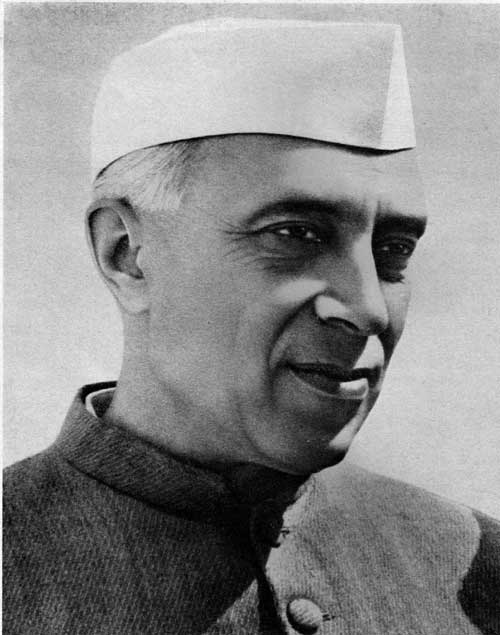
Jawaharlal Nehru | 1947
“Long years ago we made a tryst with destiny, and now the time comes when we shall redeem our pledge, not wholly or in full measure, but very substantially. At the stroke of the midnight hour, when the world sleeps, India will awake to life and freedom." Jawaharlal Nehru, the first Prime Minister of India, delivered this speech at the stroke of midnight on August 14, marking the commencement of India's autonomy. “A moment comes, which comes but rarely in history, when we step out from the old to the new when an age ends, and when the soul of a nation, long suppressed, finds utterance. It is fitting that at this solemn moment, we take the pledge of dedication to the service of India and her people and to the still larger cause of humanity.”
Indira Gandhi | 1966
“If we have achieved independence, we should not rest peacefully that we have now achieved independence. We always have to struggle to maintain it. We have to protect this flame of independence from every storm, from every gust of wind, we have to save it with our hard work.”
Rajiv Gandhi | 1982
“Being an Indian does not mean we are mere inhabitants of the country… We have a diversity of cultures. We belong to different religions- Hindus, Muslims, Sikhs, Christians, Jains, Parsis and Buddhists… We accord equal respect to all faiths and religions. Our strength and unity flow from this fact. This is the only path we must follow, for our strength lies in our diversity.”
Atal Bihari Vajpayee | 1990
“Come, let us make India a nation of high achievers - in every sphere. In business and economy, in education, in science and technology, in arts and culture, and also in sports. Let us make India synonymous with 'achievement', the achievement of the kind that can be benchmarked globally ... Today, speaking to a self-confident India, I declare: Sanctions have lost their effect. They have become a thing of the past. We have dealt with them in such a way that they hardly had any effect on our economy. We kept the Southeast Asian economic crisis at bay.” He further added, “Yes, the Government was brought down, but the country was not. It continued to march ahead, fulfilling the mantra of Charaiveti, Charaiveti (Move on, Move on). The Government continued to discharge its duty.”
Manmohan Singh | 2013
“I am aware of the differences of opinion on some aspects of the bill. Those who don't agree with this bill can put forward their views to Parliament, political parties, and even the press. However, I also believe they should not resort to hunger strikes and fasts unto death." During his speech in 2013, he addressed several topics ranging from the Uttarakhand crisis to the economic situation.
“Today is certainly a day of joy for us. But on this celebration of independence, we also feel pain in our hearts that our brothers and sisters in Uttarakhand had to face devastation about two months back. Our deepest sympathies are with all the families that suffered the loss of life or property. We are also deeply pained that we lost the submarine, INS Sindurakshak in an accident yesterday. Brothers and Sisters, We achieved independence in 1947 under the leadership of Mahatma Gandhi. If we look at our subsequent journey, we would find that our country has seen major changes every ten years."
Inspirational Independence Day Quotes
Independence Day is a time to reflect on the sacrifices made by our freedom fighters and honor the freedom we presently enjoy. Below is a curated collection of motivational quotes to honor this significant occasion.
| Mahatma Gandhi: “Freedom is never dear at any price. It is the breath of life. What would a man not pay for living?” |
| B. R. Ambedkar: “We are Indians, firstly and lastly.” |
| Jawaharlal Nehru: “At the stroke of the midnight hour, when the world sleeps, India will awake to life and freedom.” |
| Nelson Mandela: “It always seems impossible until it’s done.” |
| Sardar Vallabhbhai Patel: “Every citizen of India must remember that he is an Indian and he has every right in this country but with certain duties.” |
| Subhas Chandra Bose: “Give me blood, and I shall give you freedom!” |
| Rabindranath Tagore: “Where the mind is without fear and the head is held high; where knowledge is free.” |
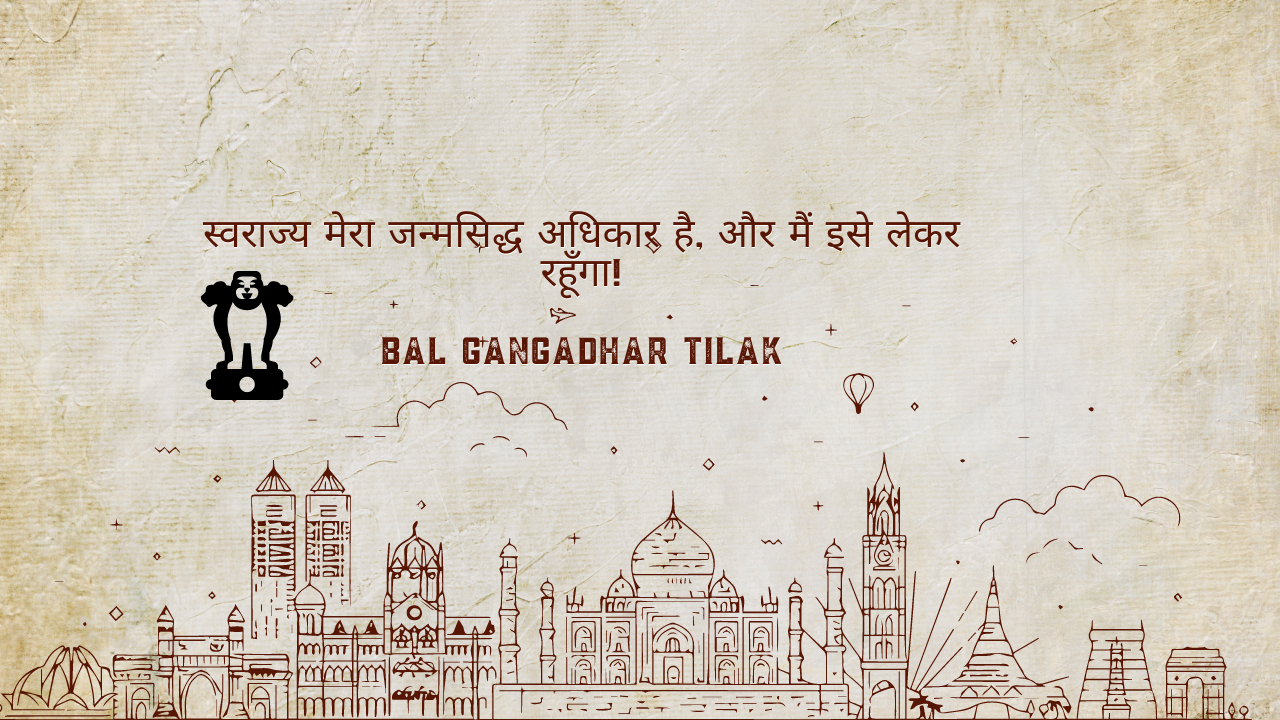
| Bal Gangadhar Tilak: “Swaraj is my birthright and I shall have it.” |
| Indira Gandhi: “The power to question is the basis of all human progress.” |
| Dr. A.P.J. Abdul Kalam: “Freedom is not just about independence; it is about self-discovery and self-realization.” |
| Lal Bahadur Shastri: “We believe in peace and peaceful development, not only for ourselves but for people all over the world.” |
| Bhagat Singh: “They may kill me, but they cannot kill my ideas. They can crush my body, but they will not be able to crush my spirit.” |
| Annie Besant: “Liberty is the breath of life to nations.” |
| Tenzin Gyatso (14th Dalai Lama): “In the practice of tolerance, one’s enemy is the best teacher.” |
Independence Day Messages You Can Send To Fellow Indians!
- Wishing you a Happy Independence Day 2026! May the tricolour always fly high and our nation continue to prosper.
- Happy Independence Day! Let’s honour the brave heroes who made our freedom possible.
- On this Independence Day, may our dreams for a brighter tomorrow come true! Enjoy a day filled with patriotic spirit.
- May the spirit of Independence Day be with us forever. Wishing you a joyful Independence Day!
- Happy Independence Day! Let’s celebrate our freedom and the glory of our nation.
- United we stand, proud we rise. Have a day full of pride, honour, and joy. Happy Independence Day!
- Celebrating the pride and freedom of being an Indian. Happy Independence Day!
- Sending warm wishes on this Independence Day. Let’s salute our great nation!
- Today, we honour the freedom fighters who sacrificed their lives for our country. Happy Independence Day!
- May our country continue to flourish and celebrate many more years of independence. Happy Independence Day to all!
- Proud to be an Indian. Wishing you a Happy Independence Day!
- On this day, let’s remember and honour the sacrifices that made our freedom possible. Happy Independence Day!
- Celebrating the freedom and glory of our nation with pride. Happy Independence Day!
- Let’s pledge to protect the peace and unity of our great nation. Happy Independence Day!
- Freedom is a hard-won gift, and we are blessed to have it. Let’s appreciate and celebrate our freedom. Happy Independence Day!
To every proud Indian, on behalf of everyone at Superprof, we wish you a very happy Independence Day!
Let's celebrate our country, our motherland together!
Summarise with AI:
Did you like this article? Leave a rating!

 Loading...