


Hatha fundamentally refers to yoga postures, meaning that your favourite type of yoga – be it Ashtanga, Iyengar, vinyasa, and power yoga is all hatha.
By definition, hatha yoga is meant to be physical; the word hatha itself means ‘force’, ‘effort’, or ‘willfulness’. That doesn’t mean that every hatha workout must be forceful; with the wealth of poses to choose from, you could design a workout for virtually any purpose.



Hatha Yoga Sequence
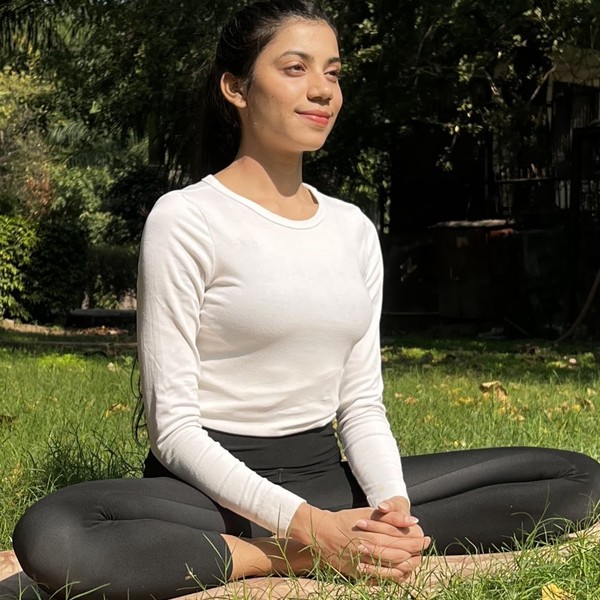
Hatha Yoga sequence is a traditional system of physical and spiritual practices designed to balance body and mind through breath and posture. It includes various Hatha Yoga poses (asanas) suitable for all levels, making it ideal for those starting their journey with beginner Hatha Yoga.
- 1. Yama – Ethical restraints
- 2. Niyama – Personal observances
- 3. Asana – Physical postures (Hatha Yoga asanas)
- 4. Shatkarma – Cleansing techniques
- 5. Pranayama – Breath control
- 6. Mudra – Energy gestures
- 7. Bandha – Energy locks
- 8. Pratyahara – Withdrawal of the senses
- 9. Dharana – Concentration
- 10. Dhyana – Meditation
- 11. Samadhi – Union or enlightenment
Hatha Yoga Session Basics
A hatha yoga session generally runs for an hour but beginners classes may last only 30 minutes and some yoga studios offer ‘yoga during lunch’ sessions that may last only 15 or 20 minutes!
The general outline of a hatha yoga session, regardless of level or duration, starts with the physical aspect, meaning the poses. That exertion better prepares us for the more subtle breath work and energy flow.
The tranquillity we earn from breath awareness and energy flow, in turn, prepares us for a deeper state of meditation.
The roots of Hatha Yoga can be traced to the 8th–11th centuries CE, emerging as a practical discipline of the broader yogic system. Classical texts like the Hatha Yoga Pradipika (15th century), Gheranda Samhita, and Shiva Samhita detail its philosophy, postures, and techniques.
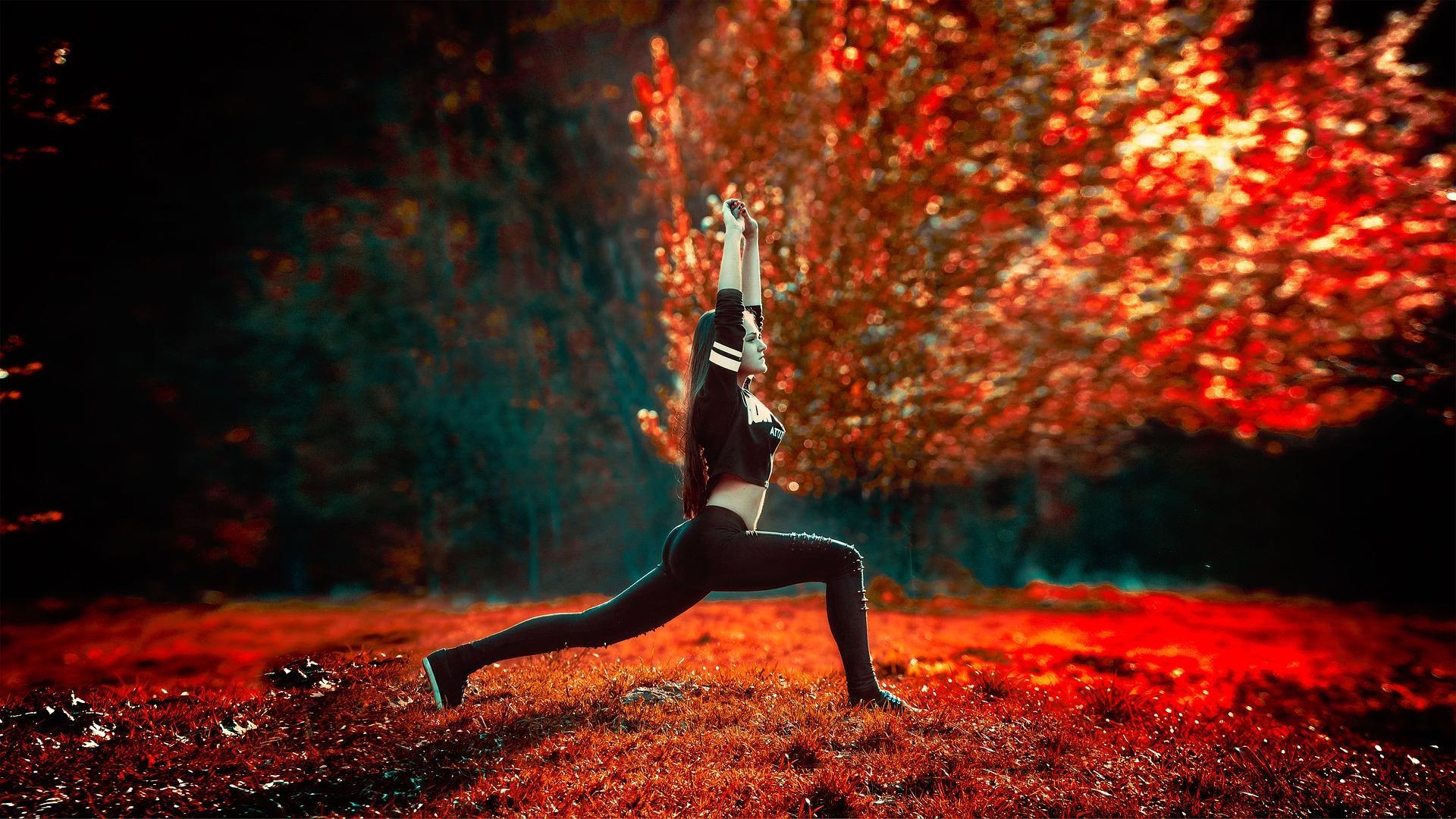
A general rule of thumb for hatha yoga suggests starting with the standing poses – warrior poses, gate and tree poses, moving down to the kneeling poses such as ‘cow and cat’ and downward-facing dog.
The seated poses would be next, among them the ‘bound angle’ and ‘cow face’ poses – and let us not forget ‘crane’ and ‘peacock’! And then, we arrive at the lying down poses, with ‘cobra’ and ‘sphinx’ being very similar.
Finally, savasana! Enjoy your ‘corpse’ pose; you’ve earned it!
Some yoga teachers have preferred poses that they will include in every session – the crescent lunge is a particular fav of mine, for example.
However, if you are currently undergoing yoga teacher training or hope to soon, you should always be sure to mix things up a little bit so that your students do not become bored with the same sequences in every class.
Just one little exception to that point: if you are leading restorative yoga sessions, you should probably keep things pretty much the same, seeing as that particular yoga sequence is meant to serve a particular purpose!
With these general guidelines in place, let’s take a look at some targeted hatha sequences.
When the breath wanders, the mind is unsteady; but when the breath is still, so is the mind.
Hatha Yoga Pradipika, II.2
A Good Place to Start: Sun Salutation Sequences
Many yoga teachers like to begin their class with a sun salutation; it is a great way to warm up, stretch and work major muscle groups. Sun salutations are particularly effective in vinyasa flow classes and also in power yoga classes because each movement flows into another.
A benefit of these Suria Namaskar mantras – the Sanskrit name for sun salutation sequences is that they coordinate breath with movement. For instance, as you sweep your arms upwards in the ‘raised arm’ pose, a deep inhale feels inevitable because your ribcage naturally expands on that move.
Likewise, as you flow into a forward fold, exhaling is inevitable; it is almost as though you were compressing a bellows.
Find steady Hatha routines through online yoga classes for women.

That is rather the point of this sequence. When done correctly, each ‘reaching’ move is done on an inhale and each release is done on the exhale.
There are many ways to sequence a sun salutation but most yogis agree that one should start in mountain pose (pranamasana) and then flow into ‘upward salute’ or hasta uttanasana, its traditional name.
The rest of the sequence is a follows:
- Uttasana or standing forward bend: feet shoulder-width apart, bend forward at the hips
- Anjaneyasana or crescent moon pose: a deep lunge with head back and arms raised high
- Adho Mukha Svanasana: the downward dog positions
- Ashtanga Namaskara: knees and chest down, hands under shoulders and hips raised
- this asana has many names including ‘chest, knees and chin’, indicating what should touch the mat when done properly
- Urdhva Mukha Shvanasana or ‘upward-facing dog’: head and torso raised; hips and legs on the mat
- Adho Mukha Svanasana: again, flow into the downward-facing dog pose
- Anhaneyasana: again, the crescent moon position, this time with the other foot back
- Uttasana: again, bend forward
- Hasta Uttasana: reach again for the heavens with your head raised, really opening your chest up
- Pranamasasa; back into mountain pose; the salutation is complete. Namaste!
This sequence is more commonly known as a Type A Sequence, from which you may logically infer that there must be a Type B.
Hatha Yoga teaches us to use the body as the bow, asana as the arrow, and the soul the target.
B.K.S. Iyengar
Type B substitutes the ‘forward bend’ pose with the chair pose, which looks like the yogi is about to sit down on a chair, albeit with arms raised high. The Type B sequence includes the forward bend but calls for the yogi to grab their toes. It also includes warrior poses.
Of course, nothing says you cannot include other asanas in your warmup sequence; some yoga instructors may insert a boat pose (navasana) or a seated forward bend.
The important takeaway of sun salutations is that they are meant to open the body up and coordinate movement with breathing; to ready the mind and body for deeper reflection of the fundamental yoga philosophy: that the mind, body and spirit are one.
Did you know that yin yoga does not call for any standing asanas?

Sequencing a Yoga for Beginners Class
Using the Sun Salutation sequence is a great way to start your class – indeed, some instructors base their hour-long class on these 12 asanas alone, but you should probably add a few asanas to make each session complete.
The average hatha yoga session includes between 20 and 30 asanas; about half of them should be dynamic.
Hatha yoga is a ‘yang’ yoga, meaning that there is more movement involved than, say in a yin yoga class. Each session should start by working the body. Once the body is ‘opened’, warmed up, practitioners can focus exclusively on breathing which, in turn, leads to a meditative state.
The Hatha Yoga Pradipika describes 84 traditional postures, symbolizing 84 lakh (8.4 million) life forms. Modern yoga derives thousands of variations from these foundational asanas. The most revered posture is Siddhasana (Adept’s Pose) — said to be the best for meditation and spiritual attainment.
After your sun salutation, deciding which asanas to include in your sequence really depends on the results you are aiming for.
If you are looking for general flexibility and other benefits of yoga, you would use a combination of standing, hand-and-knees and seated poses, culminating in a series of laying down poses. Just make sure the poses flow into one another!
In this table, we’ve listed a sequence of asanas to try; naturally, you may replace some of these poses with your favourites.
Do yo know you can check for online yoga classes on Superprof?
Hatha Yoga Sequence for Beginners
| Name | Target Area(s) | Notes |
|---|---|---|
| Surya Namaskar or Sun Salutation | works your entire body | a series of 12 poses to warm the body |
| Standing Poses | The focus is on strengthening major muscle groups and building balance | Warrior poses, Tree poses, Gate poses, Extended Side Triangle and others |
| Hand-and-knee postures | work your core as well as lower joints | Camel pose, cow-and-cat; upward and downward facing dog; plank and side plank. |
| Seated postures | gain flexibility | head-to-knee, seated forward bend, bound angle, cow face pose |
| Lying down poses | work your abs and back | On your stomach: Sphinx, Cobra, Pigeon, Bow On your back: Bridge, Fish, Plow |
| savasana corpse pose | resting your entire body | Namaste! |
What About the Sun and Moon?
Somehow, word has gone around in yoga circles that ‘hatha’ is actually the melding of two words: ‘ha’ for sun and ‘tha’ for moon, implying that hatha yoga is a balance between solar and lunar energies. Or, if you wish, between yin and yang.
Unfortunately, that theory is not correct.
While ‘ha’ does indeed represent ‘sun’, it is not the only word for the sun, nor is it meant to represent the sun in ‘hatha’. Likewise, ‘tha’ may well stand for ‘moon’, but Sanskrit texts do not indicate such.
While the practice of hatha yoga is millennia-old, focus on the physical is a relatively new aspect of the discipline and, focusing one’s efforts solely on balancing the physical and mental aspects of yoga leaves out the most important aspect, the spiritual.
Really, it is more than a matter of semantics.
According to Swami Svatmarama, spending all of our energy trying to balance two forces constantly in flux overlooks the fundamental philosophy of yoga. He averred that we should instead focus and guide the mind so that the body’s energy can flow as it should.
Now learn how you can sequence any yoga class…
Summarise with AI:
Did you like this article? Leave a rating!

 Loading...
