

The major boards of education in India - Central Board of Secondary Education (CBSE) or Indian Certificate of Secondary Education (ICSE) combine the curricula for Physics, Chemistry and Biology into one subject of study, viz. Science. The Board exams are conducted in the month of February or March.


Class 10 Syllabus For Chemistry
Students often find the class 10 Science syllabus be really vast. To tackle this, a proper study plan needs to be put in place whereby the revision of the syllabus can be completed by the end of December, followed by practice with previous years' question papers and sample papers.
On the other hand, there are those students who find Chemistry easier to prepare for than some other subjects. In order to prepare in a better way for the exam, the first step is always to familiarize oneself with the Chemistry syllabus. This article also discusses some useful preparation tips for the actual exam. First, let us explore the Chemistry syllabus in-depth.
Science Unit I: Chemical Substances – Nature and Behaviour
- Chemical Reactions: Chemical equation, Balanced chemical equation, implications of a balanced chemical equation; Types of chemical reactions: combination, decomposition, displacement, double displacement, precipitation, neutralization, oxidation, and reduction.
- Acids, Bases and Salts: Their definitions in terms of furnishing of H+ and OH– ions, General properties, examples, and uses, concept of pH scale (Definition relating to logarithm not required), importance of pH in everyday life; preparation and uses of Sodium Hydroxide, Bleaching powder, Baking soda, Washing soda and Plaster of Paris.
- Metals And Nonmetals: Properties of metals and non-metals; Reactivity series; Formation and properties of ionic compounds; Basic metallurgical processes; Corrosion and its prevention.
- Carbon Compounds: Covalent bonding in carbon compounds. Versatile nature of carbon. Homologous series. Nomenclature of carbon compounds containing functional groups (halogens, alcohol, ketones, aldehydes, alkanes, and alkynes), the difference between saturated hydrocarbons and unsaturated hydrocarbons. Chemical properties of carbon compounds (combustion, oxidation, addition and substitution reaction). Ethanol and Ethanoic acid (only properties and uses), soaps and detergents.
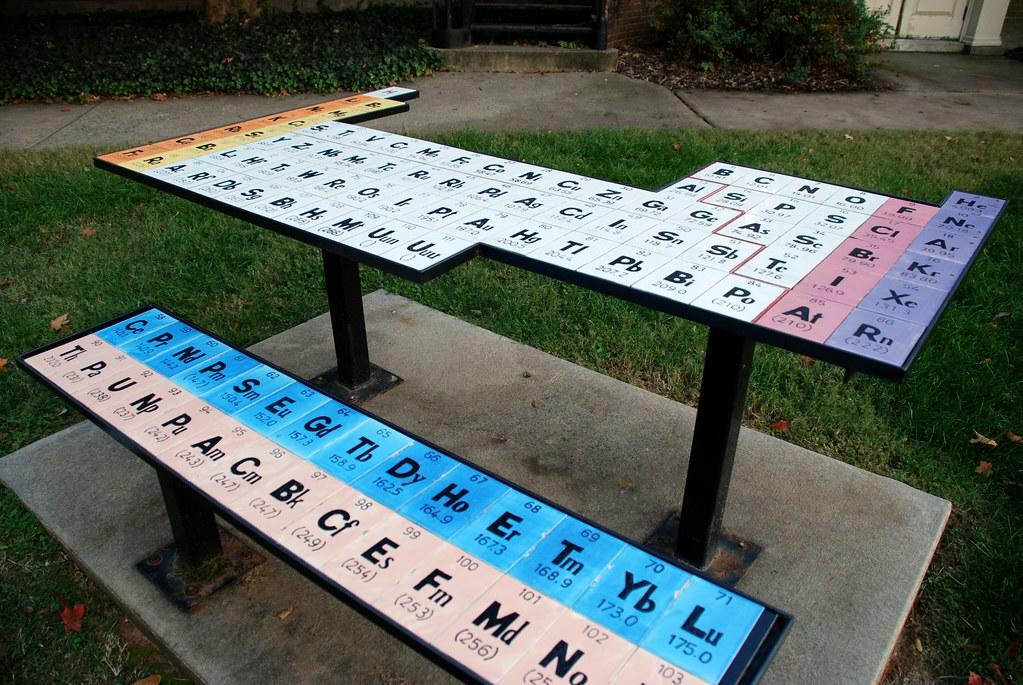
- Periodic Classification Of Elements: Need for classification, early attempts at classification of elements (Dobereiner’s Triads, Newland’s Law of Octaves, Mendeleev’s Periodic Table), Modern periodic table, gradation in properties, valency, atomic number, metallic and non-metallic properties.
Practical Syllabus for Class 10 Chemistry
Chemistry laboratory experiments constitute 20 marks in the form of internal assessments. It is important for students to pay an equal amount of attention to their CHemistry practical.
Practical tests, if properly done, can fetch high scores for students, while helping them gain greater clarity of the concepts of Chemistry.
The list of laboratory experiments included in the CBSE Chemistry Class 10 syllabus is as follows:
Finding the pH of the following samples by using pH paper/universal indicator:
- Dilute Hydrochloric Acid
- Dilute NaOH solution
- Dilute Ethanoic Acid solution
- Lemon juice
- Water
- Dilute Hydrogen Carbonate solution
Studying the properties of acids and bases (HCl & NaOH) on the basis of their reaction with:
- Litmus solution (Blue/Red)
- Zinc metal
- Solid sodium carbonate
Performing and observing the following reactions and classifying them into:
- Combination reaction
- Decomposition reaction
- Displacement reaction
- Double displacement reaction. The action of water on quicklime. The action of heat on ferrous sulfate crystal iron nails kept in copper sulfate solution reaction between sodium sulfate and barium chloride solutions.
Observing the action of Zn, Fe, Cu and Al metals on the following salt solutions:
- ZnSO4(aq)
- FeSO4(aq)
- CuSO4(aq)
- Al2 (SO4)3(aq)
- Arranging Zn, Fe, Cu and Al (metals) in the decreasing order of reactivity based on the above result.
Study of the following properties of acetic acid (ethanoic acid):
- odor
- solubility in water
- effect on litmus
- reaction with Sodium Hydrogen Carbonate
Preparation Tips for Class 10 Chemistry Exam
To start with, pay attention in Chemistry class! Students must thoroughly study the NCERT Class 10 Science textbook. The question paper for the Board exam is designed based on this book.
Try to learn the fundamentals of Chemistry provided in the book and also solve the exercise questions at the end of each chapter.
There are many learning resources available for preparing well for the final exams, such as Lakhmir Singh Chemistry Class 10 Solutions, prepared by the very experienced teachers of science - Lakhmir Singh and Manjit Kaur. The Selina Concise Chemistry Class 10 Solutions is also a handy reference when it comes to the ICSE Chemistry syllabus.
Know the Exam Pattern and Marking Scheme
The question paper for CBSE class 10 consists of 80 marks, divided into 5 sections. The distribution of marks and the number of questions for each section is as follows:
| Sections Name | Marks per Question | Total Questions | No. of words for Answering |
| A | 1 | 2 | 1 word or 1 sentence each |
| B | 2 | 3 | 30 words each |
| C | 3 | 10 | 50 words each |
| D | 5 | 6 | 70 words each |
| E | 2 | 6 | Brief answer (Word limit not specified) |
| Total | 27 |
The above data has been collated from analyses of previous years' question papers. It is only suggestive in nature. Students should bear in mind that there may be slight variations in the upcoming exam pattern.
Revise the Syllabus More than Once
Classes in school usually cover the entire syllabus during the course of the academic year. However, students must go through it once again by themselves. This way, they can chalk out learning strategies for topics that they are strong in and those that need improvement. Keep the NCERT textbook questions handy as you go through the revisions. Challenge yourself to solve them multiple times. You can also refer to the NCERT Solutions of Class 10 Science.
Common Preparatory Advice
Here are some particular areas of emphasis for those who find CHemistry to be an uphill task. Focus on:
- Balancing chemical reactions.
- Applications of acids and bases in our daily life.
- Common names of salts, their chemical formula, preparation, and uses.
- Names of carbon compounds containing functional groups and their main chemical properties.
- Saponification and cleansing action of soap.
- Important reactions involving the conversion of one compound to another.
- Elements placed in the first and last two groups of the Modern Periodical Table, along with their electronic configuration.
- Gradation in properties of elements both along a period and down a group.
Remember: You can improve your speed of writing and accuracy of answers through extensive practice of sample papers and in-depth preparation of the subject.
Discover various chemistry courses on Superprof.

General Tips for Exam Day
You are all set for the big day. Here is some friendly advice on how to sail through the exam blues, come exam day!
- Be relaxed. It is just an exam!
- Sleep properly the night before the exam.
- Tell yourself you have prepared well for the exam by covering all the important topics from the syllabus.
- Go through the entire question paper thoroughly, before you commence writing.
- Check the marks allocated to each question and frame your answer accordingly.
- Try not to get stuck on a particular question. Move on to the next, and come back to it at the end.
- Routinely check the time. The clock is ticking!
- Include drawings and diagrams to illustrate your answers better, but only if time allows it.
- Write your answers in neat handwriting.
Parting Shot
Try to correlate what you read and learn from your Chemistry books to the things you see in daily life. For example, acids, bases, and salts, carbon and its compounds, and so on. Once you begin to see the action of Science unfolding in front of your very eyes, it will be so much easier to remember the concepts of Chemistry!
Chemistry is a real-world phenomenon.
Board exams are a crucial phase in the life of all Indian students, irrespective of their plans for higher studies. Chemistry is one of the easiest subjects to score in. Class 10 Science is one of the major subjects to score in for students planning to pursue Science in higher studies. A thorough conceptual understanding of concepts taught in Physics, Chemistry, and Biology helps in building a strong foundation.
Discover other online chemistry courses on Superprof.
Enjoyed this article? Leave a rating!

 Loading...
