

Math puzzles are a fun way to help kids think creatively and improve problem-solving skills. Try solving this one:
I am thinking of a number between 1 and 50.
- It is a multiple of 3.
- The sum of its digits is 9.
- It is greater than 20.
What number am I?
Answer: The number is 27 (2 + 7 = 9, multiple of 3, greater than 20).
Math puzzles exist in a wide range of styles. Some simpler number problems do require calculations to solve. Others test your ability to spot patterns and are more akin to logic puzzles. Some puzzles use images, which makes them excellent for visual learners.
Neuroplasticity is the brain's ability to reorganize itself by forming new neural connections throughout life. So, there is actual science between improving your cognitive sense with logic-based Mathematics puzzles.




Math Puzzles for Kids To Solve At Home
The Magic Square Puzzle: Fill in the empty boxes so that the sum of the numbers in each row, column, and diagonal is the same.5 3 8 4 ? 2 1 9 7
The Math Riddle: What is the smallest positive number that is divisible by 7, 8, and 9?
The Word Problem: A school has 240 students. If 3/5 of them are boys, how many boys are there in the school?
Answers below!
Maths Puzzles With Answers For Kids
Maths Riddles
Question 1: A farmer had 15 sheep. All but 9 died. How many sheep were left?
Answer: 6
Question 2: If three birds are sitting on a wire and you shoot one, how many birds are left on the wire?
Answer: none (because once you shoot one, the other two will fly away)
Question 3: Mary has five daughters: 1. Betty, 2. Irene, 3. Anna, 4. Emma. What’s the name of the fifth daughter?
Answer: Her name is Mary. Reread the question!
Question 4: You ran a race and passed the person in second place. What place would you be in now?
Answer: You would be in second place because you passed the person in second place!
Question 5: A man has four daughters, each of whom has a brother. How many children are in the family?
Answer: 5
Arithmetic Math Puzzles
Question: A man walking in the street meets his friend and says to him: ” My daughter has just had as many children as I have. Each of her children has the same number of brothers as it has sisters. Each of my sons has twice as many sisters as he has brothers. How many children does my daughter have?”
The friend replies: “I am sorry, I cannot solve this problem. Can you give me another hint?”
The man says: “Well, in that case, I can tell you that each of my daughters has one more brother than she has sisters.”
What is the answer?
Answer: 4 girls and one boy (three girls, two girls, and one boy)
Question: What is the value of one-half of one-fifth of one-tenth of 400?
Answer: 2
Question: What is the sum of the digits of all numbers from 1 to 999?
Answer: 270000
Question: A thief has a very clever strategy when stealing the number plates of cars. Whenever he steals a number plate, he changes it with the help of a magic machine, and the altered number becomes two times the original number. If the new number is odd, he leaves it as such. The machine changes it into the next higher odd number if it is even.
What will be the new number after three such changes?
Answer: 12
Benefits of Maths Puzzles for Children
Maths riddles are entertaining for kids, but they also help children build problem-solving abilities, lateral thinking, creative issue-solving, and maths skills. Children can learn a lot and gain a better understanding by solving math puzzles and riddles. Maths puzzles benefit a child in many ways.
Children can learn maths in a structured way by playing games and solving puzzles that require them to use their cognitive abilities to make choices and solve problems.
A game or puzzle is a product or activity created to offer a compelling challenge that takes careful consideration, ingenuity, and perseverance to solve. Children may be required to develop plans and strategies to achieve a particular objective or find a solution.
Children enjoy maths games and puzzles because they may be entertaining, which is a positive thing. Children enjoy experimenting, questioning, testing, and exploring. Thus, enabling them to do so enhances their cognitive abilities. There are many different types, sizes, and colors of math games and puzzles. Children may find them enjoyable in the form of equations, puzzles, or exercises.
Crosswords, jigsaw puzzles, Rubik's cubes, and connect-the-dots are some of the kids' all-time favorite puzzles. Children can explore different combinations and sequences of numbers to get at solutions when playing maths games like Prodigy or dice games. Jigsaw puzzles can improve spatial memory, while Sudoku is another game that challenges pattern identification. Group math games and puzzles let kids relate to one another and foster social and collaborative skills in addition to cognitive skill development.
Higher Level of Concentration
This is one of the greatest advantages of completing maths puzzles. A student's ability to focus can be improved via math puzzles. This is due to the fact that it takes a pupil at least 10-15 minutes to complete a puzzle and pay attention to the topics. This enhances the child's focus by giving them the capacity to maintain sustained attention on a single task.
Clear Knowledge of the Subject
Students who are given puzzles can concentrate on the solution, which helps them review the material. In order to answer the puzzle, students might therefore go through the themes. Kids can use this to better learn the subjects while attempting to solve the puzzle.
Mind-Body Integration
This is a pleasant bonus that also contributes to a child's overall personality development. One of the hardest abilities to master is the ability to coordinate one's thinking and one's body, yet your children may easily learn this skill by solving puzzles.
Problem-solving Skills
Puzzles are one of the best ways to improve problem-solving abilities. Problem-solving is one of the most important talents in today's world. This is a great advantage of maths puzzles.
Find out how to convert units in Maths and ace everyday maths problems like a pro!
Gain New Knowledge
Children learn new information through solving puzzles because they are based on a variety of themes. As a result, puzzles not only aid in understanding mathematical topics but also encourage kids to think critically and grasp ideas outside of mathematics.
Confidence in Oneself
Last but not least, puzzles can make people feel better about themselves. Children have a sense of accomplishment after finishing a puzzle. A chore they complete on their own also makes them happy!
1. Answer: 5 3 8 6 7 2 1 9 7
2. Answer: 504
Explanation: The number must be a multiple of the least common multiple of 7, 8, and 9, which is 504.
3. Answer: 144
Explanation: 3/5 of 240 is (3/5) x 240 = 144.
Math puzzles require you to think critically and approach problems from different angles. This helps improve your problem-solving abilities and encourages logical thinking.
Best Maths Puzzles for Kids
Maths Crossword Puzzles
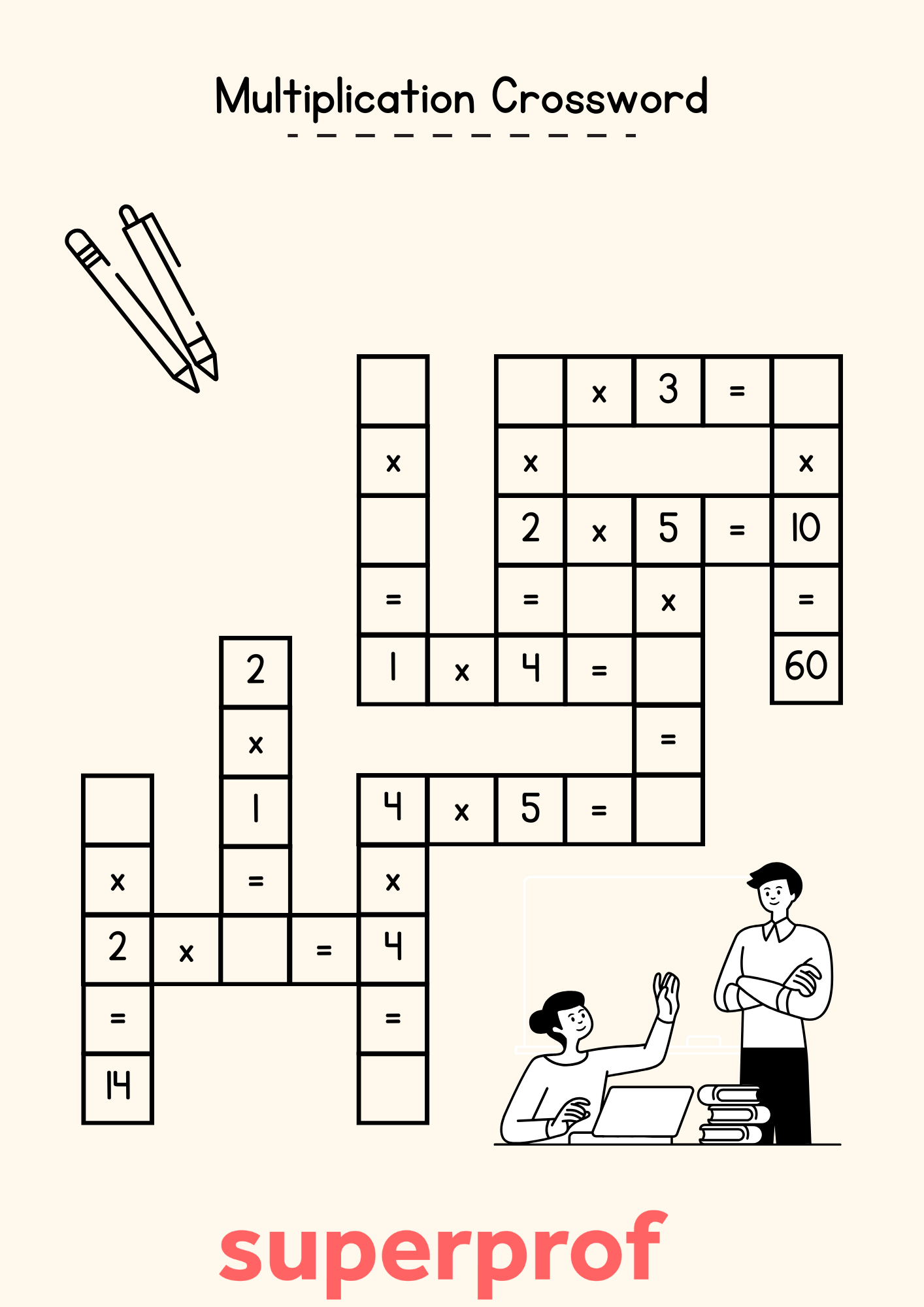
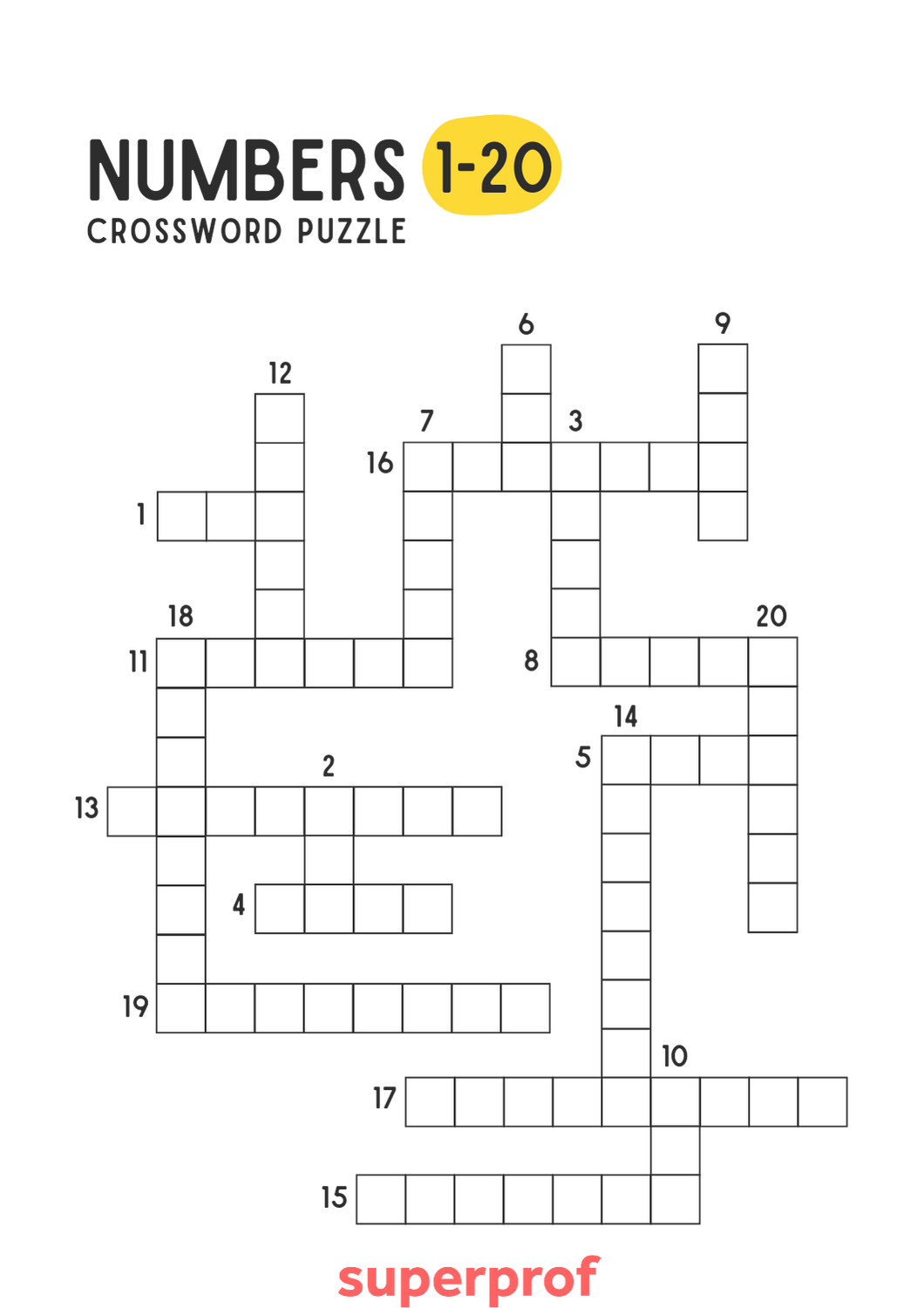
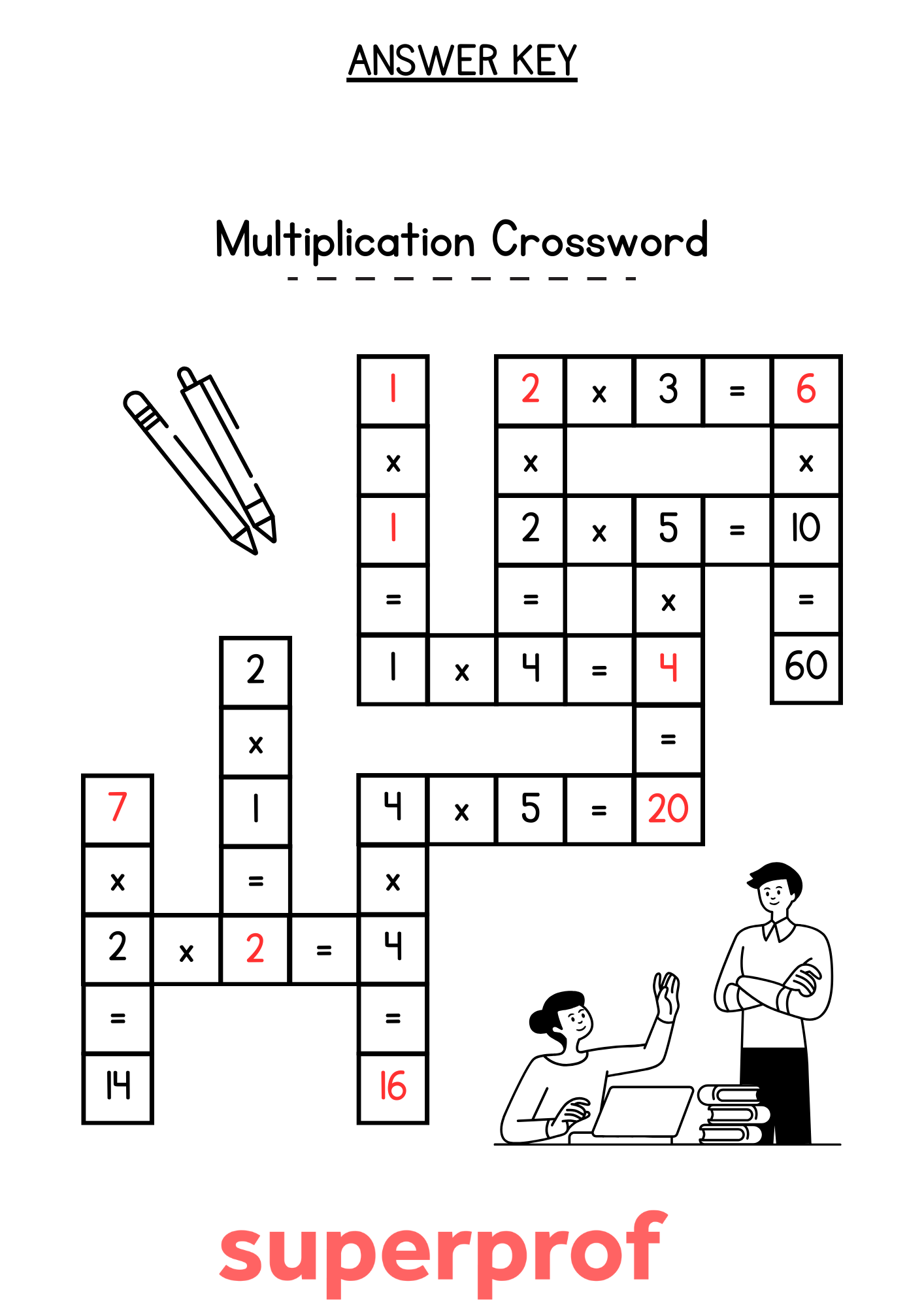
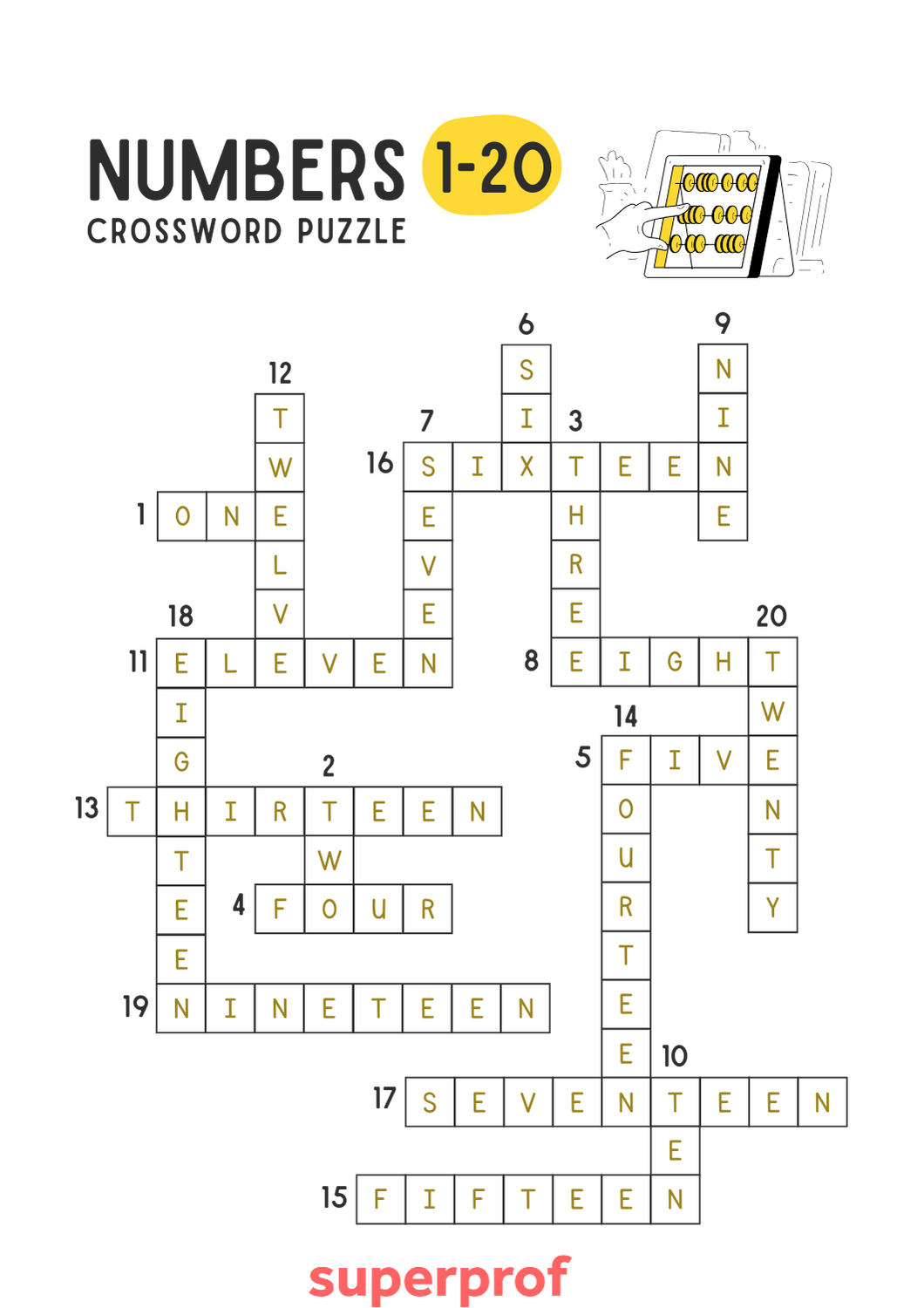
This incredibly customizable maths challenge is based on the basic idea of taking a crossword and turning it into maths. The vertical and horizontal strips are completed by the students using numbers rather than words. It is possible to modify math crossword puzzles to teach ideas like money, addition, or rounding. The results of equations or the numbers provided by hints can be solutions.
Maths Problem Search
Have pupils complete a word search-style puzzle in which they must find hidden arithmetic equations to practice their addition, subtraction, multiplication, and division skills. It encourages a firm grasp of fundamental maths principles and may be tailored to whatever skill you want students to practice.
Maths Riddles
Do your kids love word puzzles? Give them some math puzzles that need both basic math knowledge and critical thinking. Teachers can post one on the board for students to consider, or give them out as additional practice after they've finished their task.
Boost their problem-solving skills with a maths class 9 and strengthen their understanding of core concepts.
Pattern Math Puzzles
An excellent method to get your pupils chatting is by using pattern puzzles. They encourage children to engage their minds in novel ways and are fascinating and enjoyable to solve. These can be used by teachers as icebreakers, review exercises, or group-based problem-solving exercises.
The typical requirement for solving a pattern problem is not to guess the pattern that was utilised to solve it. In order to figure out where each piece goes, the solver must apply reasoning.
Put-Together puzzles have a subclass known as pattern puzzles. You are given shapes in these puzzles, and your task is to arrange them so that they fit inside one or more outlines. There can be hints like, "There should be three squares in this row," or instructions like, "Place a triangle here." in some of the outlines.
Arithmetic Math Puzzles
Students can practice their math abilities while also having fun by working on arithmetic problems. These puzzles can also be a great method to revisit concepts that pupils have already learned or introduce new ones. These games are entertaining and instruct kids in fundamental math concepts. Children must solve the elementary math problems—addition, subtraction, multiplication, and division—included in each puzzle in order to complete it.
Prodigy
A fun, game-based application called Prodigy makes learning maths exciting! Prodigy uses many of the same techniques to foster analytical thinking and mathematical fluency even if it isn't a typical maths puzzle in the classic sense.
For cash, pets, and quests, students must perform math exercises that are in line with their course curriculum. With a free account, teachers can simply examine student accomplishment data, prepare for standardized tests, and present a tailored math curriculum to each student.
Algebra Puzzles
Algebraic equations can be used to answer a wide range of riddles and puzzles. Even though it's not always simple, solving equations gives you access to a wide range of solutions. These algebraic puzzles are a great method to get practice with formula manipulation and solving for various variables.
Discover the fascinating story about the origins of algebra and other contributions of Indian mathematicians.
Domino Puzzle Board
There are countless ways to incorporate dominoes into math lessons. This puzzle offers kids a fun, active approach to practicing addition and multiplication. To finish the puzzle, instruct your children to either work alone or in pairs.
Logic Puzzles
Logic games are a fun and engaging approach to assessing your pupils' analytical skills. These riddles frequently have a question-and-answer format. "What happens once every minute, twice every second, but never in a million years?" With the identification and manipulation of the pertinent data, the letter "m" emerges as the solution.
Kakuro
Another mathematical crossword problem is Kakuro, commonly referred to as "Cross Sums." To get to the "clues" on the outside of the row, players must use the numbers, 1 through 9. For younger players, make the grid smaller, or leave it alone for pupils who prefer a challenge. Students can mix addition and critical thinking in a fun challenge to advance various skills.
Sudoku
An excellent post-lesson exercise that promotes critical thinking and problem-solving is Sudoku. This time-tested puzzle, which you've probably already tried, is excellent for your pupils. Daily Sudoku puzzles can be found in newspapers all over the world, and there are several websites that offer puzzles of varying degrees of difficulty.
Magic Squares
Magic squares have been around for thousands of years, and during the Renaissance, translated Arabic literature brought them to Western civilization. Although there are other sizes for magic squares, the three-by-three grid is the smallest and the most user-friendly for younger children.
If your kids like to study through touch, you should give them a go at this maths puzzle. Place a number from 1 to 9 on each bottle cap you've used to recycle. Ask your students to arrange them in a three-by-three grid so that any three caps in a row added together (horizontally, vertically, and diagonally) equal 15 points.
KenKen
KenKen is a "grid-based numerical puzzle" that resembles a combination of a sudoku grid and a number cross. It was created in 2004 by Tetsuya Miyamoto, a well-known maths teacher from Japan, and is regularly featured in publications like The New York Times and other journals. In solving the puzzle, students are required to use logic and critical thinking skills in addition to their fundamental math abilities.
Boxes Puzzle
Boxes Puzzles is a logic game using colored and symbol-filled boxes in a box-style format. The objective is to arrange the boxes in accordance with the grid's numbers and indicators. There are hints throughout each problem that reveal the arrangement of the boxes in various locations.
By using combinations of grouping, intersections, and numbers provided in the rows, columns, and blocks, students can solve puzzles by inferring the contents of individual cells. The fundamental principle of solving a box problem is to limit the number of possible solutions for each box until there is just one left.
Tower of Hanoi
French mathematician Edouard Lucas created this interactive logic game in 1883. There is also a narrative around its creation that describes a temple with three poles and 64 golden discs. To fulfill a prophecy that the world will end with the final move of the puzzle, priests move these discs by the game's rules. You won't have to miss any of your maths classes, either because it will take the priests 585 billion years to complete!
Students must slide all of the discs from the first to the third pole without stacking a larger disc on top of a smaller one after starting with three discs piled on top of one another. Older kids can also learn about the mathematical principles involved in the solution: the equation 2n-1, where n is the number of discs, can be used to describe the minimum amount of moves.
So if you have free time and want to improve your cognitive intelligence, then solving Maths puzzles is among the best things you can do to improve your logic and reasoning.
So, did you solve a logic Maths puzzle, yet?
Summarise with AI:
Did you like this article? Leave a rating!

 Loading...
We are unable to connect
Did payment
No response
Hey Ayaansh,
Sad to hear that you have not received any response. Feel free to contact our customer support at namaste@superprof.com