Quick Steps to Learn and Master the Butterfly Stroke
Before getting into the detail, here's the streamlined sequence every Indian swimming coach uses when teaching the butterfly — a checklist you can follow whether you're training at a society pool in Mumbai, a club in Bengaluru, or a Sports Authority of India centre. The butterfly is never the first stroke beginners attempt — most learners come to it after they have already mastered breaststroke and front crawl.
- Build core and shoulder strength first — butterfly demands more raw power than any other stroke.
- Learn the dolphin kick at the wall — start with the kick alone, holding the pool edge or a kick board.
- Practise the body undulation — let the wave-like motion travel from your chest through your hips and feet.
- Add the simultaneous arm pull — sweep both arms outward and downward, then push past your hips.
- Master the over-water arm recovery — sweep both arms forward together over the surface.
- Time your breath with the arms — lift your head and shoulders as your arms pull back; lower as they recover.
- Work in short distances first — 25 metres of butterfly is more tiring than 100 metres of any other stroke.
- Train with drills, not just full strokes — single-arm butterfly, dolphin kick on the back, and 3-3-3 drills all build form efficiently.
What Is the Butterfly Stroke?
The butterfly stroke — often shortened to "fly" — is one of the four officially recognised competitive swimming strokes and is widely regarded as the most physically demanding of them all. Performed face-down in the water, it uses simultaneous, symmetrical arm movements combined with a wave-like dolphin kick that originates from the hips. The result is a striking, powerful motion in which the entire body moves as a single connected unit.
Visually, the butterfly is unmistakable — both arms sweep forward and back together, the chest and hips undulate up and down, and the feet move as one. Done well, it is one of the most beautiful sights in swimming. Done poorly, it becomes one of the most exhausting things a swimmer can attempt.
In India, the butterfly is the stroke that most distinguishes serious swimmers from casual ones. Few recreational swimmers at residential society pools attempt it. But at the National Aquatic Championships and at international events, India's top butterfly specialists — most notably Sajan Prakash, who became the first Indian swimmer to qualify on direct Olympic 'A' standard times in the 200m butterfly at Tokyo 2021 — represent the country at the highest level.
A Brief History of the Butterfly Stroke
The butterfly is by far the youngest of the four competitive strokes. Until the 20th century, it didn't exist as a separate event at all.
The stroke's origins lie in the breaststroke. In the 1930s, swimmers began experimenting with bringing their arms forward over the water during the breaststroke recovery, rather than pushing them through the water. This proved significantly faster, but technically still legal under the breaststroke rules of the time. The first major innovator was David Armbruster, an American swimming coach who developed what was originally called the "butterfly breaststroke" — combining over-water arm recovery with the breaststroke whip kick.
In 1935, Armbruster's swimmer Jack Sieg added the dolphin kick — borrowed from observations of underwater dolphin movement — to the new arm action. The combination was so dramatically faster than traditional breaststroke that it was banned in breaststroke events.
For nearly two decades, swimmers continued using the butterfly arm action with breaststroke-legal kicks at competitions. It wasn't until the 1956 Melbourne Olympics that the butterfly was officially introduced as a separate competitive event, with both the dolphin kick and the over-water arm recovery permitted together.
The stroke went on to be defined and popularised by some of the greatest swimmers in history. Michael Phelps, the most decorated Olympian of all time, became the dominant force in butterfly during the 2000s and 2010s, winning multiple Olympic golds in the 100m and 200m butterfly events. Caeleb Dressel later set new world records in the 100m butterfly. In women's butterfly, Sarah Sjöström of Sweden remains the world record holder.
Master butterfly stroke with swimming classes Chennai.
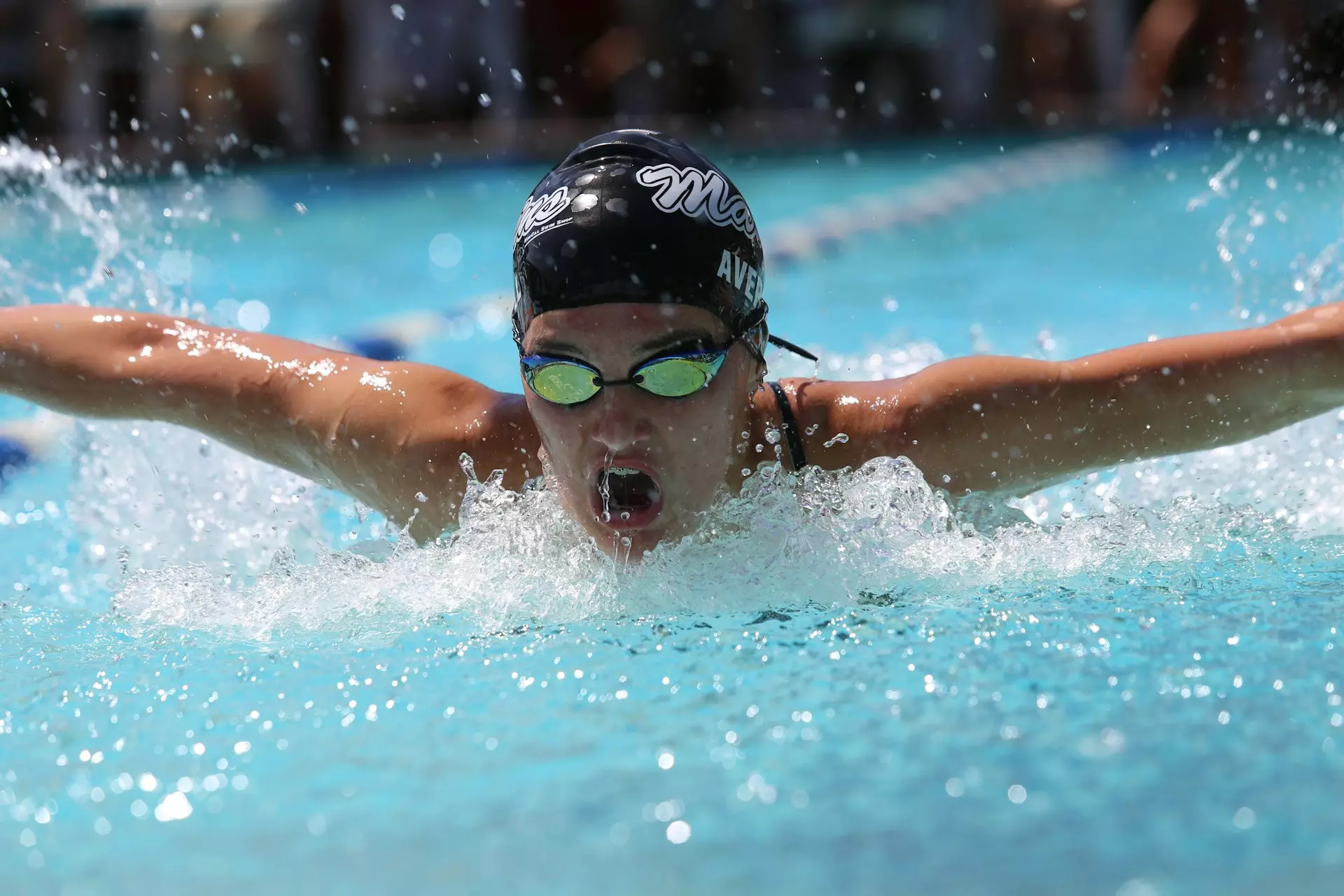
In India, the butterfly is a regular feature at all national and state-level championships, and Sajan Prakash continues to hold the senior national records in the 100m and 200m butterfly events.
Why Butterfly Is Considered the Most Difficult Stroke
There are several genuine reasons why the butterfly is universally considered the hardest of the four competitive strokes:
- Simultaneous arm action. Unlike the front crawl and backstroke, where one arm rests while the other pulls, both arms work together in butterfly. There is no recovery time within a single stroke cycle.
- Over-water arm recovery. Swinging both arms forward over the surface of the water against gravity is enormously taxing on the shoulders and core.
- Dolphin kick demands hip mobility. Many adult learners in India simply don't have the hip flexibility to execute a clean dolphin kick straight away.
- High oxygen demand. Each stroke cycle uses huge amounts of energy, and breathing must be perfectly timed — a missed breath leads to immediate fatigue.
- Coordination is critical. The arms, kick, and breath must all align. If any one element is off, the stroke collapses.
- Strength prerequisites. Butterfly demands serious upper-body, core, and lower-back strength, which most beginners simply haven't built yet.
This is why no responsible coach in India teaches the butterfly to a beginner. It is built on top of the other strokes — usually after at least 6–12 months of consistent training in front crawl and breaststroke.
It wasn't until the 1956 Olympics in Melbourne that the butterfly stroke was officially introduced as a separate event, replacing the breaststroke as the fourth stroke in competitive swimming. Michael Phelps broke the record for the fastest time when he completed 100 meters in under 50 seconds, something that has since been beat by Caeleb Dressel in men's swimming events at the Olympics.
How Butterfly Differs from the Other Strokes
Understanding what makes the butterfly unique helps you train it more effectively:
- Versus front crawl — both are face-down, but front crawl uses alternating arms and a flutter kick. Butterfly uses simultaneous arms and a dolphin kick from the hips.
- Versus backstroke — backstroke is on the back with alternating arms; butterfly is on the front with simultaneous arms. The two could not be more different in feel.
- Versus breaststroke — historically related (butterfly evolved from breaststroke), but butterfly's over-water arm recovery and dolphin kick make it a faster and far more demanding stroke.
Because of its breaststroke heritage, swimmers often find the rhythmic up-and-down body motion of butterfly more familiar than the steady horizontal feel of front crawl.
SW 8.1 — The body must stay on the breast throughout the race. Rolling onto the back is not allowed, except briefly during turns.
SW 8.2 — Both arms must move simultaneously — forward over the water and backward under it.
SW 8.3 — Both legs must kick up and down together. Alternating leg movements and breaststroke-style kicks are not permitted.
SW 8.4 — Wall touches at turns and the finish must be made with both hands together.
SW 8.5 — After the start and each turn, swimmers may stay underwater for up to 15 metres, after which the head must break the surface and remain there until the next turn or finish.
Body Position: The Foundation of a Good Butterfly
A good butterfly stroke begins with body position and the wave-like undulation that defines the stroke. Unlike the flat, streamlined position of the front crawl, the butterfly works through controlled undulation:
- Body flat at the start of each stroke, with arms extended forward.
- Chest presses down during the arm pull, allowing the hips to rise.
- Hips drive up and down in a continuous wave, generating the dolphin kick.
- Core stays engaged throughout — the wave originates from the core, not from the head bobbing up and down.
- Head stays low except during the brief breath, with eyes looking down or slightly forward.
The most important cue Indian coaches use is: "chest, hips, kick, breathe." Every stroke flows in that order, and the wave of energy must travel cleanly from the chest through the hips and out through the toes.
The Arm Action
The butterfly arm cycle has three distinct phases:
1. Entry and catch. Both hands enter the water simultaneously, slightly wider than shoulder-width, with palms angled outward. Your arms extend forward in a Y-shape ready to begin the pull.
2. Pull and push. Your hands sweep outward, then inward and downward in a keyhole or hourglass pattern. As they pass your chest, they accelerate strongly past your hips. This is where most of the propulsion comes from.
3. Recovery. Both arms exit the water at the hips and sweep forward together over the surface in a wide arc, with the elbows leading slightly. The arms are mostly straight but relaxed during this phase.
A common mistake among Indian beginners attempting butterfly is bringing the arms over the water too tensely. The recovery should feel almost like the arms are being thrown forward by momentum, not powered by muscle.
Find expert coaches for swimming classes Mumbai today.
The Dolphin Kick
The butterfly's dolphin kick is unique among competitive strokes — both legs move together in a wave-like motion, with power generated from the hips, not the knees or the ankles.
A good dolphin kick has two parts per stroke cycle:
- First (small) kick: as the arms enter the water at the start of the stroke.
- Second (big) kick: as the arms push past the hips at the end of the stroke.
The body undulates in time with these kicks, creating the wave-like movement that defines the stroke. Knees should bend only slightly, ankles must stay flexible, and the toes should be pointed.
Useful drills include:
- Dolphin kick on back drill — kick on your back with arms at your sides, focusing on hip-driven motion.
- Vertical dolphin kick drill — kick in deep water, body upright, building hip and core power.
- Underwater dolphin kick drill — push off the wall and dolphin-kick underwater for as far as you can.
Learn at your pace with swimming classes in Lucknow.
Breathing in the Butterfly
Butterfly breathing is the single hardest part of the stroke for most learners — and the part that most often falls apart during fatigue. Key principles:
- Lift the head and chin forward, not up. The head should clear the water just enough to take a quick breath.
- Breathe at the end of the arm pull, when the arms are pushing past the hips and the body's natural undulation lifts you slightly.
- Drop the head back down as the arms swing forward in recovery.
- Don't lift too high — the higher the head goes, the more the hips drop and the harder the next kick becomes.
Most butterfly swimmers in India breathe every two strokes when starting out. As fitness improves, swimmers can train themselves to breathe every three strokes or more for short, fast efforts.
Common Mistakes Indian Beginners Make in Butterfly
A few errors come up again and again with butterfly learners:
- Over-using the arms. Most propulsion comes from the kick and core, not from forcing the arms.
- Bending the knees too much in the kick. Turns the kick into a flutter motion. The kick should originate from the hips.
- Lifting the head too high to breathe. Causes hips to sink and the next stroke to fail.
- No undulation. A flat butterfly is an exhausting butterfly. The body must move in a wave.
- Asymmetric arms. Both arms must move together; even a slight delay between them is technically illegal in competition and inefficient otherwise.
Improve your strokes and breathing through swimming lessons.
Tips to Improve Your Butterfly Faster
Once your basics are steady, these refinements will lift your stroke meaningfully:
- Train butterfly in short, focused sets. 8 × 25m butterfly with full rest builds form without burnout.
- Build core strength. Planks, dead bugs, and Russian twists translate directly into stronger undulation.
- Improve hip and ankle mobility. Yoga and dynamic stretching make the dolphin kick visibly better.
- Use a pull buoy for arm work. Removes the kick load and lets you focus on arm mechanics.
- Master the underwater dolphin kick. Up to 15 metres of underwater dolphin kick are allowed off every wall — winning swimmers exploit every one of them.
Learn the Butterfly Stroke With a Coach on Superprof
Of all four strokes, the butterfly is the one that benefits most from professional coaching. Subtle issues in timing, undulation, or breathing can lock a self-taught swimmer at an inefficient level for years. A qualified coach can identify these errors in a single session and prescribe drills to fix them.
Superprof connects swimmers across India with verified swimming coaches, many of whom have competitive backgrounds, formal Swimming Federation of India certification, and years of experience teaching butterfly to learners of every level. Browse coach profiles, compare reviews, and book your first session today.
Summarise with AI:
Did you like this article? Leave a rating!

 Loading...