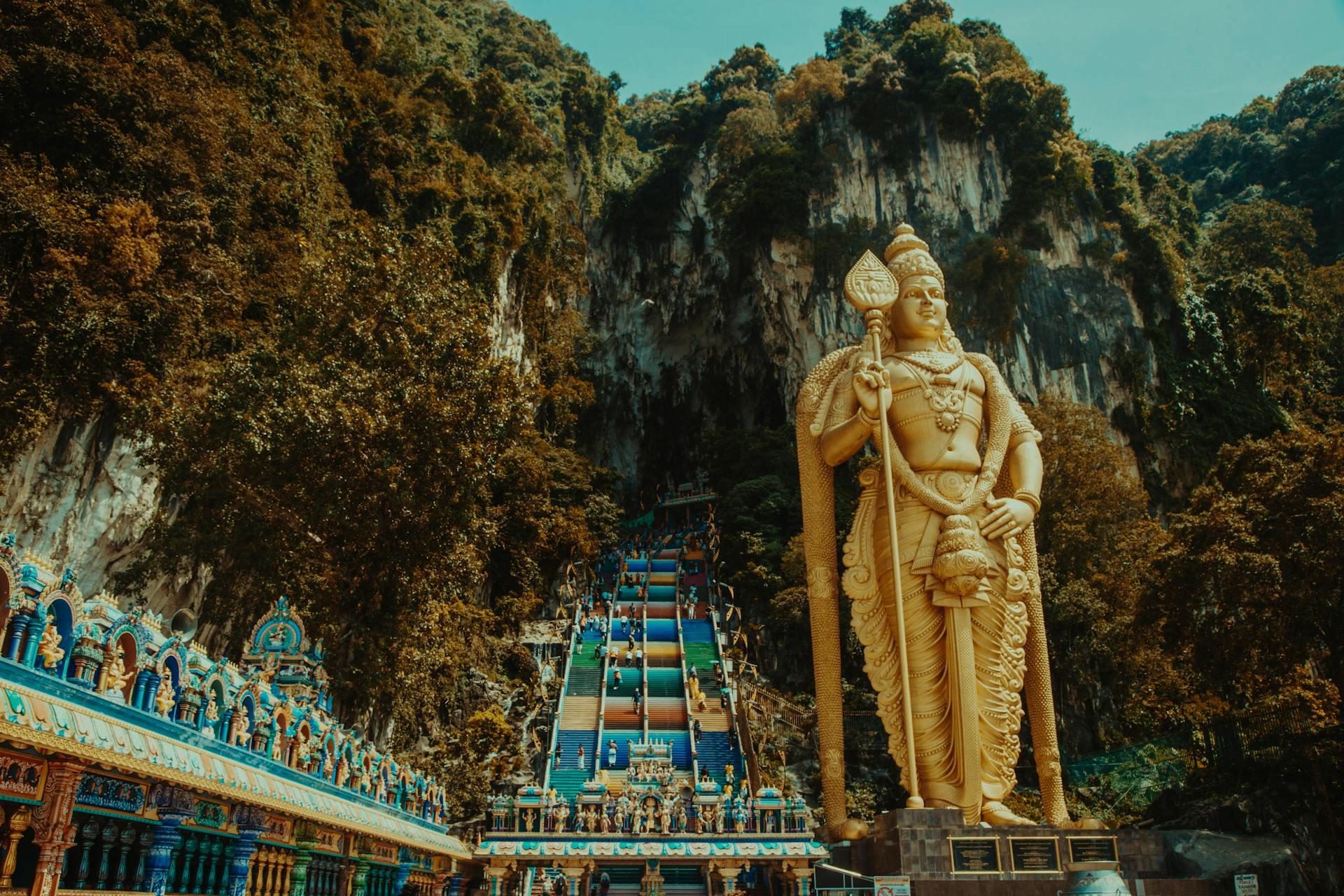

Hinduism is the world’s oldest surviving religion, but there are more reasons why it's interesting than just its age! It is one of the most practiced religions in the world and is further spreading across the globe with each passing year.
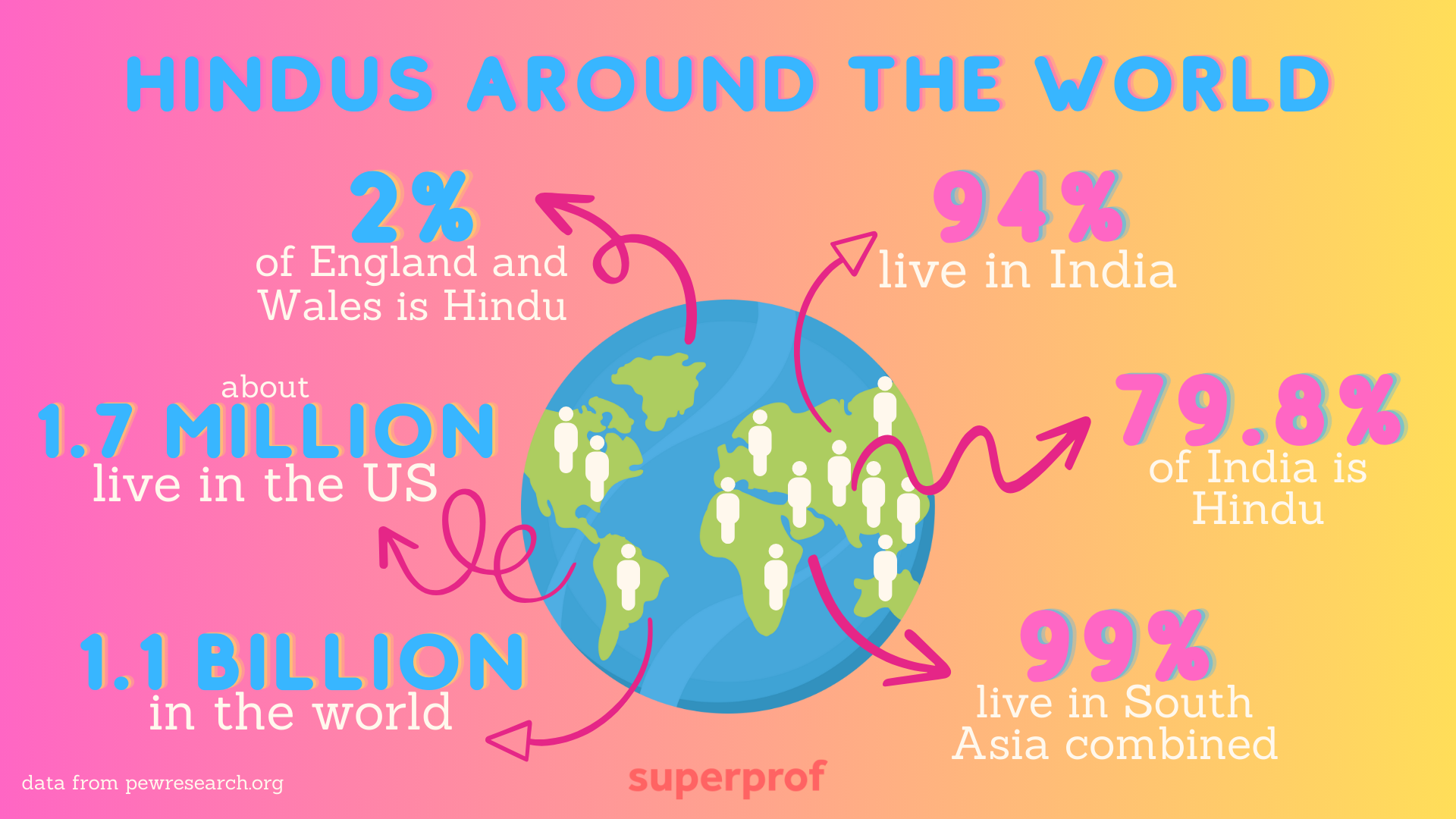
As of 2020, Hinduism is the fourth-largest religion globally, following Christianity, Islam, and atheism/secularism. With approximately 1.161 billion (116.1 crore) adherents, it accounts for around 15.2% of the world’s population.


India: Home to Hinduism
Unsurprisingly, India is home to the highest percentage of Hindu in the world.
More than 94% of Hindus reside on the Indian subcontinent, which includes India (of course), Pakistan, Bangladesh, Sri Lanka, Nepal, and Bhutan. India, in particular, is home to the vast majority of the world's Hindus, and Nepal has the second-highest population in numbers.
Nepal has a higher concentration of Hindus than India, with 81.19% of the country being Hindu. India’s Hindu population is about 80% of the general population.
This is only logical because Hinduism originated in the Indus River Valley in what is now northwest India and Pakistan and has been around for about 4,000 years.
Nepal was the last Hindu kingdom until 2008 when the Nepalese monarchy was abolished. Sri Lanka's Tamil population is majority Hindu, while smaller numbers of Hindus exist in Bhutan and Afghanistan.
India's Hindu roots trace back to the Vedic era, and the religion continues to influence the nation's culture, traditions, and societal structure. The country has also seen a significant Hindu diaspora that has carried the essence of Hinduism beyond its borders.
Naturally, all of Hinduism's holy sites are in the Indian subcontinent, so many Hindus from around the world may travel to India for certain ceremonies like yatras, which have to do with the concept of Sapta Puri (pilgrimage to the seven sacred cities).
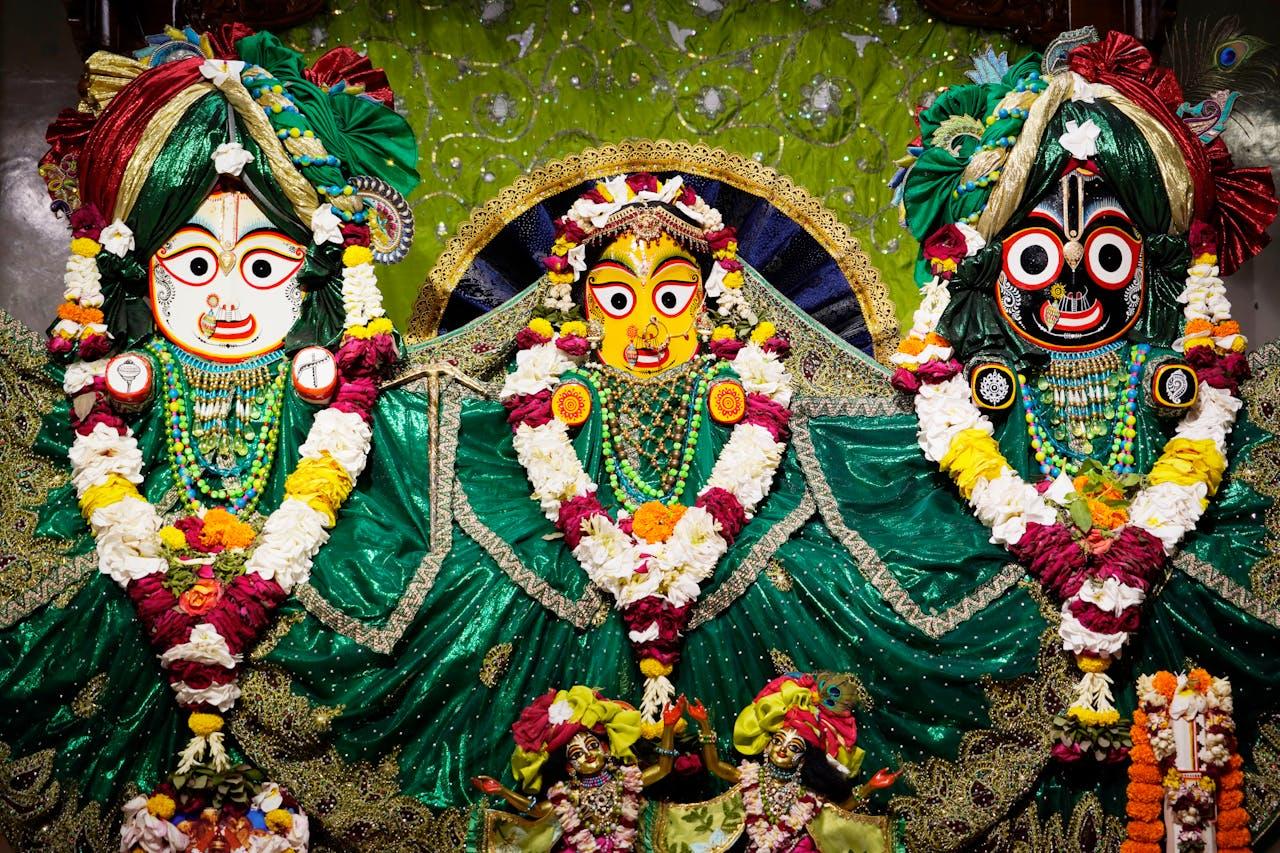
Hinduism Around the World
Despite having a vast number of followers, mostly in the Indian subcontinent, Hinduism is often misunderstood due to its intricate and multifaceted nature. However, this very complexity is what makes the religion so rich and adaptable, allowing it to flourish across different cultures and regions.
Over the years, Hinduism has spread among many other places in the world, where it mixed with the local cultures and lives on to this day.
Southeast Asia
Hinduism gradually spread eastward to what is now Southeast Asia, likely carried by merchant traders traveling between India and the mainland and islands of the region.
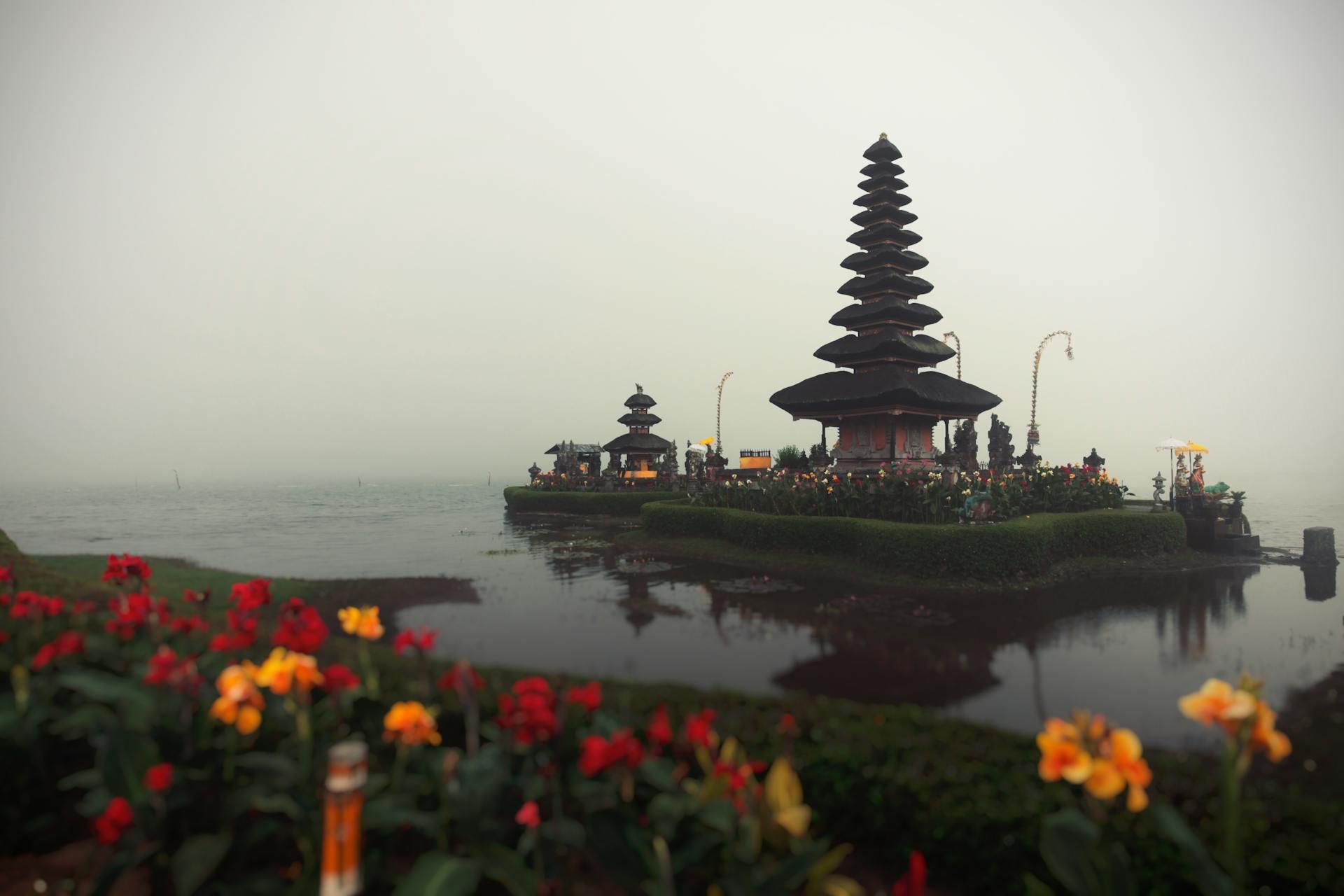
Ancient Hindu civilizations flourished in places like Cambodia, Thailand, the Philippines, Vietnam, Singapore, Malaysia, and Indonesia. Even today, Hindu communities remain, with the Balinese Hindus of Indonesia and the Cham people of Vietnam being among the most prominent.
While Hinduism still has a presence in the region, many of today’s Hindu populations are likely Indian nationals or descendants of Indian immigrants from past generations. Meanwhile, Buddhism, Islam, Confucianism, Christianity, and various indigenous religions are now widely practiced across Southeast Asia.
The West Indies & Africa
During the Colonial Period, many Hindus were forcibly migrated as indentured laborers to British and Dutch colonies, leading to the spread of Hinduism to regions such as the West Indies, Mauritius, and South Africa. As a result, significant Hindu communities still exist in countries like Guyana, Mauritius, Suriname, South Africa, and Trinidad & Tobago today.
While Hinduism remains a minority religion in many of these areas, Mauritius and Guyana have particularly large Hindu populations, making it a deeply rooted part of their cultural and religious landscape.
The International Society for Krishna Consciousness has over 600 locations worldwide, spreading interest and knowledge in Hindu practices to non-Hindus all over the globe.
North America
Hindu texts began reaching North America in the late 1800s, often brought back by Christian missionaries who had traveled to India and returned with newfound knowledge about the region and its people.
The 20th century saw a significant wave of Hindu migration to the United Kingdom, Canada, and the United States, followed later by movement to Australia and New Zealand. Many of these immigrants were gurus who traveled across the Western world, spreading awareness of Hinduism and Indian culture. Others were individuals—mostly men—seeking better economic opportunities and ways to support their families back home.
However, strict immigration laws at the time limited migration to North America. It wasn’t until the 1960s, when Canada and the U.S. reformed their immigration policies, that a major influx of Indian immigrants arrived in the region. With this increase in population came a rise in Hindu spiritual teachers, sparking a growing interest in Hinduism among non-Indians. Some people even converted, while others adopted aspects of Hindu philosophy in a more secular way.
Today, North America is home to around 4 million Hindus, the majority of whom have roots in the Indian subcontinent and other parts of South Asia.
UK and Europe
Hindus began arriving in the United Kingdom soon after India gained independence in 1947. In the 1960s, many Indian doctors were recruited by Enoch Powell, who was the UK’s health minister at the time. Around the same period, a growing number of Indians also migrated to continental Europe, settling in countries like the Netherlands, France, and Italy.
The 1970s saw another wave of Hindu migration, this time from Africa, as several African nations expelled their Asian populations. Then, much like in North America, immigration policy changes in the 1990s made it easier for Indians and other South Asians to move to the UK. This led to a large influx of students, workers, and refugees, including many Sri Lankans fleeing conflict.
Today, the UK is home to over 1 million Hindus, while across Europe, the Hindu population exceeds 7 million (700 lakh).
The Romani people who arrived in Eastern Europe around 1,000 years ago were likely North Indian people, and therefore the very first Hindus to live in Europe. However, their religion and culture changed over time as the nomadic people travelled across Eastern Europe. It’s also important to note that Romani people (aka Roma) are not the same as Romanian people.
Oceania
During Britain’s colonial rule, many Indians were sent to Oceania, as both India and several South Pacific islands were under British control. Fiji saw a particularly large influx of Indian indentured laborers, who arrived about 150 years ago to work on plantations.
Even before this, in the 1790s, South Asians arriving on ships found work in Australia as laborers, farmhands, and merchants. After the ‘White Australia Policy’ was abolished in 1970, immigration increased, bringing more South Asians to the country, including descendants of the original Indian indentured servants in Fiji.
In New Zealand, Hindu migration dates back to the early 19th century, when Gujaratis and Punjabis arrived as Lascars (sailors) and sepoys (soldiers) and later settled on the islands. Immigration laws changed in 1996, making it easier for South Asians and Southeast Asians to move to Aotearoa. Many Hindus, particularly from Fiji, sought refuge in New Zealand due to political instability in their home country.
Today, Hinduism is the second-largest religion in New Zealand after Christianity, and the combined Hindu population in Australia, New Zealand, and Fiji exceeds 1 million.
Learn about the city of Ayodhya, which is sacred in Hinduism.
The Modern Diaspora
Over the past two centuries, the presence of Hinduism and Hindu communities in the West has steadily grown. As more Indians and other Eastern populations continue migrating to Canada, the U.S., the U.K., Europe, Australia, and New Zealand, Hinduism’s influence in these regions is likely to expand even further in the coming years.
According to a report from the Indian Ministry of External Affairs, over 29 million Indians live abroad under the classifications of Non-Resident Indians (NRIs), People of Indian Origin (PIOs), and Overseas Citizens of India (OCIs)—making Indians the largest overseas diaspora in the world today.
Additionally, around 2.5 million (25 lakh) Indians migrate internationally each year, the highest number of emigrants from any country. The largest Indian communities outside India are found in the UAE, the U.K., South Africa, the U.S., and Canada. While there are no exact figures on how many of these emigrants are Hindu, it is likely that the majority come from a Hindu background, given that about 80% of India’s population practices Hinduism.
Connect with Indian history by learning Hindi! Find Hindi tutors nearby or for online lessons with Superprof!
Hinduism By Country
Here’s what Hinduism around the world looks like in the modern day.
5 Facts About Hindus Around the World
How do Hindus live around the world? Are the same festivals and holy days observed?
Here are some facts about what global Hindus are experiencing in the modern age.
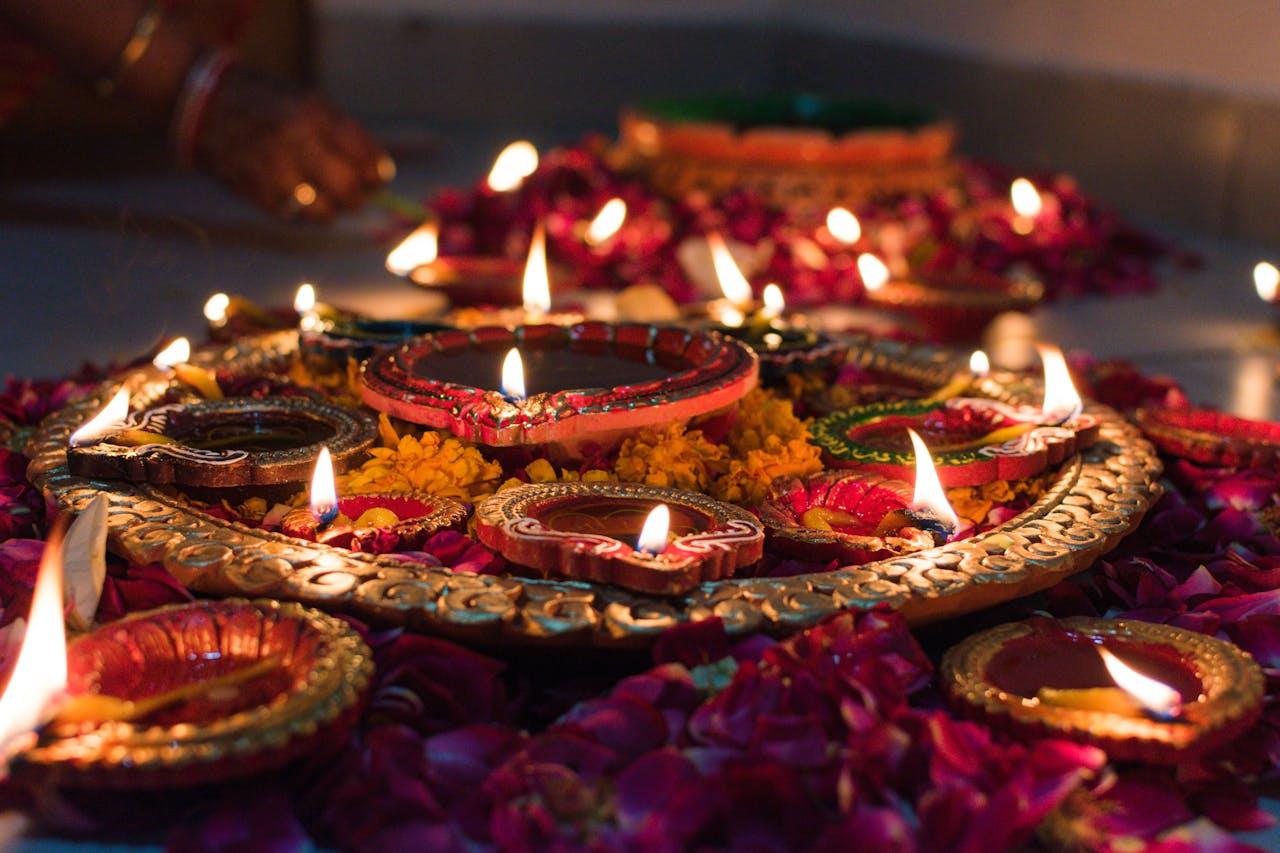
Diwali Is Still the Largest Holiday
Even abroad, Diwali is a widely celebrated holiday - even by non-Hindus! It’s a national holiday in Fiji, Guyana, Malaysia, Mauritius, Myanmar, Nepal, Pakistan, Singapore, Sri Lanka, Suriname, and Trinidad and Tobago.
In the US, it’s even been declared a holiday in the state of Pennsylvania! Anywhere with a notable Hindu population generally has celebrations for at least the biggest holidays on a local level.
Holi is the second-most celebrated holiday abroad even by non-Hindus.
The Most Educated Religious Group Abroad
In the UK and US, Hindus from India are, on average, the most educated religious group.
US Hindus have about 15.7 years of education on average, versus 12.9 years for the average American.
In the UK, Hindus have about 13.9 years of education versus the average British with 12.2 years.
Meanwhile, they are the least educated group in India, where only 39% of Hindu adults have at least 10 years of schooling, which is less than Sikhs (48%) and Christians (47%).
Hindu Temples Abroad
Presently, there are over 1450 Hindu temples across the United States, with most of them being located in New York. And, the northernmost Hindu temple resides in the US, which is the Sri Ganesha Temple of Alaska in Anchorage.
In UK, there are 303 temples, 252 in Canada, 134 temples in Australia, and a handful located in New Zealand and South Africa.
How Many Hindus in the World?
As of a report from 2023, there are about 1.2 billion (120 crores) Hindus around the world, which is about 15% of the world’s population.
Hinduism is made up of a large set of beliefs including deities, spiritual concepts, guidelines for daily life (including sanatana dharma), and ceremonies and rituals.
The Growth of Hinduism
With the rise in popularity of things like yoga, ayurveda, general spirituality, and the efforts of ISKCON in the West, more and more people are converting to Hinduism or at least holding many Hindu beliefs with reverence.
Indians, particularly Hindus, make up a vast and growing global community, with many moving abroad for high-paying jobs and education. Even when settling far from South Asia, they continue to uphold their cultural and religious traditions. Many parts of the world have embraced Hindu customs, with local communities even joining in annual celebrations. One thing is certain—Hinduism is here to stay and will continue to thrive for the foreseeable future!
Discover online spoken Hindi classes here on Superprof!
Summarise with AI:
Did you like this article? Leave a rating!

 Loading...