

If you grew up in India, you may already be familiar with how astrology can move from “interesting” to “actionable” very quickly. People consult a Panchang before naming a child, choosing a wedding muhurat, signing a property agreement, or opening a new shop. In China and across East Asia, Chinese astrology occupies a similarly practical space—often treated as a planning tool rooted in tradition, not merely a personality quiz.
That said, one of the biggest misconceptions (in India and elsewhere) is assuming the Chinese horoscope is simply “your animal.” The animal sign is only the headline. Underneath sits a deeper system built on a lunisolar calendar, the Yin–Yang polarity, the Five Elements (Wu Xing), and a birth-chart method called Bazi (the Four Pillars). Once you understand how these parts interlock, the system becomes much more coherent—and far more nuanced than the usual “12 animals” summary.
This India-adapted guide walks through the origins, the famous animal legends, and the mechanics behind the zodiac—plus a clear comparison with Indian astrology so you can map familiar concepts without forcing a one-to-one equivalence.


Founding legends: The Great Race and why the Rat is first
Chinese zodiac ordering is explained through a widely told myth: the Jade Emperor (or, in some versions, the Buddha) calls the animals to a banquet; their arrival order sets the zodiac sequence. The Rat, clever and opportunistic, persuades the Ox to carry it across the river—then jumps ahead at the finish.
Why does this matter beyond storytelling? Because myths encode archetypes:
- Rat: strategy, adaptability, opportunism
- Ox: effort, reliability, endurance
- Tiger: power, competitiveness
Where is the Cat?
Many people in India ask this because cats appear naturally in local folklore. In the popular Chinese myth cycle, the cat is excluded due to a Rat–Cat betrayal story; interestingly, some regional zodiacs in Asia do include the cat in place of the rabbit.
A different sky: Why the “year” matters so much in Chinese astrology
Western pop astrology tends to start with the Sun and a monthly zodiac sign. In Chinese astrology, the foundational rhythm is the year (and season) within a lunisolar framework—so your birth year’s sign becomes a major layer of identity and timing.
For an Indian reader, the easiest parallel is not “Sun-sign vs animal-sign,” but calendar logic:
- Indian calendars commonly blend solar and lunar considerations through Panchang elements such as tithi (lunar day), nakshatra (lunar mansion), weekday, yoga, and karana.
- Chinese calendrical astrology similarly blends solar and lunar cycles and then maps time into repeating patterns (12 animals, 10 heavenly stems, 12 earthly branches, generating a 60-year cycle).
In both cultures, astrology has historically been tied to governance, agriculture, medicine, and social decision-making—not just personal introspection.
A compressed history: From imperial astronomy to everyday belief
Chinese astrological practice did not emerge from modern lifestyle media. It was institutionally developed and refined at court, in step with calendar-making and statecraft. (The timeline below is the standard way many modern summaries present their formation.)
Key milestones
- Founding myth (traditional dating): Attributed to the Yellow Emperor (Huang Di), associated with the establishment of an early calendar and the 60-year cycle.
- Warring States period (4th century BCE): Integration of Wu Xing (Five Elements) into cosmology and medicine.
- Han dynasty codification (around 104 BCE): Formal calendar reforms helped stabilize and standardize the system.
- Tang dynasty popularization: Wider spread of the animal-year associations across society and into neighboring cultures.
- Modern dual calendar reality: Many people use the Gregorian calendar administratively and the lunar calendar for festivals and astrology.
India comparison: “Court science” becoming “public custom”
This arc resembles how Indian jyotisha also spans elite scholarly traditions (siddhantas, classical texts, temple math) and popular day-to-day use (Panchang, muhurat, festival timing). The key takeaway is that both systems matured as timekeeping technologies with cultural authority.
Philosophy at the core: Yin–Yang, destiny vs timing, and why nuance matters
A common mistake is treating Chinese astrology as deterministic fortune-telling. In practice, many traditional framings separate what is fixed from what is navigable.
- Yin and Yang represent complementary forces (not “good vs bad”), and each sign and year is often classified as primarily Yin or Yang to indicate its style of energy: receptive vs assertive, inward vs outward, stabilizing vs initiating.
- Traditional discussions often separate “what you’re born with” from “how cycles unfold,” emphasizing timing and adaptation.
India comparison: Karma, dashas, and the “map vs journey” idea
Indian astrology often distinguishes between natal potential and unfolding periods (for example, dasha systems in Vedic practice). The conceptual similarity is not perfect, but the practical mindset is: you use the system to choose better timing and strategy, not to surrender agency.
The mechanics: the Chinese zodiac is not only 12 animals
1) The 12-animal cycle (Earthly Branches)
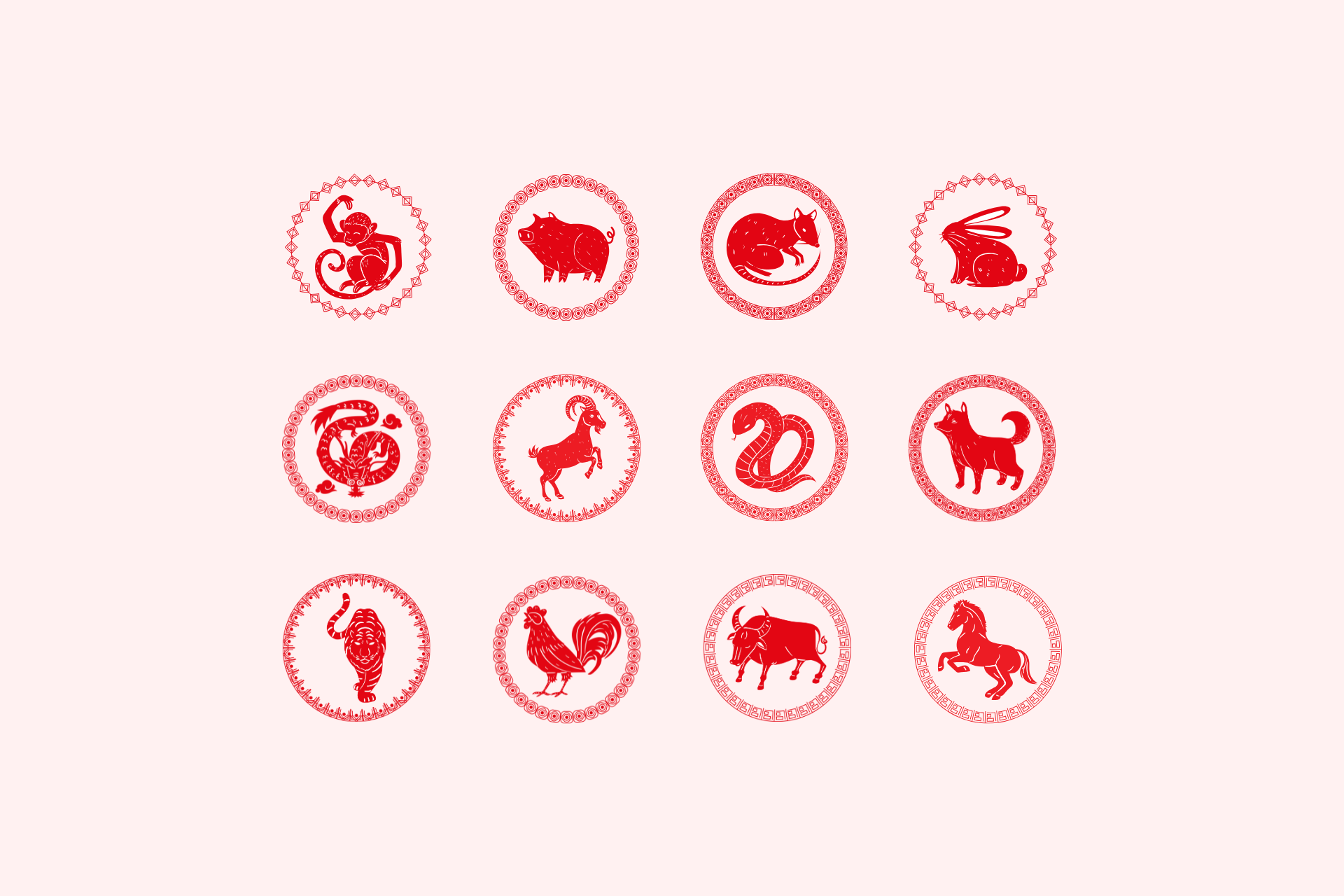
Most people start here: Rat, Ox, Tiger, Rabbit, Dragon, Snake, Horse, Goat, Monkey, Rooster, Dog, Pig. Your birth year assigns an animal, but that is only one layer.
A practical India-specific note: if you’re born in January or early February, your “Chinese year” may differ from your Gregorian birth year’s assumed animal. The Chinese New Year date moves each year in the Gregorian calendar.
2) The Five Elements (Wu Xing): The personality “colouring” layer
Wu Xing is often translated as Five Elements, but many scholars emphasize it is closer to “Five Phases” or “Five Movements”—a dynamic cycle of transformation rather than static substances.
The elements are:
- Wood
- Fire
- Earth
- Metal
- Water
A classical association links these elements to the five visible planets in traditional Chinese cosmology (Jupiter/Wood, Mars/Fire, Saturn/Earth, Venus/Metal, Mercury/Water).
Elements interact through cycles (commonly described as generating and controlling/overacting patterns). The point for the reader is simple: the element modifies the animal’s expression. A “Horse” is not just a Horse—its element changes temperament, decision style, and the kind of environments where it thrives.
India comparison: Pancha Mahabhuta vs Wu Xing
It is tempting to equate Wu Xing with the Indian Pancha Mahabhuta (earth, water, fire, air, ether). Don’t force that match. Wu Xing is a process model used to describe change and relationship dynamics across systems (including traditional Chinese medicine).
The Indian five-element concept often functions differently depending on the school (Ayurveda, Tantra, Vedanta). Similar vocabulary does not mean identical logic.
3) The 60-year sexagenary cycle (Heavenly Stems + Earthly Branches)
The 12 animals combine with 10 “heavenly stems” to create a 60-year cycle. That’s why you’ll hear phrases such as “Fire Horse” returning once every 60 years.
This is a useful bridge for Indian audiences because Indian calendrical tradition also contains a widely recognized 60-year cycle of named years (samvatsaras), historically linked to Jupiter’s motion.
So, even though the naming schemes and calculations differ, the shared intuition is: 60-year cycles matter as cultural time-structures.
Bazi: The Four Pillars (Why your birth year is only the beginning)
If you take one idea away from this guide, make it this:
Your animal year sign is only a fraction of your full chart in Chinese astrology.
A more complete reading uses Bazi (Four Pillars of Destiny), which maps:
- Year pillar
- Month pillar
- Day pillar
- Hour pillar
Each pillar carries its own stem-branch combination (elemental and Yin–Yang information). The hour of birth, in particular, can significantly change interpretations—much like how time of birth is essential in Indian practice for calculating the ascendant (lagna) and divisional charts.
India comparison: Why “time of birth” suddenly becomes non-negotiable
Indian readers will recognize the pattern: a quick reading can be done from broad categories (rashi, nakshatra), but a serious reading requires accurate birth time. Bazi plays a similar role: it upgrades the Chinese horoscope from “general traits” to a layered, time-sensitive structure.
The larger point: even when people say they don’t “believe” in astrology, they still transmit its values through stories.
Why Chinese astrology still feels relevant today (including for Indians)
Across India, astrology has modernized—apps, online Panchang, compatibility tools, and muhurat calculators are now mainstream. The same modernization happened with Chinese astrology: what was once temple- or court-adjacent expertise is now accessible through calculators, social media explainers, and lifestyle platforms.
But the staying power comes from function, not novelty. People use systems like these for:
- Compatibility and relationships
Not only “who suits whom,” but also how conflict styles differ, what timing supports commitment, and how families evaluate alignment. - Timing for major decisions
In India, you see this via muhurat and Panchang; in Chinese contexts, you see it via date selection practices aligned to the lunar calendar and elemental considerations. - Identity and reflection
A good system gives language to patterns you already sense—strengths, blind spots, and preferred environments.
Chinese horoscope 2026: The Year of the Fire Horse (and what that framing means)
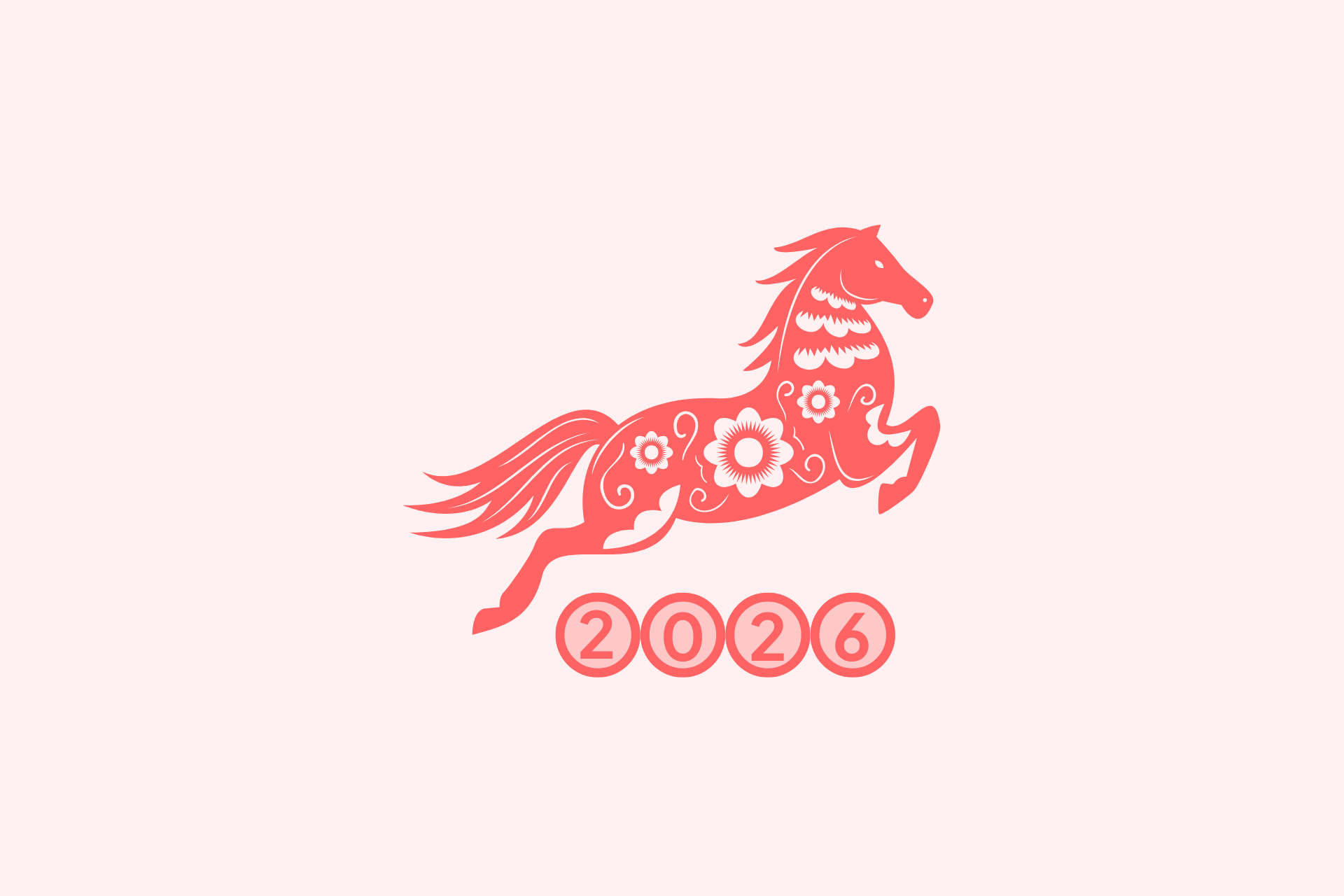
For readers specifically searching Chinese horoscope 2026, the headline is widely presented as:
- Chinese New Year 2026 begins on February 17, 2026, marking the start of the Fire Horse year.
- Many references describe this as the Yang Fire Horse (Bing Wu) within the sexagenary cycle.
- Sources commonly list the Fire Horse period as running from February 17, 2026, to February 5, 2027.
What does “Fire Horse” imply in the logic of Chinese astrology?
- Horse is associated with movement, independence, speed, visibility, and social energy.
- Fire emphasizes intensity, initiative, charisma, and risk appetite.
- Yang Fire adds outward expression, fast ignition, and a preference for decisive action.
For an Indian audience, a practical way to use this is not “prediction,” but scenario planning:
- If the collective tone is more “fire-and-motion,” it can be a good year to launch initiatives that require energy, marketing, public presence, and momentum—while also being mindful of burnout, impulsive decisions, and conflict escalation.
- If you are personally fire-heavy (in any system you follow), you may want balancing practices and calmer scheduling.
- If you prefer a Panchang-based approach, you can treat “Fire Horse year” as a macro-season and still rely on your usual muhurat logic for specific days.
How to use Chinese astrology responsibly (without turning it into superstition)
A mature approach to Chinese astrology treats it as a symbolic decision aid:
- Use it to ask better questions: What is my default stress response? Do I rush? Do I avoid?
- Use it to time actions: When should I push? When should I consolidate?
- Use it to improve relationships: How do we repair after conflict? What motivates each person?
This is also where Indian readers can integrate systems without confusion: you do not need to choose one “true” astrology. Many people comfortably use a Panchang for muhurat and still enjoy a Chinese horoscope reading for personality archetypes and yearly themes.
Summarise with AI:
Did you like this article? Leave a rating!

 Loading...
