
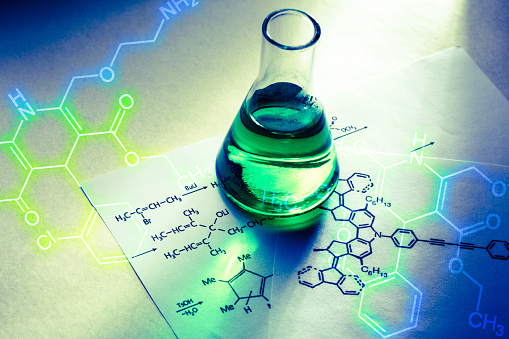

Chemistry is a scientific discipline that studies matter, its compositions, properties, and reactivity with other elements. Matter is something that has mass and acquires space. Everything around us that is physically present is made up of matter. For instance, books, furniture, and even our bodies. The basic concepts laid down in Chemistry are the foundation of matter, ranging from atoms, molecules, compounds, and the measuring units of matter.
In the scope of its subject, Chemistry lies somewhere at the intermediate position among various other branches of science. This explains its importance to the rest of the branches of science. Chemistry provides a foundation for understanding both the basis and applied scientific disciplines at a fundamental level. Take a look at the below figure to understand the relationship between some of the major branches of science and how chemistry emphasizes its importance among them.
Chemistry, like physics and biology, is a natural science. In fact, there is considerable overlap between chemistry and these other disciplines. Chemistry is a science that studies matter. This includes atoms, compounds, chemical reactions, and chemical bonds. Chemists explore the properties of matter, its structure, and how it interacts with other matter.



Branches of Chemistry
- Organic Chemistry: Organic chemistry is the study of carbon and its compounds. It studies the chemistry of life and reactions occurring in living organisms. Organic chemistry might study organic reactions, structure, and properties of organic molecules, polymers, drugs, or fuels.
- Inorganic Chemistry: Inorganic chemistry studies compounds not covered by organic chemistry. It studies inorganic compounds or compounds that don't contain a C-H bond. A few inorganic compounds do contain carbon, but most contain metals. Inorganic chemists are interested in ionic compounds, organometallic compounds, minerals, cluster compounds, and solid-state compounds.
- Analytical Chemistry: Analytical chemistry is the study of the chemistry of matter and the development of tools to measure the properties of matter. Analytical chemistry includes quantitative and qualitative analysis, separations, extractions, distillation, spectrometry and spectroscopy, chromatography, and electrophoresis. Analytical chemists develop standards, chemical methods, and instrumental methods.
- Physical Chemistry: Physical chemistry is the branch of chemistry that applies physics to the study of chemistry, which commonly includes the applications of thermodynamics and quantum mechanics to chemistry.
- Biochemistry: Biochemistry studies chemical processes that occur inside living organisms. Examples of key molecules include proteins, nucleic acids, carbohydrates, lipids, drugs, and neurotransmitters. Sometimes this discipline is considered a subdiscipline of organic chemistry. Biochemistry is closely related to molecular biology, cell biology, and genetics.
Check out these websites for class 12 chemistry resources.
Other Branches of Chemistry
There are other ways chemistry can be divided into categories. Depending on who you ask, other disciplines might be included as a main branch of chemistry. The other branches of chemistry include:
- Astrochemistry: Astrochemistry examines the universe's abundance of elements and compounds, their reactions to each other, and the interaction between radiation and matter.
- Chemical Kinetics: Chemical kinetics (or simply "kinetics") studies the rates of chemical reactions and processes and the factors that affect them.
- Electrochemistry: Electrochemistry examines the movement of charge in chemical systems. Often, electrons are the charge carrier, but the discipline also investigates the behavior of ions and protons.
- Green Chemistry: Green chemistry looks at ways of minimizing the environmental impact of chemical processes. This includes remediation and ways of improving processes to make them more eco-friendly.
- Geochemistry: Geochemistry examines the nature and properties of geological materials and processes.
- Nuclear Chemistry: While most forms of chemistry mainly deal with interactions between electrons in atoms and molecules, nuclear chemistry explores the reactions between protons, neutrons, and subatomic particles.
- Polymer Chemistry: Polymer chemistry deals with the synthesis and properties of macromolecules and polymers.
- Quantum Chemistry: Quantum chemistry applies quantum mechanics to model and explores chemical systems.
- Radiochemistry: Radiochemistry explores radioisotopes' nature, radiation's effects on matter, and the synthesis of radioactive elements and compounds.
- Theoretical Chemistry: Theoretical chemistry is the branch of chemistry that applies mathematics, physics, and computer programming to answer chemistry questions.
Career Scope for Chemistry Students
Chemistry has universal applications, with a huge demand for expert professionals in various diverse and exciting fields. Most job profiles in chemistry involve working in laboratory settings for long hours. Chemistry-based job roles are used in educational institutions, research institutes, laboratories, energy production, oil and gas companies, and defense and manufacturing establishments.
Check out the best ways to ace chemistry in class 12.
Forensic Expert
These experts collect, study, and analyze potential evidence at a crime scene. Such potential evidence can be the evidence found at the crime scene.
Chemical Engineer
The role of a chemical engineer is to deal with the design of chemical plans and improve existing production methods to convert raw materials into useful products.
Toxicologist
These professionals study the impact of chemical substances on a living organism to assess if that substance.
Waste Management Professional
The growing urbanization has posed problems of waste management, especially hazardous materials.
If you need help in your chemistry classes, you can find a qualified private chemistry teacher to help you learn on Superprof!
Quality Control Chemist
These chemists work as the Quality Assurance part of a company, ensuring that the product produced/ manufactured by the company is on par with the rules, guidelines, and mandates.
Biochemist
They study the biological effects of drugs or chemicals on innate biological processes in a living organism.
Pharmacologist
The role of a pharmacologist involves developing and testing drugs and analyzing their interactions with biological systems to ensure their safety and efficacy.
Food Safety Professional
A food safety professional's role involves testing raw food ingredients to determine if it complies with global and local food safety standards.
Top Courses for Chemistry Enthusiasts after Class 12
Chemistry, of course, is not for all, but for most of us, it is a fun subject to investigate. The theoretical part can still be an arguable topic, but the practical part is definitely in the good books for all of us. Chemistry as a subject has had a great influence on human history. Therefore, the scope of Chemistry is humungous and ever-increasing; new research is being made in every field of chemistry, and new fields are being created. Choosing Chemistry as a subject to spend the rest of your life is just the apt choice.
The scope of chemistry as a career option is immense in India. Candidates can pursue a degree, diploma, and certificate courses in chemistry at undergraduate (UG), postgraduate (PG), and doctoral levels. Look at the list of chemistry courses offered at colleges in India.
Undergraduate Chemistry Courses
- Bachelor of Science (Hons.) in Chemistry
- Bachelor of Science in Applied Chemistry
Postgraduate Chemistry Courses
- Master of Science in Chemistry
- Master of Science (Hons.) in Chemistry
- Master of Science in Drug Chemistry
- Master of Science in Analytical Chemistry
- Master of Science in Physical and Material Chemistry
Ph.D./M.Phil. Chemistry Courses
- Master of Philosophy in Chemistry
- Master of Philosophy in Applied Chemistry
- Master of Philosophy in Industrial Engineering
- Ph.D. Chemistry
- Ph.D. Industrial Chemistry
- Ph.D. Material Science and Polymer Composite
- Ph.D. Electro Chemistry
Top Chemistry Colleges in India
- Indian Institute of Science, Bangalore
- Hindu College, New Delhi
- Fergusson College, Pune
- Mount Carmel College, Chennai
- Christ University, Bangalore
- St. Xavier’s College, Mumbai
- Indian Institute of Technology, Madras
- Indian Institute of Technology, New Delhi
- Indian Institute of Technology, Roorkee
- Indian Institute of Technology, Kanpur
Follow these simple tips to score big in your chemistry exam.

Chemistry Courses: Eligibility Criteria and Entrance Exams
Colleges offering chemistry courses in India have different selection processes and eligibility criteria for admission to the UG, PG, and Ph.D. programs. However, below are the basic eligibility guidelines that candidates must comply with while applying for such courses.
Eligibility for UG courses in Chemistry
Candidates are eligible to secure admission to the UG courses in chemistry if they have completed 10+2 from a recognized board with a minimum of 50% marks in the qualifying examination.
Eligibility for PG courses in Chemistry
Candidates seeking admission to the PG courses in chemistry should have completed their graduation in science from a recognized university with a minimum of 50-60% marks in the qualifying examination.
Eligibility for Ph.D. courses in Chemistry
To be eligible for admission to the doctoral courses in chemistry, candidates should have completed their post-graduation from a recognized university with a minimum of 60% marks in the qualifying exam.
Popular Chemistry Entrance Exams
Admission to the undergraduate chemistry courses offered at most colleges happens through merit on the 10+2 qualifying exam. However, some popular colleges like Jamia Milia Islamia and Banaras Hindu University conduct entrance exams for admission to such courses. Admission to postgraduate courses in chemistry is mostly offered through exams only.
Learn more about this important science with chemistry online classes on Superprof.
Summarise with AI:
Did you like this article? Leave a rating!

 Loading...
