
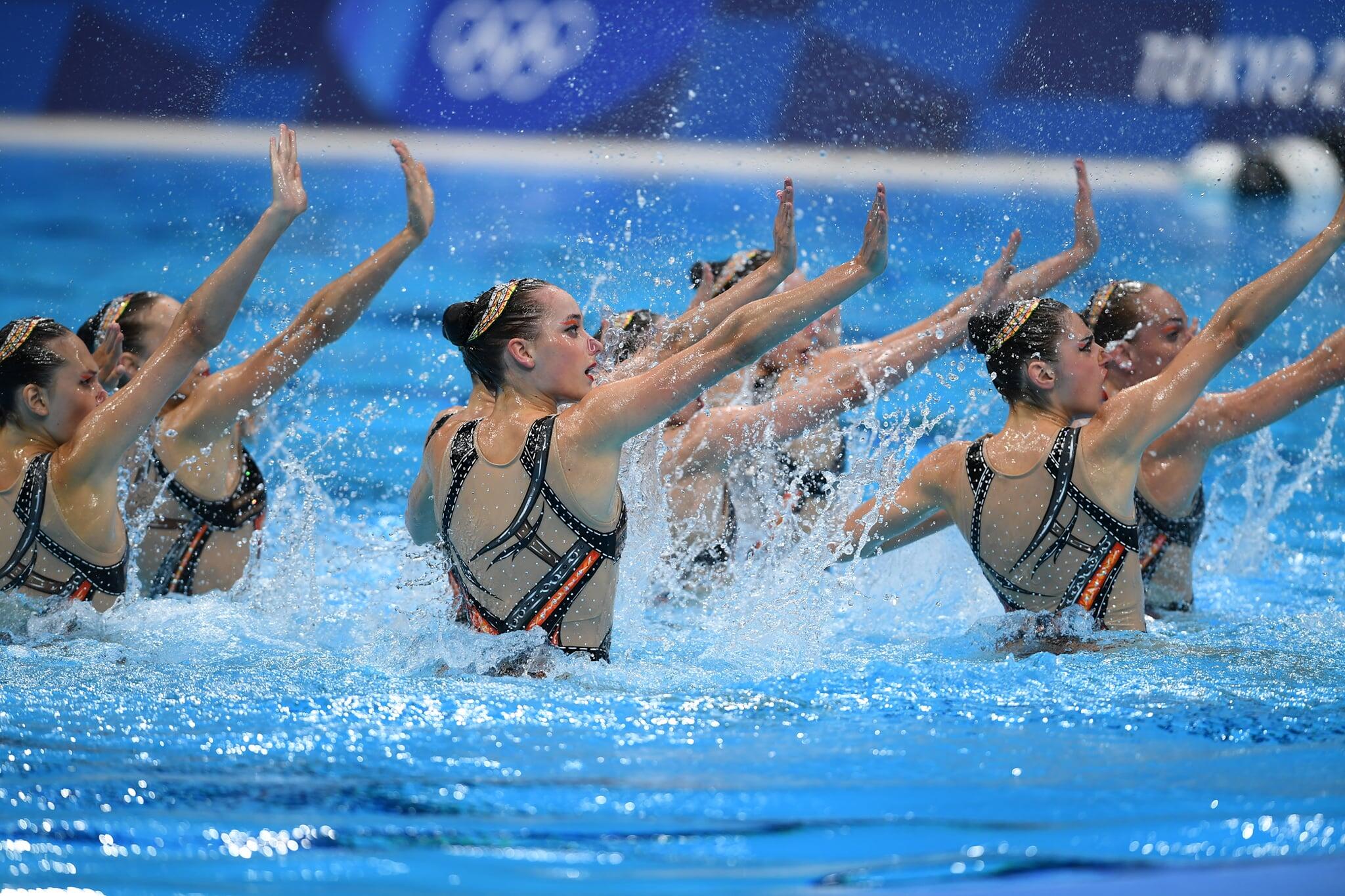

Artistic swimming is one of the most unique Olympic sports, combining swimming ability, strength, flexibility, choreography, and artistic expression. Formerly known as synchronized swimming, the sport officially adopted the name artistic swimming in 2017 to better reflect its technical and creative demands.
Athletes perform highly coordinated routines both above and below the water, requiring exceptional breath control, endurance, and precision. Unlike traditional swimming events that focus purely on speed, artistic swimming is judged on elements such as synchronization, difficulty, execution, artistic impression, and technical skill.
Although the sport was dominated by a few nations during its early Olympic years, artistic swimming has become increasingly global. Countries such as Russia, China, Spain, Japan, Canada, Italy, and the United States have produced some of the world’s most successful swimmers.


Famous Artistic Swimmers and Their Nationalities
| Athlete | Country | Olympic Highlights |
|---|---|---|
| Natalia Ishchenko | Russia | Five-time Olympic gold medallist |
| Svetlana Romashina | Russia | Seven Olympic gold medals |
| Anastasia Davydova | Russia | Five Olympic gold medals |
| Ona Carbonell | Spain | Two Olympic medals, artistic swimming icon |
| Huang Xuechen | China | Multiple Olympic medals |
| Sun Wenyan | China | Olympic gold and silver medallist |
| Svetlana Kolesnichenko | Russia | Olympic champion and world record holder |
| Yukiko Inui | Japan | Olympic and world championship medallist |
| Jacqueline Simoneau | Canada | Olympic team medallist |
| Anita Alvarez | USA | Olympic silver medallist |
| Bill May | USA | First male world champion in artistic swimming |
| Virginie Dedieu | France | Three-time world champion |
| Gemma Mengual | Spain | Olympic and world championship medallist |
| Mariya Koroleva | USA | Olympic duet competitor |
| Boryana Kaleyn | Bulgaria | Emerging artistic swimming talent |
Understanding Artistic Swimming: From Water Ballet to Olympic Sport
Artistic swimming has evolved significantly since its early days as a performance art.

The origins of the sport can be traced to the early 20th century, when swimmers began combining water skills with music and choreography. The term “synchronized swimming” became popular during the 1930s, particularly after demonstrations at major exhibitions in the United States.
The discipline made its Olympic debut as a full medal sport at the 1984 Los Angeles Olympics, featuring solo, duet, and team events. Over time, the sport moved away from being viewed only as a performance activity and became recognised as a highly demanding competitive discipline.
In 2017, the international governing body changed the official name from synchronized swimming to artistic swimming. The new name highlighted the complexity of routines that combine:
- Swimming technique
- Gymnastics-style flexibility
- Dance and choreography
- Strength and endurance
- Underwater technical movements
Today, Olympic artistic swimming includes duet and team competitions, with athletes performing routines set to music while executing complex formations and acrobatic movements.
Legendary Olympic Artistic Swimmers from Around the World
Natalia Ishchenko (Russia)
Olympic medals: 5 gold
Events: Solo, duet, team
Natalia Ishchenko is widely considered one of the greatest artistic swimmers in Olympic history.
She dominated international competition during the 2000s and 2010s, winning five Olympic gold medals across the Beijing 2008, London 2012, and Rio 2016 Games.
Known for extraordinary flexibility, technical precision, and expressive routines, Ishchenko helped establish Russia as the leading force in Olympic artistic swimming.
Career highlights:
- Five Olympic gold medals
- Multiple World Championship titles
- One of the most decorated artistic swimmers ever
Svetlana Romashina (Russia)
Olympic medals: 7 gold
Events: Duet, team
Svetlana Romashina holds the record for the most Olympic gold medals in artistic swimming history.
She won Olympic titles across four Games between 2008 and 2020, becoming the defining athlete of Russia’s long period of dominance.
Her combination of technical difficulty, synchronization, and artistic presentation made her one of the sport’s most influential performers.
Career highlights:
- Seven Olympic gold medals
- Multiple world championship victories
- Record holder for Olympic success in the sport
Ona Carbonell (Spain)
Olympic medals: 1 silver, 1 bronze
Events: Solo, team
Ona Carbonell became one of Spain’s most recognised artistic swimmers and helped transform the country into a major competitor.
At the London 2012 Olympics, she won silver in team competition and bronze in the duet event. She was also known for her innovative routines and expressive performance style.
Career highlights:
- Two Olympic medals
- Multiple World Championship medals
- Spain’s most decorated artistic swimmer
Huang Xuechen (China)
Olympic medals: Multiple medals
Events: Duet, team
Huang Xuechen represents China’s rise as a global powerhouse in artistic swimming.
She has been a key member of China’s Olympic teams, contributing to historic medal performances and helping the country challenge traditional dominance in the sport.
China has invested heavily in artistic swimming development, and athletes such as Huang have helped establish the nation among the world’s elite programs.
Career highlights:
- Olympic medallist
- World championship champion
- Key figure in China’s artistic swimming success
Yukiko Inui (Japan)
Olympic medals: Multiple medals
Events: Solo, duet

Yukiko Inui is one of Japan’s leading artistic swimmers and a symbol of the country’s technical approach to the sport.
Japan has a long tradition in artistic swimming, and Inui has continued that legacy with strong performances at Olympic and world championship levels.
Career highlights:
- Olympic medallist
- Multiple international podium finishes
- Represents Japan’s modern artistic swimming excellence
Male Participation and New Eras in Artistic Swimming
For much of its Olympic history, artistic swimming was associated primarily with female swimmers. However, the sport has gradually become more inclusive, creating opportunities for male performers at the highest levels of competition.
The introduction of mixed events at international competitions and the inclusion of male athletes in the Olympic team event at the Paris 2024 Games marked an important milestone in the evolution of the sport.
Bill May (United States)
Achievements: First male World Aquatics Championship gold medallist
Events: Mixed duet, team events
Bill May is one of the most influential figures in the history of male participation in artistic swimming.
After beginning the sport as a child, May became one of the world’s leading male performers and challenged traditional perceptions about who could compete in artistic swimming.
In 2015, he became the first male athlete to win a World Aquatics Championship gold medal in artistic swimming. His success helped increase recognition of male athletes and contributed to the sport becoming more inclusive.
Career highlights:
- First man to win a World Championship gold medal in artistic swimming
- Pioneer for male participation
- Competed at elite level after a decade away from competition
Anita Alvarez (United States)
Achievements: Olympic silver medallist
Events: Team event
Anita Alvarez is one of the most recognised artistic swimmers of the modern era.
She represented the United States at multiple Olympic Games and became part of the US team that won silver at the Paris 2024 Olympics, marking a major achievement for American artistic swimming.
Her career also highlighted the extreme physical demands of the sport after she was rescued during a World Championship routine in 2022 when she lost consciousness underwater.
Career highlights:
- Olympic silver medallist at Paris 2024
- Multiple-time US national champion
- One of the leading figures in modern artistic swimming
Olympic Milestones and Records in Artistic Swimming
Artistic swimming has produced some of the most technically impressive performances in Olympic history. The sport has evolved from early solo routines into highly complex team performances involving underwater choreography, lifts, and acrobatic elements.
Olympic Debut and Early Champions
Artistic swimming became an official Olympic sport at the 1984 Los Angeles Olympics.
The first Olympic champions included:
- Tracie Ruiz (USA) – first Olympic solo and duet champion
- Candy Costie and Tracie Ruiz (USA) – first Olympic duet champions
During the early Olympic years, countries such as the United States and Canada were among the strongest programs.
Russia’s Era of Dominance
From the late 1990s through the 2010s, Russia became the dominant force in Olympic artistic swimming.
Russian athletes won consecutive Olympic titles through exceptional technical difficulty, flawless synchronization, and innovative choreography.
Major Olympic figures included:
- Svetlana Romashina
- Natalia Ishchenko
- Anastasia Davydova
- Svetlana Kolesnichenko
Their performances pushed the technical standards of the sport and influenced training programs worldwide.
China’s Rise as a Global Power
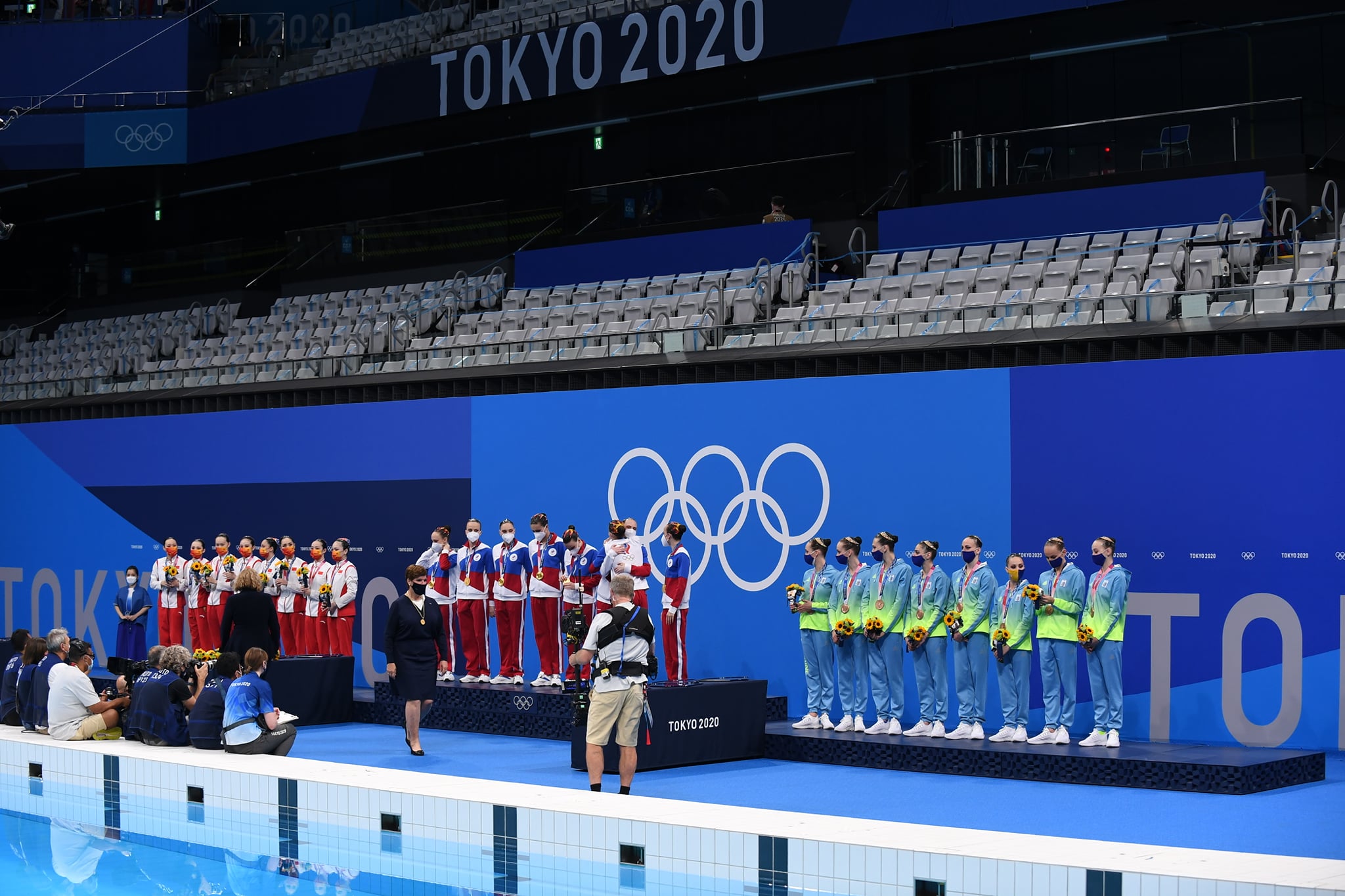
China has become one of the strongest artistic swimming nations in recent years.
Through advanced training systems and investment in aquatic sports, China has challenged traditional leaders and achieved historic Olympic success.
At the Tokyo 2020 and Paris 2024 Olympic cycles, Chinese teams and duet pairs established themselves among the world’s best.
Development of Artistic Swimming in India
Artistic swimming remains a developing sport in India, but interest has gradually increased through swimming clubs, aquatic academies, and national-level competitions.
The sport is governed nationally through swimming organisations affiliated with World Aquatics, and Indian athletes have participated in Asian-level artistic swimming competitions.
While India has not yet produced Olympic artistic swimming medallists, the growth of swimming infrastructure and increased exposure to international aquatic sports have created opportunities for young athletes.
Indian swimmers and coaches continue to work towards improving technical skills, choreography, and international competitiveness.
The future development of artistic swimming in India will depend on:
- Greater access to specialised coaching
- More competitive events
- Increased awareness among young athletes
- Investment in aquatic training facilities
The Future of Artistic Swimming Olympics
The future of artistic swimming Olympics competition is becoming increasingly global. Modern artistic swimmers are combining greater athletic difficulty with creative expression. New judging systems introduced by World Aquatics have placed increased emphasis on technical difficulty, execution, and artistic impression.
The sport continues to evolve through:
- Greater participation from male athletes
- More countries competing internationally
- Higher levels of technical difficulty
- Innovative choreography and underwater movements
The Paris 2024 Olympics represented a significant turning point with the participation of male swimmers in the team event. This change opened the door for a more diverse future generation of competitors. As countries such as China, Japan, Spain, Canada, and emerging nations continue developing their programs, artistic swimming is expected to become even more competitive at future Olympic Games.
Summarise with AI:
Did you like this article? Leave a rating!

 Loading...
