Not sure whether ballet training is right for you? This guide covers what ballet poses entail, the reasonably well-supported benefits, how the art form is growing in India, and how to find quality instruction near you.
Ballet often looks like something reserved for European stages and childhood recitals. In reality, it is a structured form of movement that more and more adults and children across India are taking up, whether for fitness, discipline, or the sheer pleasure of moving well. Before you sign up for a class, it helps to understand what ballet can offer and what it actually involves.
Here is a quick look at the benefits people commonly report from regular ballet practice. These vary from person to person, and ballet is not a substitute for medical care or a complete fitness programme on its own.
- Tones and lengthens muscles through controlled, repeated movement
- Builds core, leg, and postural strength over time
- May support better balance and coordination
- Encourages better posture and body awareness
- Provides weight-bearing exercise, which can support bone health
- Improves flexibility when practised consistently and safely
- Offers a focused, mindful break from daily stress
- Can build confidence as you notice your body becoming more capable
- Works as a form of creative self-expression
A word of caution before we go further. Many articles claim ballet will transform your health, prevent disease, or guarantee a particular body type. The honest position is more modest. Ballet is a form of physical activity, and like most regular exercise, it can contribute to general wellbeing. It is not a cure, and individual results depend on how often you train, your starting fitness, and your overall lifestyle. Keep that in mind as we look at each area in more detail.
Great dancers are not great because of their technique, they are great because of their passion.
Martha Graham
Martha Graham, the American choreographer, might have been speaking about almost any pursuit. You can be technically proficient at coding, cooking, or law, but technique alone rarely makes for something memorable. The same is true of ballet. Whether the mechanics of the movement interest you or the grace of it draws you in, the value lies as much in steady practice as in natural ability.


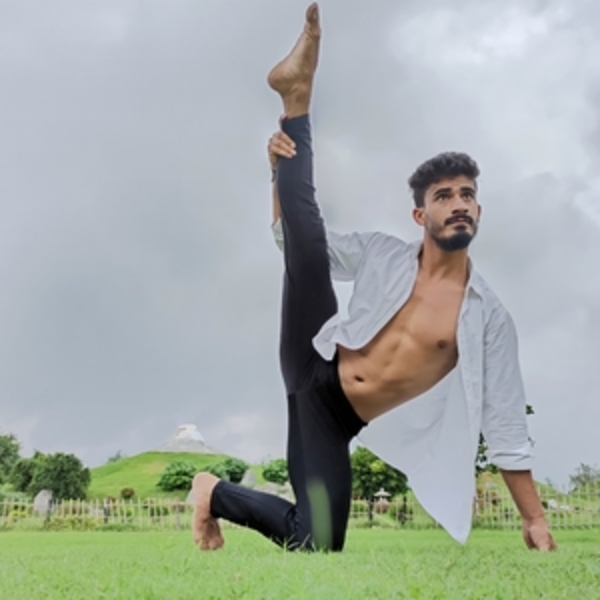


The Physical Benefits of Ballet
Most people start moving because they want to move better, with less stiffness and more ease. Ballet is a demanding form of physical activity, and the physical effects tend to overlap with mental ones at every stage.
Muscle Benefits
As we age, muscle fibres can become tighter and less elastic, and we tend to lose some range of motion. Relatively inactive routines make this worse. Ballet works against that pattern. You flex and hold positions for several seconds at a time, engaging both long and short muscle fibres and keeping the muscles under tension.
This is sometimes compared to "time under tension" training, a resistance approach built on controlled, slow movement. Ballet has worked this way for centuries. The aim is not to build large muscles but to build resilient, controlled ones. People often notice improved tone and stamina with regular practice, though how much depends on frequency and effort.
Bone Benefits
Many forms of exercise are weight-bearing, meaning your skeleton carries your body's load. Walking, stair-climbing, and dancing all fall into this group, and ballet is firmly among them. Weight-bearing activity is associated with healthy bone maintenance, which is one reason doctors often recommend it as people get older.
This does not mean ballet prevents osteoporosis or any specific condition. What can be said is that regular weight-bearing movement, ballet included, supports general bone and muscle health as part of a broader active lifestyle. If you have an existing bone or joint condition, check with a doctor before starting.
Flexibility Benefits
Ballet works many muscle groups, both small and large, and asks you to move through a wide range of motion with control. Practised regularly and without forcing, this can improve flexibility over time. The key words are regularly and without forcing. Flexibility develops slowly, and pushing too hard too soon is a common cause of injury for beginners. A good teacher will pace this for you.

Health Benefits of Ballet
Exercise tends to be more sustainable when it is enjoyable, and many people find ballet more engaging than repetitive gym routines. A ballet session combines slow resistance movements with music and focus, which some people find leaves them feeling energised rather than drained.
Part of this comes from the link between physical activity and mood. Regular movement is widely associated with reduced everyday stress and a general sense of wellbeing. Ballet is not a treatment for any medical condition, but as a form of enjoyable, structured exercise, it can be a healthy part of your week.
Ballet for Stress Relief
After a hard day, physical activity can offer a useful mental reset. When you are concentrating on your posture, balance, and the next movement, there is little room left for the day's frustrations. Many people describe this focused, absorbing quality as one of the main reasons they keep coming back to class.
Being fully present in the moment, with complete awareness of the activity you are doing.
Ballet for Mindfulness
Ballet dancers tend to be highly aware of their bodies and how they move. Focusing on posture, balance, and movement while listening to music is a fairly natural form of mindfulness. It engages the whole body at once: feet and legs, arms and torso, neck and head, and the mind along with them.
Ballet for Self-Confidence
Walking into a studio with mirrored walls can feel intimidating for beginners. That feeling usually fades once you realise everyone in the room, including the instructor, is there for the same reason: to learn and enjoy, not to judge.
Noticing what your body can do is often a first step towards greater confidence. As you learn to hold a position you could not manage a month earlier, a small positive loop tends to form. The more capable you feel, the more you want to practise, and the better you tend to feel about it.
The Basic Ballet Poses and Positions
If you are completely new to ballet, the vocabulary can seem like a foreign language, and in a sense it is. Ballet terms are mostly French, because the art form was formalised in 17th-century France under King Louis XIV. That shared French vocabulary is why a dancer can take a class almost anywhere in the world and follow the instructions. Here are the foundations every beginner starts with.
The five basic positions of the feet are credited to Pierre Beauchamp, a French ballet master working in the 1670s and 1680s. Almost every ballet step begins and ends in one of these positions.
The five positions of the feet. These describe where your feet sit and form the base of nearly every movement.
- First position: Heels together, toes turned outward to each side, legs straight.
- Second position: Feet turned out as in first, but heels about shoulder-width apart.
- Third position: One foot in front of the other, the front heel touching the middle of the back foot.
- Fourth position: Similar to third, but the feet sit parallel and separated by about the length of one foot.
- Fifth position: Feet fully crossed, the front heel against the toe of the back foot. This is more demanding, and many adult beginners start with third position instead while their hips and ankles adjust.
Once you know where your feet go, you learn the basic movements:
- Plié (to bend): A smooth bend of the knees, often called the "shock absorber" of ballet. A demi-plié is a small bend with heels on the floor; a grand plié is deeper.
- Tendu (to stretch): Extending the leg until only the tip of the toe touches the floor, then drawing it back. This builds the foot strength needed for almost everything else.
- Relevé (to rise): Lifting the heels to balance on the balls of the feet, which builds calf strength and stability.
- Dégagé (to disengage): Like a tendu, but the foot lifts slightly off the floor.
Then come the recognisable poses:
- Arabesque: Standing on one leg with the other extended straight behind you, arms positioned to create one long line from fingertips to toes. It is one of the most recognisable shapes in ballet and a real test of balance.
- Attitude: Similar to an arabesque, but the raised leg is bent at the knee rather than held straight.
You do not need pointe shoes or special equipment to begin learning these. A beginner can memorise the placements in a single class, though refining them with proper turnout, alignment, and arm movement is the work of months and years. That gradual progress is part of the appeal.
How Popular Is Ballet in India?
Ballet is not a traditional Indian dance form. Indian dance culture is built around classical and folk styles such as Bharatanatyam, Kathak, Odissi, and many regional traditions. Western ballet arrived comparatively recently and remains a smaller, niche pursuit. That said, it has been steadily gaining ground, especially in larger cities.
Today there are dedicated ballet schools and a growing number of independent teachers across India. The National Ballet Academy and Trust of India (NBATI), founded in 2002, describes itself as the country's first classical Western ballet school and runs classes across Delhi, the NCR region, and through international partners. The Lewis Foundation of Classical Ballet, established in 2006 and affiliated with the ISTD in London, runs multiple centres across Bengaluru and is taking admissions for terms starting in 2026. Bella Academy in South Mumbai offers training aligned with the Royal Academy of Dance and American Ballet Theatre curricula. Delhi is also home to the Imperial Fernando Ballet Company.

Beyond these established schools, listings platforms such as UrbanPro show hundreds of independent ballet teachers across Mumbai, Bengaluru, Delhi, Pune, Hyderabad, and other cities, offering both group and one-on-one classes. The 2008 film Aamir, the dance reality shows on Indian television, and the wider growth of contemporary dance studios have all helped raise the form's profile, particularly among children and young adults.
It is worth being realistic. Specialised resources such as pointe shoes, advanced training, and performance opportunities are still limited compared with countries where ballet has a longer history, and serious students sometimes travel abroad for advanced work. But for a beginner or hobbyist in a major Indian city, finding a quality class has never been easier than it is now.
Finding Ballet Classes in India
If you want to get started, here is a sensible way to approach it in 2026:
- Look locally first. Search for established schools in your city. Bengaluru, Mumbai, and Delhi have the most options, but Pune, Hyderabad, and Chennai have growing scenes too.
- Check the teacher's training. Look for instructors certified by recognised bodies such as the Royal Academy of Dance (RAD), the ISTD, or the American Ballet Theatre, or those with strong professional backgrounds.
- Compare formats and fees. Independent teacher rates on platforms like UrbanPro commonly range from around ₹500 to ₹1,000 per hour, with structured school programmes charging term fees. Group classes are usually cheaper than private ones.
- Ask about beginners and adults. Many schools have separate adult beginner streams, so you will not be the only newcomer in the room. Some offer demo or trial classes, though policies vary, so ask in advance.
- Online options exist too. If there is no studio near you, several teachers and platforms offer online ballet classes, which can be a reasonable starting point for learning basics.
A quick search engine query like "ballet classes near me" along with your city name will usually surface both schools and independent teachers. Visit if you can, watch a class, and see whether the atmosphere suits you before committing.
A Final Word
Ballet offers a structured, enjoyable way to move better, build strength and flexibility, and give your mind a focused break. Those are reasonable expectations for regular practice. What it will not do is work miracles, and any source promising guaranteed health outcomes is overstating the case.
If the idea appeals to you, the best next step is simple. Find a beginner-friendly class, learn your first plié, and see how it feels. You do not need to be young, flexible, or experienced to begin. You only need to start where you are.
Summarise with AI:
Did you like this article? Leave a rating!

 Loading...