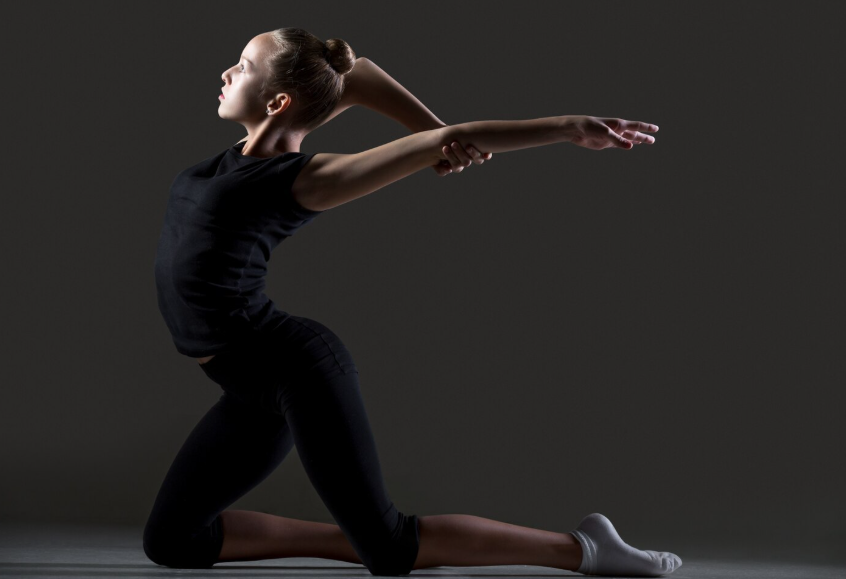

A warm-up can be just as enjoyable as the dance itself. It wakes up the muscles you are about to use, lowers your risk of injury, and sets the mood for everything that follows. Whether you train in Bharatanatyam, Kathak, contemporary, hip-hop, or a Bollywood routine for a sangeet, the right warm-up gets your body performance-ready.


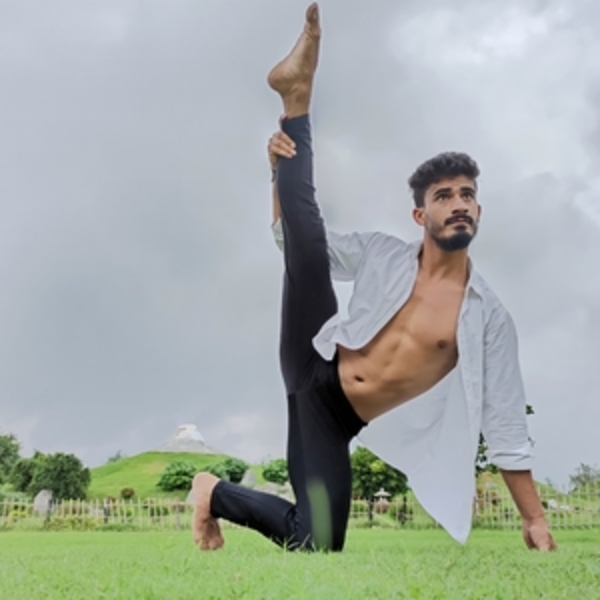


Most Popular Dance Warm Up Exercises
Before we get into the details, here 10 warm up exercises before dancing that show up in almost every dancer's warm-up:
- Deep breathing
- Star jumps (jumping jacks)
- Neck rolls
- Shoulder rolls
- Hip swings
- Leg swings
- Heel raises
- Lunges
- Arm circles
- Ankle rolls
Why a Warm-Up Matters
It takes an athlete to dance, but an artist to be a dancer. Many fitness routines borrow from choreography, including Zumba, step aerobics, and even some yoga flows. Those workouts may be more repetitive than a dance, yet the line between them comes down to how the dancer interprets the movement. Even a beginner can tell the difference between a workout and a dance routine, and no seasoned dancer would step on stage without warming up first.
Warming up before class is not optional. It is the difference between a body that responds to you and one that fights you.
A view shared by most Indian dance teachers
Warming up is the step that prepares your body for effort and lowers the chance of injury. As you raise your body temperature gradually, your muscles become more supple and responsive. That is what helps you avoid the muscle pulls and sprains that turn up when the body is asked to perform cold. A good warm-up also lifts your blood circulation, loosens tight muscles, improves flexibility, and mobilises the joints, all of which carry straight into a better performance.
There is a mental side too. The first few breaths and rolls signal that you are shifting gears, away from the rush of the day and into your practice. By the time you finish, you are focused and present. The chart below sets out the moves dancers make to get ready, and the rest of this guide explains why each one earns its place.
| The move | What it does | How many reps |
| Deep breathing | Sharpens focus and loads the body with oxygen | 10 rounds at the start, middle, and end of your warm-up |
| Star jumps (jumping jacks) | Raises heart rate, builds coordination | 2 sets of 20 |
| Neck rolls | Stretches the neck muscles | 10 to the left, 10 to the right |
| Shoulder rolls | Loosens the upper back, torso, and shoulders | 10 forward, 10 backward |
| Hip swings | Warms and conditions the hips | 10 clockwise, 10 anti-clockwise |
| Leg swings | Builds range of motion in the hips | 10 for each leg |
| Heel raises | Conditions hamstrings and calves | 10, both legs together |
| Lunges | Works glutes, knees, and hips; warms the lower body | 10 for each leg |
Breathing: The Best Place to Begin
Anyone who has sat through a strict Kathak or ballet class will remember the drills more than the breathing. Many of us were never told to breathe in and breathe out on cue. Teachers seemed to assume we would manage it on our own, or felt it was too basic to mention. A good instructor, though, will remind you to breathe well during warm-ups and technique work.
Skipping breathing warm-ups leaves dancers at a disadvantage. Breathing is one of the best warm-up exercises for dancing, because it improves how oxygen reaches your body. These rounds give your lungs a workout and condition them for the session ahead. A second round after warming up helps clear your mind and channel your energy.
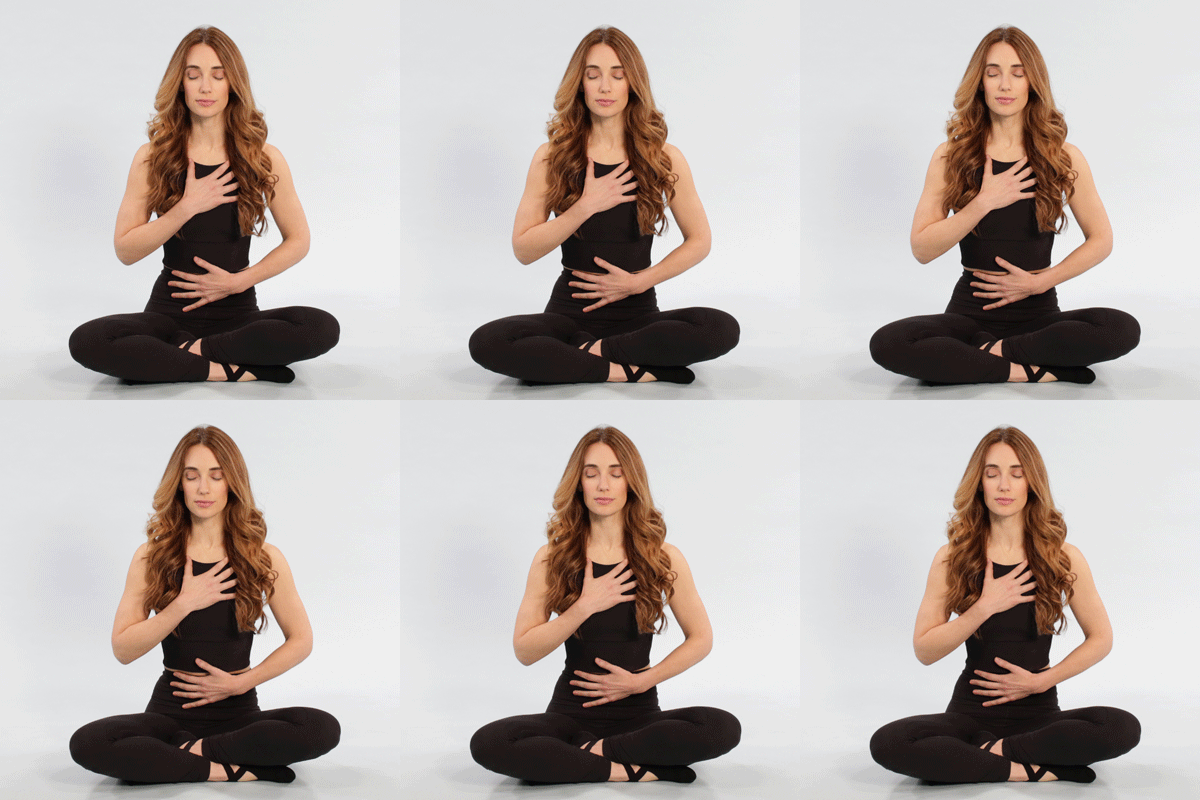
Finally, breathing helps you hold your focus. At the start, it tells your body you are moving from everyday life into dance mode. Finishing with a few rounds lets you settle back into yourself. In both cases, the benefit reaches your mind as much as your body.
Breath is the first instrument a dancer learns to play.
Stand tall with your feet hip-width apart. Inhale slowly through the nose, letting the belly and chest expand, then exhale gently through the mouth. Ten unhurried rounds is plenty. For a calming, India-rooted version, borrow the steady rhythm of pranayama you may already know from yoga.
Star Jumps
Some dancers like to get moving with energy, so star jumps make a natural follow-up to breathing. You do not have to leap straight into them; you can begin with any move on this list, as long as you do them all. In school, students often groan at jumping jacks because they feel a little silly. We would argue the move is underrated for everything it offers.
Star jumps, also called jumping jacks, demand coordination, balance, and a good deal of stamina. Dance asks for the very same qualities, which makes these jumps one of the best warm-up moves you can choose.
Our chart sets the bar low at two sets of twenty. If you want to start with this move, do one set now and the other towards the end of your warm-up. Since it is the most energetic of your dance warm-up moves, it is best to spread the sets out.

Neck Rolls
Many people like to warm up from the top down, starting with the neck and working their way lower. If that is you, begin with neck rolls. Stand with your feet shoulder-width apart and your arms relaxed at your sides. Drop your chin to your chest, then tilt your head to the right to start the circle.
Imagine a laser shooting out of the top of your head. The beam should trace as round an oval as possible. Carry it over your right shoulder, across the nape of your neck, over your left shoulder, and back to where you began.
Once again you have two sets of ten, but you need not follow that formula exactly. You might do five travelling left, another five to the right, and save the last ten for later in your warm-up.
Keeping the cervical spine loose and flexible is one clear gain. Neck rolls can also draw your attention to issues such as ear infections, fluid imbalance, or a jaw that sits out of line. Move slowly and stop if you feel sharp pain rather than a gentle stretch.
Shoulder Rolls
All the sitting we do is hard on the body. From students to desk workers to anyone slouched over a phone, almost everyone carries tension across the upper back. A nagging ache in the trapezius muscles is one of the clearest signs of it.
Neck and shoulder rolls are instinctive ways to release that tightness. If you have ever rolled your shoulders after a long day at the keyboard, you know how good it feels. It is also one of the best warm-up exercises for dancing.
Form matters here. Stand with your feet shoulder-width apart, pull your shoulders as far forward as you can, then slowly drive them up, back, and down. Keep the traps loose and let your arms hang at your sides. Do all ten forward first, then all ten backward, simply reversing the movement.
Ideally, carry your breathing through these reps, inhaling on one roll and exhaling on the next. Trained dancers use this pairing to build posture, strength, and control.

Hip Swings
You may have noticed the word stretch has not turned up much. That is deliberate. We are not trying to stretch anything as we warm up. We want to condition the joints and muscles for the work ahead.
With the upper body released, it is time to move to the lower body, beginning with the hips. For proper hip swings, stand with your feet shoulder-width apart and your hands on your hips. Push your hips to the right, then forward and around until they swing to the left.
The motion should trace a half-circle, not a flat side-to-side swing. Complete the circle by carrying your hips back to the right, this time arcing towards your back. As with shoulder rolls, do these reps all at once, first clockwise, then anti-clockwise.
Leg Swings
With the hips now mobile, put them to work. Hold on to something for balance. A sturdy chair back works well, and so does a wall or a door frame. With your balance secured, plant one foot and swing the other leg front to back, then forward again. Repeat ten times for each leg, and there is no need to break these reps up.
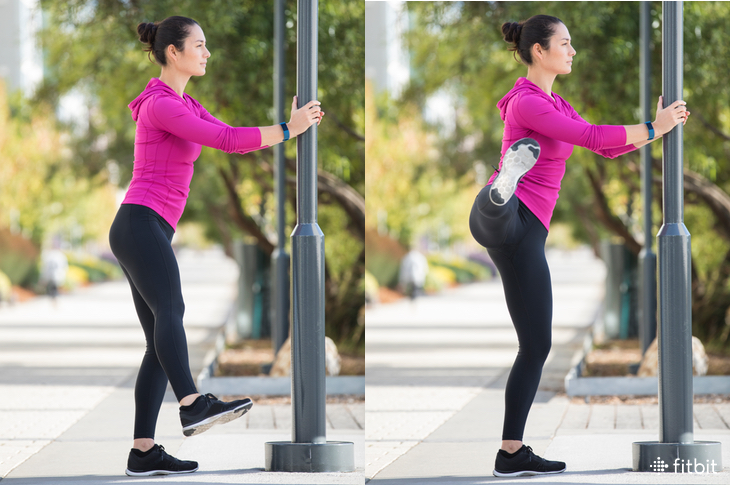
This move turns your leg into a pendulum. You are not kicking as high as possible; you are swinging freely. You will notice that the closer you get to your tenth swing, the higher your leg travels. That growing range of motion is proof your warm-up is working.
Heel Raises
As long as you have that chair or wall handy, warm up your calves and hamstrings next. With your feet slightly apart and your hands resting on your support, raise your heels as high as you can. Hold the tiptoe position for a beat, then release. Repeat ten times.
This move works best when you build tension slowly. Raising your heels gradually lets the muscles and tendons work step by step. That slow effort warms these parts far better than a quick up-and-down yank.
Do not be surprised if you have not broken a sweat by now. You were not meant to. A warm-up readies the body; it does not exhaust it.
Lunges
With your lower body warmed, you are ready for a more dynamic movement. Done slow or fast, lunges call for proper form, both to condition well and to avoid injury:
- Stand upright, feet shoulder-width apart, upper body relaxed
- Plant one foot and slide the other backwards, keeping the back leg straight
- Make sure the planted foot's knee stays above the heel, not pushed forward
- With each lunge, sink your body lower for maximum effect
Those four points describe the basic lunge. Variations exist, as this contrast shows.
| Version 1 (slow and grounded) | Version 2 (fast and dynamic) |
| Hands by your sides for balance Same leg, 10 times Slow lunges to work the lower body | Hands on your hips for upper-body posture Alternating legs Fast lunges to lift the heart rate |
Our opening line said you must be an artist to dance well. That is not always the case. Some people dance to stay fit or to reach a health goal, and these warm-up moves prepare you for both artistry and fitness.
Bringing It Home: Warm-Ups for the Indian Dancer
India's dance traditions ask a lot of the body. The deep aramandi sit of Bharatanatyam, the fast chakkars of Kathak, the grounded stance of folk forms such as Bhangra and Garba, all of these need warm joints and switched-on muscles. The good news is that the moves above translate cleanly to any of them. A few small tweaks make the routine feel native to an Indian practice:
- Lead with breath. If you already practise pranayama, use that steady rhythm as your breathing warm-up. It is the same principle dancers everywhere rely on.
- Add ankle and wrist rolls. Classical forms place heavy demand on the ankles and on expressive hand work, so give both a few slow rotations before you begin.
- Warm up barefoot, on a clean surface. Most Indian forms are danced without shoes. Massage the soles of your feet for thirty seconds each to wake up balance and posture before footwork.
- Mind the season. In a humid Kolkata or Chennai summer, your muscles loosen quickly, so keep the warm-up gentle and stay hydrated. In a north Indian winter, give yourself extra time and an extra round of star jumps.
The body is your first instrument. Tune it before you play.
A reminder many gurus pass to their students
Warm-Up Videos and Resources for 2026
If you prefer to follow along, a few Indian creators stand out for clear, well-paced warm-up and dance-fitness work that suits home practice:
- DanceWithDeepti, led by certified trainer and nutritionist Deepti Gaur-Sengupta, offers high-energy dance-fitness sessions that open with proper warm-ups.
- Workout with Sabah, run by NASM-certified instructor Sabah Kadri, builds each Bollywood dance workout around a warm-up and cool-down, which makes it a safe pick for beginners.
- For classical dancers, search YouTube for a yoga-based warm-up for Indian classical dance, which uses deep stretches to prepare the body before a Bharatanatyam or Mohiniyattam session.
If you would rather learn in person, a local teacher can tailor a warm-up to your body and your style. You can find a dance tutor near you on Superprof, with many offering a first lesson free.
Summarise with AI:
Did you like this article? Leave a rating!

 Loading...