
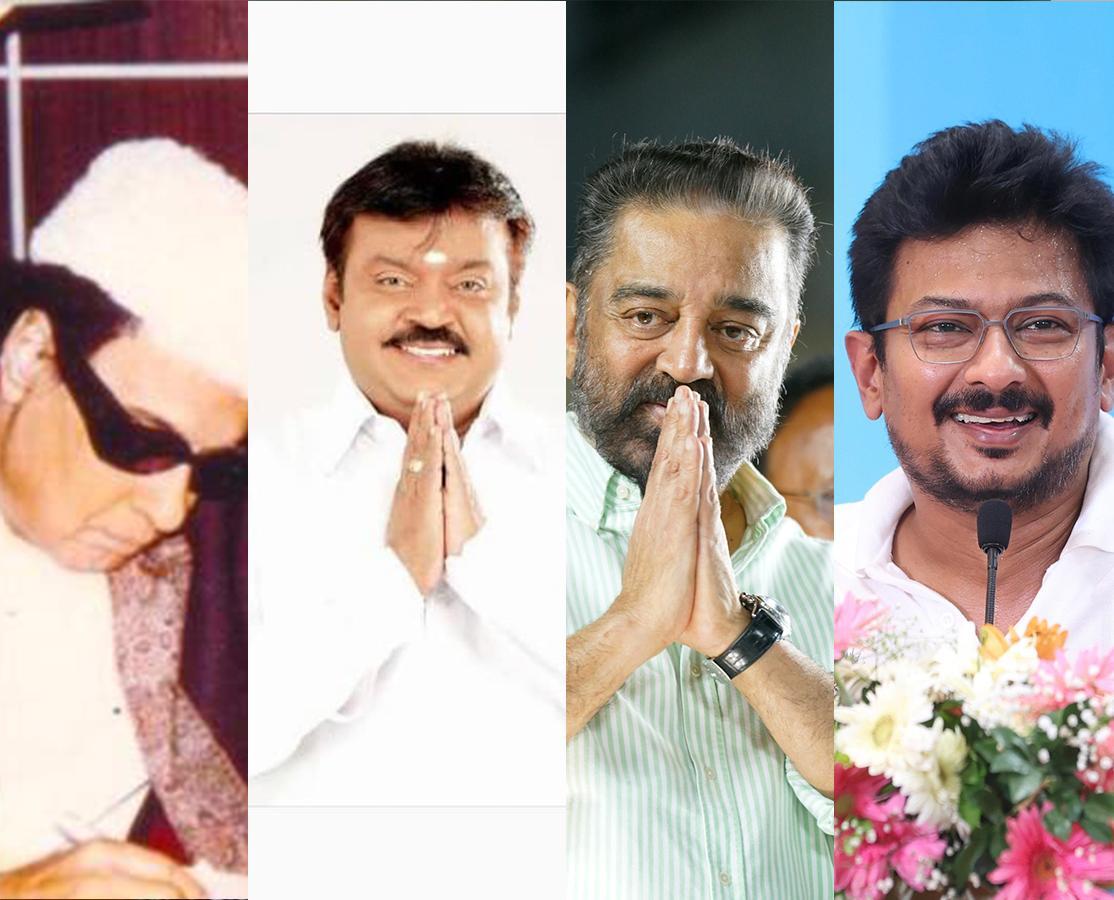

Tamil Nadu represents one of the most compelling examples in the world where cinema and politics are deeply intertwined. The phenomenon of Tamil actors in politics is not simply a matter of celebrity influence—it is a structural feature of the state’s socio-political ecosystem. Over decades, cinema has functioned as a vehicle for ideological communication, identity formation, and mass mobilization.
This article examines how the rise of the Tamil actor in politics, the emergence of the Tamil hero in politics, and developments like the Vijay Thalapathy political party discourse have collectively shaped Tamil Nadu’s political culture. It adopts a neutral, analytical lens to understand how cinema continues to influence governance and society.


Key Influences at a Glance
- Actor-to-politician transitions form a parallel leadership pipeline
- Cinema used as a medium for political messaging and social reform
- Fan associations evolving into structured political networks
- Strong influence on public opinion and voter perception
- Reinforcement of Tamil linguistic and cultural identity
- Creation of the “Tamil hero in politics” archetype
- Contemporary institutionalization via Tamilaga Vettri Kazhagam
Historical Roots of Tamil Actors in Politics
The connection between cinema and politics in Tamil Nadu can be traced back to the early 20th century, particularly during the rise of the Dravidian movement. Unlike many other Indian states, Tamil Nadu used cinema as a deliberate political communication tool.
Fan clubs in Tamil Nadu were among the first in India to organize structured welfare programs at scale.
Cinema as Ideological Infrastructure
Films in Tamil Nadu were often designed to carry ideological messages. Screenwriters and dialogue writers embedded themes such as:
- Social equality and anti-caste narratives
- Rationalism and anti-superstition
- Tamil linguistic pride
- Critiques of centralized authority
Leaders like C. N. Annadurai and M. Karunanidhi were deeply involved in cinema, using it as a platform to disseminate political ideas to a mass audience.
This strategic use of cinema laid the foundation for the emergence of Tamil actors in politics as credible public figures.
Early South Actor Turned Politician Model
The first major example of a successful South actor turned politician was M. G. Ramachandran (MGR).
- His films portrayed him as a protector of the poor and a moral leader
- These roles created a strong emotional connection with audiences
- His transition into politics was perceived as a continuation of his on-screen persona
MGR’s success institutionalized the idea that cinematic popularity could translate into electoral success, fundamentally reshaping Tamil Nadu’s political recruitment model.
Rise of the Tamil Hero in Politics
The concept of the Tamil hero in politics is rooted in the alignment between cinematic roles and political expectations.
Construction of the Heroic Persona
Tamil cinema often portrays protagonists as:
- Defenders of justice
- Champions of marginalized communities
- Leaders who challenge systemic corruption
Actors like M. G. Ramachandran and later Rajinikanth cultivated screen images that resonated with public aspirations.
This alignment creates a narrative continuity: audiences begin to perceive the actor not just as a performer but as a potential real-life leader.
Emotional Capital and Public Trust
A key factor behind the success of a Tamil actor in politics is emotional capital.
Cinema builds:
- Familiarity through repeated exposure
- Trust through moral narratives
- Identification through relatable struggles
When Tamil actors enter politics, they leverage this accumulated emotional capital, often bypassing traditional political pathways.
Fan Clubs as Proto-Political Organizations
One of the most distinctive aspects of Tamil Nadu’s political culture is the transformation of fan clubs into political machinery.
Origins of Fan Associations
Fan clubs initially emerged as:
- Promotional groups supporting film releases
- Community organizations conducting welfare activities
- Platforms for the collective celebration of stars
Over time, these groups developed organizational discipline and grassroots reach.
Evolution into Political Networks
Fan clubs eventually became:
- Campaign units during elections
- Volunteer bases for political rallies
- Communication channels for political messaging
Actors like Rajinikanth and Vijay have extensive fan networks capable of mobilizing large numbers of people quickly.
The formation of Tamilaga Vettri Kazhagam demonstrates how these networks can evolve into formal political structures, reinforcing the pipeline of Tamil actors in politics.

Cinema as a Tool for Social Messaging
Tamil movies have long functioned as a platform for addressing societal issues, often influencing public discourse and policy priorities.
Social Reform Narratives
Films have tackled critical themes such as:
- Caste-based discrimination
- Gender inequality
- Corruption in governance
- Access to education and healthcare
Actors associated with such narratives gain legitimacy as socially aware individuals, strengthening their appeal as Tamil actors in politics.
Dialogues as Political Language
Tamil films are known for powerful dialogues that often:
- Reflect political ideologies
- Critique existing systems
- Inspire public action
These dialogues frequently transcend cinema, becoming part of everyday political discourse.
Early Tamil film dialogues were often written by active politicians, making cinema a direct extension of political communication.
Regional Identity and Cultural Assertion
Tamil cinema plays a central role in reinforcing regional identity, which is a key factor in Tamil Nadu’s political landscape.
Language and Cultural Pride
Films emphasize:
- The importance of the Tamil language
- Preservation of cultural heritage
- Resistance to cultural homogenization
This cultural reinforcement contributes to the rise of the Tamil hero in politics, who is often seen as a guardian of regional identity.
Cinema and Dravidian Ideology
The Dravidian movement used cinema to:
- Promote social equality
- Challenge caste hierarchies
- Advocate for regional autonomy
This historical linkage ensures that cinema remains politically relevant even today.
Modern Developments: Changing Dynamics
The contemporary phase of Tamil actors in politics reflects both continuity and adaptation.
Vijay Thalapathy Political Party Discourse
The growing conversation around the Vijay Thalapathy political party marks a new phase in actor-led political engagement.
- Vijay has increasingly addressed social issues in his films
- His fan base functions as a semi-organized political network
- The establishment of Tamilaga Vettri Kazhagam signals institutional intent
This development highlights how modern actors are formalizing the transition from cinema to politics.
Influence of Digital Media
Unlike earlier eras, today’s political communication is shaped by:
- Social media platforms
- Digital fan engagement
- Online political discourse
While cinema remains influential, it now operates alongside digital ecosystems.
Comparative Overview of Actor-Politics Influence
| Factor | Earlier Era | Modern Era |
|---|---|---|
| Communication Medium | Cinema halls | Cinema + social media |
| Fan Engagement | Physical clubs | Hybrid (digital + physical) |
| Messaging Style | Ideological | Issue-based + branding |
| Political Entry | Gradual | Strategic and planned |
Long-Term Impact on Tamil Nadu’s Political Landscape
The sustained presence of Tamil actors in politics has had far-reaching consequences.
Positive Outcomes
- Enhanced political communication through mass media
- Increased voter engagement
- Strong connection between leaders and the masses
Structural Challenges
- Risk of personality-driven politics
- Blurring boundaries between entertainment and governance
- Over-reliance on image rather than policy expertise
The Enduring Role of the South Actor Turned Politician
The model of the South actor turned politician remains resilient because it aligns with Tamil Nadu’s socio-cultural context:
- Cinema provides visibility and trust
- Fan networks offer organizational support
- Cultural narratives reinforce legitimacy
Even as political dynamics evolve, this model continues to influence leadership patterns.
Intersections of Cinema, Society, and Governance
Tamil cinema does not merely reflect societal values—it actively shapes them.
The recurring emergence of the Tamil actor in politics demonstrates:
- The power of storytelling in shaping public perception
- The role of cultural identity in political mobilization
- The integration of media and governance.
The phenomenon of Tamil actors in politics is a deeply rooted system shaped by history, culture, and media. From the early Dravidian movement to contemporary developments like the Vijay Thalapathy political party, cinema has remained a central force in Tamil Nadu’s political life.
By blending storytelling, identity, and mass communication, Tamil cinema continues to influence how leaders emerge, how policies are perceived, and how society engages with governance.
Summarise with AI:
Did you like this article? Leave a rating!

 Loading...
