


Still-life is an art genre that spans thousands of years, from Ancient Egypte still-life frescoes carver and painted by anonymous artists to sixteenth-century Dutch artists who made still-life painting a legitimate art form and the nineteenth-century French painters that started the Impressionist movement.
Still-life continued to be a popular art form and was revived in the 1950's by artists such as Andy Warhol, Roy Lichtenstein and later on by artists such as Judy Chicago and Keith Haring.
We have selected some of the most famous and influential pieces of still-life art from the early 17th century to the 1950's.
- Caravaggio — Basket of Fruit
- Willem Claesz. Heda — Still Life with a Gilt Cup
- Rachel Ruysch — Flower Still Life
- Jean-Baptiste-Siméon Chardin — The Ray
- Paul Cézanne — The Basket of Apples
- Georgia O’Keeffe — Jimson Weed/White Flower No. 1
- Giorgio Morandi — Still Life (bottles and jars series)
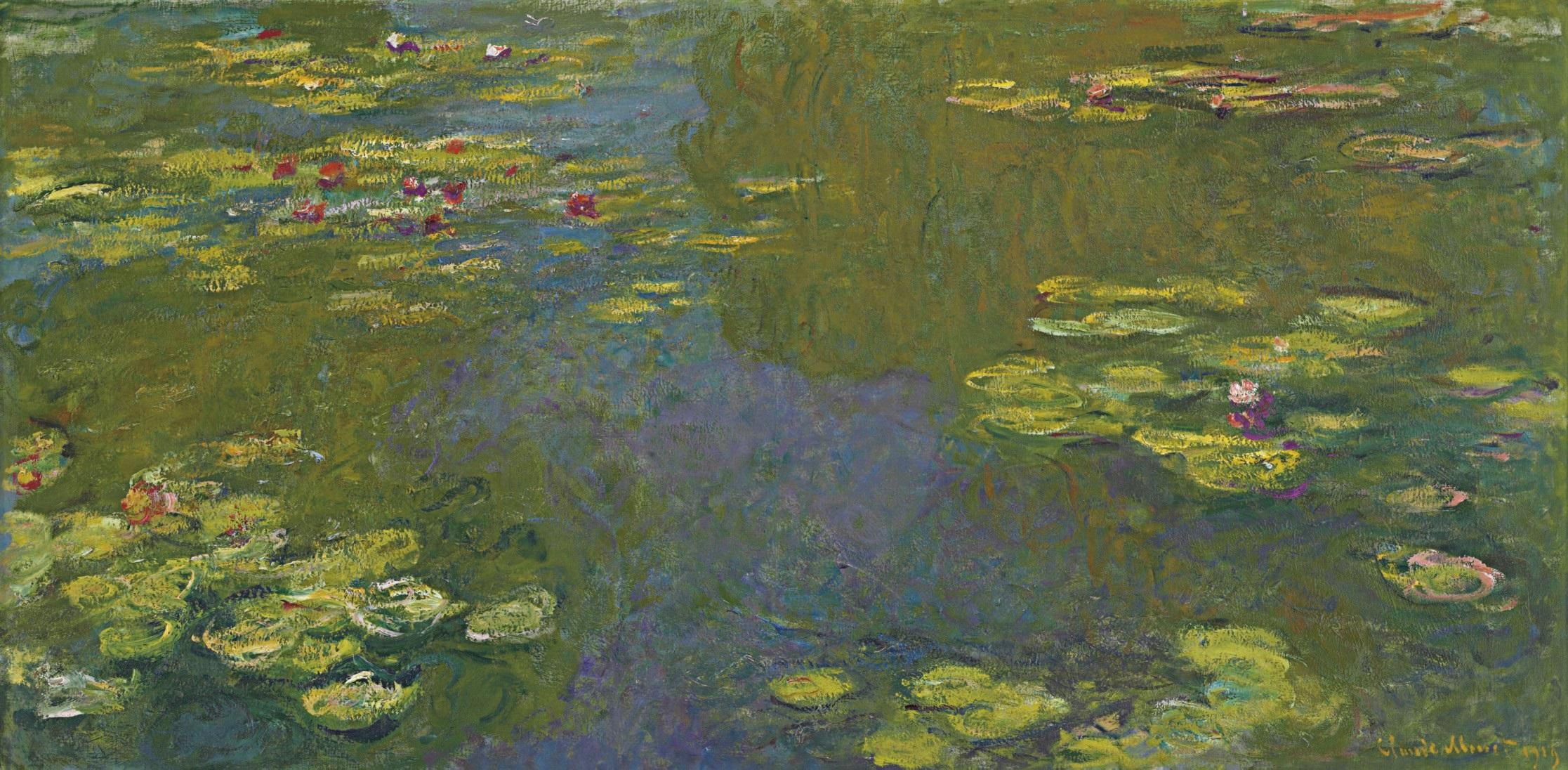
- Claude Monet — Water Lilies (series)
- Salvador Dalí — Living Still Life
- Andy Warhol — 32 Campbell’s Soup Cans
- Amrita Sher-Gil — Still Life with Green Bottle
- Bikash Bhattacharjee — Still Life with Doll





"Basket of Fruit" by Caravaggio
Michelangelo Merisi Caravaggio was an Italian painter born in Milan at the end of the sixteenth century. He is famous for painting some of the most critically appraised religious paintings of his time or since. His style relied heavily on the use of the chiaroscuro technique, using very dark backgrounds and very clear and luminous shafts of light to illuminate the characters on his paintings.
His style which later became known as tenebrism had a significant influence on the following generation of artists and this stylistic element can be seen in the work of Dutch artist Rembrandt, even though Rembrandt never travel to Italy to study Italian master painters.
The Basket of Fruits was painted around 1599 and stands out in Caravaggio's work as one of only two still-life paintings.
One of the tricks that Caravaggio often used during his career was trompe l'oeil. In this painting, the quasi-photographic realism it displays tricks our eyes and brain into thinking that the fruits are almost popping out of the canvas.
With Still Life with Fruit on a Stone Ledge, Caravaggio started the Roman still-life movement even though it would take some time for the movement to really kick-off.

Willem Claesz. Heda and the Dutch banquet still-life: “Still Life with a Gilt Cup”
If Caravaggio made still-life feel physically present, Dutch Golden Age painters made still-life feel socially meaningful. Willem Claesz. Heda became one of the masters of the “banquet still-life,” where tables hold half-eaten meals, overturned cups, citrus peels, reflective metalware, and glass that seems to breathe.
In Still Life with a Gilt Cup, Heda demonstrates why Dutch still-life was a technical proving ground. He paints reflections that behave correctly, textures that distinguish lemon rind from pewter, and highlights that describe glass without outlining it. But the real punch is conceptual: these tables are rarely “celebrations.” They often hint at transience—luxury that has already begun to pass. A tipped goblet can read as casual realism, but also as a quiet reminder that pleasure and time are unstable.
Heda’s work is essential to understanding still-life because it shows the genre’s double function: it is both a display of skill and a coded language about living.
Rachel Ruysch and floral drama: “Flower Still Life”
Still-life isn’t only about food and objects; it’s also about nature curated into symbolism. Rachel Ruysch became one of the most celebrated painters of floral still-lifes, producing bouquets that feel both scientifically observant and theatrically composed.
A Ruysch Flower Still Life is never “just pretty flowers.” The arrangement is engineered: blossoms at different stages of life, insects that add tension, petals that bruise at the edges. Her paintings often compress seasons—flowers that wouldn’t bloom together appear in one bouquet—creating an impossible, idealized nature that is also a reminder that nature cannot be held.
Ruysch’s significance lies in her ability to make still-life feel alive. She turns botanical accuracy into narrative. Her work also demonstrates that the still-life genre created space for women artists to achieve professional success in periods when history painting and public commissions were often inaccessible.
"Water Lilies" Series by Claude Monet
Claude Monet was one of the founders of the Impressionism movement that started in Paris in the 1860's. The name of the movement itself came from of one of Monet's paintings Impression, Sunrise, a title that was first used to mock the growing movement.
Throughout his career, Monet remained the main leader of the Impressionist movement and has been its most prolific artist. One of the ways Monet achieved the intended play on natural light was by painting the same scene again and again, at a different time of the day or a different season.
Monet was a meticulous and very driven painter. He spent extended periods of his time to study the effect of smoke, steam, rain or fog on the refraction of light. This study led him to once again paint the same scene over and over to capture as many details as he could.
His Water Lilies series, with more than 250 paintings, includes some of his most famous artwork. The oil on canvas painting titled Water Lily Pond and painted in 1919, is one of the most expensive European work of art ever sold. It reached the price of $80,451,178 in 2008 at an auction in Christie's, London.
Google for "drawing classes near me" and start to learn.
Giorgio Morandi and the philosophy of bottles: “Still Life” (bottles and jars series)
Giorgio Morandi is one of the most important still-life painters for anyone interested in minimalism, form, and the meditative side of art. His repeated arrangements of bottles, jars, and boxes are not repetition for its own sake—they are sustained inquiry.
A Morandi Still Life often looks modest at first: muted colors, soft edges, ordinary containers. But the longer you look, the more the composition behaves like a serious spatial argument. Distances are calibrated. Shadows are quiet but precise. The objects seem to breathe together, like a small group caught in a private conversation.
Morandi demonstrates a key truth about still-life: the genre doesn’t require “exciting objects.” It requires meaningful seeing. In his hands, still-life becomes a disciplined practice—almost philosophical—where the subject is not the bottle, but the experience of attention.
Chardin and quiet truth: “The Ray”
Jean-Baptiste-Siméon Chardin pushed still-life away from flamboyant display and toward psychological presence. His paintings often depict kitchen objects, simple meals, and domestic scenes with restrained color and profoundly honest surfaces.
The Ray is an unforgettable example: a skinned fish hangs as the central form, surrounded by kitchen elements. It is not sentimental, but it is strangely dignified. Chardin’s paint handling makes matter feel weighty—ceramic, metal, skin, and wood all have their own logic. The work also demonstrates how still-life can confront viewers with the realities behind comfort: before food is “food,” it is biology, labor, and transformation.
Chardin matters because he shows that still-life can be moral without being preachy, and serious without relying on spectacle. The genre becomes a form of truth-telling.
"The Basket of Apples" by PaulCézanne
Paul Cezanne is probably one of the most influential artists of the 19th century. When the Impressionist movement emerged, he gladly joined Pisaro, Renoir and Monet in creating amazing Impressionist landscape paintings and portraits. For most of the 1870's Cezanne stuck to the Impressionist style but even though his paintings were displayed in exhibitions alongside other artists of the movement, Cezanne's work was always something else, not quite entirely Impressionist.
Cezanne did a lot of work, studying the relationship between naturally occurring geometrical shapes. He always desired to reduce any natural element to its purest geometrical form. Many critics of the time suggested that the rendering of Cezanne's compositions were due to an impaired eye-sight, but no evidence ever suggested such a thing.
Find the best drawing classes for kids on Superprof.
Cezanne's work, for most of his career, was a mix of life portraiture and still-lifes, including landscapes and "nature morte".
Some of his work directly influenced the Post-Impressionist movements including the cubism movement, but as a whole, Cezanne's legacy was to be one of the most revolutionary artists of his time and to alter the course of modern art development. He was set the paths of Vincent Van Gogh, Picasso and Gaughin.
The Basket of Apples painting includes many elements that would be used to bridge the gap between Impressionism and Cubism:
- the disjointed perspective
- the unbalanced aspects of the picture coming all together to balance the whole composition
- the simultaneous two point of views.
Find the best online drawing classes thanks to Superprof.
Georgia O’Keeffe and the monumental object: “Jimson Weed/White Flower No. 1”
Georgia O’Keeffe is often associated with flowers, bones, and desert landscapes, but her enlarged botanical paintings also sit squarely in the still-life tradition: close observation, controlled composition, and meaning built through form.
Jimson Weed/White Flower No. 1 takes a flower—an object that might normally be decorative—and turns it into a commanding presence. The bloom becomes architectural. The curves are sensual but also formal. O’Keeffe’s approach shows how still-life can shift scale and perspective to change psychological impact: when the object dominates the frame, the viewer can’t dismiss it as background.
Her work expanded still-life by making it modern and assertive. Instead of symbol-heavy vanitas arrangements, O’Keeffe offers intensity through simplicity: a single subject, elevated through focus.

"Living Still Life" by Salvador Dali
Salvador Domingo Felipe Jacinto Dalí i Domènech, 1st Marquess of Dalí de Púbol or simply Salvador Dali, was probably one of the most eccentric and extravagant artists of the twentieth century.
He was also an artistic genius and contributed artwork in many fields, from drawings, paintings, sculptures to photographies, writings, movies and even fashion.
He was fascinated by quantum physics and the work of Werner Heisenberg about the principle of uncertainty. This fascination translated into his work and many of his paintings included elements and symbol acknowledging the new science.
While Dali was greatly influenced by painters of the Renaissance, however some of his work also include cubist elements and later on Dali would develop his own interpretation of the Surrealism and Dadaism post-WWI movements.
Nature Morte Vivante or Living Still Life was painted by Dali in 1956. At the time the painter was experiencing with a style he called Nuclear Mysticism. In such masterpieces, Dali tried to draw the link between quantum physics and the human mind.
Dali composed this canvas and tried to link elements of art, science and physics and believed that despite the still and motionless nature of such a still-life painting, the atoms that composed either the objects represented on the picture or the painting itself, are always moving, in a constant, infinite motion.
Dali successfully took the century-old subject matter of still-life and added his own signature style on it while conveying to the viewer what he really meant by Nuclear Mysticism.

"32 Campbell's Soup Cans" by Andy Warhol
Born in Pittsburgh, Pennsylvania, from Slovak immigrants parents, not much predestined Andy Warhol to become the pop culture leader of the booming 1960's.
As a sickly child, he was often bedridden and later in life described that time of collecting pictures of movie stars and listening to the radio with his mom as a period of great importance in the development of his personality, skill set and preferences.
Early in his career, Warhol worked as a commercial and advertising artists; he went on doing extensive work for the American shoe manufacturer, Israel Miller.
Warhol who had been spotted by the art world for his unusual ink drawings of shoe ads started to exhibit his work in galleries in New York during the late 1950's and then in Los Angeles in the early 1960's.
At the same time he began breaking through the art world, he was hired by RCA Records to design album covers and promotional materials for bands of the time.
It is during the 1960's that Andy Warhol's work really became famous and his influence over American pop culture established itself. He mastered the art of printmaking using both abstract and realist subjects capturing the essence of objects or celebrities.
During that decade, he produced paintings of iconic American everyday life objects such as the Campbell's Soup Cans or Coca-Cola bottles and also started painting personalities that fascinated him: actors, singers and influential people such as Marilyn Monroe, Marlon Brando or Elizabeth Taylor.
He started the Factory, an art studio, that became a hub for artists, musicians, writers, journalists and actors, and underground celebrities.
Sadly Andy Warhol was shot at in 1968 and suffered injuries that would impact him for the rest of his life. He experienced a decline of popularity in the 1970's when he was perceived by the rest of the art world as more of an entrepreneur and businessman than an artist.
Despite the criticism of the time, Warhol kept working on his art, often with wealthy patrons. In 1979 he co-founded the New York Academy of Art, a private graduate art school that today, offers one of the most well-regarded Masters of Fine Arts in the United States.
The New York Academy of Art includes everything from still-life and life drawing classes to demonstrations, exhibitions and galleries. It started drawing lessons and painting classes for all-level students where they can be taught by professional artists.
Andy Warhol died in February 1987 from the complications of a gallbladder surgery.
His impact on our modern culture can still be seen pretty much everywhere. Art sales feature his artwork all the time (one-sixth of all contemporary art sales), and his style has influenced both "classical modern art" and pop culture.
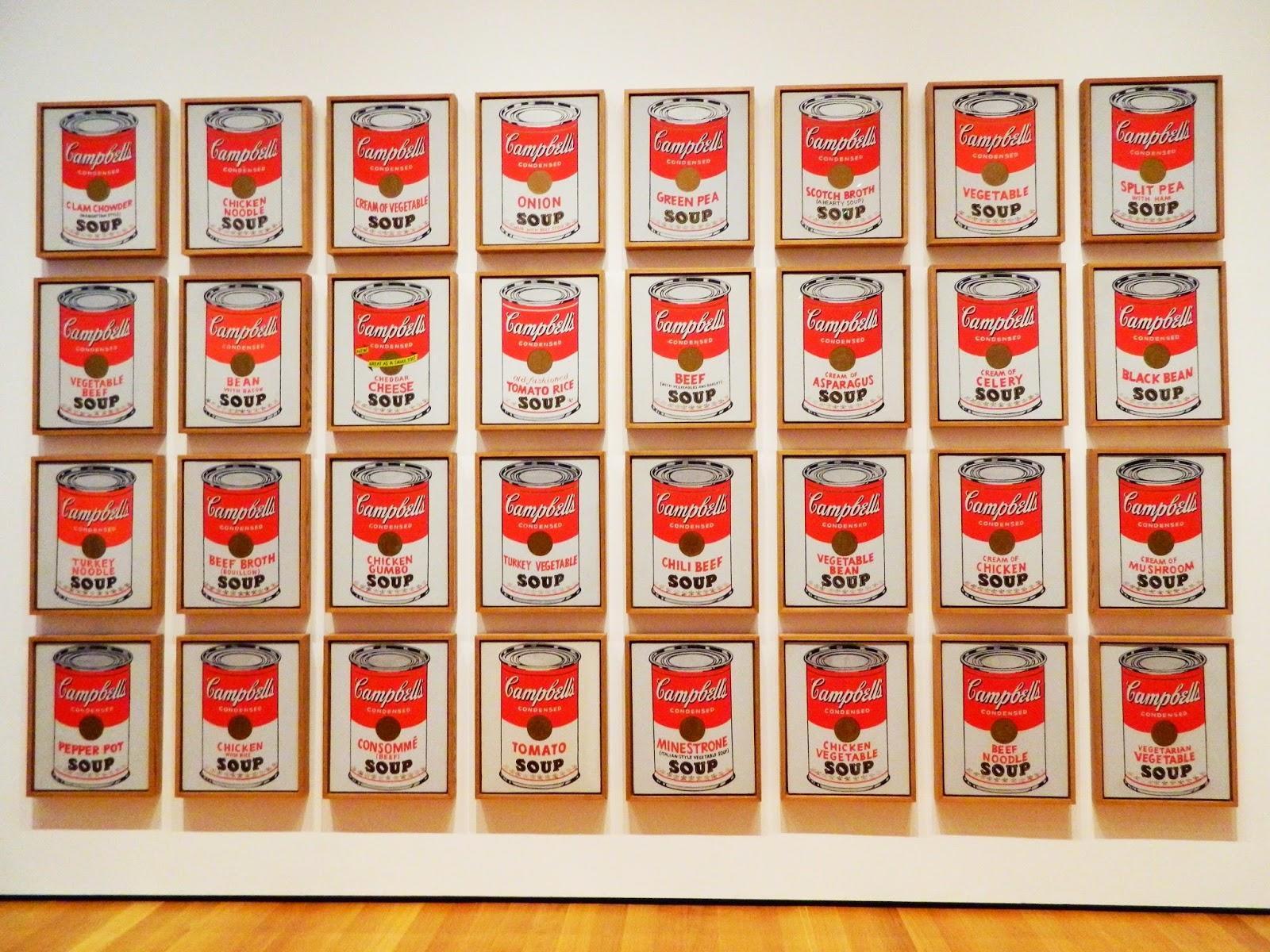
His 32 Campbell's Soup Cans is probably the most famous still-life masterpiece of the modern era. With this work, Warhol linked both classic techniques such as painting and drawing, with advanced processes.
Each of the 32 Soup Can's outline was first drawn on the canvas using a projector, then the can and label were hand painted, and the lettering was also projected before being painted, and finally, the fleur-de-lys logo was stamped using a recycled rubber eraser.
At the time he first displayed this series, in a one-man exhibition in Los Angeles, it caused great controversies, some critics questioning Warhol's artistic motive and denying that his work had any real value as art.
Today his art is recognised as some great examples of Pop Art and are amongst the most expensive Pop Art masterpieces. One of his Small Torn Campbell Soup Can sold for $11,776,000 in 2006 and was the highest price of any of the Campbell Soup Series.
Amrita Sher-Gil: “Still Life with Green Bottle”
Amrita Sher-Gil is widely recognized for her role in shaping modern Indian art through a distinctive synthesis of European training and Indian subject matter. Her still-life work, including Still Life with Green Bottle, shows her sensitivity to color relationships and material presence.
In Sher-Gil’s still-life approach, the objects don’t feel staged for luxury. They feel intimate—part of lived interiors. The compositions often emphasize tonal harmony and quiet tension, using simple forms to build emotional atmosphere. That’s a powerful reminder that still-life is not only about display; it can also be about private life and interior experience.
Bikash Bhattacharjee: “Still Life with Doll”
Bikash Bhattacharjee is known for psychologically charged imagery and an ability to make ordinary things feel uncanny. In works like Still Life with Doll, the “object arrangement” becomes narrative. The doll is not just a decorative element—it’s a trigger for memory, discomfort, nostalgia, or critique.
This is a distinctly modern still-life strategy: objects are chosen not only for shape and color, but for what they suggest about human presence. Bhattacharjee’s still-life work shows how contemporary Indian artists can use the genre to talk about identity and domestic symbolism without relying on grand scenes.
Summarise with AI:
Did you like this article? Leave a rating!

 Loading...
Thank you
You have such an in depth knowledge of art.