
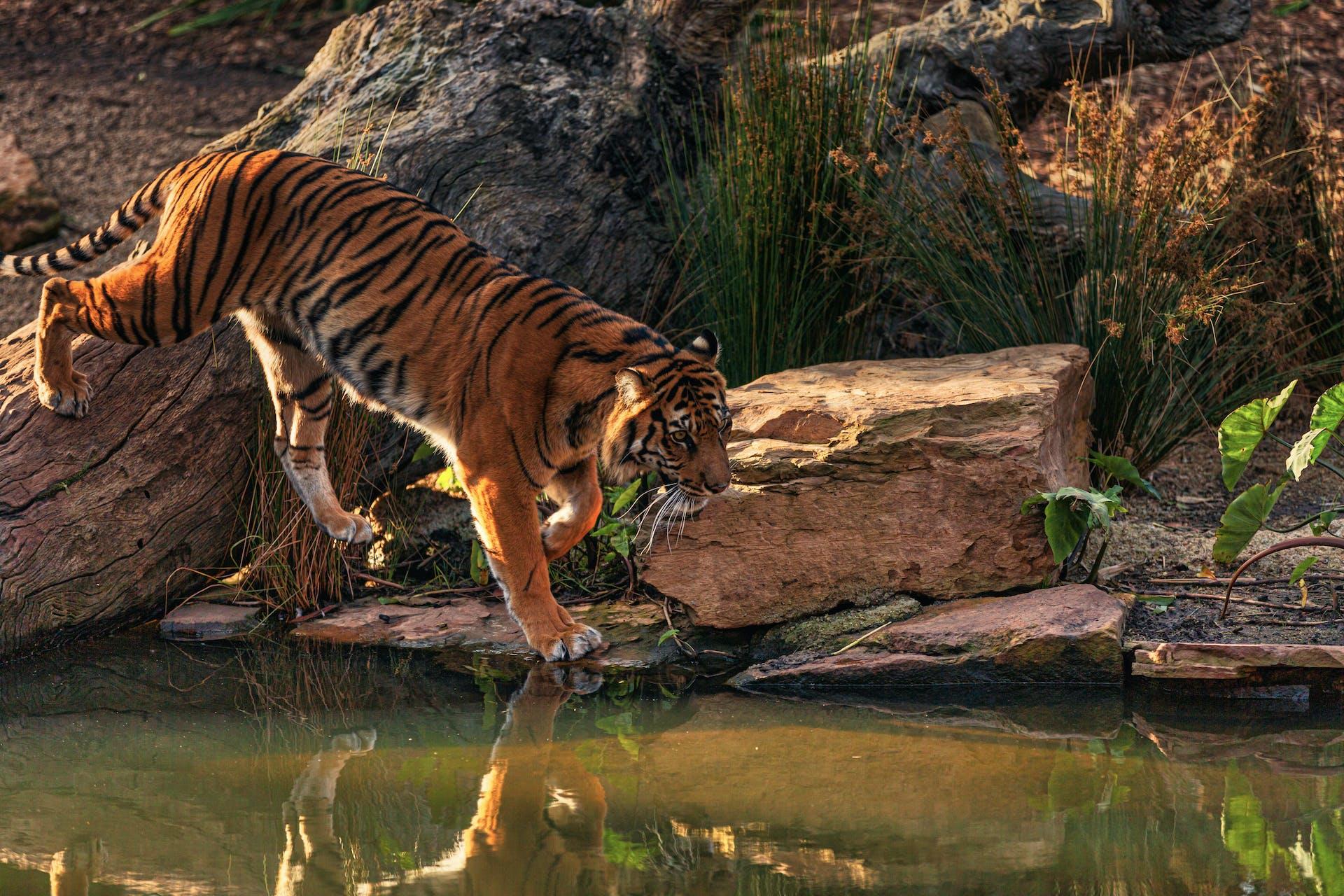

Periyar National Park is one of the most well-known national parks in India due to the lush landscape and incredible fauna; visitors are always left with breathtaking photos!
The famous Periyar Tiger Reserve was founded in 1978 and in 1991, Project Elephant launched and began helping to preserve the elephant population in the area.
Furthermore, the India Eco-development Project assisted in providing help for conservation from 1996 to 2005.
Clearly, Periyar Wildlife Sanctuary is an incredibly important ecosystem that’s received a lot of recognition from various organizations, and it must be preserved for the good of the global ecosystem!
For tourists, this means that there are many eco-tourism opportunities to experience the amazing scenic views and wildlife encounters Periyar National Park has to offer.d


Where is Periyar Wildlife Sanctuary?
Periyar National Park is located in the town of Thekkady in Kerala, India, high in the Cardamom Hills and Pandalam Hills, and in the southern region of the Western Ghats. In 1950, it became a wildlife sanctuary; before then, it had been Nellikkaampetty game reserve since 1934.
The entire sanctuary is 925 qu km, and the core area of 350 sq km was officially declared the Periyar National Park in 1982. Now, the sanctuary protects all the wildlife from poaching, environmental destruction, and other dangers.
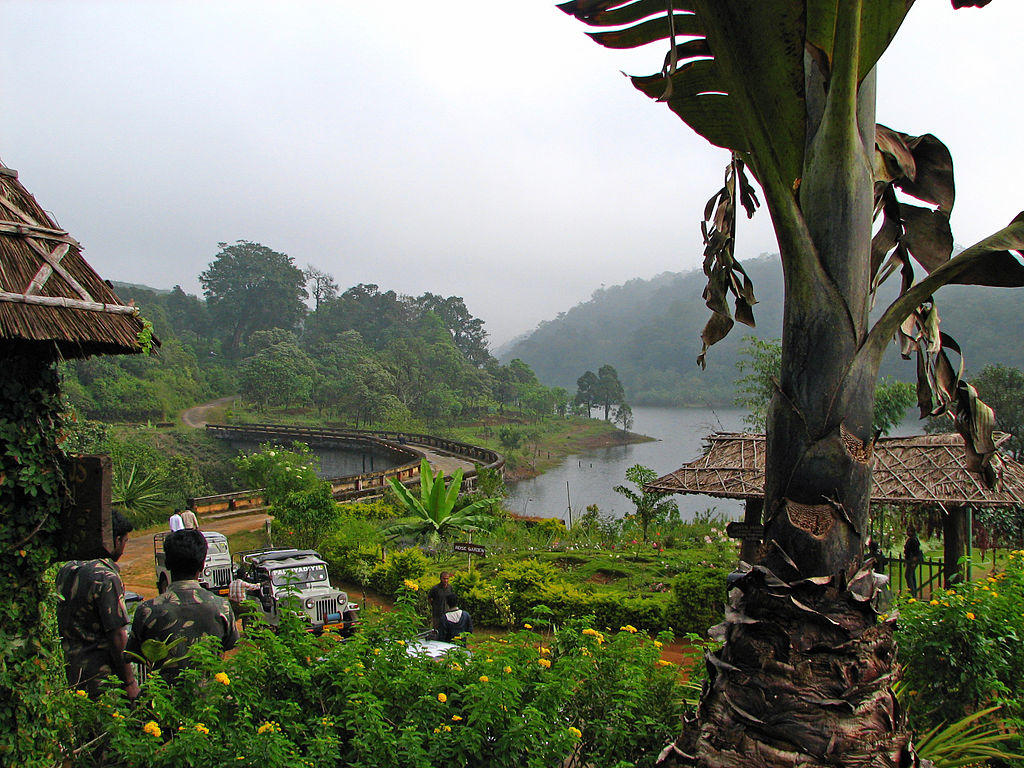
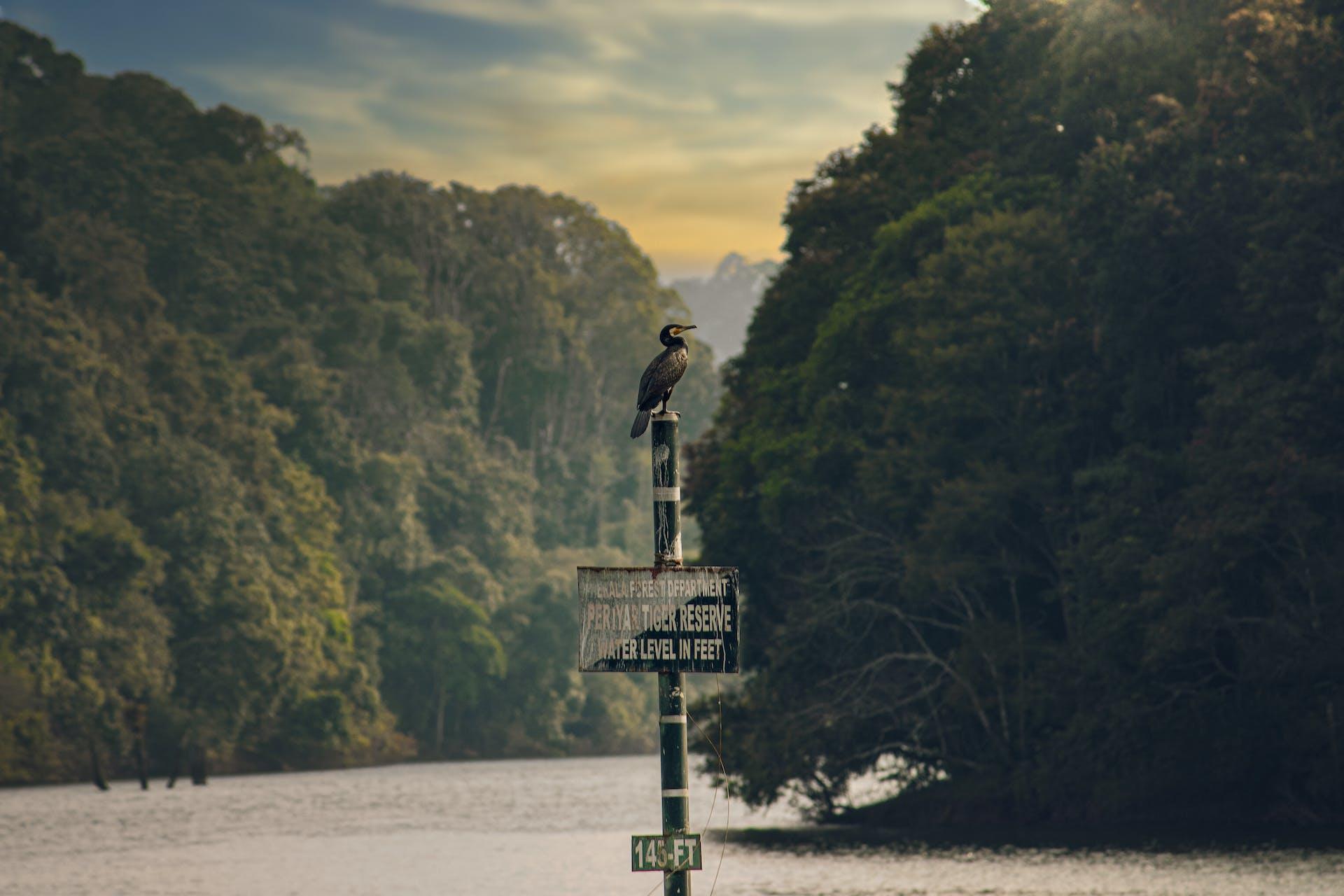
Periyar Lake is a man-made lake that was created in the 12th century by the Pandayas when they built the Mullaperiyar dam across the Periyar River. The dam was brought into the modern day when it was rebuilt between 1887 and 1895. This centralized lake became a watering hole for people as well as animals and set the scene for the area to become first a game reserve, and then the wildlife sanctuary it is today.
Facts about Periyar Wildlife Sanctuary
Periyar Wildlife Sanctuary is full of fascinating features, history, flora, and fauna. And there are plentiful opportunities to explore the incredible landscape while perhaps sighting a few animals residents.
Periyar Tiger Reserve (PTR)
The Periyar Tiger Reserve is part of the Western Ghats, which has been a UNESCO World Heritage Site since 2012. It works to help preserve the number of Bengal tigers since they are endangered.
As of 2023, there are about 43 tigers in the Reserve, which is the highest concentration of tigers in Kerala. In total, there are about 84 tigers in all of Kerala. In 2008, it was estimated that there were only around 1,411 Bengal tigers in the entire world.
Unlike lions, tigers are shy and solitary creatures. They rarely associate with other tigers, and they avoid people. So, you may or may not see a tiger on your trip to the tiger sanctuary.
The tiger preservation programme is world-class, earning the title Best Managed Tiger Reserve in the Management Effectiveness Assessment category in 2022.
While the area used to be a game-hunting ground, it is now firmly anti-hunting and anti-poaching. The only shot you can take of a tiger in these hills is with a camera.
Periyar Tiger Reserve uses rigorous anti-poaching measures, including the deployment of forest guards, the use of modern surveillance technology, and intelligence gathering to deter and apprehend poachers. Additionally, community engagement and awareness programs aim to reduce the demand for tiger products in traditional medicine, fashion, and "trophies."
Periyar Elephant Reserve
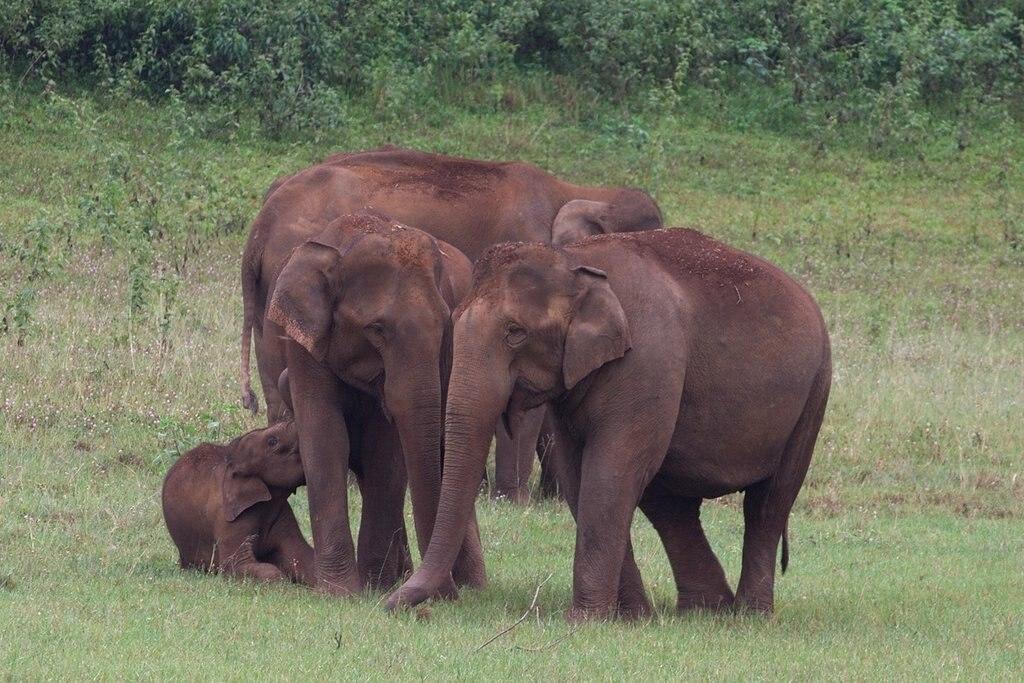
While not as established as the tiger programme, Project Elephant declared Periyar National Park to be part of the movement to protect wild Asian elephants.
There are currently hundreds of elephants residing in Periyar, perhaps as many as 1000!
Other Fauna and Flora in Periyar Wildlife Sanctuary and National Park
While the tigers and elephants are the main animal attractions at Periyar National Park, there are also 60+ species of mammals, 65+ species of reptiles, 340+ species of birds (migratory and endemic), 60+ species of amphibians, 40+ species of fish, and a large number of insect species (over 160 types of butterflies alone).
Some of the most notable animals located here (besides the Bengal tiger and Asian elephant) are:
- gaur
- sambar
- wild pig
- Indian giant squirrel
- Travancore flying squirrel
- jungle cat
- Dhole
- sloth bear
- Nilgiri tahr
- lion-tailed macaque
- Nilgiri langur
- Salim Ali's fruit bat
- stripe-necked mongoose
- Nilgiri marten
- Malabar grey hornbill
- Nilgiri wood pigeon
- blue-winged parakeet
- Nilgiri flycatcher
- crimson-backed sunbird
- white-bellied restart
- black-necked stork
As for plants, there are 4800+ species of flowering plants in the evergreen jungle. Among total plant populations are trees as well as flowering plants, such as:
- Teak
- Rosewood
- Terminalia
- Sandalwoods
- Mangoes
- Jamun
- Tamarind
- Banyans
- Sacred Fig
- Kino Tree
- Bamboo
- Diospyros bourdillonii
- Hopea parviflora
- Dipterocarpus indicus
- Semecarpus travancoricus
- Nageia wallichiana
There are even sections of eucalyptus, which were added intentionally by the Forest Department to try and reverse the effects of deforestation in the area.
Ecotourism in Periyar Wildlife Sanctuary
The best time to visit Periyar Wildlife Sanctuary is between October and June when the weather is the mildest and the animals are most likely to visit the lake for water. In the rainy seasons, they rarely have a need to come out of the dense foliage and you are unlikely to see them.
There are several different types of safari available for tourists looking to explore the region and see the wildlife.
Some of the most popular ecotourism activities at the park include:
- Nature walks
- Bamboo rafting
- Camping and Trekking on the Tiger Trail
- Night Trekking
- Boating
- Observing a tribal dance
- Staying in Eco-Lodges
Eco-tourism is an important way to offer sustainable activities to huge amounts of tourists without jeopardising the well-being of the ecosystem and wildlife living in the places people come to see. Periyar Wildlife Sanctuary is home to many community-run programmes, meaning you can help support the locals while supporting the park and enjoying your amazing trip!
Geographic Information
Periyar Wildlife Sanctuary is located in a highly mountainous region, meaning the highest point within the sanctuary is the Kottamala peak at 2,019 m (6,624 ft), and the lowest point is near the lake, at around 720 m (2,362 ft) above sea level.
There is a wide swath of different ecosystems in the park:
Tropical Evergreen Forest
This type of ecosystem is also called a Rainforest. It is almost consistently 20-25°C, with heavy annual rainfall (the Western Ghats get between 200 and 400 cm per year on average) distributed throughout the year, and high biodiversity in plants and animals.
Semi-Evergreen Forest
Most semi-evergreen forests are a transitional zone between tropical areas and deciduous areas. It has some qualities of both ecosystems, including a mixture of evergreen and deciduous trees, and more pronounced seasons than the nearby tropical forest but less pronounced than the deciduous forest.
Moist Deciduous Forest
This part of the ecosystem experiences both a dry season and a wet season. In the dry season, almost all of the trees lose their leaves.
Montane Grasslands
This area of the comprehensive ecosystem is mostly grasses and shrubs. "Montane" means mountain, which refers to the requirement that the grassland is only present in high altitudes. It's also much cooler than the forests and experiences both dry and wet seasons.
Montane Savannas
This ecosystem also only occurs at high elevations. It shares features with forests and grasslands and can be a transitory ecosystem between the two. It has mostly grasses and shrubs but also with some taller trees. The climate is cooler than the forests and it also experiences a distinct dry season and a wet season.
Wetlands
The Ramsar Convention defines wetlands as "areas of marsh, fen, peatland, or water, whether natural or artificial, permanent or temporary, with water that is static or flowing, fresh, brackish, or salt, including areas of marine water, the depth of which at low tide does not exceed six meters."
The presence of Periyar River and Periyar Lake facilitate the presence of wetlands.
What is Periyar Wildlife Sanctuary Famous For?
Periyar Wildlife Sanctuary is most famous for its importance as a tiger preserve in Project Tiger. Secondly, it is known for being an elephant reserve as part of Project Elephant.
How to Get to Periyar Wildlife Sanctuary
It’s best to plan your trip to Periyar between October and June.
By Air: Kochi (Cochin) Airport is 200 km away and Madurai Airport in Tamil Nadu is 140 km away.
By Rail: Kottayam Railhead is 114 km away.
By Road: Kumily, the nearest town from Periyar, is well served by both state and private buses from Kottayam, Ernakulam and Madurai in Tamil Nadu.
This dazzling National Park offers a wide variety of activities while allowing you to possibly see many amazing plants and animals in a way that respects and protects the landscape and the animal inhabitants.
Summarise with AI:
Did you like this article? Leave a rating!

 Loading...
Very interesting article about wildlife
Interesting facts