


Buddhism is a spiritual and philosophical tradition that began with the teachings of Siddhartha Gautama, commonly known as the Buddha. Understanding the origin of Buddha is essential to understanding the Buddha religion, which traces back to ancient India in the 6th century BCE. The Buddha’s teachings focused on overcoming suffering through ethical living, meditation, and wisdom. Over time, the religion spread across Asia and developed into several traditions, giving rise to different types of Buddhism that interpret and practice the teachings in slightly different ways.
To educate our interested readers about the history of world religions, we will spend some time analysing the origins, doctrines, and additional information on the world's fourth-biggest faith in terms of followers: Buddhism.
Check out how you can find the history professor here.





What Is Buddhism? A Brief Origin Story
Buddhism is one of the world’s major religions, with more than 500 million followers, representing roughly 7% of the global population. Because of its wide reach, learning about Buddhism helps people understand the cultural and spiritual background of millions across Asia and beyond.
The religion is most widely practised in Sri Lanka and Southeast Asian countries such as Thailand, Myanmar, Laos, and Cambodia. Large Buddhist communities also exist in China, Japan, Korea, Tibet, and parts of the Himalayas. Despite regional differences, most Buddhist traditions are rooted in the original teachings of the Buddha.
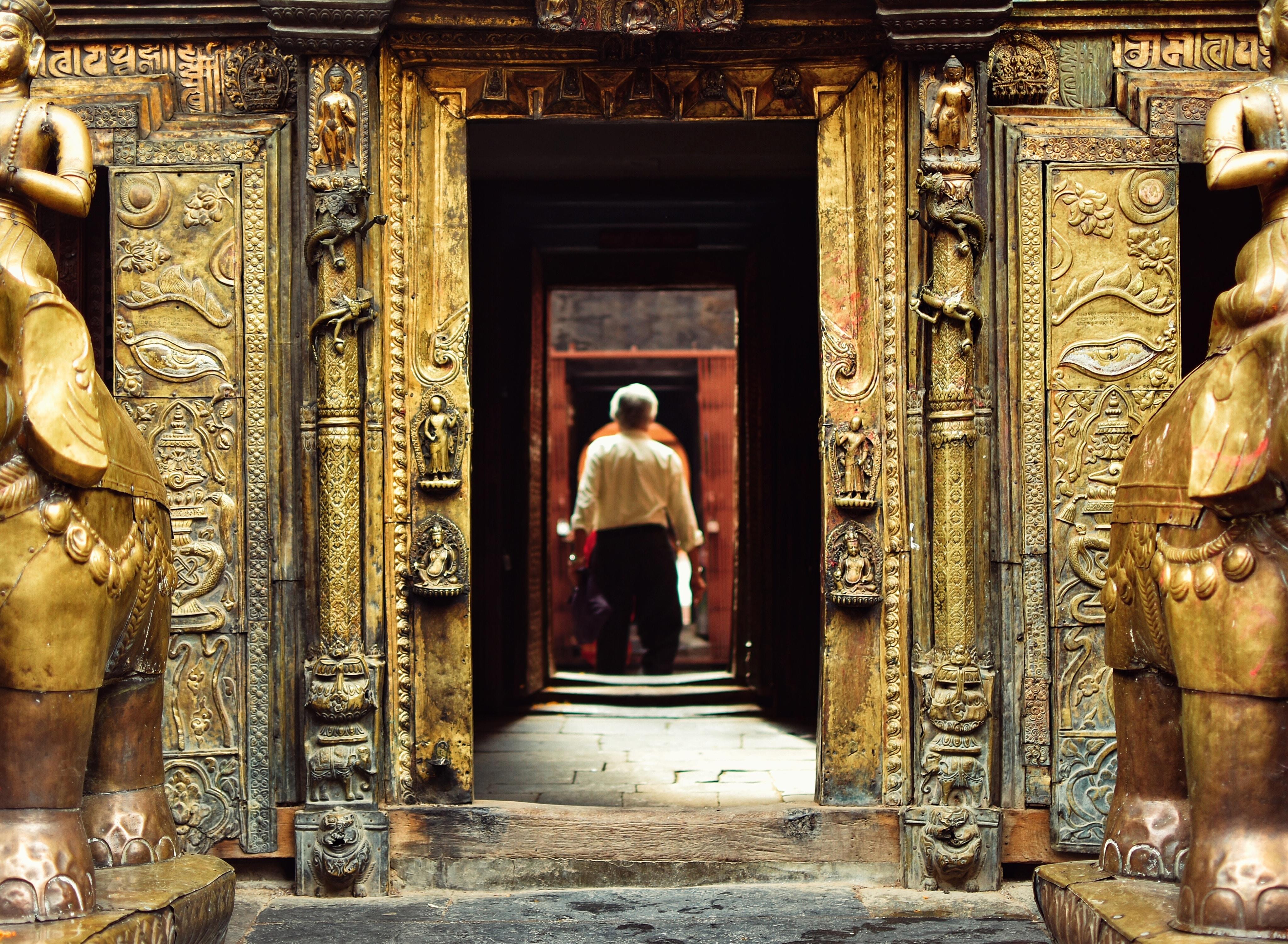
Key Facts About Buddhism
- Around 500+ million followers worldwide
- Originated in northern India and Nepal
- Began in the 6th century BCE
- Focuses on ending suffering and achieving enlightenment
- Core teachings include the Four Noble Truths and the Eightfold Path
Origins of Buddhism
Buddhism traces its origins to Siddhartha Gautama, who was born around 563 BCE near the Himalayan foothills. According to tradition, he was the son of a king and queen and grew up surrounded by luxury and protection from the hardships of the outside world.
However, his perspective changed after encountering old age, illness, and death. These experiences made him question the nature of human suffering and the meaning of life.
Gautama's encounters are known in Buddhist tradition as the “Four Sights”—old age, sickness, death, and a wandering ascetic. They inspired Siddhartha to seek spiritual truth.
The Search for Enlightenment
Determined to understand suffering, Siddhartha left his royal life behind. He became a wandering seeker and studied with various teachers while practising extreme austerities such as severe fasting.
Eventually, he realised that extreme self-denial was not the answer.
Instead, he adopted what later became known as the Middle Way, which teaches balance between indulgence and extreme hardship. The concept of the Middle Way is still central to Buddhist philosophy and encourages moderation in lifestyle and spiritual practice.
Enlightenment Under the Bodhi Tree
After abandoning extreme ascetic practices, Siddhartha sat in deep meditation under a fig tree in Bodh Gaya (present-day Bihar, India). He vowed not to rise until he understood the cause of suffering.
After prolonged meditation, he attained enlightenment. This moment transformed Siddhartha Gautama into the Buddha, meaning “the awakened one.”
The Concept of Nirvana
After enlightenment, the Buddha explained that liberation from suffering is possible through spiritual understanding.
The ultimate goal in Buddhism is Nirvana, a state where a person is free from:
- Suffering
- Ignorance
- The cycle of rebirth (samsara)
Achieving Nirvana represents complete spiritual awakening.
Buddha’s Core Teachings
After enlightenment, the Buddha travelled and taught his ideas to others. His teachings form the foundation of Buddhism and remain central to Buddhist practice today.
The most important teachings include:
- Four Noble Truths – explaining the nature and cause of suffering
- Eightfold Path – a guide to ethical living, wisdom, and mental discipline
These principles guide Buddhists toward enlightenment and a life of compassion and mindfulness.
The tree where Buddha meditated is called the Bodhi Tree, and the site of enlightenment, Bodh Gaya, is now one of the most important pilgrimage destinations for Buddhists.
Early Buddhist Writings
Although the Buddha lived in the 6th century BCE, written biographies of his life appeared centuries later. One of the earliest detailed accounts is the “Buddha Charita”, written by the scholar Ashvaghosa in the 1st or 2nd century CE.
These early texts helped preserve the story of the Buddha and allowed Buddhism to spread across Asia and eventually the world. The Buddha’s teachings were first passed down orally by monks before being written down centuries later.
Want to learn more about Judaism?
Types of Buddhism
Today, when people explore what Buddhism is, they often encounter the three main types of Buddhism that evolved as the teachings spread across Asia. These traditions developed over centuries within the broader Buddha religion history, building upon the original teachings connected to the origin of Buddha. While they share core ideas such as the Four Noble Truths, the Eightfold Path, and the goal of overcoming suffering, each tradition interprets Buddhist philosophy and practice in slightly different ways.
- Theravada Buddhism – Considered the oldest surviving tradition, Theravada Buddhism focuses on preserving the earliest teachings of the Buddha found in the Pali Canon. It is widely practiced in countries such as Sri Lanka, Thailand, Myanmar, Laos, and Cambodia. This tradition emphasizes personal spiritual development, meditation, and the goal of becoming an Arhat, someone who achieves enlightenment through disciplined practice and insight.
- Mahayana Buddhism – Mahayana Buddhism developed later and spread across East Asia, including China, Japan, Korea, and Vietnam. It places strong emphasis on compassion and the Bodhisattva ideal, where practitioners aim to achieve enlightenment not just for themselves but to help all beings reach liberation. Mahayana texts expand on earlier teachings and introduce concepts such as emptiness (śūnyatā) and universal Buddha-nature.
- Vajrayana Buddhism – Vajrayana, often called “Tantric Buddhism,” evolved from Mahayana traditions and is mainly practiced in Tibet, Bhutan, and parts of Nepal and Mongolia. It incorporates advanced meditation techniques, symbolic rituals, mantras, mandalas, and guidance from spiritual teachers or lamas. Vajrayana aims to accelerate the path to enlightenment by combining philosophical understanding with powerful meditative practices.
The Primary Doctrines of Buddhism
Similar to all major religions, denominations, and personal beliefs, Buddhism has many primary doctrines that are unlike any other customs or traditions practised by other faiths.
It is essential to mention that the majority of Buddhist beliefs revolve around the goal of overcoming suffering and the cycle of death and rebirth; mainly by attaining Nirvana or a path of Buddhahood.
Since there are so many intriguing doctrines encompassed in Buddhism, it is crucial to focus on some of the most noteworthy. In the following list, we will consider the Four Noble Truths in further detail:
- Dukkha: the first noble truth is known in English as the truth of suffering. When analysing suffering Buddhists recognise that there are three kinds of pain that correspond to the three sights Buddha saw. What are they? Old age, sickness, and death. Buddhists understand that life often fails to live up to our expectations; satisfaction is only temporary. By accepting this first truth, Buddhist are neither optimistic nor pessimistic but realistic.
- Samud?ya: the second noble truth is that of the origin of suffering. Many people's daily problems may be from simple causes such as thirst, hunger, sadness, or the loss of a loved one. However, Buddha has identified the exact purpose of suffering, and it is much more deeply rooted than one might think. The root of all pain comes from desire or tanh?. Also known as the three roots of evil, greed and ambition, ignorance and hatred, are the cause of suffering.
- Nirodha: the third noble truth is known as the cessation of suffering. Buddha taught that the only way to let go of desire is to be unattached. Nirvana can only be reached if the three fires of desire are extinguished. Reaching enlightenment is worth not being attached to anything since it means compassion for all living things.
- Magga:known as the path to the cessation of suffering, the final noble truth is a set of principles called the Eightfold Path. Also known as the Middle Way, the Eightfold Path avoids indulgence. In the following list, we will consider more information about the Eightfold Path.
Get class 10 history tutors here.
Deeply entrenched in Buddhist beliefs is the Eightfold Path. The following are the eight stages that should not be taken in order but are instead there to strengthen and reinforce each other:
- Samm? ditthi: known in English as the right understanding, which is accepting Buddhist teachings. Buddha never wanted his followers to believe his teachings blindly; instead, they were to judge for themselves if they were right.
- Samm? san?kappa: can be understood in English as the right intention or commitment to cultivating the right attitudes.
- Samm? v?c?: the right speech; which means that practitioners should avoid harmful speech, slander, or gossip and focus on speaking correctly of people.
- Samm? kammanta: the fourth part or step is known as the right action, which is behaving peacefully and harmoniously together avoiding any stealing, killing, or sexual overindulgence.
- Samm? ?j?va: known in English as the right livelihood, devout Buddhists following this path will work hard to avoid earning a living in ways that cause harm to other people or animals.
- Samm? v?y?ma: the right effort is a fundamental step that involves cultivating positive thoughts and staying away from unwholesome states and their development in the future.
- Samm? sati: known in English as the right mindfulness, followers exert themselves to develop an awareness of the body, sensations, feelings, and state of mind.
- Samm? sam?dhi: the right concentration is developing the mental focus necessary for the eightfold path.
By working hard to complete all of the required tasks of the eightfold path, Buddhists set themselves up for enlightenment that is necessary for true happiness in life.
Before concluding, it is essential to state that there are many more other Buddhist beliefs that are fundamental to the entire structure of Buddhism.
The Buddha delivered his first sermon at Sarnath near Benares (Varanasi), where he explained the Four Noble Truths and began teaching his followers.
Supplementary Information About Buddhism
Although the world's major religions such as Christianity, Judaism, Islam, Hinduism, and Buddhism could not be more different, they are similar in their structure.
Well, it is essential to mention that even though the beliefs and doctrines differ, there are specific categories that remain the same such as places of worship, holy books, prominent figures, and iconic symbol.
Therefore, without further ado, we will consider supplementary information about the Buddhist faith.
Places of Worship
The following is the most common sacred space where Buddhists worship:
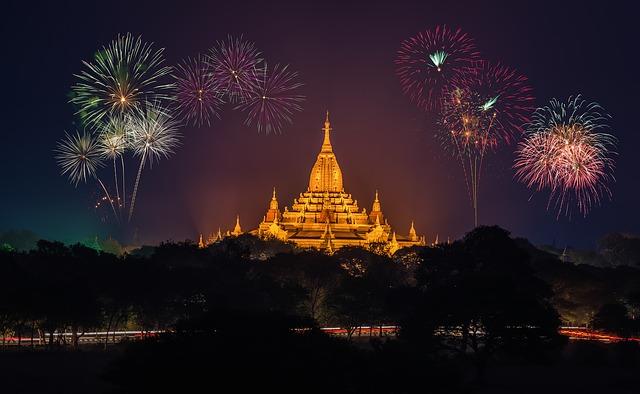
- Buddhist Temple: the followers of Buddhism worship their deities in areas known as temples across the world. Sacred Buddhist structures may be called vihara, chaitya stupa, wat, and pagoda. Temples represent the purest environment of Buddha.
Holy Writings
Christians read the Bible, Muslims examine the Qur'an, and Buddhists analyse the following ancient text for insight:
- Pali Canon: also known as the Tripitaka, the Pali Canon is an important Buddhist holy book that includes many of Buddha's discourses and teachings. Pali Canon means "the word of Buddha" when translated. Also, it is essential to state that different sects of Buddhism follow canonical and noncanonical scriptures to a varying degree.
Key Figures of Buddhism
The succeeding people are some of the most recognisable figures of Buddhism:
- Gautama Buddha: probably the most essential Buddhist of all time since the teachings of Buddhism were based on his philosophies and thoughts.
- Dalai Lama: the 14th Dalai Lama is perhaps the most famous Buddhist still alive. Born as Lhamo Dhondup, he was identified as the reincarnation of the past Dalai Lama when he was only two years old.
Buddhist Symbols
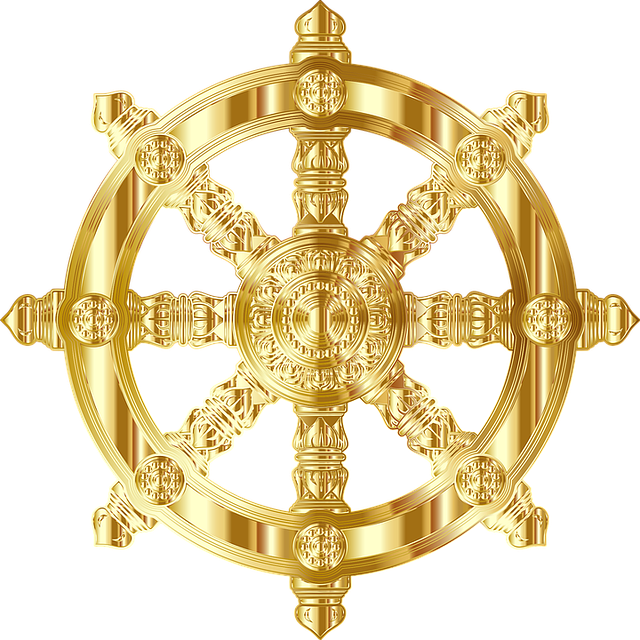
Like all denominations and faiths, Buddhism has a few symbols that are different from all else. The following are the most iconic Buddhist symbols:
- The Dharma Wheel: also known as the Dhamma Chakka, it is often used to represent Buddha himself and is now the universal symbol of Buddhism. The Dharma Wheel has eight spokes which represent Buddha's Eightfold Path.
- The Eternal Knot: the intertwining of lines on the eternal knot is said to symbolise how everything is connected to each other; according to the knot, religion and secular affairs, as well as compassion and wisdom.
By carefully analysing Buddhism, individuals become more familiar with intriguing aspects that are so ordinary for people in other continents such as Asia.
Summarise with AI:
Did you like this article? Leave a rating!

 Loading...
