


Every chess player aspires to strengthen their defences and work on their weaknesses. However, there are occasions when no matter what a player accomplishes, success eludes them. You can only get so far with talent. While perseverance helps develop the skill, without a solid plan, everything is merely a house of cards. Start putting your skills into practice today if you want tomorrow to be better than today!
You shouldn't believe that practising will suffice to enhance your chess. It's quite convenient to do a little research, and understanding some theoretical positions is very beneficial in the endgame. You should study some fundamental ideas, such as opposition in pawn endgames and the subtleties of the "rook pawn and bishop vs king" endgame or the "queen vs pawn on 7th rank" endgame, in addition to the fundamental mates.


Resources for Learning Chess Online
- Chess.com: Chess.com is a comprehensive online platform offering lessons, puzzles, practice games, and opportunities to play against other players of various skill levels. It also has an active community and provides access to articles, videos, and live-streamed tournaments.
- lichess.org: Lichess is a free and open-source chess website that offers various learning resources, including interactive lessons, puzzles, and computer analysis. It also provides online gameplay, tournaments, and a supportive community.
- Chessable: Chessable is an online platform that specializes in interactive chess courses and training. It offers a range of courses designed by top players and coaches, with a focus on systematic learning and spaced repetition.
- YouTube Channels: There are several YouTube channels dedicated to teaching chess, including "ChessNetwork," "Hanging Pawns," "Saint Louis Chess Club," and "thechesswebsite." These channels offer instructional videos, game analysis, and insights from top players.
- ChessKid: ChessKid is an online learning platform specifically designed for children. It provides interactive lessons, puzzles, and games in a kid-friendly environment. It also offers features for parents and teachers to track progress.
- Chess24: Chess24 is a popular online chess platform that offers a combination of learning resources, live streaming, and interactive training. It provides access to video lessons, tactics trainers, and a playing interface.
- Internet Chess Club (ICC): The Internet Chess Club is one of the oldest and most established online chess platforms. It offers a range of resources, including lessons, videos, and opportunities to play against strong opponents.
- ChessTempo: ChessTempo is a website focused on chess tactics and puzzles. It offers a large collection of puzzles of varying difficulty levels to help improve tactical awareness and calculation skills.
- Chess Books and E-books: There are numerous chess books and e-books available for learning at various levels. Some highly recommended titles include "Logical Chess: Move By Move" by Irving Chernev, "My System" by Aron Nimzowitsch, and "Silman's Complete Endgame Course" by Jeremy Silman.
- Online Chess Courses: Many renowned chess players and coaches offer online courses, such as those on platforms like Udemy, Chess.com's Chess University, and the Internet Chess Club's Learning Center. These courses cover various topics, from openings to endgames, and provide structured learning experiences.
Common Beginners' Mistakes in Chess
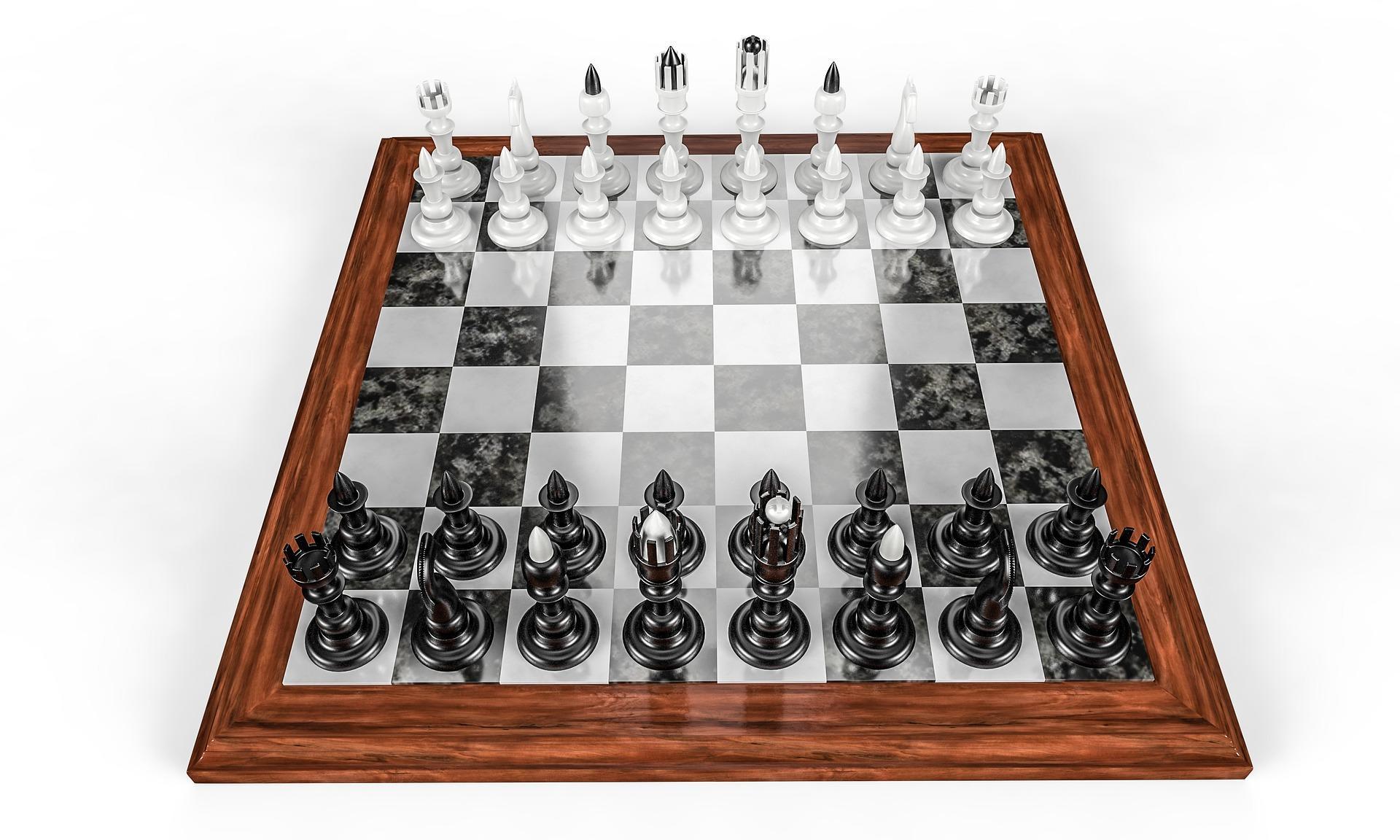
Beginners in chess frequently believe that the quantity of errors they commit separates them from strong masters and modest amateurs. The actual variation, however, is in the type of errors committed rather than their quantity. Beginners will observe as their opponent captures all of their pieces move by move, but experienced players are more prone to make mistakes such as making a weak pawn or square, to name a few. Here is a look at the most common errors that we should avoid.
Mistakes in the Opening Game
Playing too many moves with pawns
In the opening, you should make a few pawn plays that are focused on occupying and controlling the middle of the board. However, many beginners make the error of moving their pawns too frequently, which stalls the growth of bishops and knights. Additionally, the king is left out in the middle for too long.
Developing the queen too soon
The Queen is a particularly potent piece. This can prompt us to make an effort to maximize its potential right away. If the queen is moved too soon or used to make threats, your adversary will set up pieces to assault her, forcing us to manoeuvre around the queen as they advance in order to escape being captured.
Leaving the king in the middle
In a game of chess, the safety of the king is obviously of utmost importance. So, castle as soon as you can, especially in the first stages of teaching yourself chess.
Mistakes in the Middle Game
Leaving undefended pieces
Your chess pieces must occupy good squares, which are dynamic and ideally allow for coordinated actions. It is undesirable for a number of pieces to go undefended because the opponent could exploit this weakness by using tactical resources.
Not playing the rooks
In order to connect the rooks (i.e., find an appropriate square for the queen so that the rooks are coordinated), it is typically crucial to clear the first rank. The rooks must be in open or partially open files, ideally. An open file is one in which neither side's pawns are present. In a semi-open file, the opponent has pawns but we do not. As the game progresses and pawns are exchanged, some files are therefore vacant, and these must be used to activate your rooks.
Weakened castling
In the opening, we castle to protect our King, but in the middle game, we must maintain the safety of our castling. For this reason, it's crucial to avoid moving the pieces that guard the King. Their goal is to keep it secure, yet when they depart, they leave the King defenseless.

Not having a game plan
Moving merely for the sake of moving is one of the beginner's most common errors. It is essential to have a broad sense of what we want to do in the middle game. Just because it's our turn doesn't mean we should move. It needs to make sense and, if at all feasible, stick to a broad theme. Naturally, this will be simpler to accomplish as we gain expertise and get more accustomed to certain helpful patterns.
Mistakes in the Endgame
Not activating the King
Beginners frequently forget that the King must play a proactive role in the endgame because we make such a big deal out of the King seeking refuge in the castle during the opening and for it to remain safe during the middle game. The enemy King can be activated once there are fewer pieces on the board, decreasing the likelihood of an attack. Like any other piece, it has the ability to threaten and assume a crucial function.
Ignoring the development of passed pawns
In the majority of endgames, passed pawns are without a doubt the main characters. The idea that a pawn is worth one point is ingrained in our minds as we learn the value of each piece. Keep in mind that as there are fewer pieces left, the worth of the pawns steadily grows, and this is especially true if they advance and become passed pawns.
How to Improve Your Chess Game
You should ideally play chess against tougher opponents on a regular basis to get better. To improve, resistance is necessary. When you take it easy, your mind becomes sluggish! You'll advance more quickly and enjoy studying chess more if you adopt a teachable attitude. Here is some expert advice on how to improve your game.
Review Your Plays
In addition to playing frequently, you should also go through your previous games. Your mental processes are reflected in your games. Reviewing your games will therefore show you what area of your training needs the greatest work. You must record your games in order to review them. As an alternative, when you play online, your games are typically automatically recorded.
Study Chess Principles In-depth
The three major chess principles have a lot of depth, despite the fact that they seem rather straightforward. Although they are simple to comprehend, applying them successfully requires a little more effort. The concepts aid in your comprehension of chess tactics. Consider your principles if you are in a situation where you are unsure about what to do. Your thought process will be directed in the appropriate direction by it. As part of your study strategy for chess growth, you should learn the specifics of the three basic chess principles.
Improve Your Opening Move
You can play a better game if you get off to a strong start. Applying the three basic principles of chess will allow you to do rather well, even in the opening. However, you'll feel more confident if you memorize a few widely used openings. It is advantageous to begin a game with the knowledge that you will adopt a tried-and-true strategy.

Learn Key Endgame Moves
A strong approach to learning chess is observation. You can find patterns and ideas by simply watching chess master games. Watch masters play games. You ought to be aware of a few common endgame scenarios. They are significant because they take place frequently. You can win many games that would otherwise end in a draw or defeat if you have a solid understanding of these usual endgame scenarios. The following are the top three endgame positions you should research:
- King plus pawn opposing King
- King and Queen oppose King and Pawn.
- Pawn versus King + Rook and King + Rook
Improve Chess Vocabulary
Terms and expressions connected to chess concepts and theory are referred to as chess vocabulary. Adding new words to your chess vocabulary might really help you comprehend the game better overall.
Study Tactical Patterns
It's true that tactics are a crucial talent, and you should practice it frequently. On the other hand, nobody offers you tactical training suggestions. Because there are so many distinct tactical concepts to learn, it isn't quite as straightforward. Three of the many tactical patterns that exist include pins, forks, and discovered attacks. If you want to develop your tactical talent, you must study the many patterns.
Summarise with AI:
Did you like this article? Leave a rating!

 Loading...
