

Must-Know Facts About Historical Places in India
Before we dive into the curated list, here are a few quick facts that capture why India's monuments are so remarkable:
- UNESCO recognition: India has 43 UNESCO World Heritage Sites (as of 2026), with 35 of them designated as cultural heritage sites — among the highest counts in Asia.
- Regional diversity: Historical monuments are spread across every region — Mughal architecture in the north, Dravidian temples in the south, rock-cut caves in central India, and colonial-era structures in the east and west.
- Span of history: The oldest sites date back over 5,000 years (Indus Valley sites like Dholavira), while the most recent heritage structures are barely a century old (India Gate, Victoria Memorial).
- Architectural fusion: Indian monuments showcase an unmatched blend of Hindu, Buddhist, Jain, Islamic, Persian, Portuguese, French, and British architectural traditions — often in a single structure.
- Living heritage: Many sites are not just tourist destinations but active places of worship — including the Golden Temple, Jagannath Temple, and Meenakshi Temple.
- Tourism significance: Historical monuments are central to India's tourism economy, with the Taj Mahal alone drawing 6–7 million visitors annually.
India is home to the largest number of rock-cut monuments in the world, including Ajanta, Ellora, and the Pallava monuments at Mahabalipuram.
Here are our picks of the top 10 historical places in India:
- Ajanta and Ellora Caves, Maharashtra
- Sun Temple, Konark
- Taj Mahal, Agra
- Khajuraho Group of Monuments, Madhya Pradesh
- Qutab Minar, New Delhi
- Red Fort: Lal Kila, New Delhi
- Charminar, Hyderabad
- Gateway of India, Mumbai
- Golden Temple, Amritsar
- Hawa Mahal, Jaipur
Why Visit India's Historical Places?
India's monuments are not just stone, marble, and brick — they are textbooks of dynasties, faiths, conquests, romances, and revolutions. Each site reflects a distinct chapter of the subcontinent's 5,000-year-old civilisation, from the Mauryans and Cholas to the Mughals and the British. Whether you're drawn to architecture, history, spirituality, or photography, India's heritage map has something profound to offer.
Owing to their enormous significance, India's ancient landmarks have grown to become popular travel destinations, some of them featuring in UNESCO's prestigious World Heritage Sites Lists, and have even drawn interest from history aficionados and art enthusiasts around the world. India's historical sites are delightful in every manner, whether you're seeing the captivating Taj Mahal in Agra or commemorating India's freedom battle at Delhi's India Gate.
In September 2023, Santiniketan, founded by Nobel Prize winner Rabindranath Tagore, was designated as the 41st world heritage site in India.
Ajanta and Ellora Caves, Maharashtra
Built: 2nd century BCE–10th century CE State: Maharashtra
Located near Aurangabad, the Ajanta Caves are renowned for their Buddhist murals and sculptures, while the Ellora Caves house 34 rock-cut temples representing Buddhism, Hinduism, and Jainism — a remarkable testament to religious harmony. The Kailasa Temple at Ellora, carved from a single rock, is the largest monolithic excavation in the world. Both sites are UNESCO World Heritage Sites.
Mysticism of the Ajanta Caves
Visit Ajanta to witness the practice of the delayed disclosure. A 250-foot wall in the Ajanta Caves was knocked out to accommodate Buddhist prayer rooms and monasteries. The paintings showed the Buddha's various incarnations and lifetimes, accompanied by sculptures of other Buddhist deities from the second to the fifth centuries BC. Some of these caverns may really have the largest examples of ancient Indian wall paintings that have survived.
Ajanta Caves gained international recognition in the 19th century when a British officer named John Smith stumbled upon them in 1819 while on a hunting expedition.
The caves were unknown to the general public until a British officer on a hunting expedition discovered them in the 17th century. However, the Ajanta Caves are mentioned in memoirs written by Chinese Buddhist pilgrims to India in the Middle Ages.
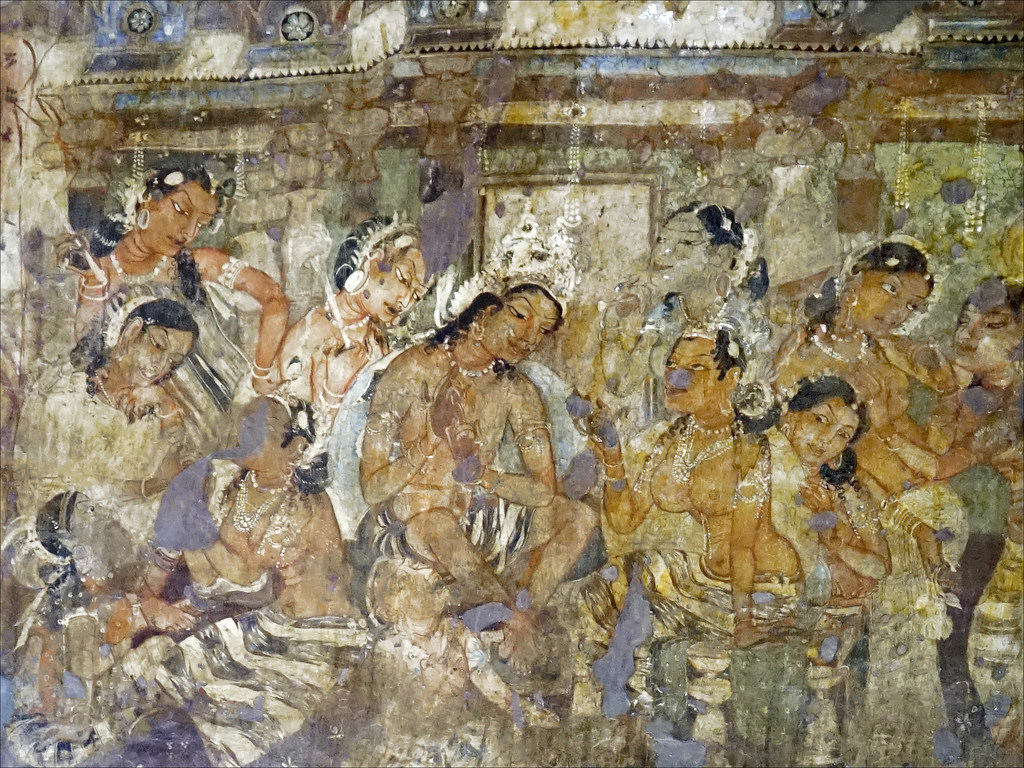
The Ajanta Cave paintings are the oldest and most important wall paintings in India because other forms of painting from around 1000 C.E., such as palace murals and paintings on wood, cloth, or palm leaf, have not survived. The technique and strategy used to create the Ajanta cave paintings are unique to South Asian art history and set them apart from any other artwork found in other civilizations' art histories.
The walls, ceilings, and columns of the tunnels were decorated with ornate designs of flowers and animals, as well as compositions of Jataka stories. The world of the paintings is one in which a lush natural setting and noblemen live in harmony. The vibrant colors of the artwork suggest that the painters were experienced in producing both secular and religious works.
Resilience of the Ellora Caves
Elura and Elapura are other names for Ellora, a historically sacred site in central India's Maharastra region. Famous for their temples and monuments dedicated to Buddhism, Hinduism, and Jainism, the Ellora Caves were hewn out of the surrounding cliff rock between the sixth and seventh centuries CE. UNESCO has designated them as World Heritage Sites.
The largest rock-cut monument in the world, the 32-meter-tall Kailasa temple, which was constructed in the ninth century CE, is the most remarkable example.
The magnificent architectural creations of followers of three main religions, the 34 caverns of Ellora, represent a spirit of religious tolerance and harmony in a precious collection.
The Kailasa Temple at Ellora was carved top-down from a single piece of basalt rock — a feat that would be considered impossible even with modern engineering.
There were three phases to the rock-cutting activity between the sixth and the twelfth century. The earliest caves (caves 1–12) were excavated between the fifth and eighth centuries, and they represent the Mahayana school of Buddhism that was then prevalent in this region.
The Brahmanical series of caverns (caves 13–29), which include the well-known Kailasa temple (cave 16), were excavated during the seventh and tenth centuries. The last phase, which spanned the ninth and twelfth centuries, was the excavation of several caverns (caves 30-34) that represented Jain doctrine.
The Ellora Caves are not only a symbol of the three major world religions—Buddhism, Brahmanism, and Jainism—but they also demonstrate the tolerant attitude of ancient India, which permitted these three faiths to establish their communities and sanctuaries in one place, adding to their significance on a global scale. The continuous series of structures at Ellora, dating from AD 600 to 1000, brings back the traditions of ancient India.
Legendary Sun Temple, Konark
Built: 13th century CE Built by: King Narasimhadeva I State: Odisha
Designed in the form of a colossal stone chariot with 12 pairs of wheels and seven horses, the Konark Sun Temple is dedicated to Surya, the Sun God. Although partially in ruins today, its surviving sculptures and architectural detail make it one of India's most visually striking monuments. UNESCO recognised it in 1984.
The Konark temple is like a gigantic chariot drawn by seven galloping, lavishly ornamented horses. It contains twelve sets of elaborate wheels. The wheels are carved on the sides of the "chariot". Hindu traditions about Surya, who is usually portrayed riding a chariot driven by seven horses, are the main source of inspiration for the temple's chariot-shaped construction. The twelve pairs of wheels stand for the twelve months of the year.
The Konark temple holds great spiritual and cultural significance for Hindus and history buffs. It is a repository of old wisdom. The sanctum sanctorum would be lit by the first light of the rising sun as it passes through the main door due to the temple's location. The temple represents the harmonious coexistence of science, spirituality, and creative expression in ancient India.
Constructed under the leadership of the esteemed monarch of the Ganga dynasty, King Narasimhadeva I
The temple's design integrates Buddhist, Indian, and Jain architectural features to represent the region's diversity in culture and religion. The temple is also an excellent example of how to apply Vastu Shastra, an Indian architectural theory that emphasizes a building's alignment with geometric shapes and cardinal points.
The Konark Sun Temple is an architectural marvel that exemplifies India's rich cultural heritage. The intricate carvings, sculptures, and architectural features of the temple bear witness to the skill and artistic prowess of those bygone days.
Taj Mahal: Symbol of Love
Built: 1632–1653 Built by: Mughal Emperor Shah Jahan State: Uttar Pradesh
The Taj Mahal needs little introduction. Built by Shah Jahan in memory of his wife Mumtaz Mahal, this white marble mausoleum is widely regarded as the finest example of Mughal architecture and is one of the New Seven Wonders of the World. Inlaid with 28 types of semi-precious stones from across Asia, it remains India's most visited monument and a UNESCO World Heritage Site since 1983.
A masterpiece of pure white marble, the Taj Mahal captures the unparalleled grandeur of a bygone era.
Construction began in 1632 and was completed in 1653
The world-renowned Taj Mahal, a testament to the Mughal Emperor Shah Jahan's undying love for his wife Mumtaz Mahal, is a testament to this love. It should be appreciated that way—a romance captured in marble and enhanced with priceless and semi-precious stones!

In 1983, the Taj Mahal received the UNESCO World Heritage Site designation. The Taj Mahal, with its whole range of Indo-Islamic sepulchral architecture, is regarded as the height of artistic and architectural achievement because of its perfect harmony and exquisite craftsmanship. Its design, conception, and implementation are masterworks of architectural style, and its symmetry, balance, and deft integration of many components give it a unique visual appeal.
The Taj Mahal subtly changes colour through the day — pinkish at sunrise, dazzling white at noon, and golden at sunset.
Khajuraho Group of Monuments, Madhya Pradesh
Built: 950–1050 CE Built by: Chandela dynasty State: Madhya Pradesh
Of the original 85 temples, 25 still survive across a 6 sq km area. Famous worldwide for their intricate Nagara-style architecture and sculptures depicting deities, mythological figures, and aspects of human life, the Khajuraho temples are a UNESCO World Heritage Site.
Khajuraho, located in the Chattarpur region of Madhya Pradesh, is a wonderful medieval city that possesses mesmerizing architecture.
In the eleventh century, the Khajuraho temple site covered twenty square kilometers and had eighty-five temples, according to historical archives. Only twenty-five of these temples, dispersed over a six square kilometer area, have survived the test of time.
Built during the Chandela Dynasty in the Middle Ages, the UNESCO-designated Khajuraho Group of Monuments is well known for its Nagara-style architecture and magnificent sculptures of Hindu deities and nayikas, or feminine characters from mythology. The magnificent statues are one of the factors that entice so many tourists to this place.
The name originated from these same trees, and the temples were known as "Khajura-vahika."
Abu Rihan-al-Biruni, the Persian historian who accompanied Mahmud of Ghazni during his raid of Kalinjar in 1022 CE, noted Khajuraho as the principal city of Jajahuti.
In addition to their sensual artwork, the Khajuraho temples depict a range of aspects of human existence, from conception to death.
- Statues of ladies deeply engaged in their daily activities
- An accurate portrayal of daily life in the ancient monarchy
- Narratives of individuals' social life
- Symbolic acknowledgment of different gods in human existence
- Importance of Nature to human existence
Qutab Minar: A Towering Glory
Built: Begun in 1192 CE Built by: Qutb-ud-din Aibak State: Delhi
At 73 metres, the Qutub Minar is the tallest brick minaret in the world. Built to mark the start of Muslim rule in Delhi, it features intricate carvings and verses from the Quran on its red sandstone surface. It is a UNESCO World Heritage Site.
It is adorned with intricate carvings and verses from the Quran, making it a remarkable example of Indo-Islamic architecture
Red sandstone makes up the tower's first three levels, while marble and sandstone make up the fourth and fifth stories. Every one of the five stories of the structure has a projecting balcony.
Constructed from red and buff sandstone and intricately adorned with inscriptions, the Qutab Minar stands as the tallest masonry tower in India.
The Qutab Complex in New Delhi, India, houses both masterpieces of Indo-Islamic art and relics from numerous earlier civilizations. Its main feature is the Qutab Minar, an ornately decorated minaret built in the early 1200s. The complex also includes two mosques, the oldest of which is Quwwatu'l-Islam in northern India.
Qutab-ud-din Aibak established the Mamluk dynasty (1206–1290) in India and ordered the construction of the Qutab Minar, which is located in Delhi's Mehrauli district. Commencing in 1192 AD, work on the model of the victory tower in Ghazni, Afghanistan was regretfully abandoned before Qutab-ud-din-Aibak lived to see it completed. The tower was eventually completed by his successors, Firoz Shah Tughlaq and Iltutmish. Firoz Shah Tughlaq and Iltutmish, the successors of Qutab-ud-din-Aibak, completed the construction of the tower. Qutab-ud-din-Aibak completed the base, Firoz Shah added the last floor, and Iltutmish added three more.
Red Fort: Lal Kila
Built: 1638–1648 Built by: Shah Jahan State: Delhi
A massive red sandstone fortress in the heart of Old Delhi, the Red Fort served as the principal residence of the Mughal emperors for nearly 200 years. It is from the Red Fort's ramparts that India's Prime Minister addresses the nation every Independence Day. UNESCO designated it a World Heritage Site in 2007.
Under the leadership of Shah Jahan, the fifth Mughal Emperor, the Red Fort Complex was built as the palace fort of Shahjahanabad, the new capital of India. The Red Fort Complex is well-known for its massive red sandstone walls. The private dwellings consist of a row of pavilions connected by a continuous water channel called the Nahr-i-Behisht (Stream of Paradise).
The fort was built by the Mughal Emperor Shah Jahan in the 17th century and served as the main residence of the Mughal emperors for nearly 200 years.
The Red Fort is considered to represent the pinnacle of Mughal ingenuity. The architecture of the palace is based on Islamic designs, although each pavilion contains Mughal-era elements that blend Persian, Timurid, and Hindu traditions. The creative planning and architectural style of the Red Fort had a significant influence on later buildings and gardens in Rajasthan, Delhi, Agra, and other locations.
The Red Fort has served as a representation of governmental and national might ever since Shah Jahan's reign. It has also witnessed the first and continuing celebrations of Indian freedom as well as the shift in India's history to British domination.
As a result, important events that have influenced the geo-cultural region and shaped regional identity have taken place at the Red Fort Complex.
Charminar: Hyderabad's Crowning Jewel
Built: 1591 Built by: Muhammad Quli Qutb Shah State: Telangana
Charminar — literally "four minarets" — was built to mark the founding of Hyderabad and the end of a devastating plague. Each of its four 56-metre minarets blends Persian and Indian architectural styles. The bustling Laad Bazaar around the monument remains famous for pearls and bangles.
The Charminar, Hyderabad's most famous structure and dubbed the "Arc de Triomphe of the East," was built to mark the end of the cholera pandemic that had devastated the city in the sixteenth century. With Makkah Masjid to the southwest and the Laad Bazaar to the west, Charminar, also known as the "four minars," or pillars, in Urdu, is a prominent cultural and historical site situated on the east bank of the Musi River. A first-time visitor's tour of Nizam City wouldn't be complete without taking in the infectious energy of the Charminar, the place where it all began.
and, 56 meters (184 feet) tall, and each of its four minarets measures about 48.7 meters (160 feet)
The Charminar is not only one of Hyderabad's most visited historical landmarks, but it's also one of the most famous buildings in the country. It is surrounded by the vibrant Chudi Bazar (often spelt Laad Bazar), where you can feel the pulse of the city. The historic mosque perched atop the Charminar is still in operation today. Numerous holidays are observed by this well-known monument, including Eid-ul-Fitr and Eid-ul-Adha.
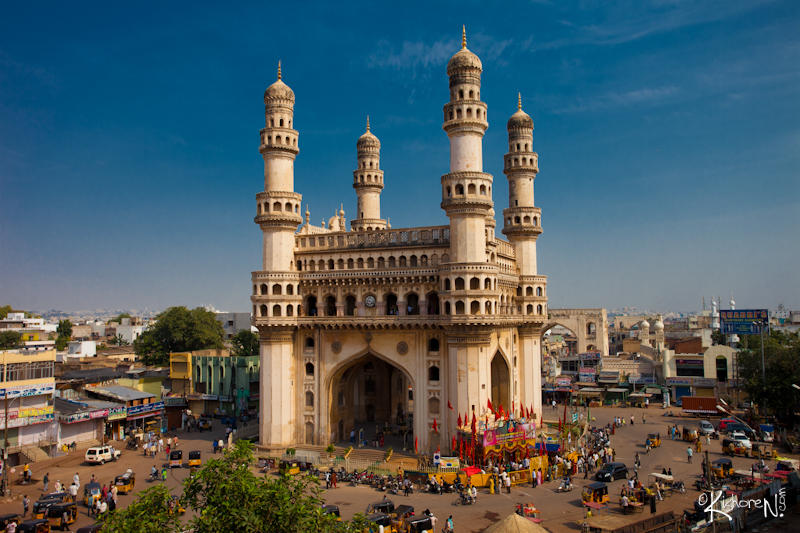
The building has a history as old as Hyderabad itself, and while it has endured the ages, it has also needed some restorations and maintenance. During the governorships of Asaf Jahi and Qutb Shahi, lightning struck the southwest minaret; however, it was later repaired. The monument underwent a fresh coat of plaster in 1824, at a cost estimated at one lakh rupees. In 1889, four clocks that Mir Mahboob Ali Khan, the sixth Nizam of Hyderabad, had bought from London, were used to decorate the four arches.
Gateway of India: Mumbai's Iconic Showpiece
Built: 1924 Built by: Designed by George Wittet State: Maharashtra
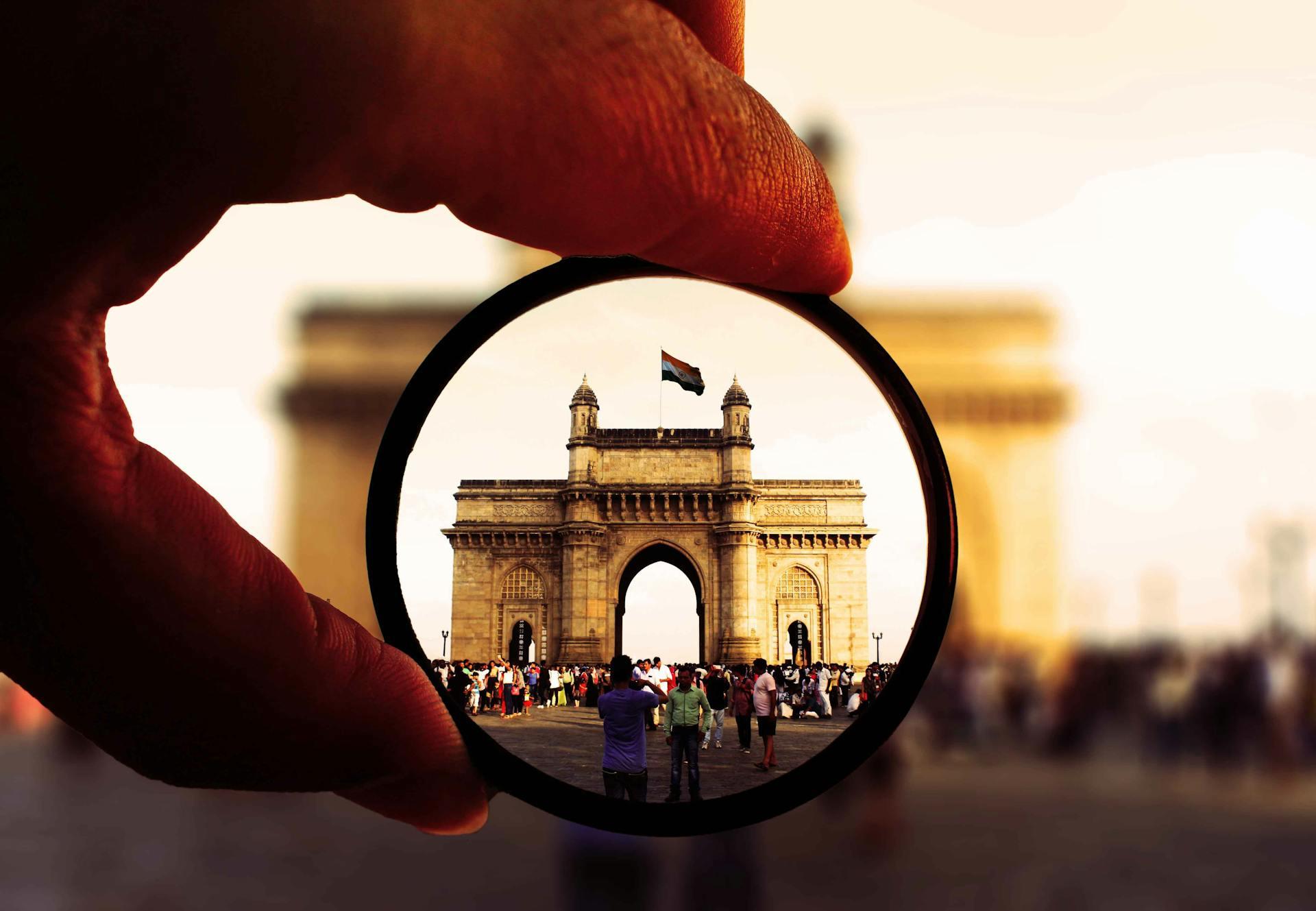
Constructed to commemorate the visit of King George V and Queen Mary in 1911, this 26-metre-tall basalt arch became symbolically important in 1948 as the point from which the last British troops departed India. It remains one of Mumbai's most photographed landmarks.
The Gateway of India is located at the end of Chhatrapati Shivaji Marg, on the waterfront in the Apollo Bunder district of South Mumbai, with a view of the Arabian Sea. Often referred to as the Taj Mahal of Mumbai, the monument is the most visited tourist destination in the state, with pictures of the Gateway of India hanging on the walls of almost every travel office in the area.
Situated in Mumbai (formerly known as Bombay), India, the Gateway of India is a famous monument that was built in the 1900s. The 1911 visit to Apollo Bunder by King George V and Queen Mary on their tour of India is commemorated by the monument.
The Gateway of India is the primary structure that greets visitors arriving by sea and is famously referred to as the Taj Mahal of Mumbai.
The foundation stone for the Gateway of India, which was built in the Indo-Saracenic architectural style, was placed on March 31, 1911. The structure is an 85-foot-tall (26-meter-high) basalt arch. The monument's final design by George Wittet was authorized in 1914, and work on it was finished in 1924. Later on, the Governors of Bombay and the Viceroys of India used the Gateway as their new official entry.
Hampi, Karnataka
Built: 14th–16th century CE Built by: Vijayanagara Empire State: Karnataka
The ruins of Hampi spread across 4,100 hectares and represent the last great Hindu kingdom of South India. The Virupaksha Temple, the Stone Chariot, and the Vittala Temple complex are the most photographed of more than 1,600 surviving structures. UNESCO declared it a World Heritage Site in 1986.
Hawa Mahal, Jaipur
Built: 1799 Built by: Maharaja Sawai Pratap Singh State: Rajasthan
This five-storey "Palace of Winds" is built from pink sandstone and features 953 small windows (jharokhas) designed to allow royal women to observe street life unseen. Its honeycomb-like façade is one of the most iconic images of Rajasthan.
Mysore Palace, Karnataka
Built: Rebuilt in 1912 Built by: Wadiyar dynasty State: Karnataka
A stunning example of Indo-Saracenic architecture, Mysore Palace was rebuilt after a fire destroyed its wooden predecessor. During the annual Dasara festival, it is illuminated with nearly 100,000 light bulbs — one of the most spectacular sights in southern India.
Golden Temple, Amritsar
Built: Late 16th century, gold-plated in 1830 Built by: Sikh Gurus; renovated by Maharaja Ranjit Singh State: Punjab
Officially called Sri Harmandir Sahib, the Golden Temple is the holiest site in Sikhism. Its gold-plated upper levels reflect beautifully in the surrounding sacred pool (Amrit Sarovar), and the temple's free community kitchen (langar) serves over 100,000 visitors every single day — regardless of faith or background.
The Golden Temple's langar is recognised as the world's largest free community kitchen, operating round-the-clock with the help of volunteers.
Humayun's Tomb, Delhi
Built: 1565–1572 Built by: Empress Bega Begum (in memory of her husband) State: Delhi
The first garden-tomb on the Indian subcontinent, Humayun's Tomb directly inspired the design of the Taj Mahal nearly a century later. Set within a charbagh (four-quartered garden), it is an early masterpiece of Mughal architecture and a UNESCO World Heritage Site.
Victoria Memorial, Kolkata
Built: 1906–1921 Built by: Designed by Sir William Emerson State: West Bengal
Built during the British Raj as a tribute to Queen Victoria, this white marble structure now functions as a museum housing British and Indian memorabilia, paintings, and sculptures. Its lush surrounding gardens make it one of Kolkata's most popular leisure destinations.
Mahabalipuram Group of Monuments, Tamil Nadu
Built: 7th–8th century CE Built by: Pallava dynasty State: Tamil Nadu
A UNESCO World Heritage Site located in Chengalpattu district, Mahabalipuram is famous for its Shore Temple, the rock-cut Five Rathas, and Arjuna's Penance — one of the largest rock reliefs in the world. It was a major Pallava-era port city.
Tips for Visiting Historical Places in India
- Best season: October to March, when most of India enjoys cooler weather.
- Photography: Many monuments charge a small camera fee; tripods are often restricted.
- Guided tours: Hiring a local guide significantly enhances your understanding of the site.
- Dress respectfully: Many sites are also active places of worship.
- ASI ticket: The Archaeological Survey of India offers a discounted combined entry ticket for several monuments.
Summarise with AI:
Did you like this article? Leave a rating!

 Loading...