
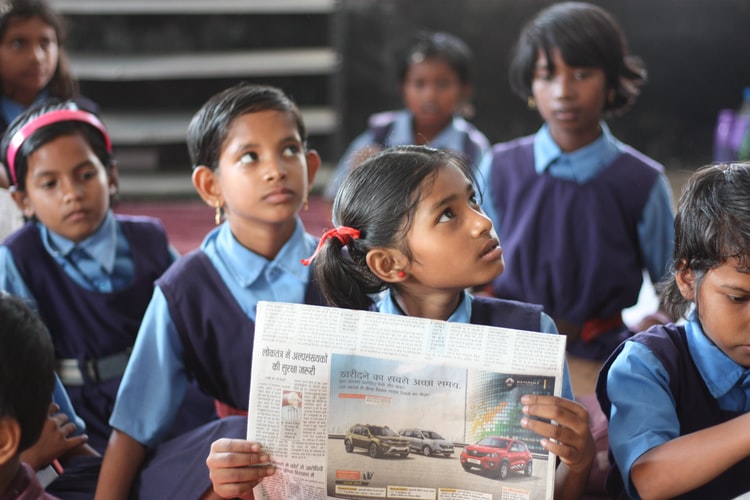

English is among the languages that are used the most frequently worldwide. India's 1.3 billion different people are brought together by their common language use—English. As it is, the Indian Constitution recognizes over 22 languages, contributing to the nation's rich and varied linguistic heritage. Nonetheless, English has always been a crucial component of the Indian educational system and is still considered an "essential skill" of modern life.
Over time, India has developed a unique form of English with words and phrases rarely used elsewhere. Here are some everyday examples you’ll hear across the country:
- Pass out – Used in India to mean “graduate” (e.g., “She passed out of Delhi University”)
- Brinjal – Eggplant (used in Indian English instead of “aubergine” or “eggplant”)
- Tiffin – A light meal or lunch, often carried in a tiffin box
- Prepone – To move an event or meeting to an earlier time (opposite of postpone)
- Hill station – A mountain town or resort popular during summer
- Out of station – Away from one’s city or town (e.g., “He’s out of station this week”)
- Do the needful – A formal Indian English phrase meaning “take the necessary action”
- Cousin-brother / cousin-sister – Informal expressions to specify the gender of cousins
- Lakh / Crore – Units of the Indian numbering system (1 lakh = 100,000; 1 crore = 10 million)
- Kindly revert – Common Indian workplace expression meaning “please reply”
Indian English stands out for how naturally it blends linguistic precision with cultural personality. From classrooms to corporate meetings, this unique variant of English continues to evolve — adapting to modern India while keeping its local charm intact.
English, as a global language, is quite important to Indian students. According to the Indian Constitution, all state institutions, including colleges, universities, and schools, are required to utilize it. All schools indeed require English instruction. It is impossible to disagree with the observation that learning English improves students' overall academic achievement.
Get acquainted with the sweetest language in India, that is, Bengali. India is a country of lingual diversity and opportunities, every state in India has a rich culture and language, learn the best of Indian languages to enjoy the beauty of India in 2025.


English Language in India
Over 100 million Indians can communicate in English to some extent. What is remarkable, though, is the paucity of literature on Indian English. A unique variety of English is called Indian English.
Theoretically, Indian English speakers use British English as defined by Oxford or Longman English dictionaries.
The English language used in India is known as Indian English. It is a variety of English that has developed in India over the centuries, influenced by the country's diverse linguistic and cultural heritage. Indian English has its unique characteristics in terms of pronunciation, grammar, and vocabulary.
English Vs Hindi In India (Number of Speakers)
As of the 2011 Census, Hindi is the most spoken language in India, with over 528 million speakers, making up 43.63% of the population. English, while not as widely spoken natively, serves as a second language for a significant portion of the Indian population.
Over 125 million people in India use English as a second or third language, highlighting its importance in education, business, and as a lingua franca among diverse linguistic groups.
Features of the English Language in India
Pronunciation: Indian English is often characterized by a distinct accent, which can vary depending on the region of India. Some common features of Indian English pronunciation include:
- The pronunciation of "th" as "t" or "d." For example, "the" is pronounced as "te" or "de."
- The pronunciation of "r" as a retroflex sound, which is produced by curling the tongue back towards the roof of the mouth.
- The pronunciation of "l" as a dental sound, which is produced by placing the tongue against the back of the upper front teeth.
Grammar: Indian English also has some unique grammatical features, such as:
- The use of the present continuous tense to express future events. For example, "I am going to the market" instead of "I will go to the market."
- The use of the past continuous tense to express habitual actions in the past. For example, "I was playing cricket every day" instead of "I played cricket every day."
- The use of the subjunctive mood to express hypothetical or unreal situations. For example, "If I were you, I would do it differently" instead of "If I was you, I would do it differently."
Vocabulary: Indian English has a rich vocabulary that includes words borrowed from various Indian languages, as well as words that have been adapted from English to fit the Indian context. Some common examples of Indian English vocabulary include:
- "Chai" (tea)
- "Roti" (bread)
- "Sabzi" (vegetables)
- "Namaste" (hello)
- "Shukriya" (thank you)
Discover your perfect Hindi teacher when you search on Superprof!

In India, English has a special importance. It isn't one of the 22 "scheduled" languages that are protected and acknowledged by the Constitution. In Indian English, "scheduled" has a specific meaning: national government acts have schedules. However, the official language of the government is English. Though a tiny percentage of people speak it as their first language, most people study it in school as a second or third language.
Why Do We Use British English In India?
The use of British English in India has historical roots. During British colonization, English became the language of administration, education, and governance. After India gained independence in 1947, English remained an official language alongside Hindi and several other regional languages.
British English continued to be used due to its established presence in government, education, and business. It became a lingua franca, facilitating communication among India's diverse linguistic communities. Additionally, Indian English retains elements of British English due to its historical influence, although it has evolved independently with its own distinct characteristics over time.
What is Hinglish?
The usage of Hindi vocabulary in English is a characteristic unique to Indian English. This is called "Hinglish," which is the Indian version of Singapore's "Singlish." People in several regions of India write or speak in Hindi phrases that occasionally contain a few English words. The main sentence is in English in other places and in print, with a few Hindi words or phrases thrown in. In any case, the significance is not immediately apparent unless one is aware of the Hindi allusions.
As the use of the Hinglish language gains traction, it is predicted that native speakers of Hinglish will eventually surpass English speakers in India. In reality, for British ambassadors to carry out their duties in the nation efficiently, they have just received official instructions to learn Hinglish. Songs and movies have both been fully composed in Hinglish. Unlike other English-language mashups, Hinglish is a whole new dialect that is easy to comprehend once you know the rules and learn the underlying languages. It's not an example of bad translation producing hilarious consequences.
Find a tutor on Superprof for spoken Hindi classes online.
Benefits of Speaking English in India
In India, as of the 2011 Census, there were approximately 128.5 million English speakers, which accounted for 10.5% of the population. Of these, 259,678 people spoke English as their first language, while 128,279,412 people used it as an additional language.
English is one of the most spoken languages in the country, a large section of the Indian youth are fluent in English, as it's considered to be the language used in a corporate environment. The reputation of English as a language of progress and opportunity has had a significant impact on Indian education, work, and society. The reasons that English is important in India are as follows:
Use of English Language in School
India’s diverse cultural heritage means that the country does not have a single national language, but instead has 22 ‘official languages’ (including English). Each of the 28 states has its native language(s) as the official language(s) due to the formation of states along linguistic lines. English is highly valued as a language of opportunity and success, with many Indians aspiring to learn it as a means to improve their economic and social standing.
As a result, most private schools in India use English as the medium of instruction. However, many public schools, for political reasons, use the state’s official languages as the primary medium of instruction, introducing English as a second language from grade 5 onwards.
In some states, students are also required to learn a non-native third language from grade 6. This lack of emphasis on English in public schools is a major factor contributing to high enrollment rates in private schools (44% in rural areas and 65% in urban areas). Both urban and rural parents overwhelmingly want to ensure that their children are proficient in English, in addition to their native language.
Kids are usually taught in English from an early age in urban areas where the language is extensively utilized in schools and other institutions. Children thus have a better chance of learning the language and improving their skills. While having a strong command of the English language is a requirement for most Indian universities and colleges, it is not a prerequisite for individuals who wish to pursue higher education.
A significant number of English-speaking professionals from India have emerged as a result of English usage in schools, and they are currently in great demand in the international job market. Because they speak English well, many Indian students who pursue higher education abroad or find employment with international corporations excel in these sectors.
Learn the history of the Telugu language.
English is also widely utilized by students preparing for government examinations or competitive exams like IIT-JEE, NEET, and AIIMS Mains. However, this does not imply that proficiency in English is a requirement for admission. Nonetheless, examination candidates ought to be aware of it as a communication tool.
Creating Employment Opportunities
The language of choice for commerce and trade across international borders is English. The need for English-speaking competence has grown dramatically as a result of the opening up of the Indian economy and the rise of globalization. Language proficiency can lead to a multitude of job prospects, particularly in IT, BPO, KPO, and related areas.
A strong command of the English language is required for many of these high-paying positions. Having fluency in English is essential when interacting with foreign clients and staff, as India is home to numerous international organizations.
Uncover another language steeped in heritage with a history of the Marathi language.
Establishing Worldwide Connections
Being the most frequently spoken language in the world, English is the most commonly used language for travel and communication abroad. When Indians learn English, they can communicate and establish connections with people all around the world. This has promoted cross-cultural dialogue and helped to eradicate cultural barriers.
Many Indians who travel overseas for employment, school, or enjoyment find it simpler to deal with the difficulties of living abroad because of their fluency in English. English makes it easier for Indian professionals to work in international corporations and cooperate with colleagues from other countries.
Means of Acquiring Information
Since English is utilized for the majority of content on the internet, it is the language that is most frequently used there. English language users can therefore access a variety of information and resources that they would not otherwise have. These days, this is especially crucial as advancements in life, both personally and professionally, depend on having access to knowledge.
In this context, the value of English cannot be overstated. Thanks to the internet, our work, communication, and learning processes have all transformed. English language proficiency is a prerequisite for success in the contemporary digital world.
Portrayal of Cultures
The English language is used metaphorically in Indian literature, movies, and other cultural industries. Consequently, it is essential for both the individuals as well as the country at large to have a solid grasp of the English language in India.
Travel to South India to immerse yourself in the rich Tamil language and culture.
Moreover, you can learn about the cultures of other nations by studying English. The Internet has made it simple to read about and learn about the cultures of many nations. Without ever leaving your nation, you can also learn about their traditions and customs.
Since English is a universal language, traveling the world is now simpler than ever. Speaking English makes it easier to communicate with individuals in other nations. You may discover more about the culture of every foreign nation you visit by strolling around its streets with assurance and without worrying about a language barrier.
The Language of Science
Some people might be surprised to learn that science is conducted in English. The majority of scientific research is not only written in English and published in books or journals, it's also true that scientific papers are evaluated based on their accuracy and that writing in English is required for many journals.
Discover royalty with a concise history of the Urdu language.

Enhanced Analytical Skills
Gaining fluency in English not only improves your cognitive functioning but also your analytical skills. Learning a new language changes the structure of the brain, affects the areas responsible for memory, and increases creativity. Numerous mental activities associated with learning English might help you maintain a sharp and healthy mind far into old age. It develops individuality, sharpens memory, and raises awareness.
The importance of English in Indian languages cannot be overstated. It's a language that opens up a world of possibilities, connects people from all over the world, and helps spread awareness of Indian culture worldwide. The ability to communicate and stay connected is essential for success in many different fields, thus people should prioritize learning and improving their English language skills.
Since English is a global language, it's also a great way to differentiate yourself from the competition. The English language is more than just a tool for communication; it is an essential component of who we are as people. This is evident in daily interactions: speaking English strengthens a person's sense of identity and interpersonal communication skills. They stand out from the crowd, whether we want to or not!
Learn how to speak Hindi with Hindi tutors near you on Superprof, learn the beauty of one of the most beautiful and poetic languages in India.
English In India - Important Information For Tourist Travelling to India
If you are a tourist traveling to India, don't worry about the language as English is widely spoken in all major cities such as New Delhi, Mumbai, Bangalore, and Chennai, tourist destinations including the Taj Mahal, and within the hospitality industry & even the Banking industry, making it a convenient language for communication. Most young people in India speak English in their universities and daily lives.
Note: Knowing basic Hindi phrases would improve your traveling experience, but English is sufficient for navigation, transactions, and interactions in urban and popular tourist destinations.
Sign up for a Hindi class on Superprof today!
Article Sources
List of countries by English-speaking population: https://en.wikipedia.org/wiki/List_of_countries_by_English-speaking_population
- Census Report 2011, India: https://www.india.gov.in/my-government/documents/census-report
Summarise with AI:
Did you like this article? Leave a rating!


 Loading...
Willing to join Superprof Team.
Hey Suresh,
Glad to hear that you are interested to join Superprof.
Please send an email to namaste@superprof.com and one of our team members will assist you further.