
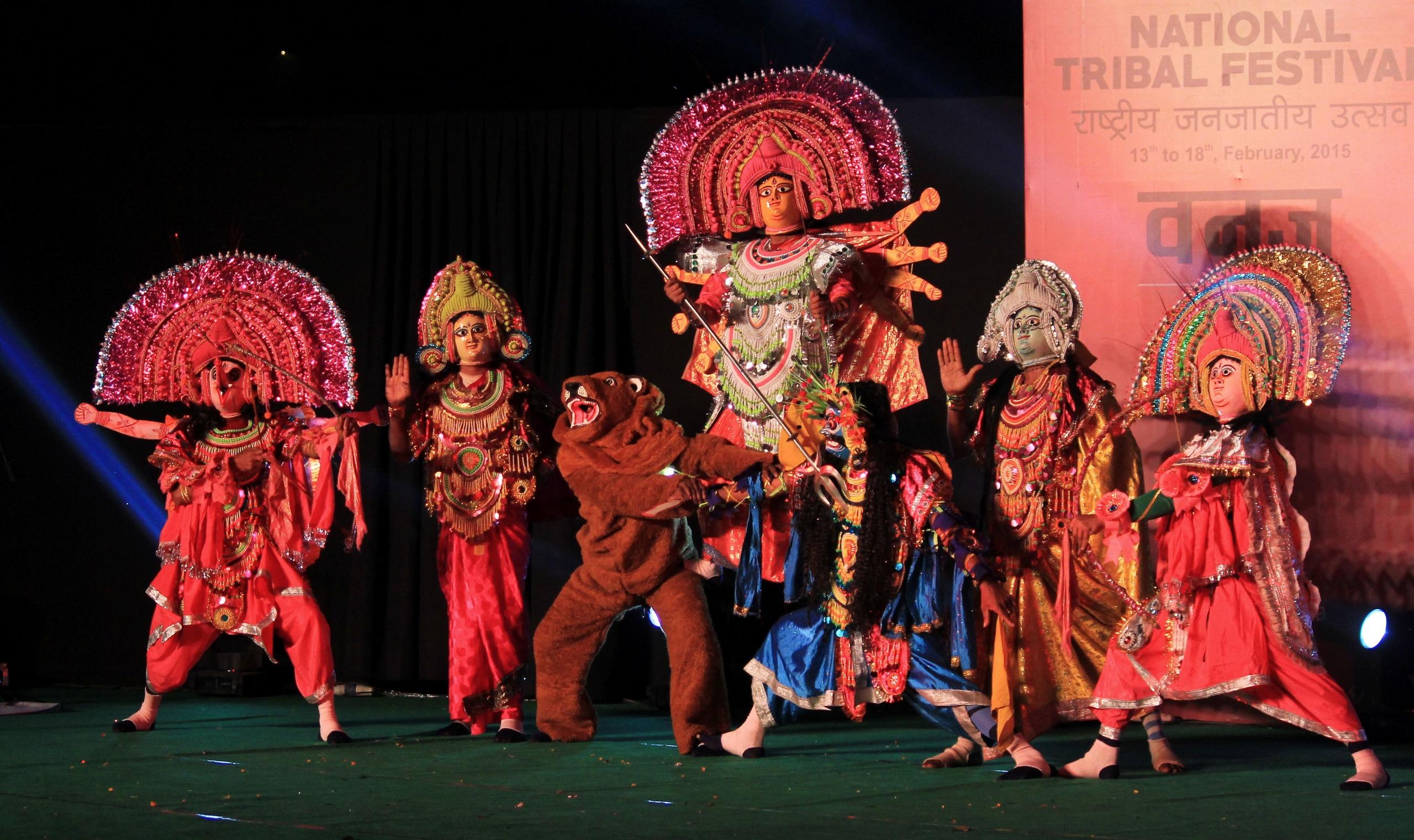

Eastern Indian folklore, abstract themes, and scenes from epics like the Mahabharata and Ramayana are all acted out in the genre of Chhau dance. Its three main styles—the first two of which use masks—come from the regions of Seraikella, Purulia, and Mayurbhanj. Regional celebrations, particularly the spring festival Chaitra Parva, are closely associated with Chhau dance. Its range of motions includes movements based on housewife tasks in rural areas, stylized animal and avian gaits, and simulated combat skills. Though not part of the classical Indian dance pantheon, Chhau has carved out a niche for itself on the global stage.
Male dancers from nearby towns or the families of traditional artists are trained in Chhau. The dance is performed in an open area at night to folk and traditional music played on the shehnai and mohuri reed pipes. The accompanying musical group is dominated by the booming beats of several drums. Chhau is an essential component of these communities' cultures. It unites people with various social practices, religious beliefs, occupations, and linguistic backgrounds from all social classes and ethnic backgrounds. But as a result of growing industrialization, financial strain, and new media, communities are becoming more removed from their historical origins and engaging in less collective activity.
To understand what gives this tradition its distinctive identity, it is useful to look closely at the core elements that shape Chhau dance in performance and meaning:
Chhau Dance Elements
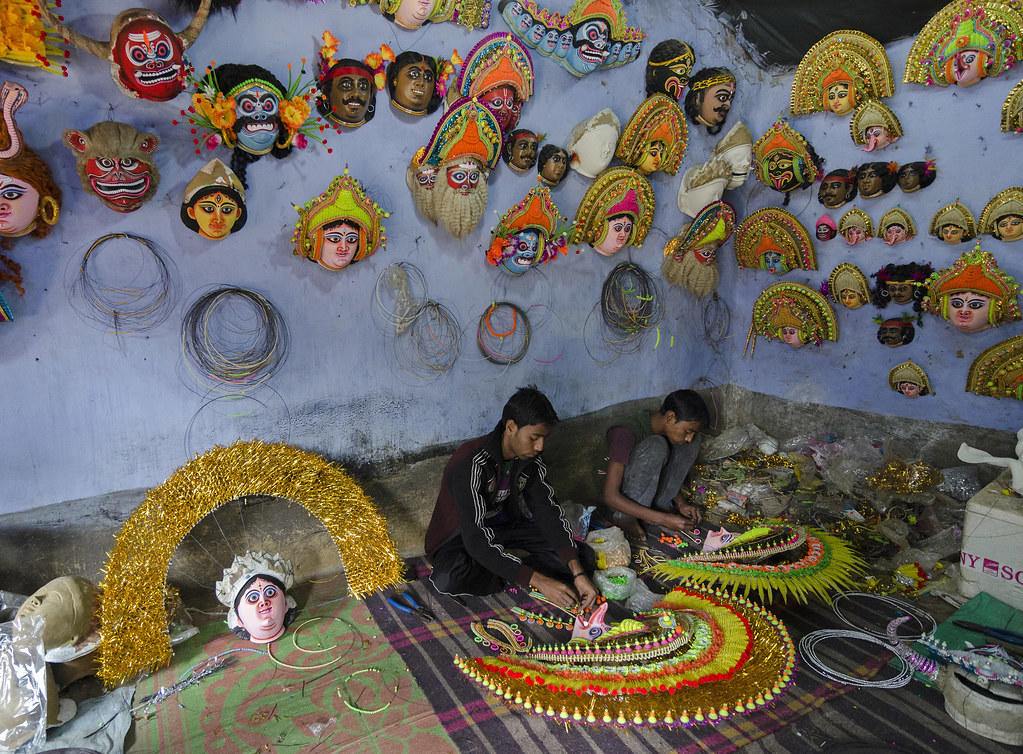
- Masks (Mukha) – Elaborately crafted masks are used in Purulia and Seraikella styles to depict gods, demons, and animals, enhancing the visual storytelling.
- Storytelling (Narrative Expression) – The dance narrates episodes from epics like the Ramayana, Mahabharata, and Puranas through symbolic gestures and choreography.
- Martial Techniques (Khel or Ugal) – Incorporates vigorous movements, leaps, and combat sequences derived from traditional martial arts.
- Music Ensemble (Melody and Rhythm) – Accompanied by live music using traditional instruments like dhol, dhamsa, shehnai, and mohuri to set rhythm and mood.
- Costumes and Ornamentation – Brightly colored costumes with ornate headgear and body ornaments emphasize the mythological or heroic nature of characters.
- Facial Expression (Bhava) – In maskless Mayurbhanj Chhau, expressive facial movements convey emotion and narrative clarity.
- Footwork (Pada Karma) – Intricate, rhythmic foot movements synchronize with percussion beats to maintain tempo and dramatize action.
- Body Postures (Angika Abhinaya) – Stylized physical gestures and stances derived from martial and folk traditions communicate meaning nonverbally.
- Group Synchronization – Dancers perform in coordinated formations symbolizing battles, celebrations, or cosmic events.
- Themes and Symbolism – Focuses on mythological, heroic, and folk themes representing the eternal struggle between good and evil.
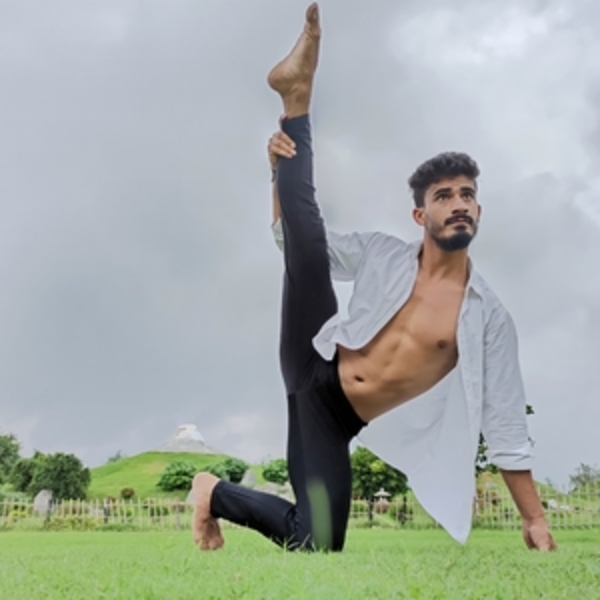
- Acrobatics and Athleticism – Energetic jumps, spins, and flips highlight the dance’s physical rigor and warrior spirit.
- Ritual and Religious Context – Traditionally performed during regional festivals like Chaitra Parva, invoking divine blessings.
- Regional Variations – Three main styles—Purulia (West Bengal), Seraikella (Jharkhand), and Mayurbhanj (Odisha)—each have distinct approaches to masks, expression, and rhythm.
- Symbolic Props – Use of weapons, bows, or torches enhances the dramatic realism of mythological battles.
- Non-Verbal Communication – Relies entirely on dance, gesture, and rhythm without spoken dialogue or singing.




History of Chhau Dance
The Sanskrit term Chaya, which means shadow or picture, is the source of the word Chhau. Some trace the name's origins to the Sanskrit word Chadma, which implies disguise, and the Odian word Chhauni, which denotes stealth and armour. The dance is renowned for its depictions of combat scenes, tales, heroes, and the idea of dharma, which is a fundamental component of war itself. Among these are the narratives found in Indian myths such as the Ramayana and the Mahabharata.
The word “Chhau” itself is believed to come from “Chhauni” (military camp) or “Chhaya” (shadow), symbolizing both martial and theatrical origins.
Learn about the history of Bharatnatyam.
Some claim that the word "Chau" is a dialect that refers to the six elements of the face: the forehead, eyes, nose, cheeks, lips, and chin. A mask is said to bear each of the six facial components. The dance is known as "Chhau Dance" because it is performed while wearing a mask. Another school of thought holds that the name "Chhau" is derived from the Sanskrit word "Chabi," which means picture. Some claim that because of the dance's diversity, it is known as Chhau dance, and as a result, the word "Chhau" means "picturesque" in English and "Chabila" in Sanskrit. New ideas claim that the word Chhau is an imagined pronunciation of Chhauni, which is a military barrack or cantonment.
Learn about the evolution of the Kathak dance style.
The Purulia Chhau dance is a creation of the people, not limited by the efforts or sponsorship of a single person. There was undoubtedly a pioneer who established a certain system that is still in use today. The Purulia Chau dance has a very old history. Orthodox Brahmins were imported from the interior of West Bengal, Bihar, and Odisha. Moreover, Hindu image makers were brought in. After relocating here, the image-makers chosen by the Raja of Bagmundi developed the method for creating the masks for the Chhau dance.
Practice all kinds of dance with dance classes in Gurgaon.
Several dance forms, including Kathak and Manipuri, had an effect on the dance form as it developed. Masks and ornate costumes were utilized to represent a variety of mythological and folkloric characters, and they eventually formed an essential component of the dancing style. Chhau dance became more and more well-known among non-tribal people throughout time, and it eventually entered popular culture. It is now acknowledged as a distinctive and important type of folk dance that highlights the rich cultural legacy of eastern India.
Discover the story of the Odissi dance.
Elements of Chhau Dance
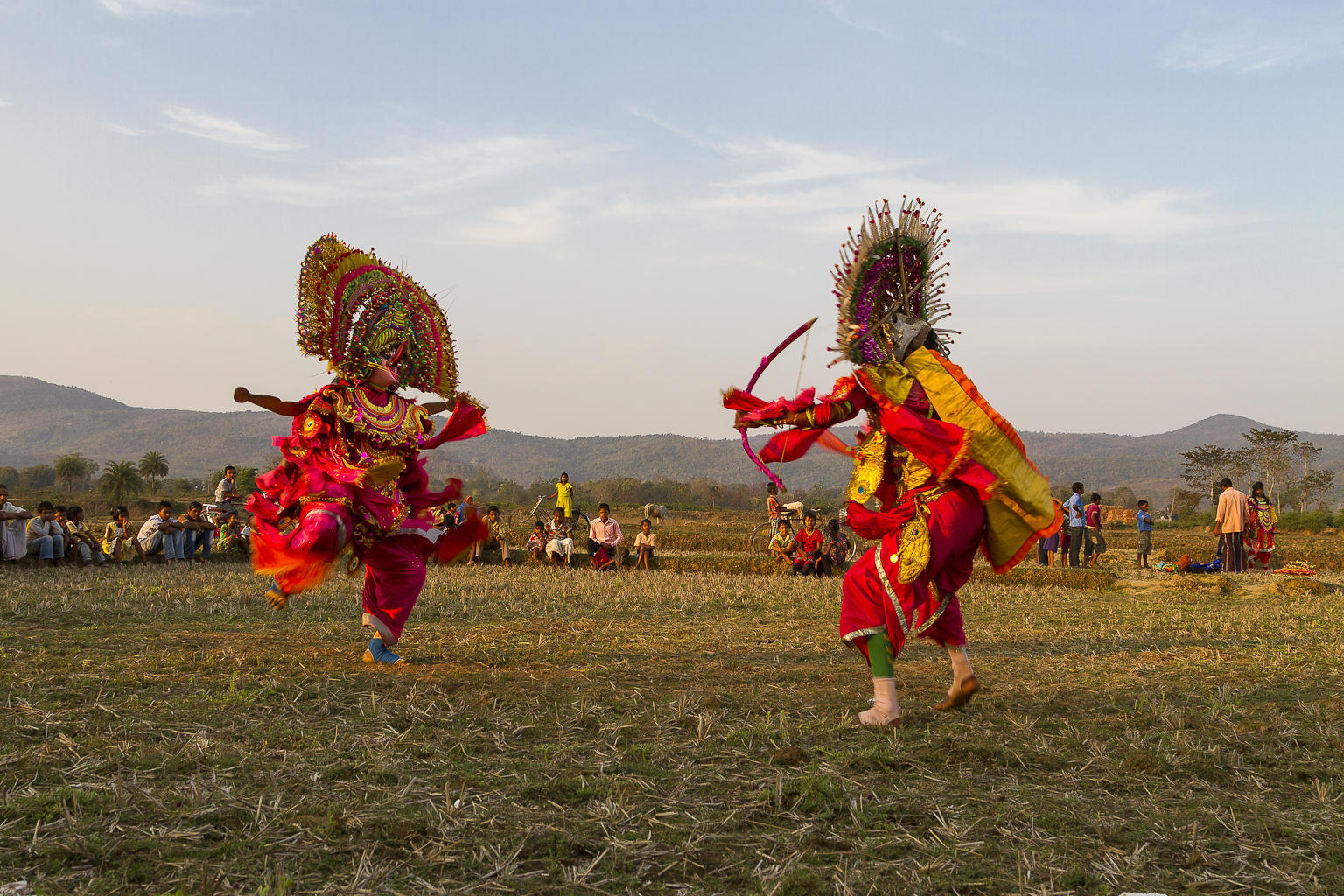
Chhau dance is mostly performed at festivals in the states of Jharkhand, West Bengal, and Odisha, particularly the community-wide Chaitra Parva spring celebration. During the Sun festival, the Purulia Chhau dance is performed. In both the Purulia and Seraikella forms, Chhau masks are an essential component. Oral instruction is used to teach dancing, music, and mask-making.
Learn Chhau dance and other dance forms with dance classes in Chennai.
Northern Odisha's Chhau dance does not employ masks throughout the dance; instead, they are worn when the artists first come out on stage to introduce themselves to the audience. The two mask-wearing varieties of Chhau dance combine elements of martial arts and dance, including stylized animal and bird motions (named Chalis and Topkas), mock combat methods (called Khel), and choreography inspired by the daily tasks performed by village housewives (called Uflis).
The mask-making art is so refined in Purulia that entire villages, like Charida in West Bengal, specialize solely in creating Chhau masks. Each artisan family often has its own “signature style.”
There is no ritual or ceremonial significance to this style of Chhau dance. It serves as entertainment and a means of communal celebration. Male dancers execute the dance in an open area known as the Akhada or Asar at night. The Mohuri and Shehnai reed pipes are used to play traditional folk music, which sets the rhythmic dance. The musical group is accompanied by a range of drums, such as the kharka or chad-chadi, the enormous kettle drum, dhumsa, and the cylindrical dhol drum.
In the moonlit arenas of Purulia, where masks glow and drums thunder, the gods descend to dance.
Bishnu Goswami, Chhau performer and folk artist
- Community Participation – Rooted in rural celebrations where local artisans, musicians, and villagers collaborate in performance.
- Rhythmic Patterns (Tala) – Complex rhythmic cycles guide movements, varying from slow devotional to fast, battle-like tempos.
- Training and Discipline – Requires years of physical and spiritual training, emphasizing balance, stamina, and coordination.
- Male Performers Tradition – Historically performed exclusively by men, who portray both male and female roles.
- Spiritual Symbolism – Seen as a dance of divine energy (Shakti), blending devotion, art, and physical prowess.
Learn about the origins of the Kathakali dance style.
Chhau Dance Costume
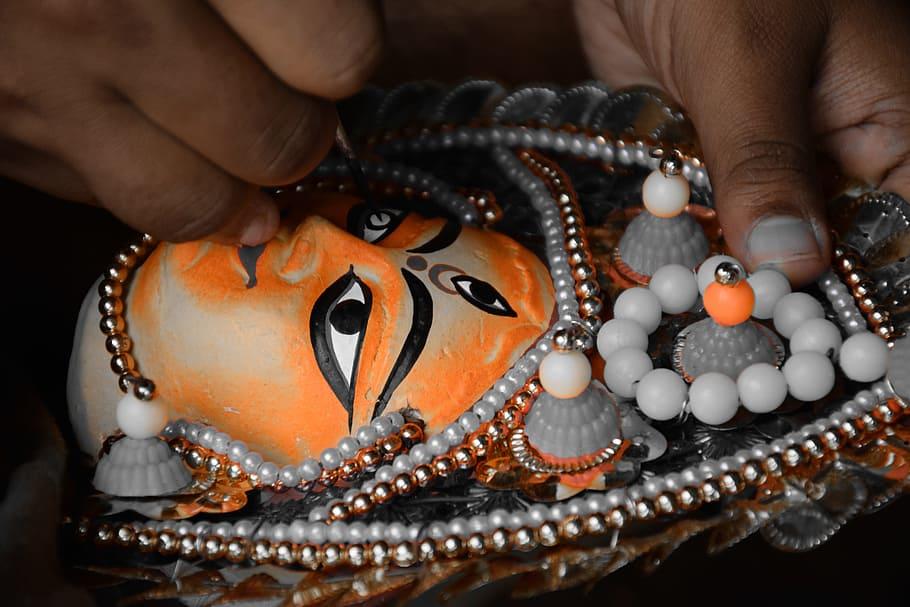
The majority of the musicians in contemporary Chhau are from the Mukhi, Kalindi, and Dhada communities, while the dancers are mostly from the Munda, Mahato, Patnaik, Kalindi, and Mohantya families. These groups also make the instruments and costumes used in Chhau, and the Moharanas and Mohapatras of contemporary Odisha are known to be the traditional painters of the masks and costumes used in Chhau.
Explore the myriad hues of Manipuri dance style.
Due to the Purulia Chhau dance's reputation for having a unique set and costumes, the costume is extremely important to this performance. The men dance in vibrantly coloured dhotis, or flared pants, topped off with matching kurtas. Usually, the sheer amount of costume jewellery worn as necklaces hide the kurta below. These are very heavy and enormous in both size and quantity. It's common for male dancers portraying feminine roles or female dancers to dress in colourful sarees.
Famous Chhau Dancers
Gambir Singh Mura
Gambir Singh Mura committed his life to promoting the traditional ritual dance form of Chhau. Originally, this dance was done to welcome fresh harvests during the Bengali New Year, which is observed in April. Dancing people, dressed in ornate masks and headdresses, performed Chhau in groups or solo in the villages of Purulia, West Bengal. The Indian government bestowed the Padma Shri upon Gambhir Singh Mura in 1981 in recognition of his global dissemination of the "Chhau" style of Indian dance. He received honors from a number of nations, including the US, Japan, France, and England.
Immerse yourself in the wonderful history of Kuchipudi.
Shashadhar Acharya
Shashadhar began dancing at a young age and has been devoted to the art form since. Despite having his father, Lingaraj Acharya, introduce him to Chhau dance, Shashadhar studied the art form with five additional gurus. He continued his training with Padma Shri recipients Kedarnath Sahoo, Vikram Kumbhakar, Siddhendra Narayan Singh Deo, and Natashekar BB Pattanaik. Along with learning the Mayurbhanj Chhau dance from Alok Niranjan Bisoi, he also trained with Surmukhi to play the dhol.
The vigorous leaps, the measured stillness, and the sculptural poise make Chhau a unique bridge between folk and classical traditions.
Kapila Vatsyayan, Indian dance historian and scholar
Shashadhar Acharya has won numerous accolades for his tireless and inventive work in Seraikella Chhau. These include the Sangeet Natak Akademi Award, the Rajkiya Samman from the Jharkhand government, the Guru Dev Prasad Das Samman from the Odisha government, the Lifetime Achievement Award, the Jharkhand State Samman from the Jharkhand government, the Unity in Diversity PHD Art & Culture Samman from the PHD House in New Delhi, and the Natyashree Award from the Nataraj Music and Dance Academy in Visakhapatnam.
Unravel the origins of Mohiniyattam, a classic among classics.
He has participated in major theater dance festivals in Asia, Europe, the United States, and Africa, as well as festivals in over 75 nations. Shashadhar Acharya is a teacher at New Delhi's Triveni Kala Sangam. He founded Acharya Chhau Nrutya Bichitra in Seraikela with the goal of advancing Jharkhand's Chhau dance. The organization has a museum featuring artefacts of Chhau dances and a library. For the past 25 years, he has been teaching dance and theater, and it was thanks to him that Chhau arrived in New Delhi. Also, he is in charge of a Central Sangeet Natak Akademi-funded initiative that trains dancers to develop a repertoire for performances that will be based in New Delhi.
Lose yourself in the unique history of the Sattriya dance form.
Chhau Dance: An Enduring Legacy
Chhau dance has endured into the contemporary era despite its long history. It has come to be recognized as a distinct art form, and numerous initiatives have been launched to protect and advance it. Chhau dance has been deemed a "national treasure" by the Indian government, which has also given financial support to promote and maintain the art form. These days, Chhau dance is done not just in India but also in many other nations. It has been exhibited at festivals and cultural gatherings around the world, establishing it as a representative of Indian culture.
UNESCO recognized Chhau dance as an Intangible Cultural Heritage of Humanity in 2010!
Moreover, young people who are drawn to traditional dance styles have also become more and more interested in Chhau dancing. To teach Chhau dance to young dancers and guarantee that the art form is passed down to future generations, a number of schools and academies have been founded. Additionally, Chhau dance has come to be recognized as a distinctive art form, and numerous initiatives have been launched to support and conserve it.
Practice Chhau dance and other forms with dance classes in Bangalore.
Summarise with AI:
Enjoyed this article? Leave a rating!

 Loading...
