
Buying your first car in India is an exciting but genuinely complex decision. The right beginner car needs to strike a balance across several considerations simultaneously: it should be easy and forgiving to drive, reliable in Indian road conditions, affordable to run and service, safe enough to protect a new driver who is still building habits, and hold its value reasonably well when it is eventually time to sell or upgrade.
This guide narrows down the best cars for beginners in the Indian market — separated into manual and automatic options — with a focus on what actually matters for a new driver navigating Indian city traffic, speed breakers, narrow lanes, and everything in between.
Not sure whether to go manual or automatic? Read our full comparison in the manual vs automatic car guide before making your decision. Once you have chosen, our guides on how to drive an automatic car and how to drive a manual car walk you through everything step by step.


Best Cars for Beginners in India – Quick Reference
Manual Options:
- Maruti Suzuki Alto K10
- Maruti Suzuki Swift
- Tata Tiago
- Hyundai Grand i10 Nios
Automatic Options:
- Maruti Suzuki Celerio AMT
- Tata Tiago AMT
- Hyundai Grand i10 Nios AMT
- Honda Amaze CVT
For beginners considering an upgrade:
- Tata Nexon (Manual / AMT / Electric)
What Makes a ar Beginner-Friendly in India?
Before looking at specific models, it helps to understand what qualities actually matter for a first-time driver in the Indian context. The following factors should guide every beginner's car purchase decision:
Safety
Safety is non-negotiable. For a new driver who is still building road awareness and reaction habits, the car itself needs to provide as much protection as possible. Look for cars with a Bharat NCAP or Global NCAP crash test rating of 4 stars or above. Essential safety features for Indian beginners include dual front airbags (mandatory on all new cars in India), ABS (Anti-lock Braking System), rear parking sensors or a reversing camera, and electronic stability control where available.

Ease of Handling
A beginner car should feel manageable in the specific conditions they will face daily — tight city lanes in Mumbai's Dharavi area, steep approach ramps on Bengaluru's flyovers, waterlogged roads during the Chennai monsoon, or slow-moving traffic on Delhi's Ring Road. Compact dimensions, light steering, and a forgiving clutch (for manual cars) all reduce the mental load on a new driver significantly.
Fuel Efficiency
Fuel costs are a real ongoing concern for Indian car owners. A car with good mileage — whether measured in km/l for petrol and diesel or range for EVs — directly reduces the monthly ownership burden. Most beginner-friendly cars in India return between 18–24 km/l on petrol, which is a reasonable baseline to look for.
Service Network and Maintenance Costs
This is an India-specific consideration that often gets overlooked. A car is only as reliable as the mechanic network that supports it. Maruti Suzuki, for instance, has over 3,500 service outlets across India — meaning a Maruti owner can find authorised service even in Tier 3 towns and smaller cities. Hyundai and Tata have similarly strong networks. Cars from brands with thinner service networks can leave owners stranded if something goes wrong away from major cities.
Spare parts affordability matters equally. Maruti and Hyundai parts are widely available and competitively priced across India. Maintenance costs for these brands are among the lowest in the country for new drivers.
Resale Value
India's used car market is one of the largest in the world, and resale value is a meaningful factor in any purchase decision. Maruti Suzuki consistently tops Indian resale charts — a well-maintained Swift or Alto retains value better than almost any competitor in its segment. Hyundai and Tata also hold resale value well, particularly in metro markets. This matters for beginners who are likely to upgrade after two to three years once their confidence and budget grow.
Purchase Price
For most first-time buyers in India, the budget is a real constraint. The best cars for beginners in India are overwhelmingly in the ₹5–12 lakh range, offering a practical combination of features, safety, and manageability without stretching finances into territory that would make ownership stressful.
Car Driving Tips for Beginners in India – What to Prioritise
Before looking at specific models, every new Indian driver should build these habits regardless of what car they are in:
- Start in quiet areas — empty parking lots, residential colonies, or wide industrial roads before attempting busy city traffic
- Learn the horn culture early — in India, honking is communication, not aggression; understand when it is appropriate and when to expect it from others
- Anticipate two-wheelers constantly — motorcycles and scooters filter through gaps unpredictably; always leave lateral buffer space
- Respect speed breakers — slow down well before every bump, regardless of what gear you are in
- Use your mirrors constantly — Indian roads have high activity from all directions, including pedestrians, cattle, and cycle-rickshaws that do not always follow lane discipline
- Never be in a hurry — impatience is one of the most common causes of beginner accidents on Indian roads
Best Manual Cars for Beginners in India
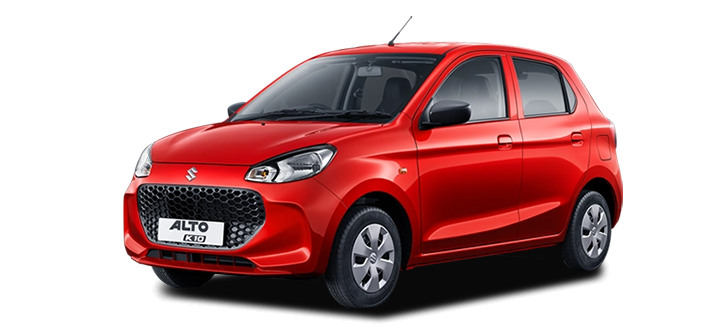
1. Maruti Suzuki Alto K10
Transmission: Manual (5-speed) Why it suits beginners: The Alto K10 is the lightest and most compact car in this list — which, for a first-time driver, is a genuine advantage. Its narrow footprint makes it easy to fit through tight gaps in market areas and residential lanes, and parking in congested urban spots becomes far less intimidating. The clutch is light and forgiving, making it one of the most learner-friendly manual cars available in India.
Safety: Dual airbags and ABS are standard across variants. The car carries a 2-star Global NCAP rating — acceptable for city driving when combined with careful habits.
Fuel efficiency: Among the best in its segment at approximately 24 km/l on petrol.
Maintenance and service: Maruti's service network is unmatched in India — parts are cheap, mechanics familiar with the car are everywhere, and annual service costs are among the lowest in the country.
Resale value: Excellent — Altos are one of the easiest cars to sell in the Indian used market, particularly outside metros.
Best for: First-time drivers in cities and towns who want the simplest, most manageable introduction to driving.
2. Maruti Suzuki Swift
Transmission: Manual (5-speed) Why it suits beginners: The Swift sits a step above the Alto in size, feature set, and road presence — making it a strong choice for beginners who want to grow into the car over time rather than outgrow it within a year. The gear shifts are crisp and well-defined, helping learners develop proper shifting habits. The steering is light and accurate, and the compact footprint still makes city driving and parking manageable.
Safety: The Swift scores well on crash tests with dual airbags and ABS standard. ESC (Electronic Stability Control) is available on higher variants.

Fuel efficiency: Approximately 22–24 km/l on petrol — one of the strongest in its class.
Maintenance and service: Full Maruti service network advantage; parts are affordable and widely stocked.
Resale value: Outstanding — the Swift consistently ranks among the highest-resale-value cars in India across all segments. A well-maintained Swift is one of the most liquid used cars in the country.
Best for: Beginners who want a car they will enjoy driving for 3–5 years without feeling the need to upgrade immediately.
3. Tata Tiago
Transmission: Manual (5-speed) Why it suits beginners: The Tiago punches above its price point on safety, making it one of the strongest value propositions for a safety-conscious first-time buyer. Its compact hatchback dimensions are easy to manage in city traffic, and the manual gearbox has a reasonably forgiving clutch for learners.

Safety: The Tata Tiago has earned a 4-star Global NCAP safety rating — one of the highest in the budget hatchback segment in India. This is a meaningful differentiator for beginners whose vehicle control is still developing.
Fuel efficiency: Approximately 19–22 km/l on petrol, depending on variant and driving conditions.
Maintenance and service: Tata's service network has expanded significantly and now covers most Indian cities and many Tier 2 and Tier 3 towns. Parts are affordably priced.
Resale value: Good in metros; improving across smaller cities as Tata's brand perception continues to rise in India.
Best for: Safety-prioritising buyers who want the best crash protection available in the beginner budget segment.
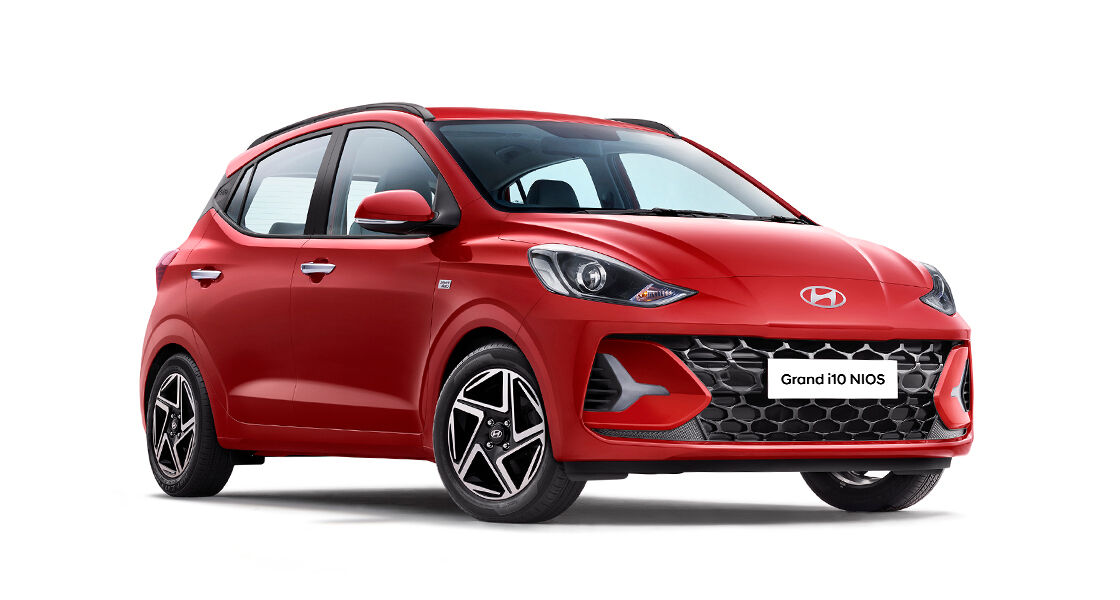
4. Hyundai Grand i10 Nios
Transmission: Manual (5-speed) Why it suits beginners: The Grand i10 Nios offers a step up in interior quality and feature set over the entry-level Maruti options, with a smooth, easy-to-operate manual gearbox that suits learners well. The car's slightly wider cabin is comfortable for daily use, and the driving position gives good all-round visibility — important for a new driver building spatial awareness.
Safety: Dual airbags and ABS standard; rear parking sensors on most variants.
Fuel efficiency: Approximately 20 km/l on petrol.
Maintenance and service: Hyundai has one of India's most extensive service networks, present across cities and towns nationwide. Authorised service centres offer consistent quality across the country.
Resale value: Strong in metros and Tier 1 cities, with Hyundai consistently ranking among the top brands for used car demand in India.
Best for: Beginners who want slightly more comfort and feature richness than entry-level options without a significant price premium.
Best Automatic Cars for Beginners in India
5. Maruti Suzuki Celerio AMT
Transmission: Automated Manual Transmission (AMT) Why it suits beginners: The Celerio AMT is one of the most affordable automatic cars available in India, making it an accessible entry point for new drivers who want the simplicity of automatic driving without a large budget stretch. AMT technology removes the clutch pedal entirely while using the same gear internals as a manual — making it familiar to mechanics and relatively inexpensive to service.
Safety: Dual airbags and ABS standard.
Fuel efficiency: Among the best for automatics in India at approximately 26 km/l — outstanding value for city commuters.
Maintenance and service: Full Maruti network advantage. AMT servicing is straightforward compared to CVT or DCT automatics.
Resale value: Strong — Maruti automatics in this price range are in consistent demand in the used market.
Best for: Budget-conscious beginners who want automatic convenience for city driving at the lowest possible ownership cost.
6. Tata Tiago AMT
Transmission: Automated Manual Transmission (AMT) Why it suits beginners: The Tiago AMT combines the segment-leading safety credentials of the Tiago with the ease of automatic driving — a compelling package for new drivers. The AMT gearbox manages gear changes smoothly for city speeds, removing the clutch challenge while the car's strong crash test performance provides meaningful protection.
Safety: 4-star Global NCAP rating — the strongest safety score in this segment. This is particularly valuable for a beginner whose reaction times and hazard perception are still developing.
Fuel efficiency: Approximately 20–22 km/l on petrol in AMT guise.
Maintenance and service: Available through Tata's national service network.
Resale value: Good and improving as Tata's market position strengthens.
Best for: Safety-first beginners who want automatic ease without compromising on crash protection.
7. Hyundai Grand i10 Nios AMT
Transmission: Automated Manual Transmission (AMT) Why it suits beginners: For a beginner who regularly drives in metro traffic — Delhi NCR, Mumbai, Hyderabad — the Grand i10 Nios AMT offers a comfortable, feature-rich automatic driving experience with excellent brand support. The AMT shifts smoothly in slow-moving traffic, and the car's compact dimensions make it easy to manoeuvre through urban congestion.
Safety: Dual airbags and ABS standard; rear parking sensors on most variants.
Fuel efficiency: Approximately 20 km/l on petrol in AMT form.

Maintenance and service: Hyundai's strong national network ensures consistent, quality service across all major Indian cities.
Resale value: Strong in Tier 1 cities; Hyundai holds resale value consistently well.
Best for: Metro-based beginners who prioritise cabin comfort, brand reliability, and service accessibility.
8. Honda Amaze CVT
Transmission: Continuously Variable Transmission (CVT) Why it suits beginners: The Honda Amaze CVT is a step up in driving refinement from AMT-based options, offering a genuinely smooth automatic experience without the gear-change jerkiness that AMT systems can exhibit in slow traffic. Its compact sedan body gives beginners more cabin space while still being manageable in cities. For beginners who are slightly more senior in age, or those buying a first family car rather than a personal city runabout, the Amaze CVT is a strong choice.
Safety: Dual airbags and ABS standard; Honda's structural build quality is well regarded.
Fuel efficiency: Approximately 18–19 km/l on petrol — slightly lower than AMT options but still competitive.
Maintenance and service: Honda's service network is strong in Tier 1 cities but less dense in smaller towns than Maruti or Hyundai — worth checking availability in your area before purchase.
Resale value: Good in metros, particularly for Honda's sedan segment which retains consistent buyer interest.
Best for: Beginners who want the smoothest automatic driving experience in the budget to mid-range segment, particularly for mixed city and highway use.
For Beginners Ready to Step Up: Tata Nexon
Transmission: Manual / AMT / Electric (EV)
Why it suits slightly more confident beginners: The Tata Nexon is worth mentioning for beginners who start with a smaller car and want to plan their upgrade. As a compact SUV, it is slightly larger and more commanding on the road than the hatchbacks above, but still very manageable for experienced beginners. Its 5-star Global NCAP safety rating makes it one of the safest cars available in India at any price point. The electric variant (Nexon EV) is also an excellent choice for beginners who want zero-complexity driving — no gears, no clutch, near-silent operation.

Best for: Beginners transitioning from their first hatchback who want more presence on highways and better long-trip capability, or those considering an EV from the outset.
What to Avoid as a Beginner in India
Some categories of car are generally less suitable for first-time Indian drivers:
- High-powered sedans and SUVs (above 120 bhp) — the power and size are harder to manage while building spatial awareness and traffic reading skills
- Large SUVs — parking, width judgement, and reversing become significantly more challenging in Indian narrow lanes and tight parking areas
- Sports cars or modified cars — sharp steering, high torque, and reduced ride height make Indian road conditions particularly challenging for beginners
- Cars with thin service networks — no matter how good the car, difficult access to authorised service is a real problem for a new driver who may not yet know how to identify mechanical issues early
Conclusion
The best car for a beginner in India is one that lets you focus entirely on learning to drive well — without worrying about whether the car is too powerful, too large, too expensive to fix, or too difficult to park. The models in this guide consistently deliver on that requirement. Whether you choose the ultra-affordable Maruti Alto K10 to start, the safety-leading Tata Tiago, or the smooth Honda Amaze CVT for city commuting, all are forgiving, practical, and well-supported across India's service landscape.
Once you have your car, the next step is developing real driving confidence. For a structured approach to learning, explore our guide to driving a manual car or our guide to driving an automatic car. And if you are still weighing up which transmission to choose, our manual vs automatic comparison covers everything you need to make the right call for your situation.
Summarise with AI:
Did you like this article? Leave a rating!

 Loading...