
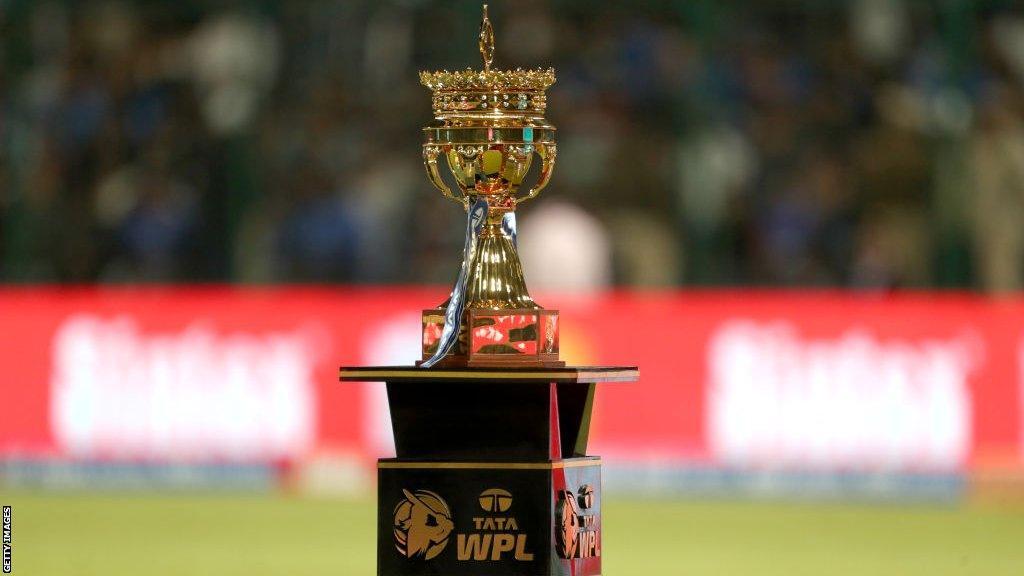

The Women’s Premier League (WPL) has moved quickly from “new property” to a mainstream cricket product in India. In just a few seasons, it has become a prime-time sports fixture with rising broadcast attention, stronger sponsorship pull, and a growing pipeline impact on Indian women’s cricket—despecially after India’s landmark ICC Women’s Cricket World Cup 2025 title.
Before we compare IPL vs WPL in detail, it helps to ground the conversation in what the league actually looks like on the map today.
- Delhi Capitals
- Gujarat Giants
- Mumbai Indians
- Royal Challengers Bengaluru
- UP Warriorz
Comparing IPL vs WPL is not about declaring a “winner.” The IPL is the world’s largest T20 league by scale, revenue, and global footprint; the WPL is a newer league that’s growing rapidly and reshaping the ecosystem for women’s cricket in India. What makes this comparison interesting in 2026 is that the WPL is now big enough to be measured not only by sentiment, but by tangible indicators: media-rights economics, prize-money signaling, cultural relevance, and its downstream impact on national-team depth.
This is also where the keyword women IPL 2026 schedule tends to come up. Many fans search that phrase when they really mean: “When is the next WPL window, and how does it fit in the broader cricket calendar?” Rather than listing match-by-match fixtures (which change annually), this article stays broad and comparative by explaining how WPL scheduling typically works, why it matters commercially, and how its growth trajectory stacks up against the men’s IPL.


A Practical Note On The Women's IPL 2026 Schedule Keyword
The phrase women IPL 2026 schedule is commonly used online as shorthand for the WPL calendar window, match dates, and where to watch. If you want the most reliable schedule source in-season, the WPL’s official site (wplt20.com) is the best anchor because it updates fixtures, venues, and match timings as the league publishes them.
Broadly, WPL has typically targeted a compact window (roughly 3–5 weeks), which is one reason it can generate concentrated attention without competing head-on with the longer IPL season.
Why The WPL’s Popularity Growth Is Not Just Hype
The WPL’s growth has two reinforcing engines:
Visibility Through Media Rights And Distribution
The BCCI sold WPL media rights for the 2023–2027 cycle to Viacom18 for ₹951 crore, which works out to ₹7.09 crore per match—a major statement for a new women’s league. That deal created stable distribution and consistent prime-time packaging—critical ingredients for building habitual viewership.
That one-match audience figure is often cited to illustrate how quickly WPL became prime-time mainstream viewing in India.
Momentum From Big National-Team Moments
India Women’s win at the ICC Women’s Cricket World Cup 2025 (beating South Africa in the final) gave women’s cricket a “mainstream moment” that feeds directly into league interest. That same final reportedly delivered record-scale digital viewing in India, reinforcing the commercial case for women’s cricket content.
WPL Teams And What They Represent Culturally
The WPL’s five-team format creates a different kind of fandom than the IPL’s 10-team footprint:
- It concentrates elite talent more tightly per roster, which can make the league feel immediately competitive.
- It accelerates “recognition cycles,” where casual fans quickly learn star names because the player pool is less dispersed.
- It enables franchises to build a strong identity quickly—colors, brand voice, and local community programs—without needing a decade-long runway.
The official team list is stable and centrally presented via the WPL site.
Prize Money Context: What The WPL Winner's Prize Money Signals
WPL winner prize money is often discussed as a symbol: it signals how seriously the organizers treat the league’s competitive and commercial status.
Recent reporting around WPL prize structures consistently cites ₹6 crore for champions and ₹3 crore for runners-up, which underlines that the league is maintaining a meaningful incentive framework as it grows.
This is where IPL vs WPL comparisons can become more nuanced:
- The IPL’s finances are on a different planet, but the WPL’s prize money is designed to be credible within the women’s franchise ecosystem.
- Maintaining consistent prize payouts helps teams build professional stability and long-term planning across cycles.
IPL Women 2025 Winner And Why That Matters For League Narrative
The keyword IPL women 2025 winner typically refers to the WPL champion of that season. In 2025, the Mumbai Indians won the WPL title, defeating the Delhi Capitals in the final.
Why does that matter in a schedule-and-growth article?
- Champions become “story engines” that boost repeat attention—fans follow whether a team can defend, rivalries sharpen, and viewership tends to rise around repeat contenders.
- A stable set of contenders also helps the WPL create recognizable narrative arcs, similar to what the IPL developed over many years.
Structural Differences Between IPL And WPL
League Size And Season Length
- IPL: Longer season, more teams (10), larger match inventory, and a deeper global player pool.
- WPL: Fewer teams (5) and a shorter, high-intensity season window.
That difference shapes everything: schedule placement, broadcast packaging, ticketing strategy, and how quickly storylines can move.
Talent Distribution And Competitive Texture
Because the WPL has fewer teams, it often feels “dense” with international and national stars. That density can increase perceived competitiveness—fewer easy games, fewer “development-only” lineups, and more matches where marquee players are facing each other directly.
Market Maturity And Media Economics
The IPL’s media-rights scale dwarfs every other cricket league. For context, IPL media rights for the 2023–2027 cycle were sold for about ₹48,390 crore, a figure widely reported when the deal was announced.
By contrast, WPL’s ₹951 crore rights deal is smaller but still substantial for a young women’s league—and that matters because it funds production quality, marketing, and consistent distribution.

Cultural Differences: What Fans Notice First
Stadium Culture And Identity Building
The IPL benefits from long-established home venues and a decade-plus of fan rituals. The WPL is building those traditions fast, and its cultural traction has been helped by:
- clear franchise branding (mirroring IPL teams)
- star-driven attendance spikes
- a “family-friendly prime-time” positioning that broadens audience composition
Role-Model Effect And Participation Culture
The WPL’s cultural impact is not only entertainment. It normalizes women’s professional cricket as a visible, aspirational pathway. That matters for:
- grassroots participation among girls
- school/college sports visibility
- sponsorship categories expanding beyond “token” support
Audience Reach And Visibility: Is WPL Competing With IPL Yet?
If “competing” means matching IPL’s absolute scale, then no, the IPL remains the dominant property. But if “competing” means establishing itself as a high-growth, high-visibility league that materially changes the cricket landscape, then WPL is already doing that.
A key visibility marker is how women’s cricket now performs on major digital platforms. India’s ICC Women’s Cricket World Cup 2025 win reportedly drew massive digital viewership for the final, illustrating that women’s cricket can deliver mega-event audiences when the stakes and storytelling are right.
Smriti Mandhana holds the record as the most expensive player in WPL history: Mandhana remains the costliest WPL buy (₹3.4 crore from the first auction), even several auctions later.
The WPL benefits directly from that shift: once the audience learns that women’s cricket can be appointment viewing, leagues gain a tailwind.
Impact On Indian Cricket: The WPL As A Talent Accelerator
The WPL’s most important “competitive” value may be what it does for Indian cricket’s depth chart.
Higher Reps In High-Pressure Roles
Domestic players get:
- More overs at the death
- More powerplay exposure against elite bowlers
- More leadership responsibility in franchise environments
That changes the readiness level of players entering international cricket.
International Standards Become Routine
With overseas stars embedded across teams, best practices become everyday norms: game planning, fitness standards, fielding intensity, and matchup-based tactics. That daily exposure can compress the time it takes for emerging Indian players to adapt.
Where The Comparison Lands: IPL vs WPL In 2026
Here’s the most accurate way to summarize IPL vs WPL right now:
- The IPL is the benchmark for the global T20 league scale.
- The WPL is the benchmark for high-growth women’s franchise cricket, with real commercial backing and growing cultural momentum.
- The WPL is not trying to replace the IPL; it’s building a parallel engine that expands the cricket economy and widens the talent base—especially meaningful after India’s 2025 World Cup breakthrough.
So when you see searches for women's IPL 2026 schedule, it’s often a proxy for a bigger question: “Is women’s franchise cricket now a permanent, must-follow part of the calendar?” At this point, the answer is clearly yes.
Summarise with AI:
Did you like this article? Leave a rating!

 Loading...
