


Have you ever heard of the Tambura? It is this amazing string instrument from India, and it has got quite the story. Think of it as the unsung hero in a band, setting the vibe and keeping everyone in tune. The history of the Tambura is not just about how it was made or where it came from. It is more about the magic it brings to music. This instrument has been around for a long time, and it is like the best kind of background singer, making sure the stars shine. So, as we look into the past of the instrument, we are not just talking about an old instrument. We are uncovering a piece of musical treasure that's been making Indian music sound awesome for centuries.
The Tambura instrument history reveals more than just its construction and design; it reveals a legacy woven into the fabric of the cultural and musical traditions of the country. Here is a salient guide about this instrument, its origin, history and more.






Sitar Origin: History of Tambura

The origin and history of the Tambura instrument in Indian music are steeped in tradition and cultural evolution. This instrument has its root in ancient India, the Tambura's ancestry can be linked to ancient string instruments known in India and the Middle East. Just like sitar origin, it is believed to have evolved from the veena, an older Indian string instrument, around the time of the early medieval period. This transformation reflects a blend of Indian musical theory and practice with influences from Persian and Central Asian cultures, brought to India through historical trade routes and conquests.
The Tambura's design and structure underwent refinements over centuries, adapting to the changing musical landscape of India. The instrument, as known today, typically features a long, hollow neck and a rounded body made from a gourd, which acts as a resonator. This design is crucial for producing its characteristic sustained, harmonious drone. The strings, traditionally four in number, are tuned to the notes of the raga being played, providing a continuous harmonic support that is fundamental to Indian classical music.
In historical texts and musical treatises, the Tambura holds a place of respect and importance. It is often depicted in ancient artwork, sculptures, and writings, indicating its longstanding presence in Indian cultural and religious contexts. This prominence is not only due to its musical role but also to the symbolic significance it holds in spiritual and meditative practices, often associated with the divine and the transcendent.
Throughout its history, the Tambura has been more than just a musical accompaniment. Its drone is considered essential in creating an immersive musical experience, setting the tonal foundation for melodic improvisations and rhythmic explorations in performances. This has remained unchanged, even as other aspects of Indian music have evolved.
In the modern era, the Tambura continues to be an integral part of classical performances, while also finding its place in contemporary and fusion music genres. Its enduring appeal lies in its ability to blend seamlessly with other instruments, enhancing the musical tapestry without overpowering it.
Top and Legendary Sitar Vadak
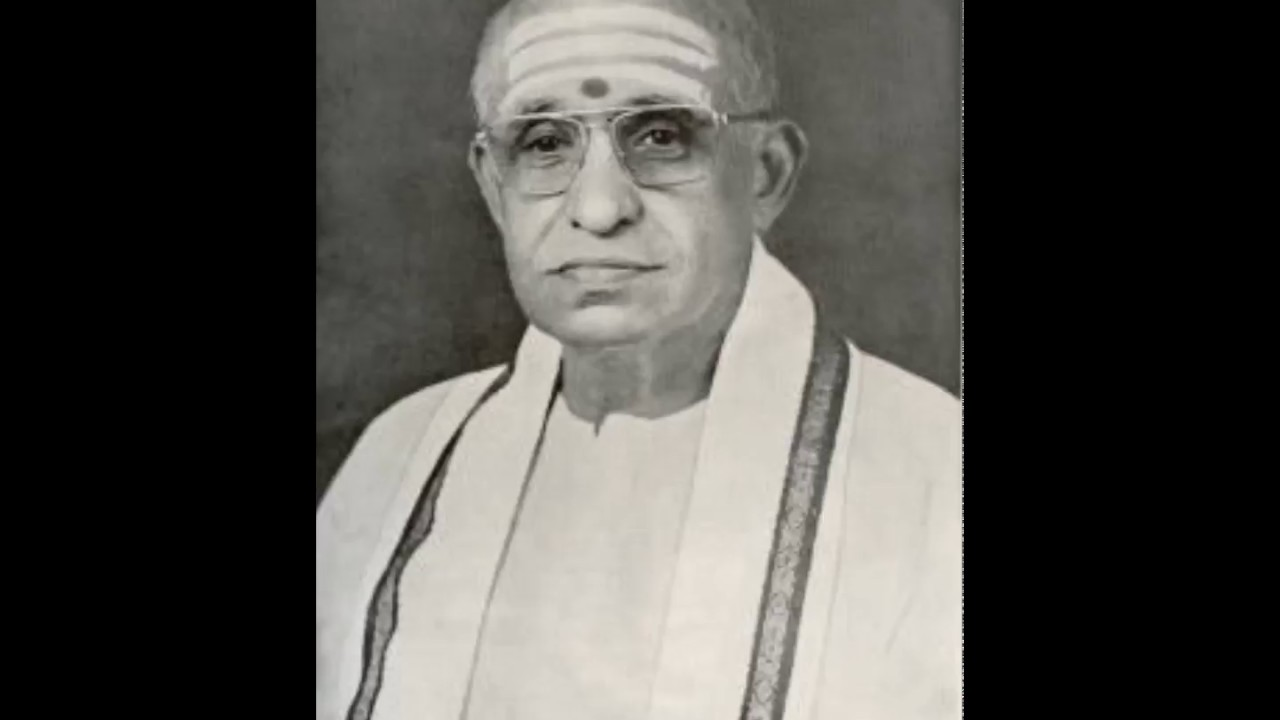
Here are the top and legendary sitar vadak in India, who have taught us how to love an instrument and dedicate our life to it.
1. Semmangudi Srinivasa Iyer
Semmangudi Srinivasa Iyer was born on July 25, 1908, in Semmangudi, a village in the Thanjavur district of Tamil Nadu, India. He was born into a family with a rich musical heritage. His initial training in Carnatic music was under his uncle, Semmangudi Narayanaswamy Iyer. Later, he became a disciple of Maharajapuram Viswanatha Iyer and Thirukodikaval Krishna Iyer, who further honed his skills.
Semmangudi is renowned for his contributions to Carnatic music, a South Indian classical music style. His music was characterized by its robustness and vibrancy. He had a unique singing style that combined technical proficiency with emotional depth. Known for his meticulous adherence to tradition, Semmangudi's renditions of kritis (compositions) were marked by clarity and precision.
Semmangudi's contributions to Carnatic music extend beyond his performances. He was instrumental in popularizing the compositions of Saint Thyagaraja and was known for his expertise in handling rare ragas (melodic frameworks). He also composed several varnams (a type of Carnatic music composition) and tillanas (rhythmic compositions) under the pseudonym "Mudhra Bhaskara."
2. Veena Sahasrabuddhe
Veena Sahasrabuddhe was a respected figure in Indian classical music, known for her expertise in the Hindustani classical genre, particularly in the Gwalior gharana style. Veena Sahasrabuddhe was born on September 14, 1948, in Kanpur, India, into a family with a strong background in music. Her father, Shankar Shripad Bodas, was a disciple of Vishnu Digambar Paluskar, a well-known figure in Hindustani classical music. Her mother was also a classical singer. This environment naturally led her to develop a deep love for music from a very young age.
Sahasrabuddhe's formal training in music began under the guidance of her father. Later, she learned from her brother Kashinath Shankar Bodas and also from Rajabhau Kogje. She further honed her skills under the tutelage of Balwantrai Bhatt, Vasant Thakar, and Gajananbua Joshi, absorbing elements from various gharanas (schools or styles of music) to develop her unique style.
In recognition of her contributions to Indian classical music, Veena Sahasrabuddhe received various awards and honors. Her profound impact on the Hindustani classical music genre made her a respected and beloved figure in the world of music.
3. S. Balachander
Balachander was a multifaceted Indian artist, renowned primarily for his virtuosity as a veena player, and also for his significant contributions to the world of cinema. Born on January 18, 1927, in Madras (now Chennai), Balachander was a child prodigy. He displayed remarkable talent not only in music but also in chess and painting. Coming from a family deeply involved in the arts, his initial exposure to music was through his father, Sundaram Iyer, who was a patron of the arts and an amateur stage actor.
Balachander's journey with the veena, a classical South Indian string instrument, began in his teenage years. What set him apart was his self-taught mastery of the instrument. He developed a unique playing style, characterized by his innovative techniques and deep understanding of the veena's capabilities. His approach was unconventional, and he often experimented with the instrument, enhancing its tonal range and expressiveness.
Balachander's contributions to the arts were recognized with several awards and honors. He was awarded the Padma Bhushan, one of India's highest civilian honors, for his contributions to Indian classical music.
4. Shashank Subramanyam
He is a celebrated Indian flautist known for his expertise in the Carnatic music tradition. Born on October 14, 1978, in Rudrapatna, Karnataka, India, Shashank showed an early talent for music. He began learning the flute at the tender age of six. His prodigious skills were evident from a young age, and he gave his first public performance when he was only 11 years old.
Shashank's style of playing the bamboo flute is noted for its depth and versatility. He has a unique approach that combines traditional Carnatic music with elements of improvisation, often incorporating techniques from other music forms and cultures. This has made his performances appealing not only to traditional Carnatic audiences but also to a global listener base.
Shashank has received numerous accolades for his contributions to music, including the prestigious Sangeet Natak Akademi Award. He is recognized for bringing a fresh perspective to Carnatic flute playing and for his efforts in popularizing the instrument globally.
5. Bahauddin Dagar
Bahauddin Dagar is an Indian musician renowned for his mastery of the rudra veena, an ancient string instrument in Indian classical music. Born in 1970 into the illustrious Dagar family, Bahauddin was immersed in music from a young age. He is the son of the legendary rudra veena player Zia Mohiuddin Dagar and the nephew of Zia Fariduddin Dagar, both prominent figures in the Dhrupad style of Indian classical music.
Bahauddin began his training under the guidance of his father, absorbing the intricacies of the Dhrupad style and the rudra veena. His playing is characterized by its depth, meditative quality, and adherence to the Dagar tradition. He has played a significant role in keeping the tradition of the rudra veena alive and relevant in contemporary times.
His performances, both in India and abroad, are acclaimed for their purity and the spiritual experience they evoke. Bahauddin is not just a performer but also a preserver of the rudra veena tradition, imparting his knowledge to the next generation of musicians.
How Many Strings in Sitar (FAQ)
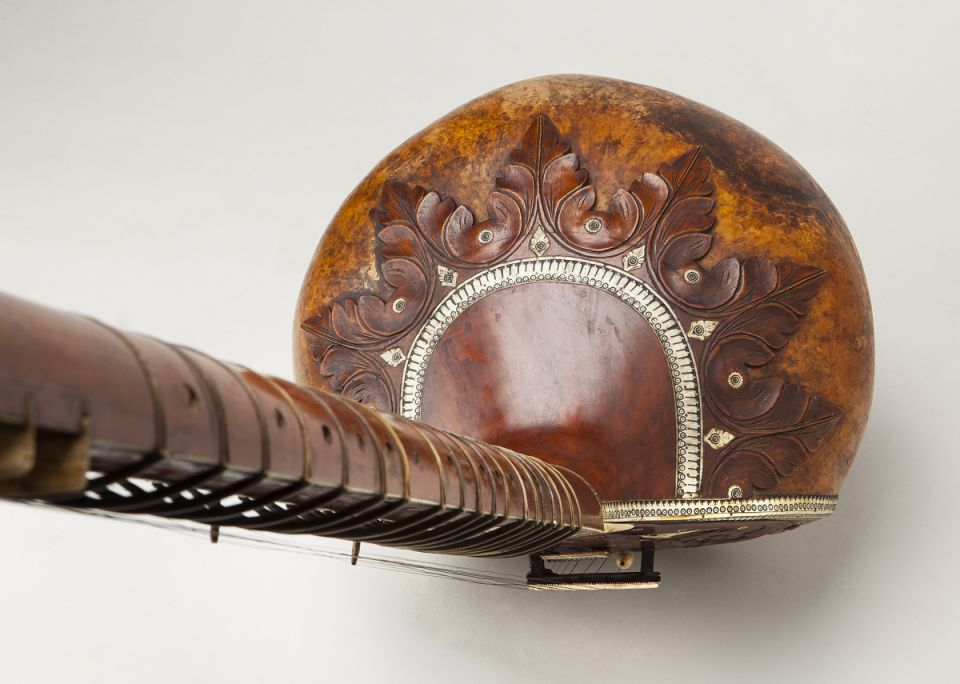
Here is how many strings in Sitar (FAQ) and Tambura and what are their differences. A sitar typically has between 18 to 21 strings. These include six or seven main playing strings, which the player plucks or strums to create melodies. Alongside these are 11 to 13 sympathetic strings, which resonate in harmony with the main strings, adding depth and richness to the sitar's sound. The sitar also has a set of drone strings that help maintain the harmonic framework during a performance.
Features of Sitar and Tambura: Their Differences
- Strings: The sitar usually has 18 to 21 strings, including main, sympathetic, and drone strings.
- Body: It has a pear-shaped, hollow wooden body with a long neck. On the other hand, a tambura typically has four to five strings. It has a similar body shape to the sitar but with a slightly longer neck.
- Frets: The sitar has movable frets, allowing for a wide range of note adjustments. Unlike the sitar, the tambura does not have frets as it is not used for melody but for providing a continuous drone.
- Sound: The sitar is known for its distinctive, resonant, and complex sound, characterized by a rich blend of harmonics. The tambura produces a deep, resonant drone that underlies and supports the melodic performance.
- Playing Style: It is played by plucking the strings with a metal pick called a 'mizrab.' The strings are strummed continuously to create a harmonic and meditative sound.
How to Learn Tambura?
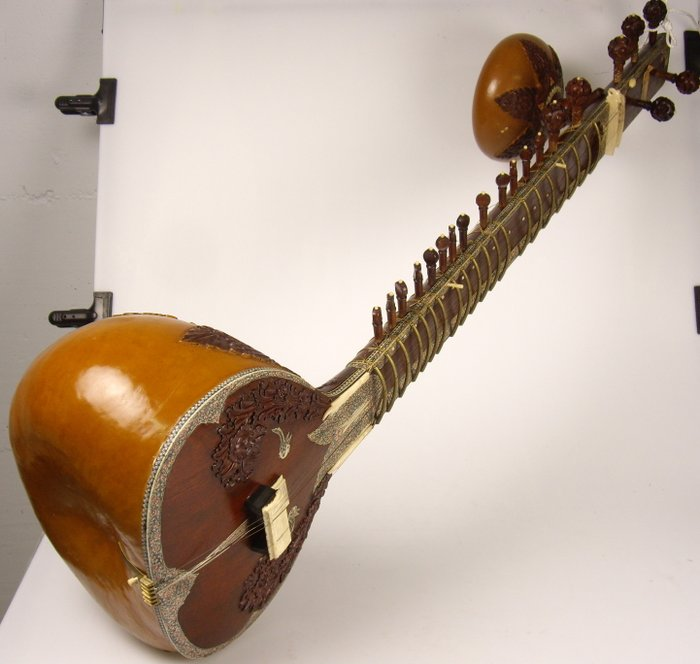
Learning to play the Tambura involves understanding its basic structure, function, and the technique required to produce its characteristic drone sound. Here is a step-by-step guide to get started:
- Get familiar with the tambura's parts: the body, neck, strings, and tuning pegs.
- Note that the tambura typically has four strings, although some have five.
- The tambura is tuned to the specific pitch of the raga or scale being played in the accompanying music.
- The usual tuning for the four strings (from lowest to highest) is Pancham (P, the fifth), Madhyam (M, the fourth), and two strings tuned to the tonic (S, Sa) note of the raga.
- Use a tuning device or app to ensure the strings are tuned to the correct pitch.
- Sit comfortably on the floor with your legs crossed.
- Place the tambura in your lap or on the floor beside you, leaning it slightly backward against your shoulder.
- Use your dominant hand for strumming the strings. The strumming motion is a gentle, continuous sweep across all strings.
- The key to playing the tambura is maintaining a consistent, rhythmic sound without any abrupt stops.
- Begin by strumming slowly, focusing on getting a continuous, harmonious sound.
- The drone sound should be smooth and resonant. Adjust your strumming technique to achieve this sound.
- Regular practice is crucial. Start with short sessions and gradually increase the duration.
- Listen to tambura music and recordings to understand the desired sound.
- Consider taking lessons from a music teacher experienced in Indian classical music. They can provide guidance on technique, tuning, and maintaining the instrument.
Further, learning how to care for your tambura, including proper storage and handling is crucial. Regular maintenance is important to keep it in good condition.
Summarise with AI:
Did you like this article? Leave a rating!

 Loading...
