
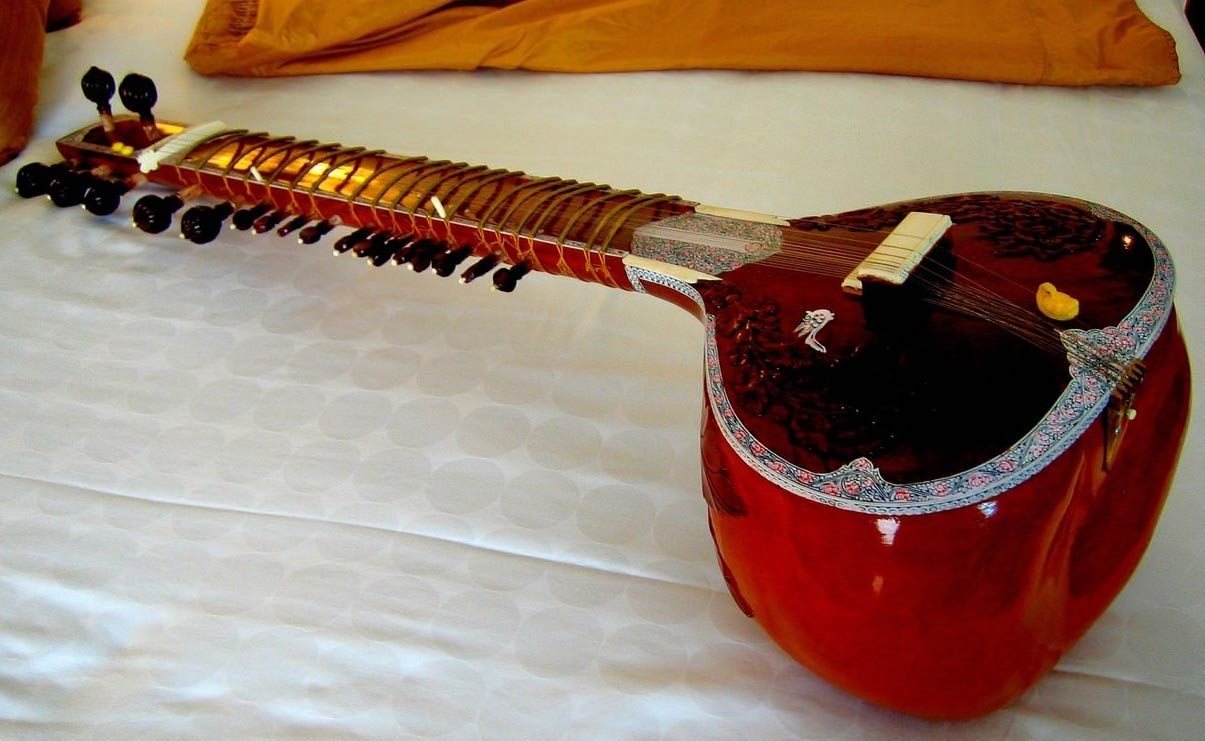

The Sitar is a traditional Indian instrument with strings. It is used a lot in Indian classical music. The Sitar has a long neck and a round body, and you play it by plucking the strings. It makes a sound that is different and nice to hear. Talking about where it comes from, the Sitar has been around for a very long time. People think the Sitar instrument was made long ago, mixing ideas from old Indian instruments and some from Central Asia.
In India, music is super important. It is not just about singing or playing; it is a way to share feelings and stories. Music is a big part of Indian culture, in celebrations and everyday life. The Sitar is really special in Indian music. It became famous around the world because of famous players like Ravi Shankar. The Sitar can make many different sounds, some deep and some lively. Here, we can explore the history of Sitar instrument, how to learn the instruments and who are the legendary sitarists in India.






Sitar: A Unique Musical Instrument
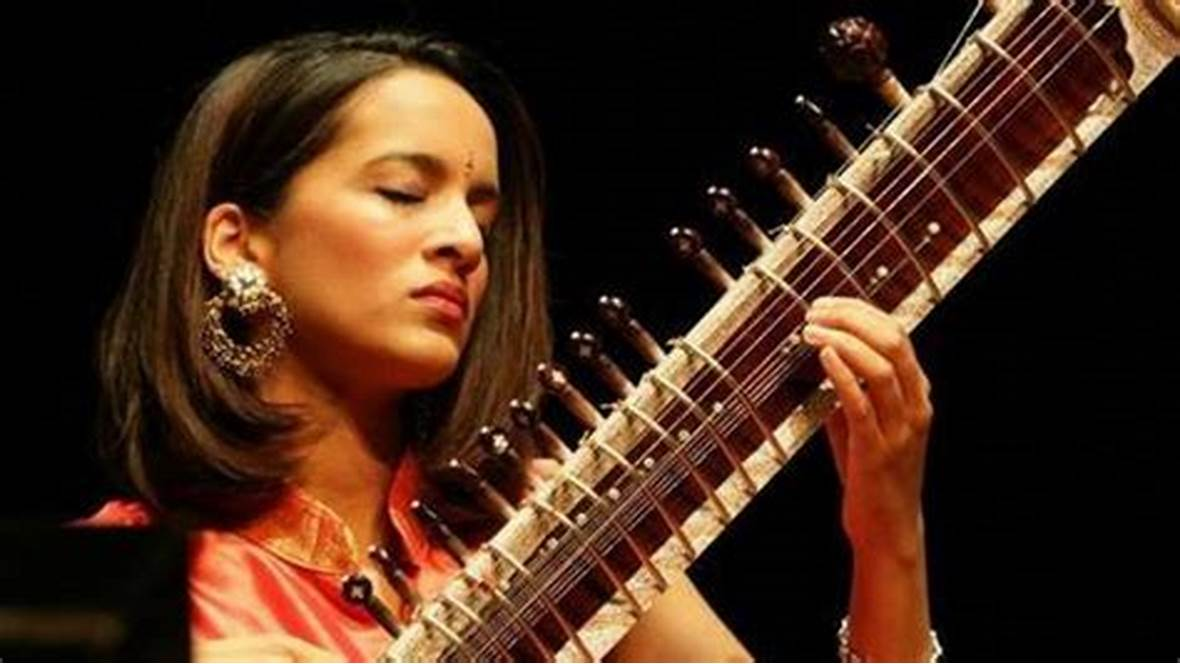
- The Sitar is a kind of instrument with strings that you play by plucking, and it is famous in Indian Hindustani classical music. This instrument is about as long as four feet, around 1.2 meters. When someone plays it, they sit down and hold the Sitar tilted at an angle, about halfway up.
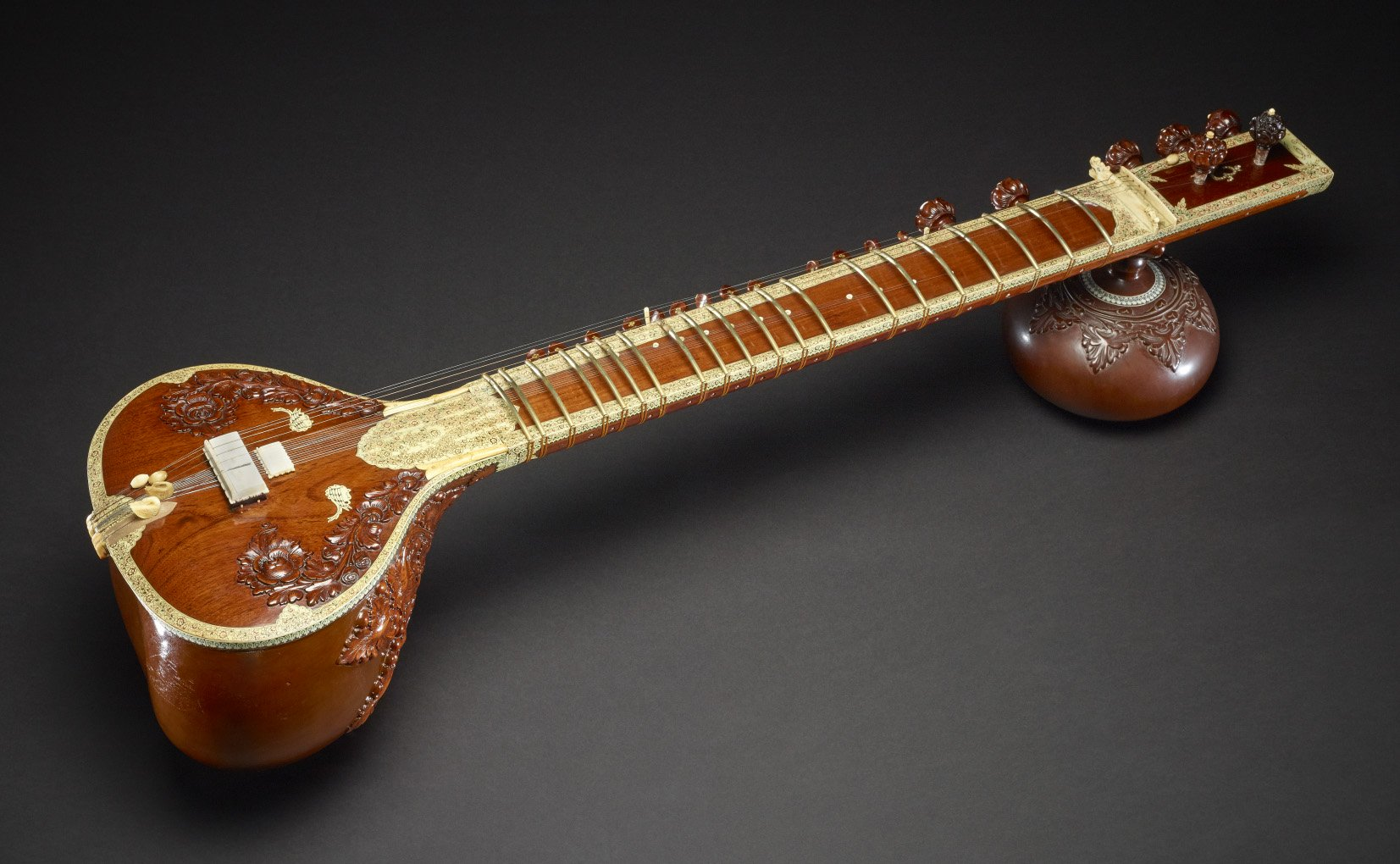
- Now, the Sitar itself looks a bit like a pear because its body is rounded and hollow and made from a type of pumpkin. It has a long neck that is also hollow. The Sitar usually has a bunch of strings, about 18 to 21. These strings are tied to little knobs (we call them tuning pegs) on the side and front. They stretch over the length of the Sitar and are attached at the other end to one of the two bridges, which help to hold the strings up and make the sound when you play.
- If you want to learn Sitar, understanding the parts of this beautiful musical instrument is the key. Sitar consists of strings, frets, a bridge, tuning pegs and a gourd resonator.
- Strings: The Sitar usually has 18 to 20 strings. There are six or seven main strings that you play melodies on, and the rest are sympathetic strings. These sympathetic strings vibrate when you play the main strings, adding a sort of echo to the music.
- Frets: The neck of the Sitar has raised metal frets. You press the main strings against these frets to change the pitch. The cool thing about sitar frets is they are movable so that you can adjust them for different music styles.
- Bridge: There is a bridge on the body of the Sitar that supports the strings. It is pretty important because it helps make the unique sound of the Sitar. When the strings vibrate, the bridge makes them buzz, creating that distinctive sitar tone.
- Tuning Pegs: These tune the strings to the right pitch. The main strings and the sympathetic strings each have their pegs.
- Gourd Resonator: Some sitars have an extra gourd at the top of the neck. This acts like a second sound box, making the music louder and richer.
How to Play a Sitar?
It is important to learn the posture of how you sit with the Sitar. First, hold the Sitar at a slight angle, resting it on your foot. Pluck the main strings with a metal pick worn on your finger, called a mizrab. The other hand moves along the frets to change the notes.
Playing the Sitar combines melody (from the main strings) with rhythm and the resonating sound from the sympathetic strings. It takes skill to make all these parts work together, creating unique and beautiful music.
- Setting Up the Sitar: sit on the floor with your legs crossed. Place the Sitar on your left foot (if you are right-handed), and balance it against your right knee. The neck should be pointing slightly upwards and to the left.
- Holding the Mizrab: Fit the mizrab (metal pick) onto your right hand's index/middle finger. The mizrab is used to pluck the strings.
- Understanding the Strings: Familiarise yourself with the main playing strings and the sympathetic strings. The main strings are used for the melody, and the sympathetic strings create resonance.
- Tuning the Sitar: Tune the main strings to the specific notes of the raga (melodic framework) you are learning. The sympathetic strings should also be tuned to match the notes of the raga.
- Positioning Your Hands: Your left hand will press the strings against the frets to change notes. Keep your fingers close to the frets for easier movement. Your right hand will be used to pluck the strings.
- Plucking the Strings: Start by practising plucking the main strings with the mihrab. Get comfortable with the motion and try to keep a steady rhythm.
- Fingering Techniques: With your left hand, practice pressing the strings on different frets to change notes—experiment with sliding your fingers along the strings (meends) to create a gliding sound.
- Playing Scales: Practice playing scales (sargam) to get used to moving your fingers along the frets and coordinating with your plucking hand.
- Combining Melody and Rhythm: As you get more comfortable, combine the melody from the main strings with the rhythm. Listen to how the sympathetic strings respond and add depth to your playing.
- Practice Regularly: Regular practice is key. Start with simple ragas and gradually move to more complex compositions. Listen to recordings of master sitar players to understand the nuances of sitar music.
As you advance, focus on expressing emotion through your playing. The Sitar is an expressive instrument, and its beauty lies in how you convey feelings through the music.
Legendary Sitar Players & Musicians
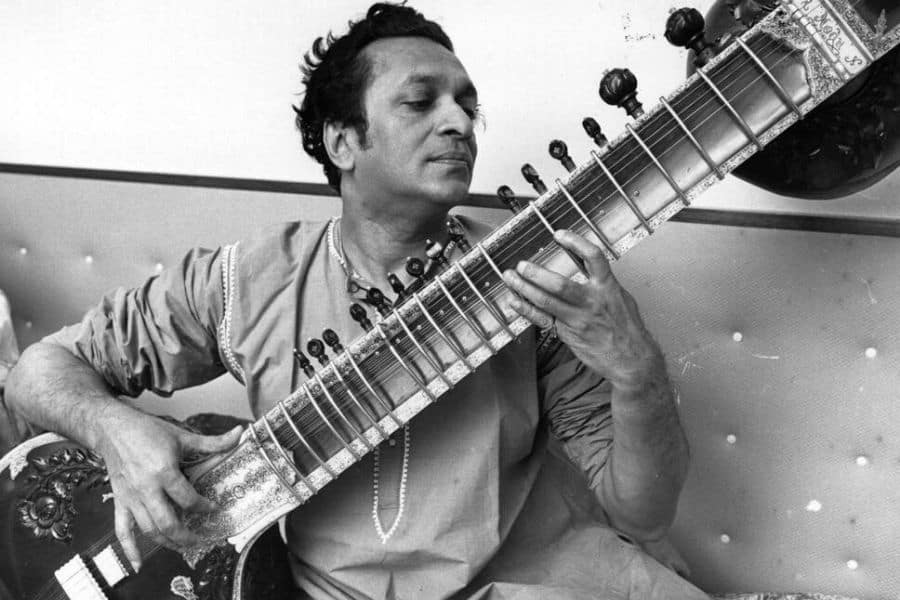
Here is a list of legendary Sitar players & musicians in India who have great achievements in the Indian music industry. Moreover, these sitarists have also crossed Indian borders and collaborated with globally acclaimed figures, providing the Indian music industry with much pride and predominance.
| Name of the Sitar Player | Birth | Journey |
|---|---|---|
| Ravi Shankar | April 7, 1920 - December 11, 2012 | Ravi Shankar began his musical journey as a dancer in a dance group. He later trained under Allauddin Khan, becoming a skilled sitarist. Shankar played a crucial role in introducing Indian classical music to the Western world. He is renowned for his pioneering work in bringing Indian music to the global stage. Further, he also collaborated with famous artists like George Harrison of The Beatles and composed music for films. He is also a multiple Grammy Award winner. |
| Nikhil Banerjee | October 14, 1931 - January 27, 1986 | Banerjee was a child prodigy, starting his sitar training early under musicians like Mushtaq Ali Khan and later, Allauddin Khan. He was known for his deep and introspective style of playing. Banerjee was admired for his unique style and mastery of the sitar and received several awards, including the Padma Shri. He was a respected figure in Indian classical music. |
| Vilayat Khan | August 28, 1928 - March 13, 2004 | Vilayat Khan, son of Enayat Khan, was a prominent sitarist known for his singing style (gayaki ang). He began learning from his father and later developed his unique style. Khan was celebrated for his lyrical style and innovative techniques. He composed music for movies and received numerous awards, including the Padma Bhushan. |
| Shahid Parvez Khan | Born October 14, 1958 | Shahid Parvez comes from a family of musicians. He was trained by his father, Aziz Khan, and is known for blending vocal (gayaki) and instrumental (tantrakari) styles. Recognised globally for his captivating performances, he has received several awards, including the Sangeet Natak Akademi Award. |
| Budhaditya Mukherjee | Born October 17, 1955 | Known for his fast and intricate playing style, Budhaditya Mukherjee trained in the Imdadkhani Gharana style. He is noted for his innovative approach and deep understanding of raga music. Highly regarded in Indian classical music, Mukherjee has received several awards, including the ITC Sangeet Research Academy award. |
| Shujaat Khan | Born May 19, 1960 | Son of Vilayat Khan, Shujaat Khan is recognised for his mastery of the sitar and unique gayaki ang technique. He has integrated singing with his sitar performances. He has been Grammy-nominated and has performed at prestigious venues worldwide, continuing his family musical legacy. |
| Anoushka Shankar | Born June 9, 1981 | Anoushka Shankar, daughter of Ravi Shankar, began training under her father at a young age. She is known for blending traditional Indian music with global genres. Anoushka has received multiple Grammy nominations and is celebrated for her musical style that merges traditional and contemporary music. |
How Many Strings does a Sitar Have (FAQ)
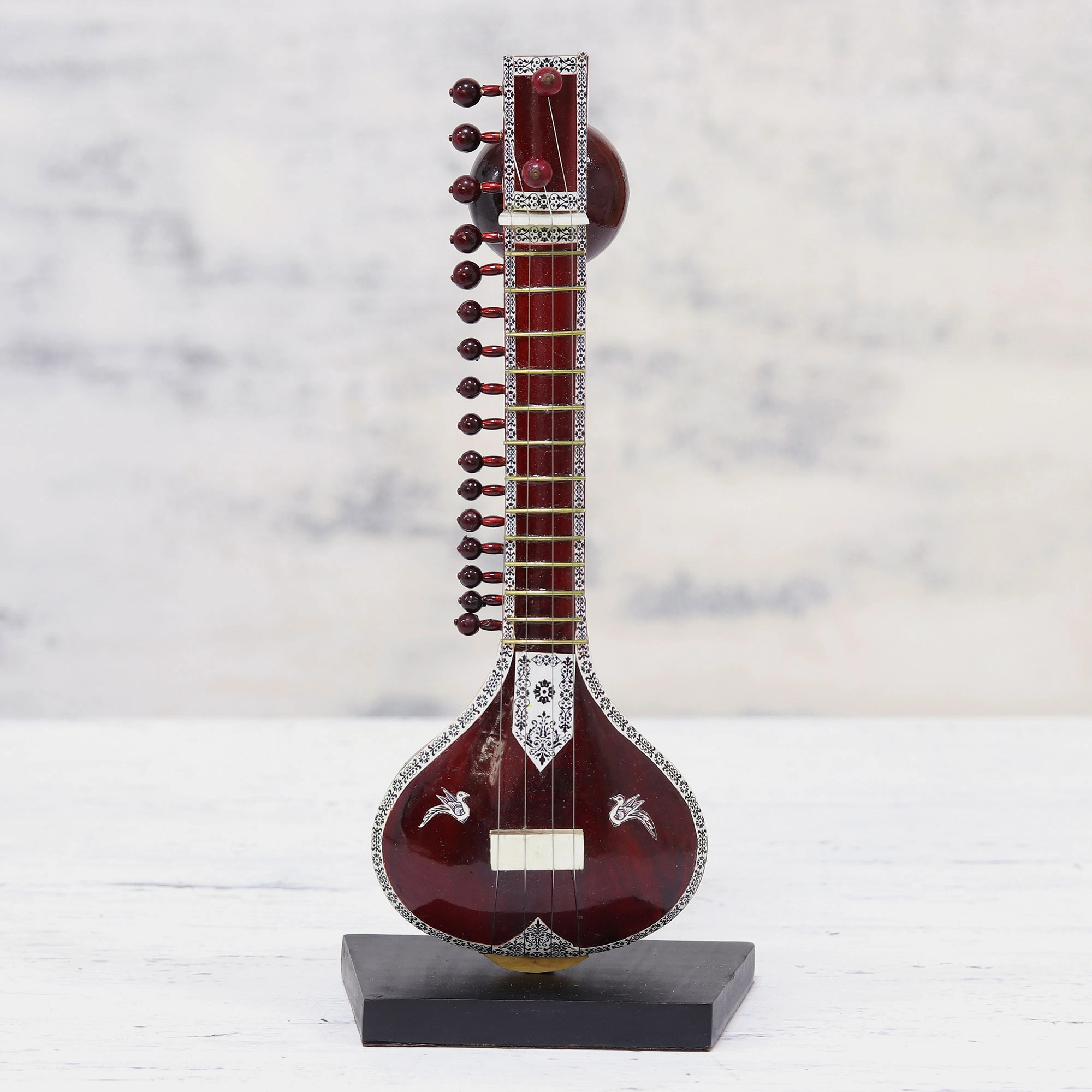
One common query, how many strings does a sitar have (FAQ) is frequently asked by the students. A sitar typically has 18 to 21 strings, but this can vary. Usually, six or seven main playing strings run over the curved, raised frets. These strings are what the player plucks to create a melody. In addition, there are 11 to 13 sympathetic strings beneath the main strings. These are not played directly; they vibrate sympathetically with the main strings, adding a rich, resonant echo to the music. The exact number of strings can differ based on the style and preferences of the musician.
What Is the Sitar Made Of?
The Sitar is primarily made of wood, with teak or tung wood being common choices. The body, or tumba, is usually a hollowed-out pumpkin, while the neck and faceplate are wood. The frets are metal, often brass or steel, and tied to the neck to move them for tuning. The strings are typically metal as well. The intricate decorations on many sitars include inlays of celluloid or mother-of-pearl and sometimes even detailed carvings or paintings.
How Is the Sitar Tuned?
Tuning a sitar can be quite complex and varies depending on the raga (melodic framework) being played. The main strings are tuned to the notes of the raga, while the sympathetic strings are tuned to the individual notes of the raga's scale. Each string has its tuning peg, and fine adjustments are often made during performances. Its unique sound partly comes from the fine-tuning of these strings to produce the right resonance and tone.
What Is the History of the Sitar?
The Sitar originated in the Indian subcontinent around the Middle Ages. Its design and playing style evolved over centuries, drawing influences from ancient Indian instruments like the veena and Persian instruments. The Sitar became prominent in the Mughal era and underwent significant modifications, especially in the 18th century, shaping it into the instrument we recognise today. Its global popularity surged in the mid-20th century, partly due to Indian musicians like Ravi Shankar performing internationally.
What Role Does the Sitar Play in Indian Music?
The Sitar is a cornerstone of Hindustani (North Indian) classical music. Its versatility makes it suitable for expressing a wide range of emotions and themes, essential in Indian music's emphasis on expression and improvisation. Its ability to produce a deeply spiritual and introspective sound has made it a key instrument for many ragas (musical modes or frameworks). In addition to classical music, the Sitar has been incorporated into various other music genres, including fusion and popular music, both in India and globally.
Summarise with AI:
Did you like this article? Leave a rating!

 Loading...
