
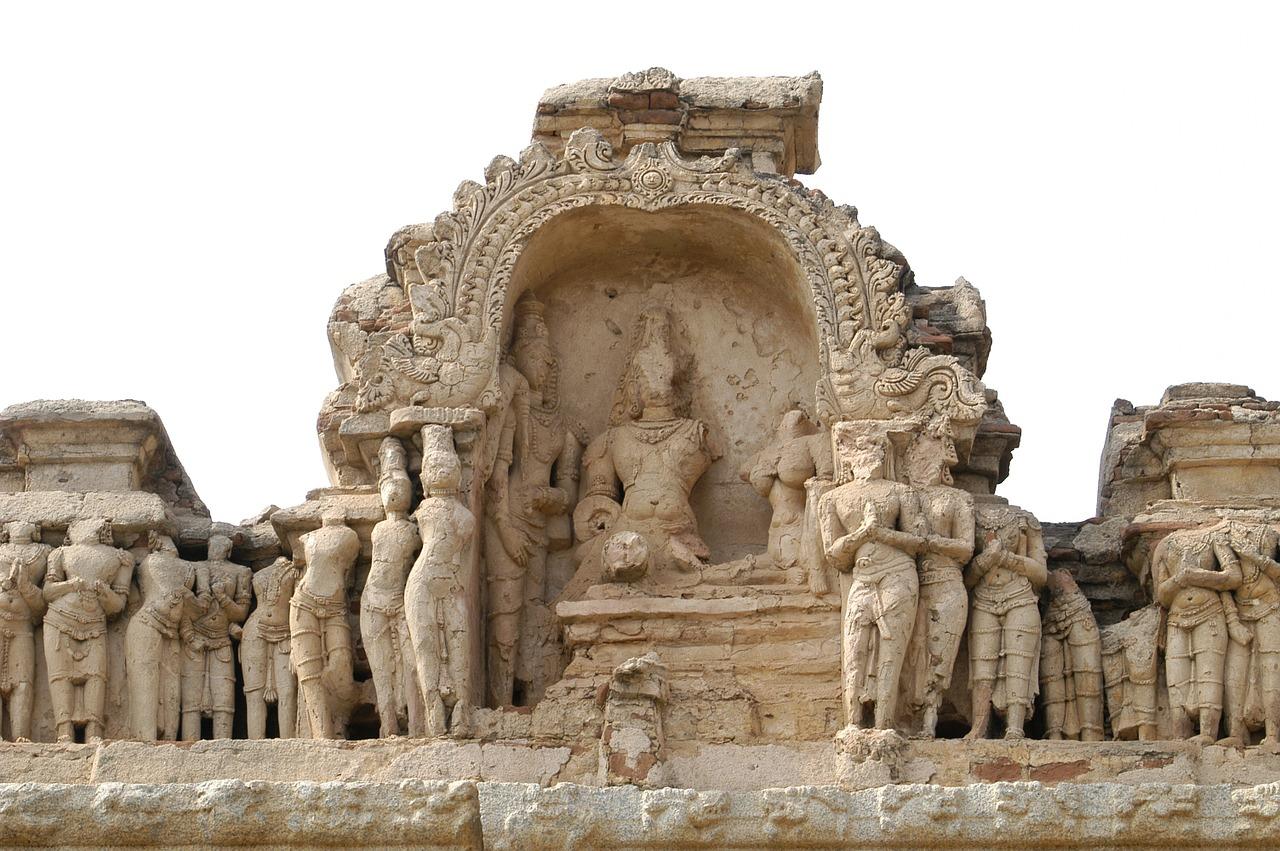

Based in the Deccan, the Vijayanagara Empire was a South Indian empire. It was founded in 1336 by Harihara I and his brother Bukka Raya I, and it lasted until 1646, though its influence waned following the Deccan sultanates' significant military setback in 1565. Located in modern-day Karnataka, India, the empire, called after its capital city, Vijayanagara, boasts spectacular remains encircling modern-day Hampi, which has been designated a World Heritage Site.
Important details regarding its history can be found in the works of early European explorers like Domingo Paes, Fernao Nuniz, and Niccolò Da Conti as well as in the literature written in the regional vernaculars. Vijayanagara's archaeological digs have exposed the empire's richness and might. Numerous monuments from the empire may be found all over South India, with Hampi being the most well-known. The Vijayanagara architectural style is the result of the fusion of South India's earlier temple construction traditions.
The Vijayanagara style of temple construction was innovative in its use of native granite, initially in the Deccan and then in the Dravidian idioms, thanks to the blending of all faiths and vernaculars. Northern Deccan Sultanate architecture can be seen in secular royal structures. New technologies, such as irrigation water management systems, were introduced by robust international trade and efficient administration. Under the empire's patronage, the arts and literature of Kannada, Telugu, Tamil, and Sanskrit reached unprecedented heights, and Carnatic music took on its present shape. By emphasizing Hinduism as a unifying factor, the Vijayanagara Empire produced an age in South Indian history that went beyond regionalism.




Vijayanagara History Notes for UPSC
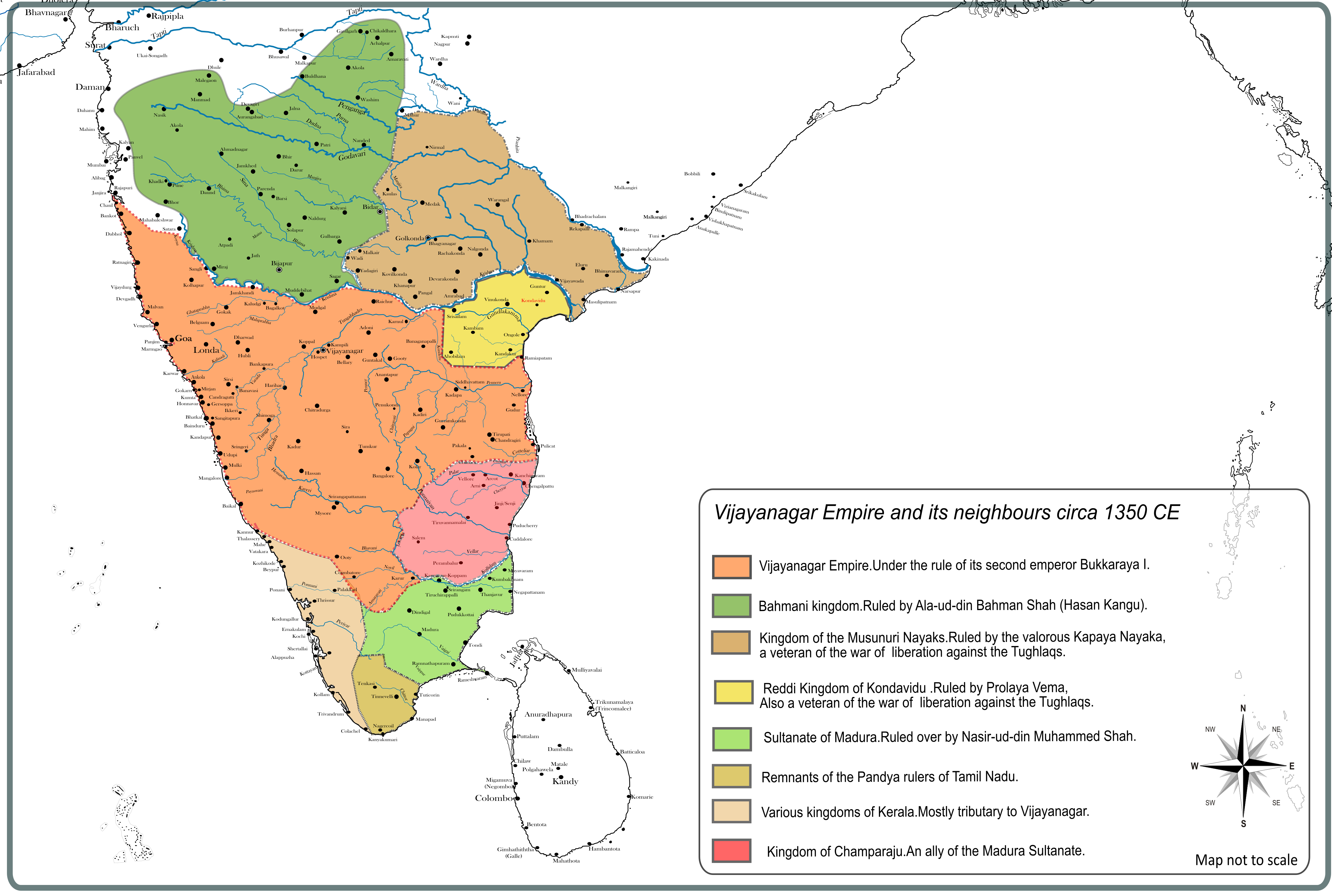
Five sons of Sangama built the city of Vijayanagara and its first dynasty in 1336; Harihara and Bukka became the city's first rulers. Vijayanagar eventually grew to become the largest empire in southern India. After the chaos and disarray of the 12th and 13th centuries, it helped to rebuild Hindu life and governance by acting as a barrier against invasion by the Muslim sultanates in the north. Interaction with Muslims, who were not personally despised, inspired original ideas and innovative output. As a unifying factor, Sanskrit was promoted, and local literature flourished. Beyond its boundaries, the nation thrived in unparalleled tranquillity and wealth.
Uncover the history of the dynasty that gave the world the mesmerizing Ellora cave architecture - the Rashtrakutas.
The Sangama dynasty was the first to hold authority until approximately 1485 when the Bahmanī sultan and the Orissan raja exerted pressure for Narasimha of the Saluva line to take over. The Tuluva dynasty had replaced the Saluva dynasty by 1503. The great Krishna Deva Raya was the ruler of Tuluva. During his rule (1509–29), the Bijapur sultan suffered terrible setbacks (1520), the Orissan Hindus were subdued by the capture of Udayagiri (1514) and other towns, and the region between the Krishna and Tungabhadra rivers (the Raichur doab) was conquered (1512). However, Krishna Deva's heirs permitted their adversaries to band together against them.
Chief Minister Rama Raya of Vijayanagar led the empire into the decisive battle of Talikota in 1565, where the united armies of the Muslim nations of Ahmadnagar, Golconda, and Bijapur routed the empire's army and destroyed Vijayanagar. The Aravidu dynasty, which created a new capital at Penukonda and temporarily maintained the empire, was subsequently established by Tirumala, the brother of Rama Raya, who took control of the empire. Nonetheless, internal strife and the cunning of the sultans of Golconda and Bijapur caused the empire to finally fall apart around 1614.
Vijayanagara Kings and Dynasties
Sangama Dynasty (1336–1486)
The Sangama dynasty was the first to control the Vijayanagara empire. The two founders of the empire, Harihara and Bukka, belonged to this dynasty. It ruled from 1334 until 1485. Bukaraya succeeded Harihara as king. The son of Bukka, Kamparaya, annexed Madurai. This episode was written in Sanskrit as Madhuravijayam by Kamparaya's wife, Gangadevi. Devaraya I was a notable ruler in the beginning. He was the driving force behind the construction of the Tungabhadra River dam.
The greatest ruler of the Sangama dynasty was Deva Raya II. Muslim archers made up his army, and he was the first Vijayanagara king to obtain tribute from Cybon. The Sangama dynasty declined after his passing. His commander, Saluva Narasimha Raya 1, deposed the last king, Virupaksha Raya, and established the Saluva dynasty.
Saluva Dynasty (1486-1506)
The Sangama dynasty was succeeded by the second dynasty of the kingdom, the Saluva dynasty, founded by Narasimha. It governed between 1485 and 1505 AD. They controlled nearly all of South India. This was the period of Annamcharaya's life. The Tuluva dynasty began to dominate under Veeranarasimha.
Matching the Vijayanagara Empire in style and magnificence, the Chalukyas also maintained a rich tradition of temple architecture.
Tuluva Dynasty (1506-1565)
The Tuluva dynasty, founded by Vir Narsimha, was the third dynasty to rule the Vijayanagar Empire. The most famous emperor of the Vijayanagar Empire, Krishna Deva Raya, was descended from this dynasty. From 1491 to 1570, it ruled. Krishna Deva Raya was a superb administrator and commander. He destroyed the Adil Shahi army of Bijapur before attacking Gulbarga and freeing the three Bahamani princes who were detained there. In appreciation for his help, Krishna Deva gave him the title Yavanarajya Sthapanacharya. He helped the Bahmanis restore control of Gulbarga.
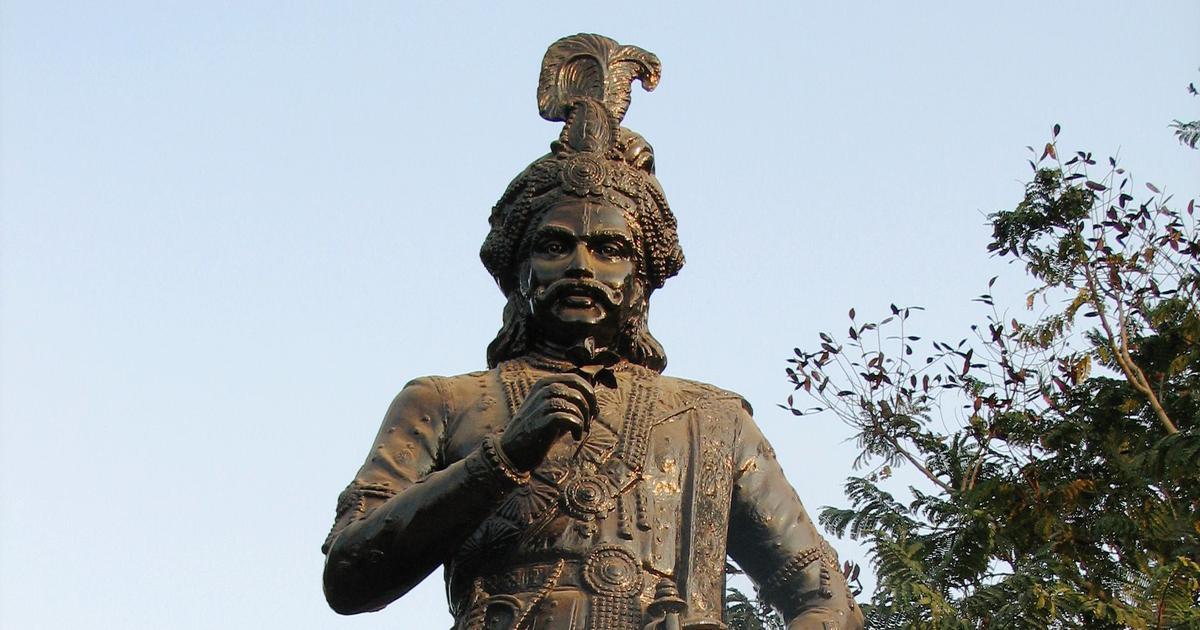
Krishna Deva Raya began his eastern expedition in AD 1513. Udayagiri was the first fort that Krishnadevaraya conquered. Krishnadevaraya and Portuguese ruler Alfanso de Albuquerque signed a pact. He was known as Andhra Bhoja and was a fervent advocate of the arts and literature. There were eight eminent scholars known as Ashtadiggajas at his royal court.
The combined troops of Bijapur, Ahmadnagar, Golkonda, and Bidar, known as the Bahaman Confederacy, defeated Rama Raya at the Battle of Talikota in 1565. Rama Raya was imprisoned and executed. The city of Vijayanagar was destroyed. It was widely believed that this conflict marked the collapse of the Vijayanagar Empire. However, the Aravidu dynasty ruled the Vijayanagar kingdom for around a hundred years after that.
Aravidu Dynasty (1570-1647)
The fourth and final dynasty to rule the Vijayanagar kingdom in South India was Aravidu, founded by Tirumala. Among this dynasty's famous rulers were Venkata II, Thirumala, and Sri Ranga. The final ruler of the state of Vijayanagara was Sri Ranga III. Sri Ranga was defeated by Mir Jumla of Golconda in the Battle of Vandavasi in 1647. This led to the fall of the Vijayanagar empire.
Decline of Vijayanagar Dynasty
The coalition that permanently undermined Vijayanagar's power was formed mainly by the sultans of Ahmadnagar and Golconda, who had suffered great losses at the hands of Rama Raya. At least four of the five sultans had started their march on Vijayanagar by 1564. This led to the Vijayanagar armies' crushing defeat in the Battle of Talikota early in 1565 and the following sack and destruction of a large portion of the city. While his brother Tirumala managed to flee to the south with the monarch and most of the royal treasury, Rama Raya was apprehended and executed.
Architecture of the Vijayanagara Empire
Earlier decades had seen the prosperity of Vijayanagara architecture, which was a dynamic fusion of the Chalukya, Hoysala, Pandya, and Chola styles and idioms. Long after the empire fell, the sculpture, architecture, and painting it left behind had an impact on the growth of the arts. Its artistic signatures include the elaborately pillared Rayagopura (tower), Vasanthamantapa (open pillared halls), and Kalyanamantapa (nuptial hall). Because strong granite was readily accessible in the area and could withstand repeated invasions, artisans chose to work with it.
Even though the structures of the empire are dispersed throughout Southern India, nothing compares to the enormous open-air theater of monuments in its capital, Vijayanagara, which is recognized as a UNESCO World Heritage Site. The kings carried on constructing monuments in the Deccan or vesara styles in the fourteenth century, but to fulfill their ritualistic requirements, they eventually added gopurams in the style of Dravidar.
Two notable instances of Vijayanagara architecture are the Hazare Rama temple of Deva Raya I and the Prasanna Virupaksha temple (subterranean temple) of Bukka Raya I. Their work is distinguished by the complex and varied decoration of the pillars. The Hazara Ramaswamy temple in Hampi, despite its modest size, offers a flawless example of the pillared Kalyanamantapa style, even if the Vitthala temple is the best example of it. One obvious feature of their style is their return to the calm, simple art of the Chalukya era. The Vitthala temple, a magnificent example of Vijayanagara art, took several decades to build under the Tuluva monarchs' rule.
Another aspect of the Vijayanagara style is shown in the carving of massive monoliths like the Nandi bull in Lepakshi, the Gomateshwara statues in Karkala and Venur, and the Sasivekalu (mustard) and Kadalekalu (ground nut) Ganesha at Hampi. Vijayanagara art includes wall paintings at the Jain basadi (temple), the Kamaskshi and Varadaraja temple at Kanchi, the Shivapurana paintings (tales of Shiva) at the Virabhadra temple at Lepakshi, and the Dasavathara (ten avatars of Vishnu) and Girijakalyana (marriage of Goddess Parvati) in the Virupaksha temple at Hampi.
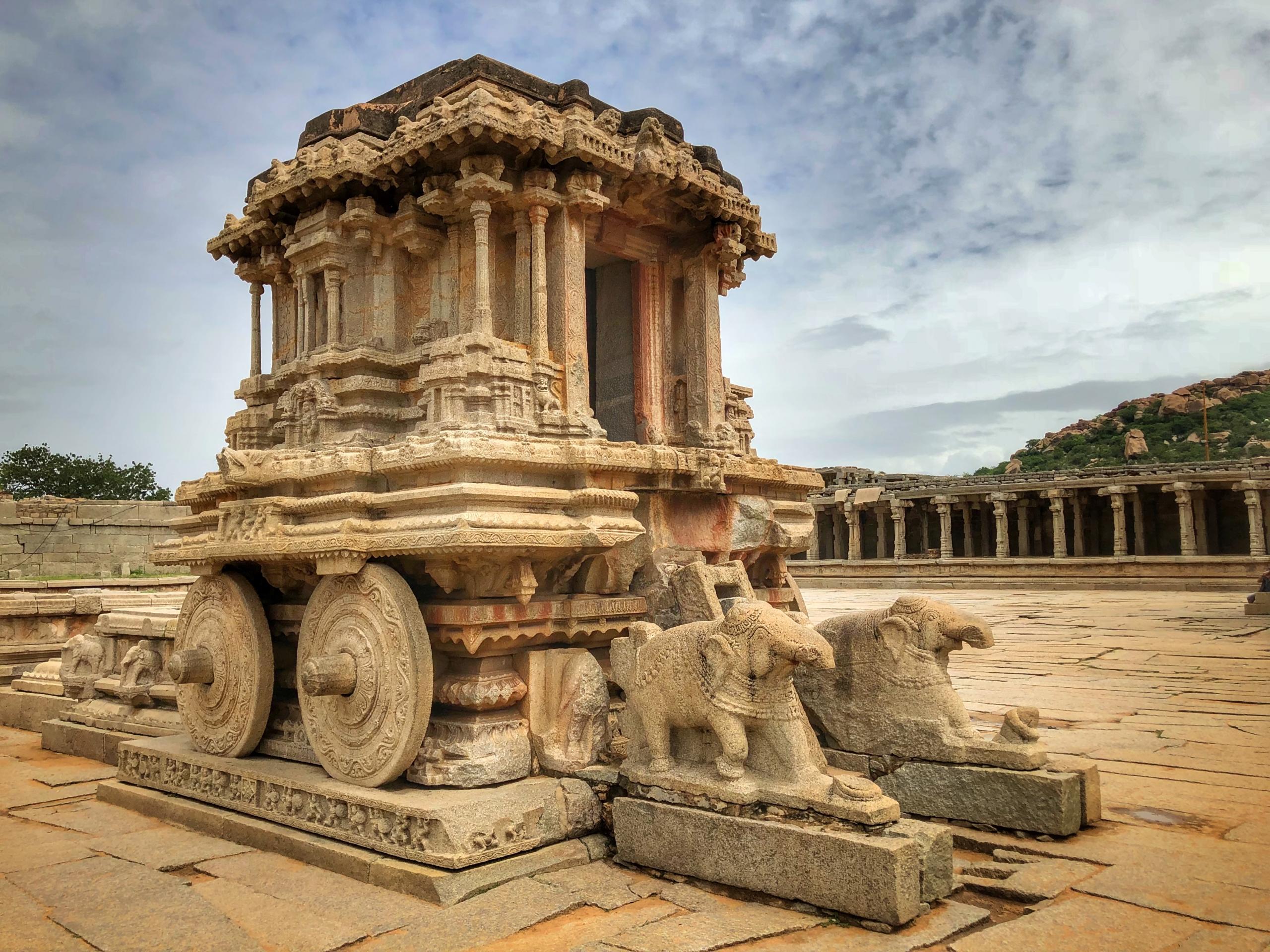
The large number of secular buildings with Islamic design elements is one facet of Vijayanagara architecture that demonstrates the city's cosmopolitanism. Architectural history documents a more creative relationship between the Vijayanagara Empire and the Deccan Sultanates, while political history focuses on the constant conflict between them. Numerous vaults, domes, and arches exhibit such influences.
Discover the grandeur that was the Chola Empire.
The profusion of buildings with towers, stables, and pavilions suggests that royalty made use of them. It's possible that the ornamental elements of those buildings were incorporated into Vijayanagara architecture in the early fifteenth century, under the reign of Deva Raya I and Deva Raya II. Many Muslims are said to have worked for those monarchs in both their army and court, some of whom may have been Muslim architects. The peaceful exchange of architectural concepts must have taken place during the infrequent times of harmony between the Muslim and Hindu dynasties.
Summarise with AI:
Enjoyed this article? Leave a rating!

 Loading...
