
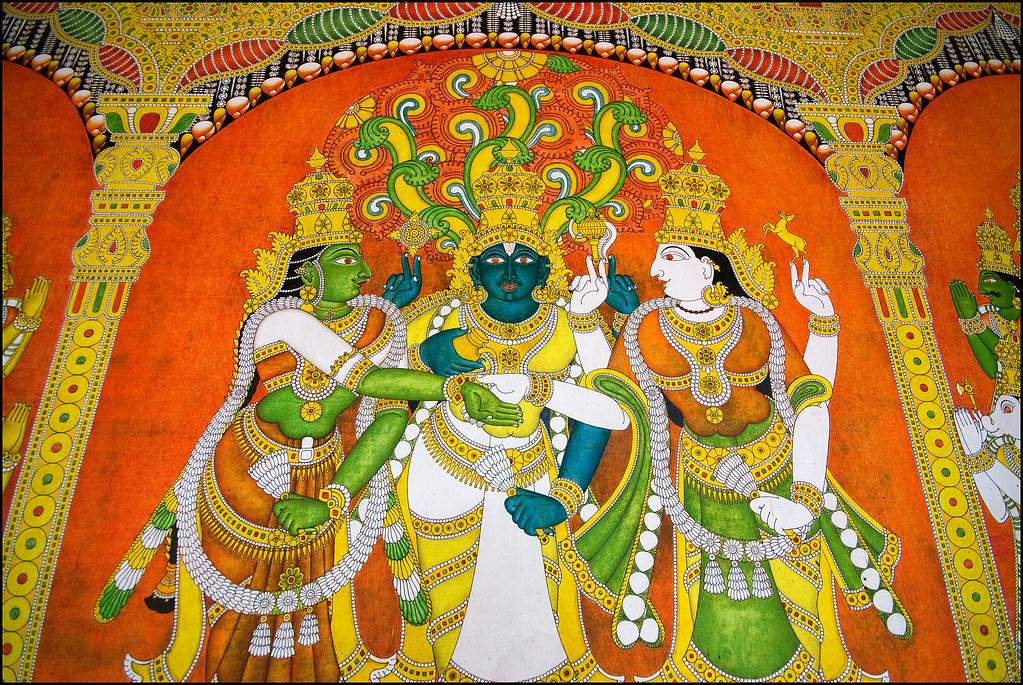

South Indian paintings are among the richest expressions of India’s artistic heritage, blending spirituality, storytelling, and intricate craftsmanship. From temple walls and palm-leaf manuscripts to royal courts and homes, these artworks reflect the region’s deep connection to mythology, religion, and nature.
Many of the famous South Indian paintings evolved as sacred art forms, illustrating gods, epics, and rituals with vivid colors and precise detail. Today, these traditional South Indian paintings not only preserve ancient techniques but also inspire modern art and design. Each of these South Indian art forms tells a story — of devotion, beauty, and the enduring legacy of the South’s creative spirit.




List of South Indian Painting Styles
- Cheriyal Scroll Painting (Telangana) – A folk storytelling art painted on long narrative scrolls using primary colors and local tales.
- Tanjore Painting (Tamil Nadu) – Known for its gold leaf work and jewel-like embellishments depicting Hindu deities.
- Kerala Mural Painting (Kerala) – Characterized by natural pigments and vibrant hues on temple walls, often showing mythological scenes.
- Mysore Painting (Karnataka) – Distinguished by its delicate lines, muted colors, and gesso work, giving a soft, elegant appearance.
- Kalamkari Art (Andhra Pradesh & Telangana) – Noted for its freehand brush or pen work on fabric, featuring stories from the Ramayana and Mahabharata.
- Pattachitra of Andhra Pradesh – Recognized for its bold outlines and earthy colors on cloth or dried palm leaves.
- Nayaka Period Temple Paintings (Tamil Nadu) – Famous for narrative frescoes that adorn the ceilings and walls of ancient temples.
- Chitrakathi Art (Maharashtra border & Southern Deccan) – Unique for its storytelling panels painted on paper or cloth, used by traveling bards.
- Lepakshi Mural Art (Andhra Pradesh) – Known for its intricate ceiling frescoes in the Virabhadra Temple, combining motion and symmetry.
- Madurai Temple Paintings (Tamil Nadu) – Marked by bright colors and mythological depictions that cover temple corridors and pillars.
- Bidri-Inspired Miniatures (Karnataka) – Blend of Persian motifs and local aesthetics, often using metallic tones and fine detail.
- Vishnupuram Painting (Kerala) – Characterized by subtle shading and devotional themes, inspired by temple murals and bhakti poetry.
Classical Tanjore Paintings
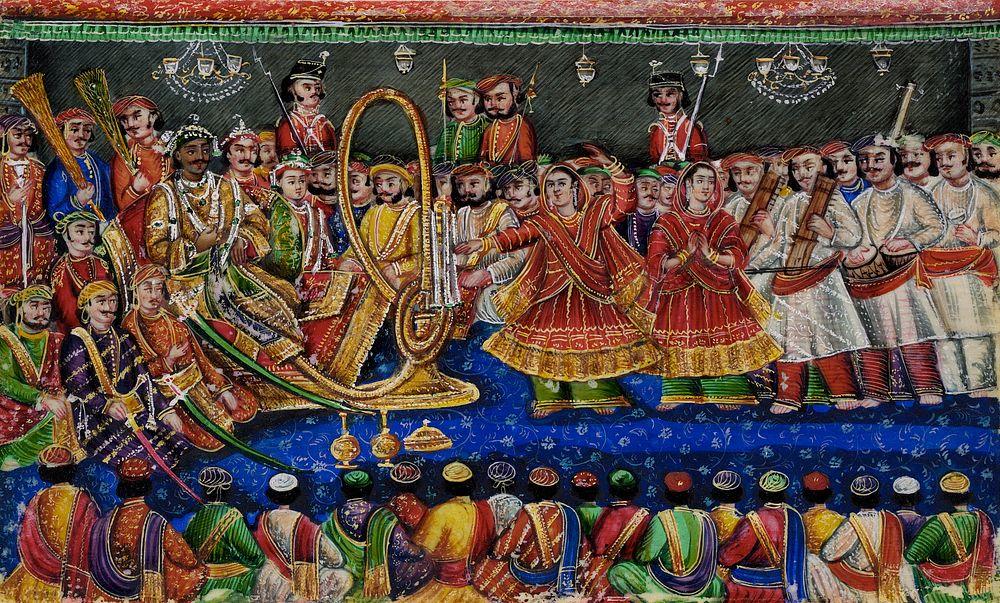
The place of origin gives the ancient South Indian art form known as Tanjore painting, also referred to as Thanjavur painting, its name. Tanjore paintings are also referred to locally as "Palagai Padam," which means "picture on a wooden plank," because they are made on wooden planks.
Tanjore Paintings, a classical form of painting native to Tanjore in Tamil Nadu
Tanjore paintings are renowned and admired worldwide due to their avant-garde painting style, vivid colours, striking composition, and smooth, rich surface texture. Each Tanjore Painting is embellished with glass beads, glittering gold foil, natural colours, and semi-precious jewels and stones. The artwork appears three-dimensional because of each of these.
History of Tanjore Paintings
Indian art during the 16th century, when the Nayaka Governors ruled their vast territory in southern India under the Vijayanagara Rayas' direction, had an impact on Tanjore's paintings. The Nayakas were great admirers of the arts and literature. Maratha kings fostered the development of artists and the arts after establishing Maratha rule over the region in 1676. During this time, Tanjore painting gained popularity and developed into the form and aesthetic that we are acquainted with today.
Maratha palaces and structures were adorned with sizable paintings depicting Maratha rulers, courtiers, and nobles. Most of the gods were depicted as having round faces, almond-shaped eyes, and sleek bodies. Painted in flat colours, the figures were usually gathered closely together beneath arches, drapery, and ornate borders. Tanjore paintings were renowned for their dense compositions and for the usual darkening of the faces to imply depth.
Tanjore Art's Legacy
Tanjore Painting was designated as a Geographical Indication by the Indian government in 2007–2008. A label placed on a product that specifies the exact location of its origin is called a geographical indication. This tag is issued by the Geographic Indication Registry, a branch of the Department of Industry Promotion and Internal Trade of the Ministry of Commerce and Industry. Following that, far less costly fake gold foil sheets started to be available; this encouraged devotees to perpetuate the art form while simultaneously advancing unscrupulous profit-making goals.
The Lepakshi temple murals (Andhra Pradesh) are among the largest in Asia, depicting scenes from the Ramayana and Mahabharata on vast ceilings.
Popular Kalamkari Paintings
The words "kalam" (pen) and "kari" (effort) are the origins of the word "kalamkari." Using vegetable dyes, the Kalamkari artists produced vivid paintings with themes of mythology, flowers, animals, birds, and trees of life. The painters were inspired by the architects and landscapes of the temples in Andhra Pradesh, as well as by the wealth of natural materials found in the area.
The traditional term of Kalamkari Chitrakala was pattachitra, derived from the combination of the words patta (cloth) and chitra (picture). In the past and present, tales from Buddhism, Jainism, and Hinduism were portrayed in this manner. Odisha is the home of pattachitra, while Andhra Pradesh and Telangana are the more usual places to find kamamkari. The Golconda dynasty played a significant role in supporting Kalamkari art, which helped it reach its pinnacle and then spread. What's so fascinating about Kalamkari paintings is that they exclusively employ colours found in nature.
History of Kalamkari Paintings
Hindu mythological stories were recited by musicians and artists known as chitrakars, who travelled from village to village painting and draping enormous pieces of cloth with paint derived from berries and plants. Original Kalamkari paintings that were painted by hand are still on display at temples and museums. The art genre flourished during the Mughal era. The painters who practiced traditional kalamkari, known as Qualamkars, received great patronage from the Golconda Sultanate. This art form is still practiced by several families in the village of Pedana, near Machilipatnam, making it a true home in the area.
The Machilipatnam style, Srikalahasti style, and Karrupur style are the three most prominent styles of this art form that have evolved. One of the most well-known styles of kalamkari painting, Machilipatnam, was greatly influenced by Persian art because Golconda became the hub of the painters' activities and the area was ruled by Muslims.
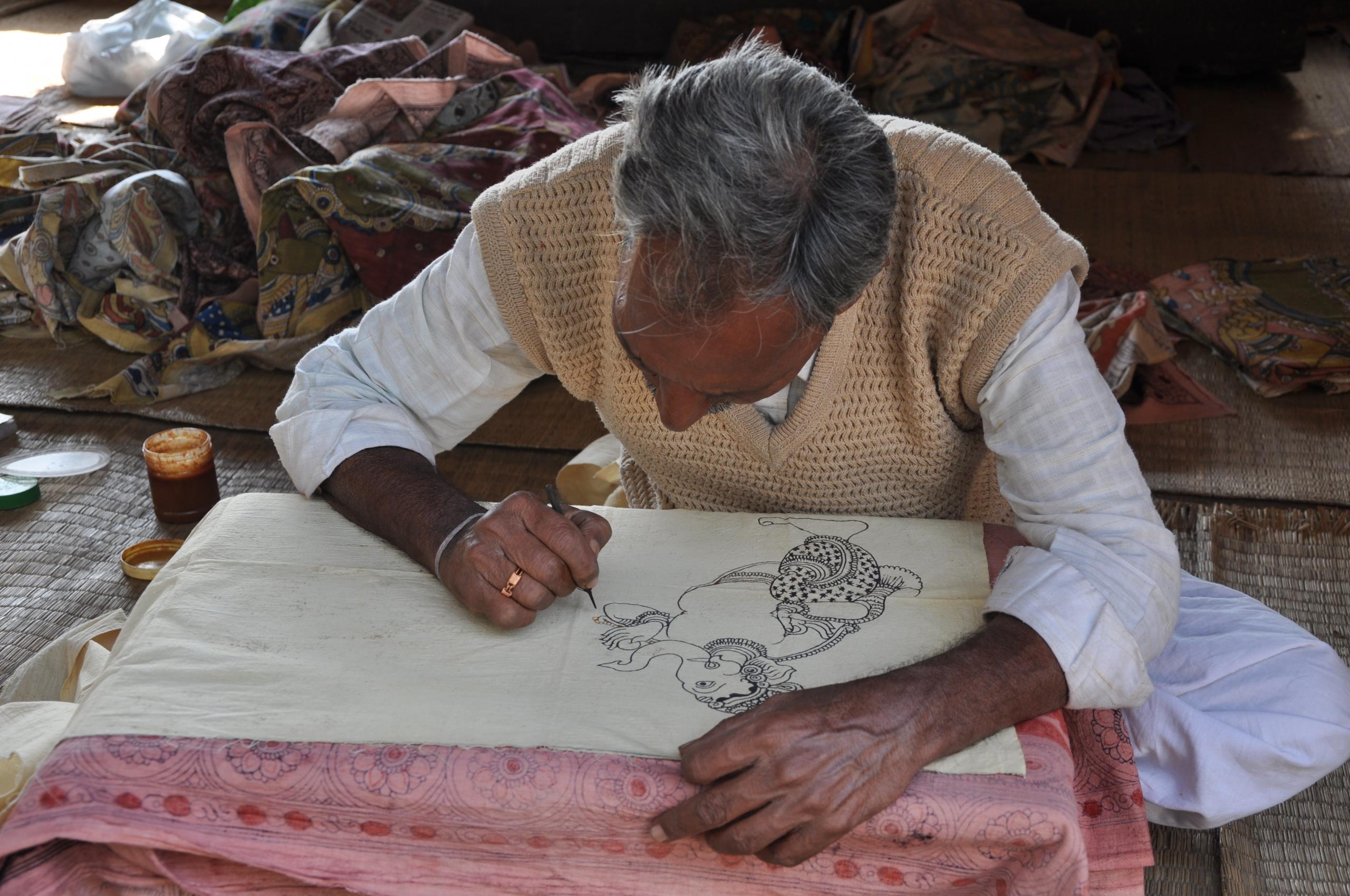
The finer details were added to the prints using pens after the blocks were first used to create them. Pen and ink illustrations of Hindu mythology, including the Ramayana and other Hindu epics, make up the bulk of the tales in the Srikalahasti style. Last but not least, the lesser-known Karrupur style originated in Tamil Nadu's Thanjavur district; it was mainly designed to be used as fabric for royal garments and had a greater amount of gold brocade.
Royal Mysore Paintings
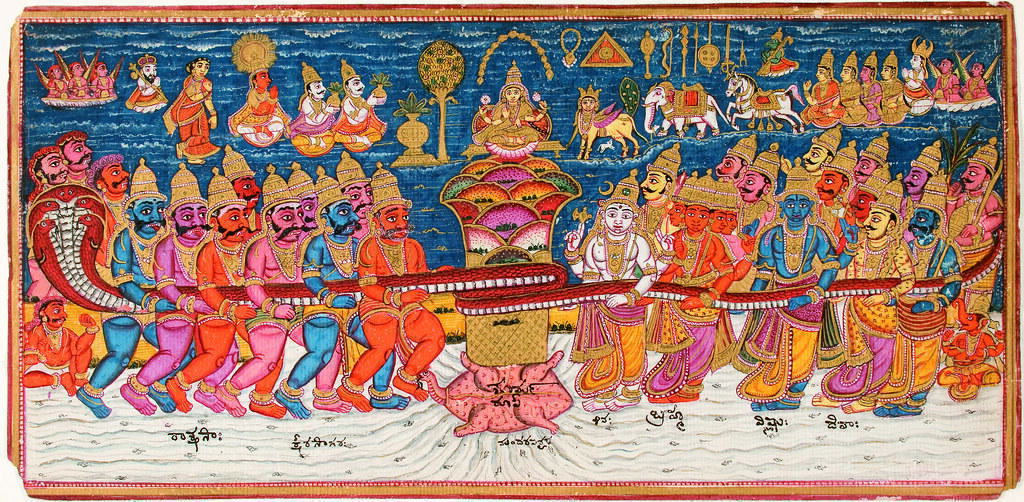
The classic South Indian painting style known as Mysore paintings has its origins in the city of Mysore in Karnataka. Although this art form has a lengthy history dating back to the Ajanta period, it gained immense popularity in the 15th century during the reign of the Vijayanagara monarchs. Despite their classic form, the paintings exhibit a deep spirituality. The Mysore paintings are a magnificent combination of subdued colours, exquisite grace, and brilliant gold work. They are based on Hindu mythology or gods and goddesses.
History of Mysore Paintings
The Karnataka town of Mysore is where the Mysore paintings first appeared, as their name suggests. Karnataka has a long and rich history of cultural arts, spanning the Ajanta period, which began in the second century BC and ended in the seventh century AD. The Mysore paintings are derived from artwork produced under the Vijayanagara Empire. Even though the Vijayanagara kings supported the arts, the artists of the region sought refuge in several places, including Tanjore, Surpur, and Mysore, after the Empire fell in the Battle of Talikota. Afterwards, by incorporating allusions and regional culture into their paintings, these artists produced distinctive traditional art styles, such as the paintings of Tanjore and Mysore.
Development of Mysore Painting Style
The Mysore paintings were patronized by Raja Wodeyar, who took it upon himself to rehabilitate the painters and artists after the fall of the Vijayanagar Empire. It was a custom that his successors continued by hiring artists to paint in palaces and temples. Sadly, Hyder Ali, Tipu Sultan, and the British destroyed all of these paintings, therefore none of them have survived.
In traditional South Indian paintings, artists often meditated or fasted before painting divine figures to maintain spiritual purity.
Nevertheless, during their reign, the painters—known as chitrakars—kept up their artistic output. One example of this is the Narasimha Swamy temple, built by Nallappa, a servant of Tipu Sultan and Hyder Ali, and located halfway between Tumkur and Sira. Another example of Mysore paintings is found in the murals and paintings at the palace of Tipu Sultan, Daria Daulat Bagh.
When Tipu Sultan passed away, the Wodeyars of Mysore were once again in charge of the area. Muhammadi Krishnaraja Wodeyar's efforts in the late 18th and early 19th centuries brought about a new phase of expansion for the Mysore paintings. Most of the artworks from this era have endured to this day.
In addition, the 1500-page text known as Sritattvanidhi—which includes illustrations and instructions—was composed during his rule. It is an accurate representation of all known information on the Mysore artworks. Sritattvanidhi is currently one of the most important resources for artists to study. The last examples of Mysore art from this era can be found at the Jagan Mohan Palace in Mysore. These paintings feature self-portraits, historical people, Hindu mythology, and the rulers of Mysore.
Summarise with AI:
Did you like this article? Leave a rating!

 Loading...



well written and lovely yto have read