
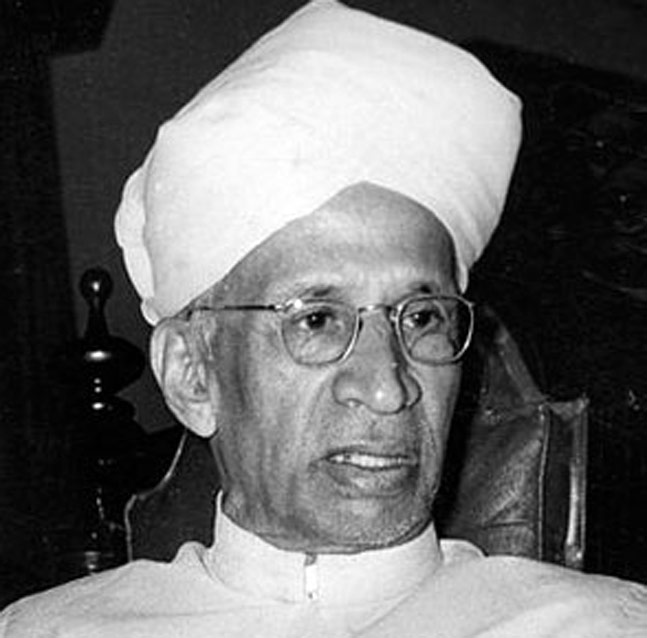

Sarvepalli Radhakrishnan was a respected Indian philosopher and statesman who played a significant role in the history of modern India. Born on September 5, 1888, in Tiruttani, India. He grew up to become a great teacher and scholar. He was known for his profound knowledge of Indian philosophy and religion. He was highly admired by his students and colleagues for his wisdom and the way he connected with people.
Radhakrishnan served as the second President of India from 1962 to 1967, but before becoming President, he was a teacher and an academic.
Teacher's Day in India is celebrated every year on September 5th, the birthday of Sarvepalli Radhakrishnan.
This day is special because it honors teachers and acknowledges their crucial role in shaping the lives of students and the future of a nation.
Teacher’s Day is not just a celebration but also a day to remember the importance of teachers in our lives. On this day, students across India show their appreciation for their teachers in different ways, such as giving them gifts, writing thank-you notes, or performing cultural programs.
The history and significance of Teacher's Day are deeply connected to Dr. Radhakrishnan's belief in the power of education. He always emphasized that teachers should be the best minds in the country. By celebrating Teacher's Day, we remember his teachings and the values he stood for. The celebration of this day in India reflects the respect and importance given to teachers and education in Indian culture.
There is more to learn about how this day is celebrated, why it holds a special place in the hearts of Indians and Sarvepalli Radhakrishnan history. So, let's get started!


Dr. Radhakrishnan - The Former President of India
Sarvepalli Radhakrishnan (1888–1975)
Before becoming President, he had an illustrious career in academia and diplomacy, significantly contributing to Indian and global education. His tenure as President is remembered for his intellectual approach and dedication to the development of the nation. Here is a brief about the journey of the former president of India.
Academic Beginnings and Professorship
Before assuming the highest office in India, Dr. Radhakrishnan had an illustrious career in academia. His journey in the field of education began at Mysore University, where he served as a professor of philosophy from 1918 to 1921. He continued his academic pursuits at Calcutta University, where he held the same position from 1921 to 1931 and again from 1937 to 1941. These roles established him as a distinguished philosopher not only in India but also on the international stage.
Vice Chancellorship and Educational Leadership
In 1931, Dr. Radhakrishnan took on the role of vice chancellor at Andhra University, serving until 1936. His tenure here was marked by significant contributions to the development of the university and the promotion of higher education. He then moved on to become the vice-chancellor of Banaras Hindu University, serving from 1939 to 1948. During this time, he played a pivotal role in shaping the educational landscape of India.
International Academic and Diplomatic Contributions
The academic journey of Dr. Radhakrishnan also took him overseas. From 1936 to 1952, he served as a professor of Eastern religions and ethics at the University of Oxford in England. This tenure not only enhanced his reputation as a scholar but also facilitated cultural and educational exchanges between India and the West. Additionally, he was the chancellor of the University of Delhi from 1953 to 1962, further cementing his status as a leading academician.
Transition to Politics and Presidency
Apart from his academic roles, Dr. Radhakrishnan was deeply involved in international affairs.
- He led the delegation of India to the United Nations Educational, Scientific and Cultural Organisation (UNESCO) from 1946 to 1952. During this period, he was instrumental in promoting global educational and cultural initiatives.
- His diplomatic skills were further acknowledged when he was elected as the chairman of UNESCO's executive board from 1948 to 1949.
- His tenure as ambassador to the Soviet Union from 1949 to 1952 marked a significant phase in his career, strengthening Indo-Soviet relations.
- Upon his return to India in 1952, Dr. Radhakrishnan entered the political arena, a natural progression given his vast experience and stature.
- He was first elected as the vice president of India, a position that allowed him to bring his philosophical and educational insights to the country’s governance. His election as the President of India on May 11, 1962, was a crowning achievement.
Taking over from Rajendra Prasad, the first President of independent India, Dr. Radhakrishnan brought a unique philosophical perspective to the presidency. His tenure was characterised by a focus on education, cultural unity, and the promotion of moral values. He was widely respected for his intellect and his ability to connect with people from all walks of life.
Legacy and Retirement
After serving the nation for five years as President, Dr. Radhakrishnan retired from politics in 1967. His retirement marked the end of a remarkable journey in public service. Dr. Radhakrishnan left behind a rich legacy as a philosopher, educator, and leader. His contributions to academia, diplomacy, and politics have had a lasting impact on India and continue to inspire future generations.
Did Dr. Radhakrishna Win Bharat Ratna Award?
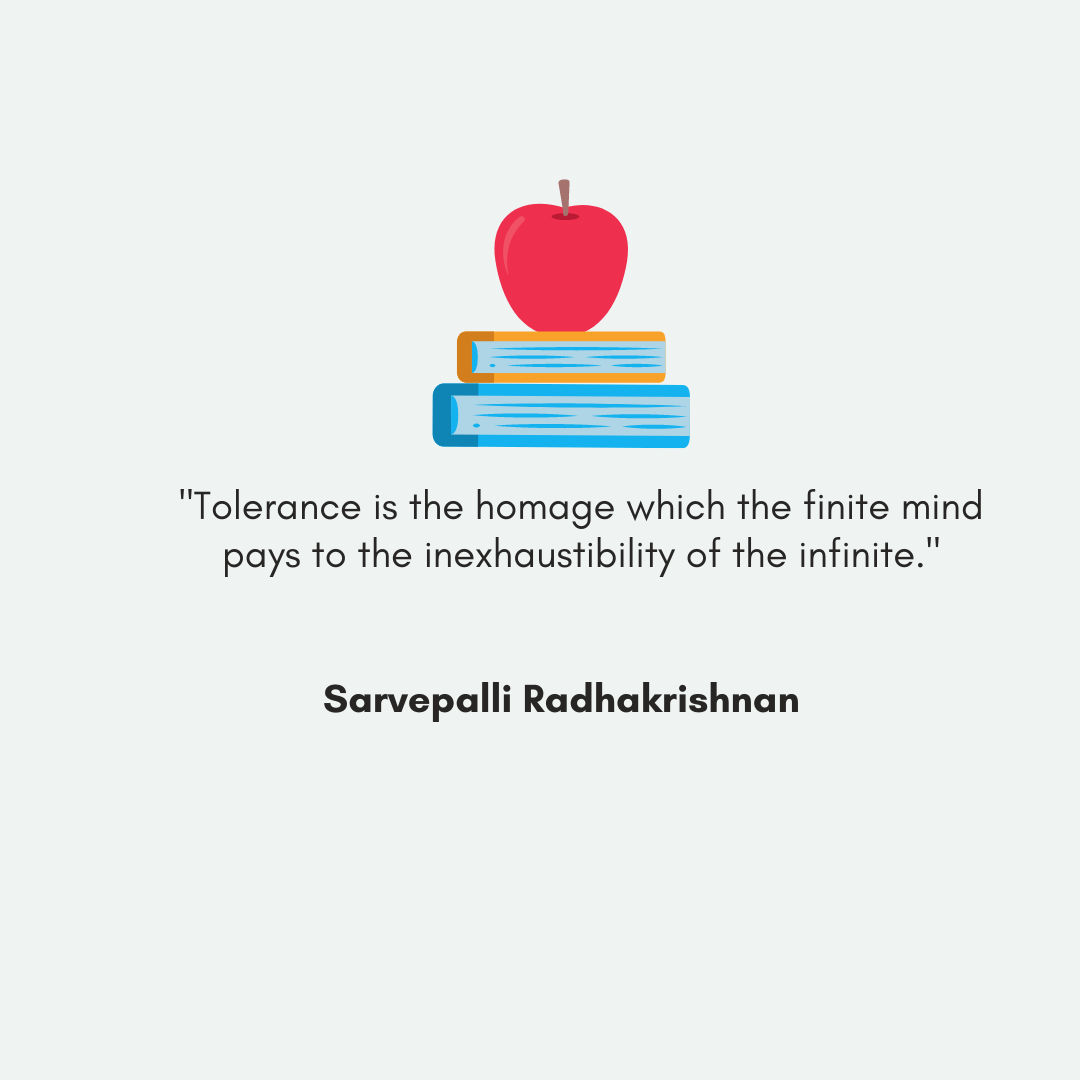
Dr. Sarvepalli Radhakrishnan won the Bharat Ratna Award, the highest civilian award in India, given to people who have done great work in their fields. Dr. Radhakrishnan received this honor in 1954 for his outstanding contributions to education and philosophy.
Apart from the Bharat Ratna, Dr. Radhakrishnan had many other achievements in his life. He was a renowned philosopher and educator, respected both in India and internationally. He worked as a professor at several prestigious universities, including the University of Mysore and the University of Calcutta. His work took him to the University of Oxford in England as well, where he taught Eastern religions and ethics. This was a significant achievement, as it showed the global recognition of his knowledge and expertise.
- In the field of education, Dr. Radhakrishnan made great contributions. He served as the Vice Chancellor of Andhra University and later of Banaras Hindu University, two of India's well-known universities. His tenure in these positions helped shape the educational landscape of the country.
- His achievements weren't limited to academia. In 1952, he was elected as the Vice-President of India, and in 1962, he became the President of India. As the President, he played a crucial role in guiding the nation and was known for his wisdom and integrity.
- Dr. Radhakrishnan was also an accomplished writer. He wrote several books on Indian philosophy, religion, and education, which are still read and respected today. His work in this area helped spread knowledge about Indian traditions and thought across the world.
- Lastly, Dr. Radhakrishnan's legacy in education is commemorated every year on his birthday, September 5, which is celebrated as Teacher's Day in India. This is a special day to honour teachers and the role they play in shaping lives, a fitting tribute to a man who was a teacher at heart.
- Dr. Sarvepalli Radhakrishnan played a crucial role in explaining Hinduism to the Western world, which often had limited understanding and many misconceptions about this ancient Indian religion. He made Hinduism more accessible and relatable to people in Western societies by addressing their unfamiliarity and correcting misunderstandings.
Dr. Radhakrishnan's deep knowledge of Hindu philosophy allowed him to present it in a way that was both understandable and respectful to the Western audience. He bridged the cultural and philosophical gaps between the East and the West, helping to build a better appreciation and comprehension of Hinduism on a global scale. His efforts were significant in promoting cross-cultural dialogue and understanding.
Dr. Sarvepalli Radhakrishnan Quotes

- Knowledge gives us power, love gives us fullness.
- When we think we know we cease to learn.
- Books are how we build bridges between cultures.
- The true teachers are those who help us think for ourselves.
- God lives, feels, and suffers in every one of us, and in the course of time, His attributes, knowledge, beauty and love will be revealed in each of us.
- Instead of celebrating my birthday, it would be my proud privilege if 5 September is observed as Teachers Day.
- True religion is a revolutionary force: it is an inveterate enemy of oppression, privilege, and injustice.
- Religion is behavior and not mere belief.
- A life of joy and happiness is possible only on the basis of knowledge and science.
- The end-product of education should be a free creative man, who can battle against historical circumstances and adversities of nature.
- The main function of a university is not to grant degrees and diplomas but to develop the university spirit and advance learning. The former is impossible without corporate life, the latter without honours and postgraduate.
- Discontent with the actual is the necessary precondition of every moral change and spiritual rebirth.
- When we think we know we cease to learn.
- The worst sinner has a future, even as the greatest saint has had a past. No one is as good or bad as he imagines.
- God lives, feels and suffers in every one of us, and in the course of time, His attributes, knowledge, beauty and love will be revealed in each of us.
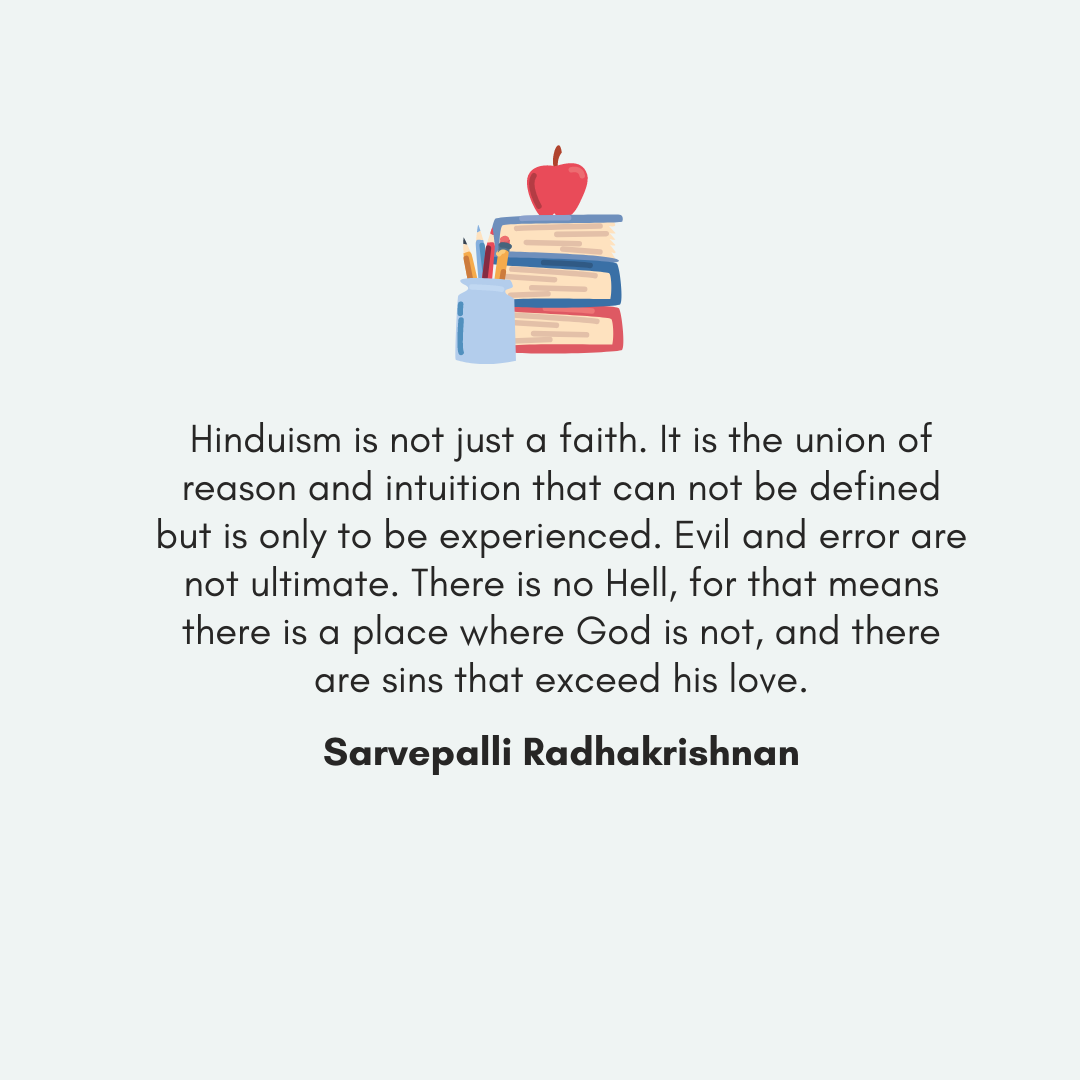
- True religion is a revolutionary force: it is an inveterate enemy of oppression, privilege, and injustice.
- Religion is behaviour and not mere belief.
- My ambition is not only to chronicle but to interpret and reveal the movement of the mind and unfold the sources of India in the profound plane of human nature.
- Man is a paradoxical being - the constant glory and scandal of this world.
- We need not seek a cause or a motive or a purpose for that which is, in its nature, eternally self-existent and free.
- The ultimate self is free from sin, free from old age, free from death and grief, free from hunger and thirst, which desires nothing and imagines nothing.
- Books are the means by which we build bridges between cultures.
- Teachers should be the best minds in the country.
- A literary genius, it is said, resembles all, though no one resembles him.
- Human life as we have it is only the raw material for Human life as it might be.
- Reading a book gives us the habit of solitary reflection and enjoyment.
Major Works and Contributions of Dr. Sarvepalli Radhakrishnan
Dr. Sarvepalli Radhakrishnan was a great philosopher and thinker, and he wrote several important works. These works are known for their deep insights into philosophy and their ability to connect Eastern and Western thought. Here are some of his major works and contributions:
Indian Philosophy (1923-1927)
This is one of Dr. Radhakrishnan's most famous works. In this book, he explained the rich and complex philosophies of India. He covered a wide range of Indian philosophical thoughts in a way that was understandable to people all over the world.
The Philosophy of the Upanishads (1924)
In this book, Dr. Radhakrishnan delved into the Upanishads, ancient Indian texts that are key to understanding Indian spiritual thought. He explained their ideas and teachings in a detailed manner.
An Idealist View of Life (1932)
This book is a collection of lectures that Dr. Radhakrishnan gave at the University of Manchester. In these lectures, he talked about idealism, a belief system that sees the mind and spiritual values as very important.
Eastern and Western Thought (1939)
This work was an exploration of the differences and similarities between Eastern and Western philosophies. Dr. Radhakrishnan tried to show how both these systems of thought could learn from each other.
Eastern and West: Some Reflections
In this piece, Dr. Radhakrishnan reflected on the cultural and philosophical exchanges between the East and the West. He discussed how both Eastern and Western cultures have their own strengths and how they could benefit from understanding each other's perspectives.
Dr. Radhakrishnan's writings played a significant role in introducing Indian philosophy to the Western world and in bridging the gap between different cultural and philosophical traditions. His works are still read and respected for their depth and clarity.
Summarise with AI:
Did you like this article? Leave a rating!


 Loading...
