
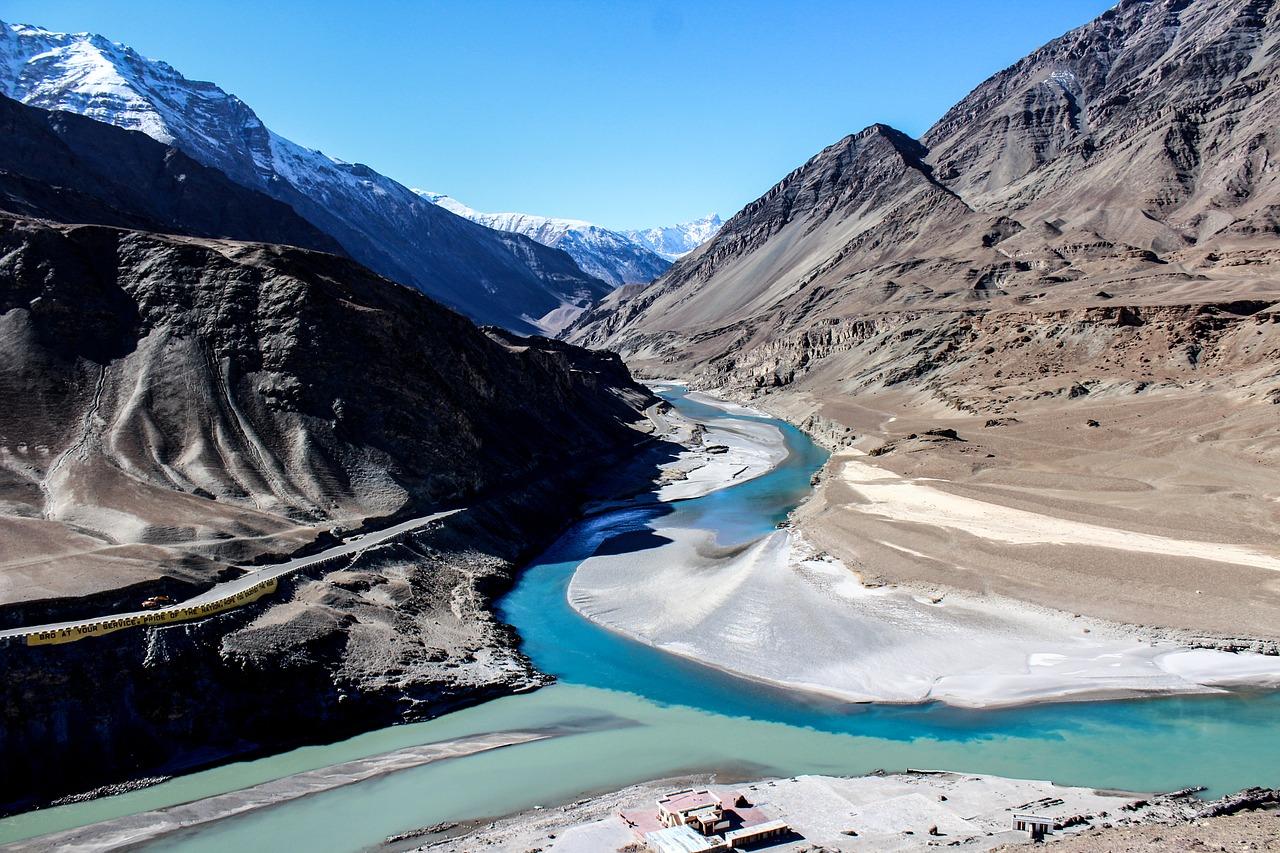

To understand the total rivers in India, it helps to begin with the major ones — the great rivers that define its landscape and culture. Below is a concise list of rivers in India featuring the eight primary rivers, arranged A to Z, along with their approximate lengths and origins.
- Brahmaputra River – Approximately 2,900 km (from Tibet’s Angsi Glacier to the Bay of Bengal).
- Cauvery (Kaveri) River – Around 805 km (originating in Karnataka’s Brahmagiri Hills, flowing to Tamil Nadu).
- Ganga (Ganges) River – Roughly 2,525 km (rising from the Gangotri Glacier, Uttarakhand).
- Godavari River – About 1,465 km (originating in Maharashtra’s Nashik district).
- Krishna River – Nearly 1,400 km (from Mahabaleshwar in Maharashtra to Andhra Pradesh).
- Mahanadi River – Around 858 km (beginning in Chhattisgarh and flowing through Odisha).
- Narmada River – Approximately 1,312 km (flowing westward from Madhya Pradesh to Gujarat).
- Yamuna River – Nearly 1,376 km (starting from the Yamunotri Glacier in Uttarakhand).
Our rivers are the lifelines of our land. When we nurture them, we nurture our nation’s future.
Dr. A.P.J. Abdul Kalam
These eight rivers are among the most significant in India, both in cultural symbolism and practical importance. While the list of rivers in India includes hundreds more — from small tributaries to vast floodplains — these primary rivers represent the core of India’s hydrological system. They have nurtured civilizations, sustained agriculture, and inspired countless hymns and legends, proving that the story of India is inseparable from its rivers.
More than 400. The rivers of India can be categorized into four groups: Himalayan rivers, Deccan rivers, Coastal rivers, and Rivers of the inland drainage basin.
The Indian River System has 8 primary rivers, namely the Indus, Brahmaputra, Ganga, Narmada, Tapi, Godavari, Krishna, and Mahanadi, along with numerous tributaries.
The Bay of Bengal is the recipient of water from the bulk of rivers. Several rivers in the western area of the country run eastward into the state of Himachal Pradesh and eventually empty into the Arabian Sea. Sections of Ladakh, the northern Aravalli range, and the parched Thar Desert exhibit inland drainage. One of the three main watersheds acts as the origin for all of India's major rivers.
Check out this article to explore the the physical characteristics and significant sites of India.


Rivers Names A To Z In India
- A: Achankovil River, Adyar River, Ahar River, Aner River, Alaknanda River, Amaravati River, Arkavathy River
- B: Ban Ganga River, Badiya River, Banas River, Bavanthadi River, Beas River, Berach River, Betwa River, Bhagirathi River, Bharathapuzha River, Bhavani River, Bhima River, Brahmani River, Brahmaputra River, Budhi Gandak
- C: Chalakkudy River, Chaliyar River, Chambal River, Chenab River, Cooum
- D: Daman Ganga River, Damodar River, Dhasan River, Dudhana River
- G: Ganga River, Gambhir River, Gandak, Gayathripuzha, Ghaggar River, Ghaghara River, Girija River,Girna River, Godavari River, Gomti River
- H: Halali River, Haora River, Hoogli River
- I: Indus River, Indravati River
- J: Jaldhaka, Jhelum River
- K: Kabini River, Kali Sindh River, Kaliasote River, Kalpathipuzha, Kanhan River, Kannadipuzha, Karnaphuli River, Kaveri River, Kelna River, Khadakpurna River, Kodoor River, Koel River, Kolab River, Kollidam River, Kosi River, Koyna River, Krishna River
- L: Lachen River, Lachung River, Luni River
- M: Mahanadi River, Mahananda River, Mahakali River, Mahi River, Mandovi River, Meenachil River, Meghna River, Mithi River, Mula River, Musi River, Mutha River
- N: Narmada River, Nethravathi River
- P: Palar River, Pahuj River, Panjnad River, Panzara River, Parbati River (Himachal Pradesh), Parbati River (Madhya Pradesh), Parbati River (Rajasthan), Payaswini, Pench River, Penner River, Periyar River, Ponnaiyar River, Pranhita River, Purna River
- R: Rangeet River, Ravi River, Rihand River, Rupnarayan River
- S: Sabarmati River, Sankh River, Sharavathi River, Shipra River, Sindh River, Son River, South Koel River, Subarnarekha River, Sutlej River, Surya River
- T: Thamarabarani river, Tansa River, Tapti River, Tawa River, Teesta River, Thuthapuzha, Tunga River, Tungabhadra River
- U: Ulhas River
- V: Vaan River, Vaigai River, Vashishti River, Vedavathi River, Vaippar River
- W: Wainganga River, Wagh River, Wardha River, West Banas River,
- Y: Yamuna River
- Z: Zuari River
Longest Rivers in India (Statistics)
| River | Length in India (km) | Total Length (km) |
| Ganga | 2525 | 2525 |
| Godavari | 1464 | 1465 |
| Krishna | 1400 | 1400 |
| Yamuna | 1376 | 1376 |
| Narmada | 1312 | 1312 |
| Indus | 1114 | 3180 |
| Brahmaputra | 916 | 2900 |
| Mahanadi | 890 | 890 |
| Kaveri | 800 | 800 |
| Tapi (Tapti) | 724 | 724 |
Major River Systems in India with States
The Indian River system is categorized into two types based on its origin: the Himalayan Rivers and the Peninsular Rivers.
The Himalayan Rivers, as their name implies, have their source in the Himalayas and traverse the Northern Plains. The primary Himalayan river systems include:
- The Indus River System refers to the network of rivers and tributaries that make up the Indus River and its associated waterways.
- The Ganges River System
- The Yamuna River System refers to the network of rivers and tributaries that make up the Yamuna River and its associated waterways.
- The Brahmaputra River System
The Peninsular River System, also known as Peninsular Drainage, mostly originates from the Western Ghats. Due to the Western Ghats acting as a "water divide," the rivers in this region either flow eastwards into the Bay of Bengal or westwards into the Arabian Sea. Peninsular rivers are rivers that are mostly dependent on rainfall for their water supply.
The Ganga, especially, is the river of India, beloved of her people. It has been a symbol of India’s age-long culture and civilization, ever-changing, ever-flowing, and yet ever the same. - Jawaharlal Nehru
The primary River Systems in peninsular India are:
- Mahanadi
- Godavari
- Krishna
- Cauvery (Kaveri)
The rivers on the plateau flow eastwards and empty into the Bay of Bengal, forming deltas. In contrast, the west-flowing rivers like Narmada and Tapti discharge into the Arabian Sea, creating estuaries.
These rivers do not have their source in glaciers but instead are nourished by rainfall. These rivers see a significant decrease in water flow or completely run dry during the summer months.
| क्रम सं. | नदी (Rivers) | लंबाई Length in किमी |
|---|---|---|
| 1 | सिंधु | 2,900 |
| 2 | ब्रह्मपुत्र | 2,900 |
| 3 | गंगा | 2,510 |
| 4 | गोदावरी | 1,450 |
| 5 | नर्मदा | 1,290 |
| 6 | कृष्णा | 1,290 |
| 7 | महानदी | 890 |
| 8 | कावेरी | 760 |
Indus
The early Hindu Scriptures and legendary books contain references to the Indus River, also known as the Sindhu River. The river is commonly referred to as the 'Puranik River'. The river originates in Tibet near Mansarovar Lake. Flowing in a westerly direction, it enters the territory of India in Jammu and Kashmir, continues to flow through Himachal Pradesh and Punjab, and eventually into Pakistan. Continuing in a westerly direction, it eventually enters the Arabian Sea close to Karachi.
The Indus River is the sole habitat of the Indus River Dolphin (or blind dolphin/ Platanista indicus minor), a type of river dolphin that is one of the most endangered cetaceans globally. The Indus River is one of the longest rivers in Asia.
The Indus River is the biggest in Pakistan and holds the distinction of being the country's national river. The tributaries of this river in India are Zanskar, Nubra, and Shyok, while in Pakistan it includes Hunza. The rivers Sutlej, Ravi, Beas, Chenab, and Jhelum are the streams that give their names to the state of Punjab.
Ganga
The Ganga (Ganges) River system is India's biggest river system. It originates in the Himalayan mountains, from the Gangotri glaciers. The Bhagirathi River merges with the Alaknanda River near Devprayag to create the Ganga River.
Ganga was allowed to descend to earth by Brahma, and Shiva cushioned her fall in his hair to prevent the earth from being shattered. Bhagiratha then guided Ganga to the sea, from where she reached the netherworld and liberated the sixty thousand sons of King Sagara.
The story of the Descent of Ganga teaches children to be patient in life, and that even though evil may temporarily triumph, good intentions are ultimately rewarded.
Ganga possesses tributaries on both sides; its tributaries on the right bank include the Yamuna (a significant river) and Son. Gomti, Ghaghara, Gandak, and Kosi are left-bank tributaries. The Ganges traverses the Indian states of Uttarakhand, Uttar Pradesh, Madhya Pradesh, Himachal Pradesh, Bihar, and West Bengal. It ultimately arrives in the Bay of Bengal.
Yamuna
The Yamuna is a prominent river in Northern India. The river originates from Yamnotri and traverses through Uttarakhand, Uttar Pradesh, and Haryana.
The Yamuna River is highly revered in Hinduism and worshipped as a goddess. In Hindu mythology, the river is also known as Yugi, as she is the daughter of the sun god, Surya, and the sister of the god of death, Yama. According to folklore, bathing in the sacred waters of the Yamuna can alleviate the suffering associated with death.
The river travels through Delhi, Mathura, and Agra, where it converges with the rivers Chambal, Betwa, and Ken, before ultimately merging with the Ganga at Allahabad. The primary tributaries of the Yamuna River include the Tons, Chambal, Hindon, Betwa, and Ken Rivers.
Brahmaputra
The Brahmaputra, a prominent river in India, has its source in the Angsi glacier located in the Himalayas of Tibet. In that location, it is referred to as the Tsangpo River. The Dihang River is the name given to the river that flows into India through Arunachal Pradesh.
The Brahmaputra River is one of the mightiest waterways in Asia, stretching across a vast expanse of 2,900 km from the Himalayas to the Bay of Bengal. It is a vital source of irrigation for the Indian states of Assam, Arunachal Pradesh, Bihar, and West Bengal.
The main Brahmaputra River is formed by the confluence of several tributaries, including the Dibang, the Lohit, and the Kenula. It flows through Assam, enters Bangladesh, and ultimately empties into the Bay of Bengal. The Brahmaputra River possesses the highest water volume among all the rivers in India.
Mahanadi
The Mahanadi is a significant river located in the region of East-central India. The river starts in the Sihava highlands of Chhattisgarh and primarily runs through the state of Orissa (Odisha). This river has the most silt deposition among all the rivers in the Indian subcontinent. The Mahanadi River passes through the cities of Sambalpur, Cuttack, and Banki.
The river has been known by various names over time, including Kanak Nandini, Chitrotpala, Nilotpala, Mahananda, and Mahanadi or Mahashweta. In the Vayu Purana, the Mahanadi river is referred to as Nilotpala, while in the Matsya Purana, it is called Chitrotpala.
Godavari
The Godavari River traverses the second-longest distance in India, behind the Ganga River. The river originates at Triambakeshwar in Maharashtra and flows through multiple states including Chhattisgarh, Madhya Pradesh, Odisha, Telangana, Andhra Pradesh, Karnataka, and Puducherry, before finally reaching the Bay of Bengal. Its tributaries, such as Pravara, Indravati, and Maner Sabri, contribute to its flow. The river is referred known as Dakshina Ganga due to its lengthy trajectory.
The Godavari River is often considered the oldest river in India, with origins dating back thousands of years. It rises in the Nashik district of Maharashtra and is also known as the Dakshin Ganga. It is significant for its historical and cultural importance across the region
Krishna
The Krishna River is the third longest river in India, spanning around 1,300 kilometers. Originating in the Mahabaleshwar area of Maharashtra, this river traverses through Karnataka, Telangana, and Andhra Pradesh before ultimately emptying into the Bay of Bengal. The primary affluents of the river Krishna include Ghataprabha, Malaprabha, Bhima, and Tungabhadra.
According to Hindu mythology, the Krishna River is believed to be the incarnation of Lord Vishnu, resulting from a curse on the Trimurtis by Savitri (also known as Saraswati). It is revered as one of the sacred rivers of India, akin to the Ganga and Yamuna Rivers, and is named after Lord Krishna.
Kaveri
The Cauvery (Kaveri) is a significant river in South India that begins in Kogadu, Karnataka as a spring on Brahmagiri Hill at Tala Kaveri. Referred to as the Ganges of the South, this river holds great religious significance in South India. The Kaveri River expands in width as several tributaries, including Hemavati, Moyari, Shimsha, Arkavati, Honnuhole, Kabini, Bhavani, Noyill, and Amaravati, converge with it.
Talakaveri on the Brahmagiri range in the Western Ghats in Karnataka at an elevation of about 1341 m and flows for about 800 km before its outfall into the Bay of Bengal.
The river meanders around 805 kilometers across the states of Karnataka, Kerala, and Tamil Nadu, with a brief contact with Pudducherry, before ultimately flowing into the Bay of Bengal.
Narmada and Tapi (Tapti)
The Narmada and Tapti rivers are the sole significant watercourses that empty into the Arabian Sea. The cumulative length of the Narmada River, which traverses the states of Madhya Pradesh, Maharashtra, and Gujarat, amounts to 1,312 kilometers. Amarkantak, located near Shahdol, Madhya Pradesh, serves as the source of the Narmada River. The Narmada River, mostly traversing Central India in an east-to-west direction, converges into the Arabian Sea.
The Tapti River runs in a parallel direction to the south of the Narmada River, passing through the states of Maharashtra and Gujarat before reaching the Gulf of Khambhat. The three primary tributaries of this river are Purna, Girna, and Panjhra.
Discover who won what in the recently concluded Lok Sabha elections 2024 in India, and learn about the most recent political map of India.
Importance of the Rivers of India
Rivers are essential for the development and sustenance of human civilization. They supply us with potable water, which is beneficial for many uses. Life would cease to exist without the presence of rivers. Rivers exhibit a continuous and uninterrupted flow. Often, individuals fail to recognize rivers' profound influence on the biosphere. The reason is that they persistently carry out their tasks in silence.
Rivers supply us with potable water. It is a significant reservoir of freshwater. Approximately 96% of the water is comprised of salty water, rendering it unfit for human consumption. Consequently, we are largely dependent on rivers for our drinking water.

Multiple civilizations have emerged in proximity to rivers. Among the earliest valleys are the Nile River Valley, the Indus River Valley (the first recorded civilization in the unique history of India), and the Yellow River Valley. These civilizations originated close to rivers due to the presence of fertile soil on river plains, which is conducive to agriculture. In addition, they also assisted with transportation. Even in the present day, several villages and cities are situated near rivers.
Rivers provide a vital role not just for humans but also for animals and trees. A plethora of aquatic organisms reproduce in rivers. Furthermore, a diverse array of vegetation thrives inside the river ecosystems. They are integral to the ecology and play a crucial role in maintaining equilibrium within the food chain.
Rivers may also serve as a renewable energy resource. It facilitates the generation of energy. Rivers in steep regions exhibit strong currents. This energy may be captured using different devices and transformed into electrical energy. Hydroelectric facilities are constructed in river systems to generate power. Additionally, dams are constructed for harvesting power, such as the Bhakra Nangal Dam.
Rivers also contribute to the economic development of a nation. This is because they facilitate the transit of products between different locations. The import and export of products enhance the economic growth of a nation. Additionally, they contribute to irrigation, urban development, navigation, and energy generation.
Rivers provide profound satisfaction to the spirit. Visiting the riverbanks consistently brings a sense of tranquility to the psyche. Observing the marvels of nature while being near the river provides visual and intellectual stimulation. Rivers also provide enjoyment. Are you familiar with the activity of river rafting? It is an experience that will last a lifetime. Additionally, rivers may accommodate a variety of other activities. They provide both recreational and thrilling experiences.
Summarise with AI:
Enjoyed this article? Leave a rating!

 Loading...
