
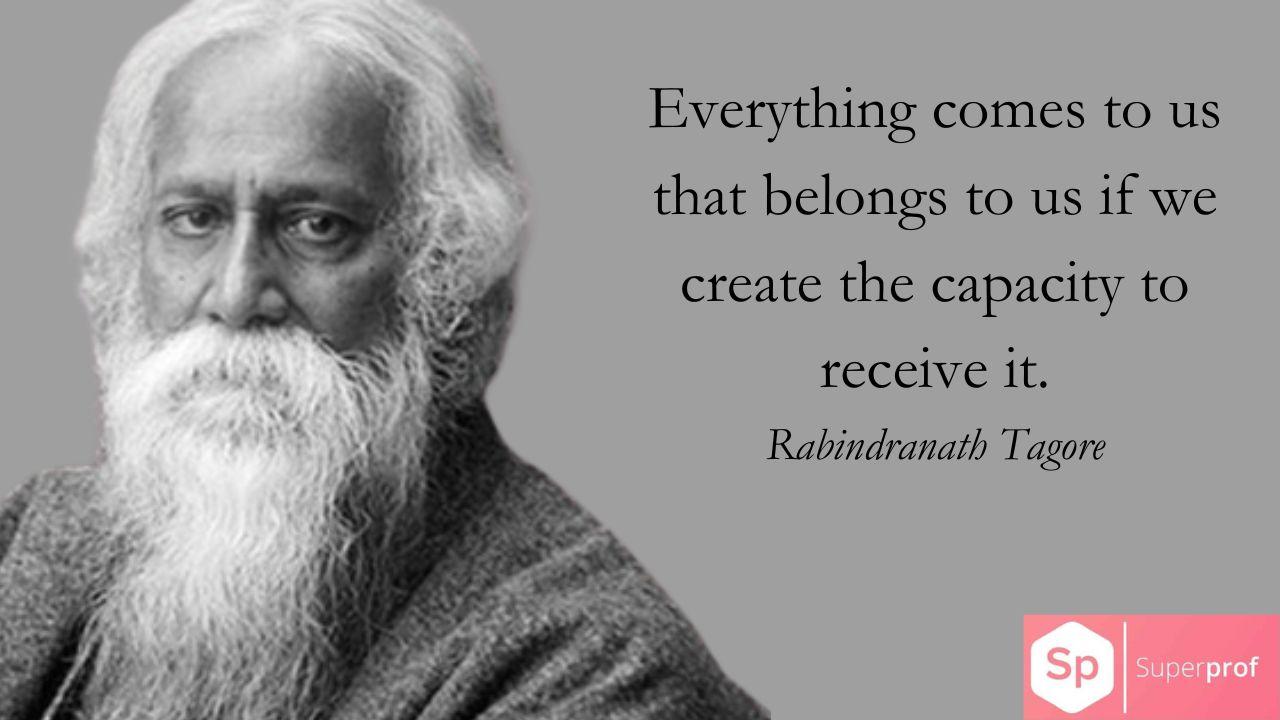

Rabindranath Tagore was a pioneering poet, novelist, philosopher, and educator whose works reshaped modern Indian literature and thought. Renowned worldwide, he remains a central figure in the Rabindranath Tagore biography narrative and continues to inspire generations through the life history of Rabindranath Tagore, marked by creativity, humanism, and cultural revival.


Rabindranath Tagore's Awards and Achievements
- Influential Thinker & Traveler — Delivered lectures worldwide, promoting universalism, peace, and cross-cultural dialogue.
- Nobel Prize in Literature (1913) — The most celebrated of all Rabindranath Tagore awards, making him the first Asian Nobel laureate.
- Author of India’s National Anthem (“Jana Gana Mana”) — A landmark in Rabindranath Tagore's achievements, adopted officially in 1950.
- Composer of Bangladesh’s National Anthem (“Amar Shonar Bangla”) — Tagore remains the only person to have written the national anthems of two nations.
- Knighthood (1915) — Awarded by the British Crown (later renounced by Tagore in protest after the Jallianwala Bagh massacre).
- Founder of Visva-Bharati University (1921) — A major contribution to Indian education and culture.
- Prolific Literary Output — Over 2,000 songs (Rabindra Sangeet), numerous poems, novels, short stories, and plays.
- Cultural Reformer — Revived Bengali art, music, and literature, shaping India’s cultural identity during the freedom movement.
Rabindranath Tagore's Early Life
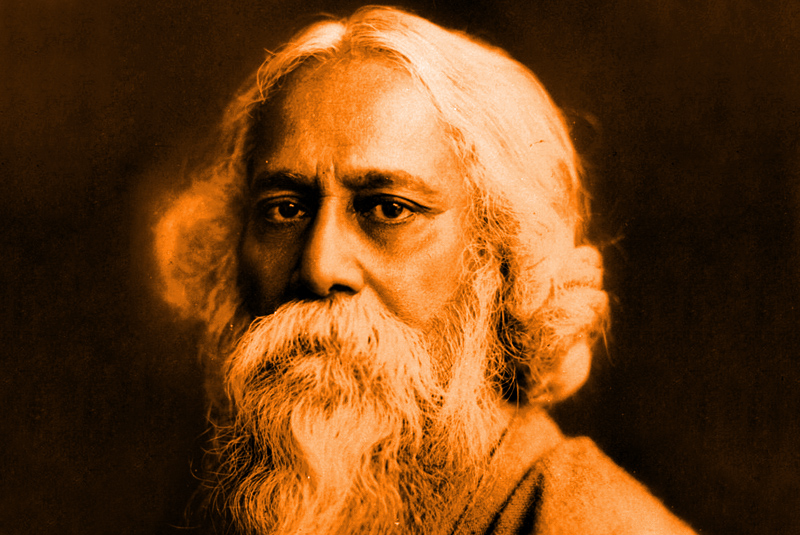
Rabindranath Tagore was born into the Tagore family in Kolkata, a significant name in Bengali cultural and literary circles. His father, Debendranath Tagore, was a leading figure in the Brahmo Samaj, which played a pivotal role in the Bengal Renaissance. The Tagore family was known for its artistic inclinations and progressive views, deeply engaged in cultural reforms, literature, and music.
Rabindranath was the youngest of thirteen siblings, growing up in an environment where creative expression and philosophical debate were daily occurrences. This atmosphere proved to be crucial in shaping his artistic learning and boosted his curiosity from a very young age. Let’s check out briefly about his education and progress in life.
Early Education - 1860s-1870s
The education of Rabindranath was quite unconventional for his time. Instead of attending a formal school, he was educated at home, a common practice among elite Bengali families of that era. This education was comprehensive and well-rounded, covering a broad range of subjects. He was exposed to Bengali and English literature, as well as Sanskrit classics.
His tutors included several family members and visiting scholars who were well-versed in various disciplines. This rich and diverse educational environment allowed Tagore to develop a deep appreciation for literature and the arts from a very young age, profoundly influencing his later works. His exposure to the Eastern and Western philosophies and arts later reflected in the versatility and global recognition of his creativity.
Writing His First Poem
In 1875, at the tender age of 14, Rabindranath Tagore composed his first significant poem, which was published under the pseudonym 'Bhanusimha', a name he chose to honour the classical poetic traditions of India. This poem, influenced by Vaishnava literature, reflected the deep cultural and spiritual influences that Tagore was exposed to from his early childhood. The poem was well-received and marked the beginning of his lifelong journey as a poet and writer.
Travel to England: Global Exposure
In 1878, Tagore went on a journey to England for formal education. He enrolled at University College London to study law, a subject chosen perhaps more due to family expectations than personal interest. However, Tagore found the rigid structure of the Western educational system at odds with his free-spirited and creative nature.
His time in England, though brief and not culminating in a degree, was significant for his exposure to Western culture, literature, and music. This experience broadened his perspective and influenced his later works, which often reflected a blend of Eastern and Western philosophies.
His return to India without completing his degree was not seen as a failure but rather as a step towards his true calling as a writer and thinker, unbound by traditional academic constraints.
Literary Works and Publications
The 1880s were a formative period for his literary career. During these years, he began publishing his short stories and dramas, which were deeply rooted in the cultural and social milieu of Bengal. These works reflected the everyday lives, struggles, and joys of the Bengali people. His stories often highlighted themes like love, social reform, and spirituality.
His dramas, too, were acclaimed for their lyrical beauty and exploration of complex emotional and philosophical themes. This period was instrumental in establishing Tagore as a significant literary voice in Bengal, resonating with a growing audience that found reflections of their own lives and thoughts in his work.
Founding of Santiniketan
In 1901, Tagore embarked on a visionary educational project by founding Santiniketan, an experimental school in rural Bengal. This was not just an educational institution but also a community where learning was intertwined with the rhythms of nature and life. He envisioned Santiniketan as a place where the best of Eastern and Western educational philosophies would merge. The curriculum included traditional subjects, arts, music, and a deep engagement with nature. His innovative approach to education was ahead of its time and reflected his belief in the holistic development of individuals, unshackled by the rigidities of conventional education systems.
Widening Literary Scope (Early 1900s)
In the early 20th century, Tagore's literary genius flourished with even greater intensity. He began writing novels, essays, and more complex forms of poetry. His novels and essays delved into themes of humanism, nationalism, and the quest for personal and spiritual liberation. His poetry from this era, characterised by its lyrical beauty and depth, continued to explore themes of love, nature, and spirituality.
Facts About the National Anthem of India

The national anthem of India, "Jana Gana Mana," holds a place of honour and pride. This anthem's journey began on December 11, 1911, when it was penned by the illustrious Rabindranath Tagore.
- A few weeks later, on December 27, 1911, its melodies first filled the air at the Indian National Congress session in Calcutta, marking a significant moment in Indian history.
- He infused the anthem with the essence of Sanskrit and Bengali to give it a poetic expression.
- The adoption on January 24, 1950, by the Constituent Assembly was a defining moment, symbolising India's newfound independence and sovereign identity.
- Interestingly, the original Bengali version penned by Tagore underwent a linguistic transformation.
- Abid Ali translated it into Hindi and Urdu, broadening its reach and resonance among the diverse populace of India.
- The orchestral and choral adaptation of "Jana Gana Mana," crafted by English composer Herbert Murrill at the behest of Prime Minister Nehru, added a new dimension to its performance. This version, which lasts for fifty-two seconds, is often played at official events, stirring feelings of patriotism and unity.
- However, there is also a condensed version of the anthem, lasting about 20 seconds. This version, comprising the first and last lines, is used on certain occasions.
- Musically, "Jana Gana Mana" is set in the Raag Alhaiya Bilawal, a choice that reflects the anthem's solemn and uplifting spirit.
- The lyrics, drawn from the first five stanzas of a Brahmo hymn, are a testament to his skill in blending traditional Indian music with a modern nationalist spirit.
The national anthem of India is a symbol of unity in diversity, a melody that is ingrained in the hearts of millions, bridging gaps between linguistic differences. It is a reminder of the journey of India, its struggles, and its triumphs as a nation.
Lesser-Known Rabindranath Tagore Facts
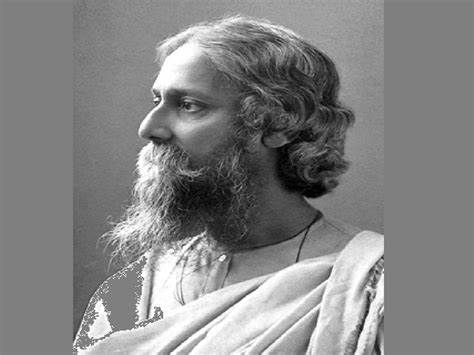
Here, you can explore some interesting and lesser-known Rabindranath Tagore facts:
- Tagore visited more than 30 countries on five continents. His travels greatly influenced his worldview and writings, helping him to spread his philosophical and humanist ideas worldwide.
- He had correspondence and interactions with numerous famous personalities, including Albert Einstein, H.G. Wells, George Bernard Shaw, and Thomas Mann. These exchanges enriched his perspectives and understanding of global issues.
- Tagore composed over 2,000 songs, now known as Rabindra Sangeet, which blend classical Indian music with his unique style. These songs remain immensely popular in Bengal and have influenced modern Indian music.
- He had a deep love for nature, which is reflected in his poetry and writings. Tagore advocated for harmony with nature and was ahead of his time in understanding the importance of environmental conservation.
- Tagore experimented with prose poems, novels, and short stories, and was the first to write modern short stories in Bengali literature. He also introduced new prose and verse forms and the use of colloquial language into Bengali literature, breaking the traditional mould.
Rabindranath Tagore started writing poetry at age eight and published his first substantial work at sixteen under a pseudonym, Bhanusimha.
Becoming a Nobel Laureate (1913)
- The global acclaim of Rabindranath Thakur soared with the Nobel Prize in Literature in 1913, making him the first lyricist to receive this honour. This was following the English publication of his poetry collection, "Gitanjali," in 1912. The preface of this edition was penned by the Irish poet W.B. Yeats. However, in a twist of fate, his Nobel medal was stolen in 2004, a loss that saddened admirers worldwide.
- A visionary in the field of education, Tagore was critical of the Western method of education, particularly its confinement within classroom walls. He founded Visva Bharati University using the Nobel Prize money, with a revolutionary approach to teaching in the open air. This university became a melting pot of global cultures and educational philosophies.
- His contributions to literature were recognised in 1915 with a knighthood bestowed by King George V. However, in a bold stance against injustice, he renounced his knighthood in 1919, following the Jallianwala Bagh massacre, where British General Reginald Dyer ordered troops to shoot at peaceful protesters, resulting in nearly 1000 deaths.
- His influence extended beyond literature into the patriotic spirit of nations. The national anthem of India, 'Jana Gana Mana,' adopted on January 24, 1950, is derived from the first stanza of his Bengali-language poem, 'Bharoto Bhagyo Bidhata' (1911). Additionally, he penned 'Amar Sonar Bangla,' which was later adopted as the national anthem of Bangladesh.
- His life was marred by personal tragedies, including the deaths of his mother, sister-in-law, wife, daughter, father and son. These losses led him to deep spiritual introspection, culminating in his belief in a supreme deity he referred to as “Jiban Devata” or the Lord of Life. This entity, in his view, was the wellspring of creativity and spiritual bliss.
The First Among the Nobel Prize Winners

Rabindranath Tagore is the first among the many Nobel Prize winners from India. He won this award in Literature in 1913 for his book "Gitanjali”, which is a collection of poems he wrote in Bengali and then got translated into English. These poems are really deep and beautiful, talking about God, life, and nature. The English version, with a special introduction by the Irish poet W.B. Yeats, made Tagore famous all over the world.
Winning the Nobel Prize changed his life a lot. He became famous worldwide and travelled to many countries in Europe, Asia, and the Americas. He met with other famous writers, artists, and leaders. These trips and meetings gave him new ideas and perspectives.
Tagore also used the money from the Nobel Prize to make his school in Santiniketan, West Bengal, better. This school, which later became Visva-Bharati University, was special because it mixed ideas from both Eastern and Western ways of teaching. It was not just about book learning; it was about understanding life and nature, too.
In his later years, Tagore kept writing and also started painting. His paintings were as unique as his writing. His life had some sad moments too, like losing people he loved and seeing India fight for freedom. But through all this, he kept inspiring people with his writing and ideas.
Summarise with AI:
Did you like this article? Leave a rating!

 Loading...
