
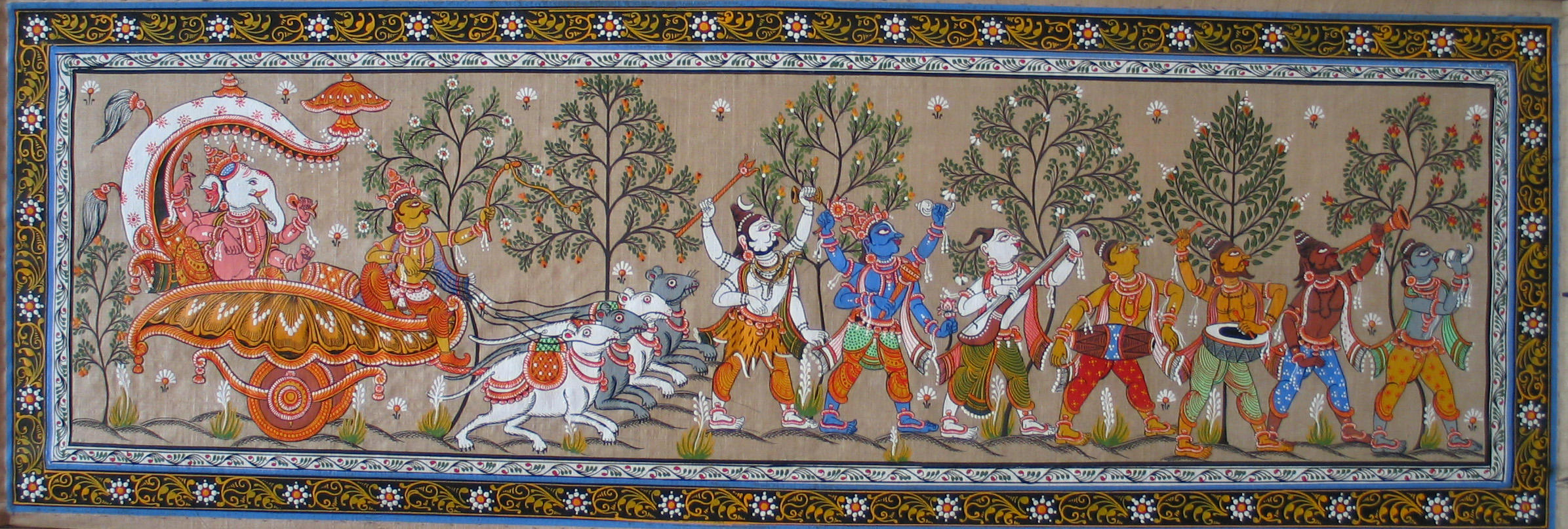

One of the most traditional and widely used folk painting styles, the Pattachitra style is mostly practiced in West Bengal and Odisha. The Sanskrit words "patta," which means fabric, and "chitra," which means picture, have given rise to the name Pattachitra. This is one of the oldest and most well-known living art forms, with origins dating back to the 12th century.
Sanskrit gave rise to Pattachitra. Divided into two halves, Chitra means image and Patta means fabric. As a result, Pattachitra is an image that is painted on fabric. This art type is strongly tied to Puri's temple customs and the worship of Shri Jagannath. It is still practiced today by people in Odisha and is thought to have started as early as the 12th century. It is one of the most well-known living art forms.
The majority of the Chitrakar community comes from Raghurajpur, a small village in the Puri district. Additionally, this is the only hamlet in India where every family works on crafts including stone carvings, wooden toys, and patta painting. The Chitrakars prepare the canvas according to a customary method for Pattachitra painting.
Tamarind seed gum and white stone powder are applied to a fine cotton gauze-like material. This prepares the canvas for painting, which is constructed of natural colors. Pattachitra is distinct because of these colors. The main component is the gum of the kaitha tree, which is used as a foundation for combining other raw materials to create other pigments. For example, a powdered conch shell is used to achieve the white color.





History of Pattachitra Style of Painting
The mythological and legendary origins of Pattachitra paintings are explored. It has a tight relationship to the Jagannath narrative. In order to ward off the summer heat, the deities from Jagannath's temple were ritualistically bathed on the full moon in May or June, which is also celebrated as his birthday.
Discover the vibrant world of Madhubani paintings.
Thousands of people would watch the "Snana Yatra," or bathing procession, during this event. During this procession, Jagannath, his brother, and his sister are led down a ceremonial path. The three gods suffer from "Anasar," a 15-day fever, as a result of this bath. Devotees cannot view their god throughout these 15 days.
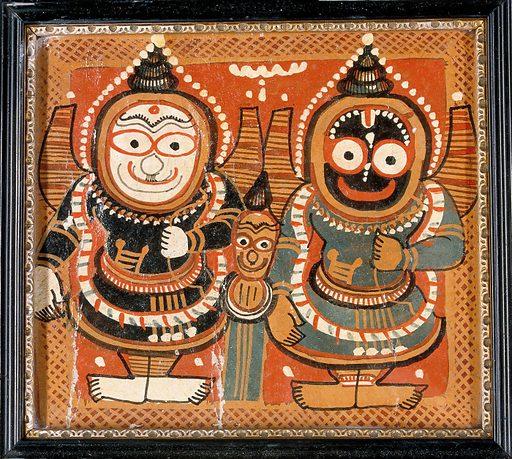
These three gods first appeared in Pattachitra paintings, which provided a way for worshippers to honor them over the 15 days that followed the bathing. Originally called "Anasar Patti" in remembrance of the 15 days of solitude, this artistic movement eventually adopted the name "Pattachitra."
The terms "pata" and "chitra" combine to form the word "pattachitra," which refers to cloth painting. This kind of painting is called scroll painting, and it is usually done on fabric. Orissa produced Pattachitra paintings in the fifth century. The village of Puri is where the first documentation of Pattachitra art may be found. In this area, pattapātra art is still highly valued today. This art form's artisans are referred to as "Maharanas" and "Mohapatras."
Kirtimukha and Lord Venkateshwara
The temples and buildings in the Orissa region served as the model for the original Pattachitra paintings. The village's stories were depicted in paintings, with the artists using intricate painting techniques to tell the tales. Originally employed for ceremonial purposes, these scroll paintings were presented as keepsakes to visitors visiting Puri and Odisha's temples.
It is commonly acknowledged that the Jagannath and Vaishnavas tribes were the first to support Pattachitra art. Hindu gods like Hanuman, Krishna, and Shiva served as the primary inspiration for artworks. Hindu goddesses like Parvati and Sita also make appearances in the tales portrayed in these paintings. Hindu scripture stories are rendered artistically through Pattachitra paintings.
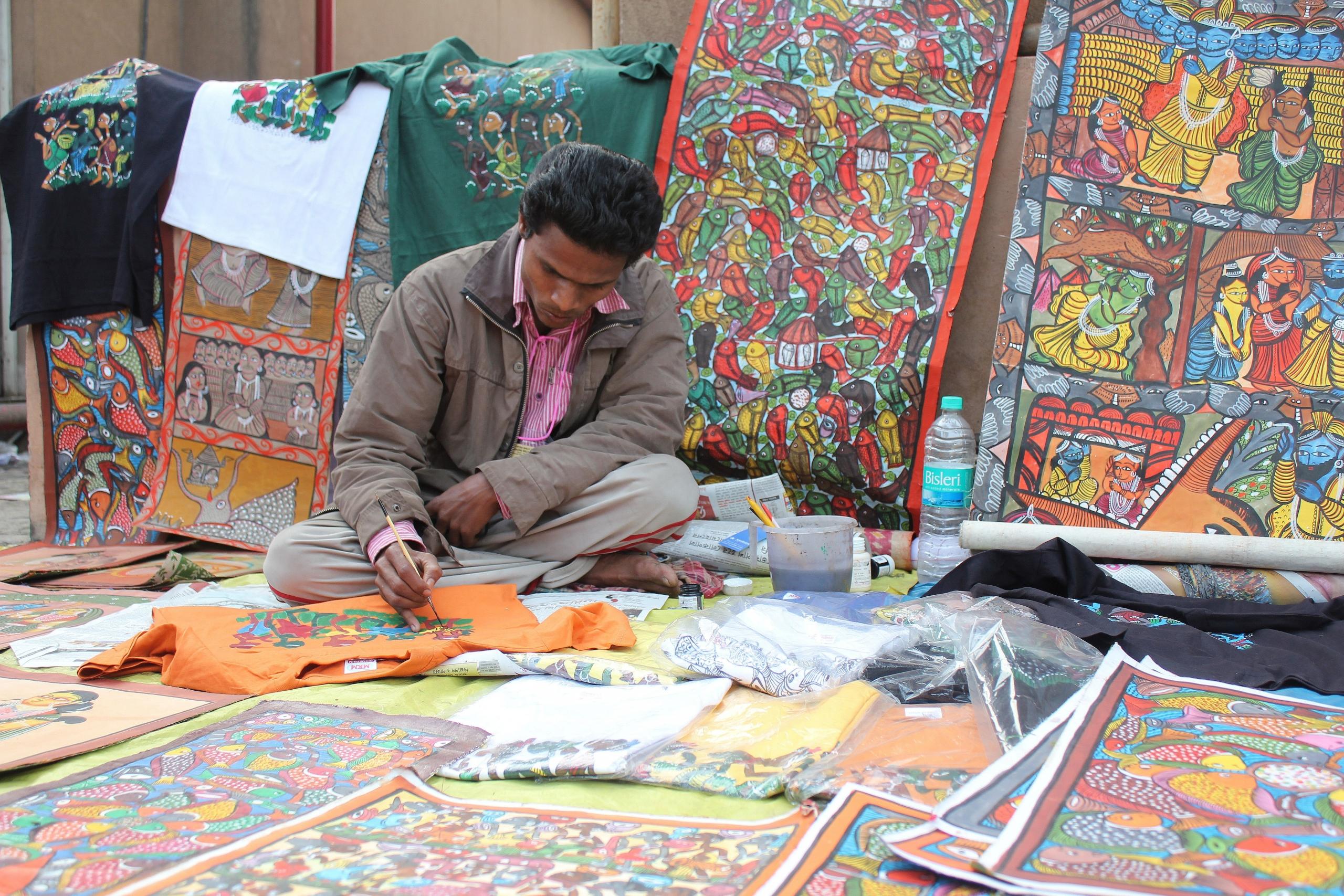
Despite having their origins in Orissa, Pattachitra paintings are well-liked throughout West Bengal. The primary distinction between the Pattachitra paintings created in Orissa and those produced by the Maharanas and Mohapatras of West Bengal is that the former are made of cotton materials, while the latter use silk. Pattachitra paintings were utilized as a visual aid in West Bengal during musical performances of songs.
Take a deep dive into the living tradition that is Warli art.
Pattachitra Painting UPSC Notes
Pattachitra's medium of choice is icon painting. The Badhia, which depicts the Jagannath temple, Krishna Lila, which enacts Jagannath as Lord Krishna demonstrating his powers as a child, Dasabatara Patti, which depicts the ten incarnations of Lord Vishnu, and Panchamukhi, which represents Lord Ganesh as a five-headed deity, are some of the popular themes of this religious art.
The deities of Puri Jagannath Temple are said to bathe in 108 pots of cold water on Debasnana Purnima each year to combat the summer's heat. After that, the gods are said to become ill for a period of fifteen days known as "Anasara." The best Chitrakars come together to create three Pattachita paintings of the three deities—Lord Jagannath, Goddess Subhadra, and Lord Balabhadra—so that the public might pay respects to them because the deities are hidden from view. Anasar Patti is the name of these paintings.
Signature Style of Pattachitra Art
The way the artisans behind Pattachitra paintings combine the defining characteristics of folklore and traditional art is what makes them unique and simple to identify. There's a classical quality to them, but the overall mood will always be inspired by the folk tales and mythology that feed the narrative depicted in the paintings.
The Pattachitra art that has been adapted into clothing and accessories also has Mughal influences. These paintings will have unique black lines made with organic hues and dyes sourced from fruits and vegetables.
Every Pattachitra artwork tells a tale, with the background typically existing only to make the main people in the picture stand out. Classical components, such as floral motifs, are frequently added to these paintings to improve their visual appeal.
Every Pattachitra painting has a border, which typically has something to do with the narrative taking place in the artwork's center. Pattachitra paintings are unadorned apart from the paint used for the painting and the original textile.
From its western frontiers to its east, India is home to some of the most ancient folk art forms, including the Buddhist Thangka paintings.
Pattachitra Paintings in Clothing
Given that fashion is a live art form, it is not surprising that Pattachitra paintings have been used in a wide variety of sari patterns. Usually, saris made of cotton and silk fabrics incorporate these paintings. The traditional saris can be given a whimsical update that seems both contemporary and traditional at the same time by adding Pattachitra artwork.
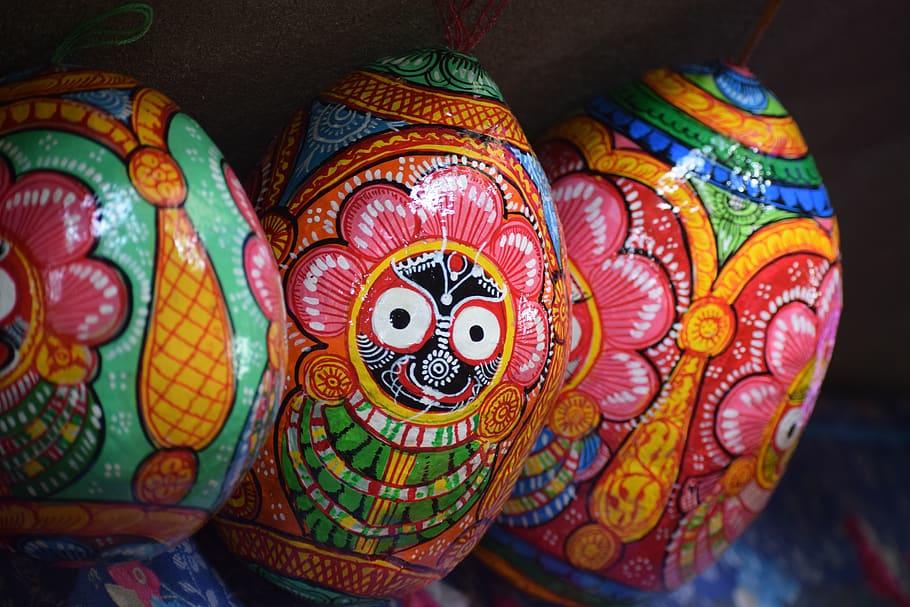
Pattachitra paintings are often used in clothing through vivid applications that offer the garments a vivid color scheme and tell the narrative in jewel-toned tones. Pattachitra paintings are becoming more and more common as sari embellishments, but they are also seen on ordinary objects like home furnishings. Paintings by Pattachitra are becoming a staple in almost every kind of live art, be it stationary, accessories, or apparel.
Contemporary Pattachitra Paintings
Depending on where it came from, Pattachitra art is currently registered under two separate names. "Orrisa Pattachitra" refers to artwork that is modeled after Odisha traditions and motifs, whereas "Bengal Patachitra" is the term used to describe art from West Bengal.
Pattachitra paintings are typically made with natural hues. It is common practice to pulverize seashells before soaking and heating them to form a paste with a white tint. An earthen plate is smoked over a burning candle to create black. To produce more vivid hues, natural powder and various materials like stones and green leaves are utilized.
The Orissan stone Hingula is ground into a powder to make red pigment, and the Harital stone is used to make yellow. Khandanella is the name of the stone used to make blue. These hues hold a special significance in Pattachitra paintings. Pattachitra is a storyteller's treasure trove that offers much more than just a visual feast.
Pattachitra Painting: FAQs
What is Pattachitra art?
The state of Odisha is the birthplace of the ancient cloth-based scroll painting technique known as pattika (previously known as Orissa). The Sanskrit words "Patta," which means "cloth," and "Chitra," which means "picture," are the sources of the name. The majority of Pattachitra paintings tell tales of Hindu gods. Hindu myths and legends serve as the basis for these tales. The Vaishnava religion and Lord Jagannath served as inspiration for the majority of the artworks. Every color that is utilized in painting is natural. Furthermore, the paintings have a traditional style.
An ancient tribal art form at risk of extinction is the Pithora style of art prevalent in Gujarat.
Which state does Pattachitra art belong to?
Pattachitra is a traditional painting style indigenous to the Indian state of Odisha.
Which is a state famous for sand art and Pattachitra?
Odisha is famous for its sand art and Pattachitra.
Summarise with AI:
Did you like this article? Leave a rating!


 Loading...
