
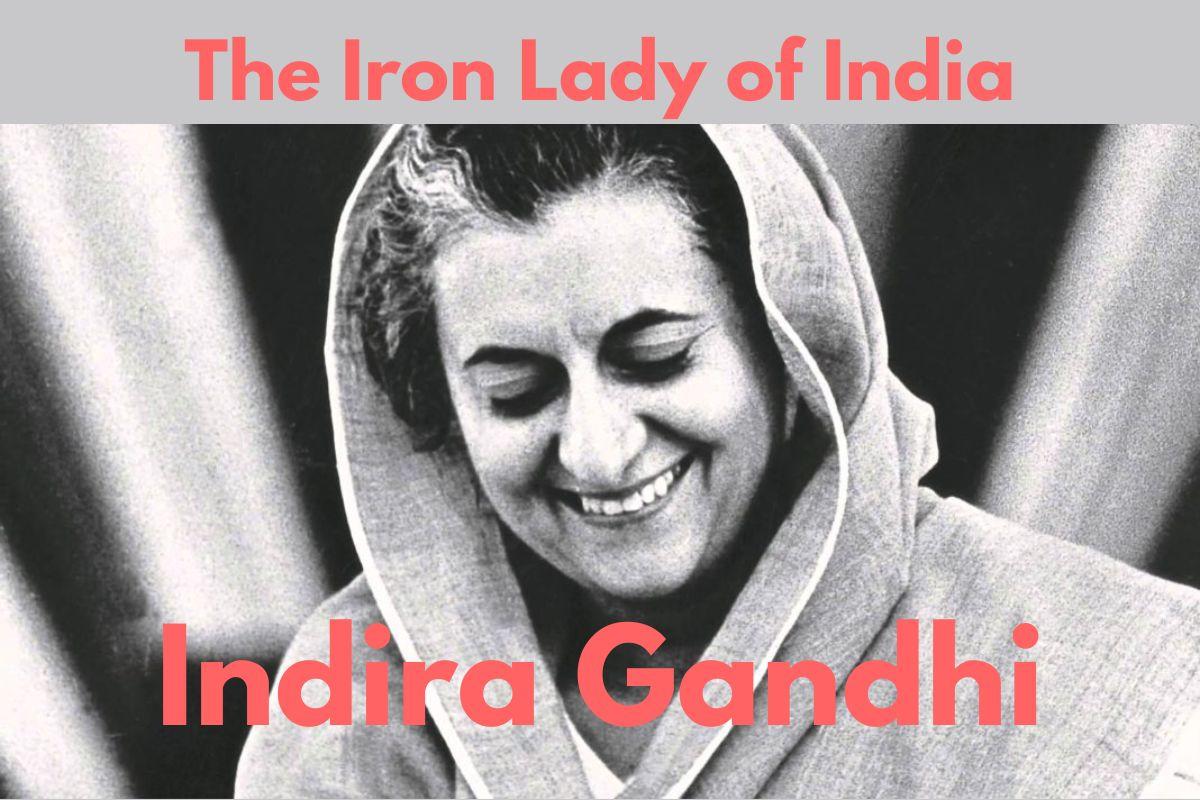

Indira Gandhi is remembered as a key figure in the political history of India. Her involvement in politics was influenced greatly by her family's deep connection to the freedom struggle of India. The history of Indira Gandhi is characterised by her ascent to the role of the first and only female Prime Minister of India, a position held by her from 1966 to 1977 and then again from 1980 until her assassination in 1984.
The early life of Indira Gandhi was shaped by exposure to the political discourse of the country, under the guidance of her father, Jawaharlal Nehru, the first Prime Minister of India. This environment nurtured her political insights and dedication to national service. As Prime Minister, a range of political and social reforms were introduced by her, aimed at reshaping the socio-economic framework of the nation. Decisions made by her, particularly those in agriculture and environmental policy, have left a lasting impact on the country.
The period of Emergency declared in 1975, a controversial era in her political journey, is also a significant part of Indira Gandhi's history. This period was marked by debates and criticisms around her leadership style and decisions. Despite the controversies, her charisma and assertiveness maintained her prominence in Indian politics.
This article is focused on the life of Indira Gandhi history, the political reforms she implemented, providing an understanding of her life's narrative and her contributions to the political landscape of India.


Indira Gandhi Early Life: Daughter of Jawaharlal Nehru
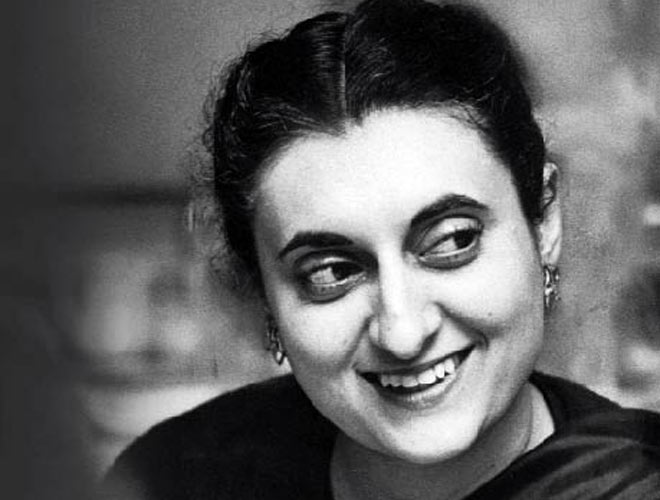
Indira Gandhi's early life, deeply influenced by her father Jawaharlal Nehru who was the first Prime Minister of India was steeped in political discourse from a young age. Born on November 19, 1917, in Allahabad, she grew up in an atmosphere where political discussions were the norm. Her mother, Kamala Nehru, was also actively involved in politics, further immersing her in a politically charged environment.
School Life
Her education began at the prominent Modern School in Delhi, but she also spent part of her childhood in Switzerland where she attended school while her mother underwent treatment for tuberculosis. These early school years were formative, exposing her to different cultures and educational philosophies. Despite the frequent moves and her mother's illness, Indira remained a curious and engaged student.
Indira Gandhi attended Santiniketan in West Bengal, a school established by Rabindranath Tagore, which emphasised a holistic approach to education. This experience broadened her horizons and deepened her appreciation for Indian culture and heritage.
Her education continued at Somerville College, Oxford, in England, where she studied history. Here, she was exposed to global political theories and practices, which played a crucial role in shaping her ideological perspectives.
Indira was known to be a reserved and thoughtful student, more inclined towards reading and introspection than active political engagement during her college years. However, the influence of her father and her exposure to the leaders and events of the Indian independence movement were profound.
She was actively involved in the freedom struggle during her time in England and even faced arrest during one of her visits back to India. This blend of diverse educational experiences and exposure to significant political events and figures during her formative years was instrumental in shaping Indira Gandhi's leadership style.
Her journey from the daughter of Jawaharlal Nehru to a formidable political figure in her own right began in these early years, marked by intellectual growth, cultural exposure, and a deepening commitment to national service.
Indira Gandhi Politics, Reforms: First Woman Prime Minister of India
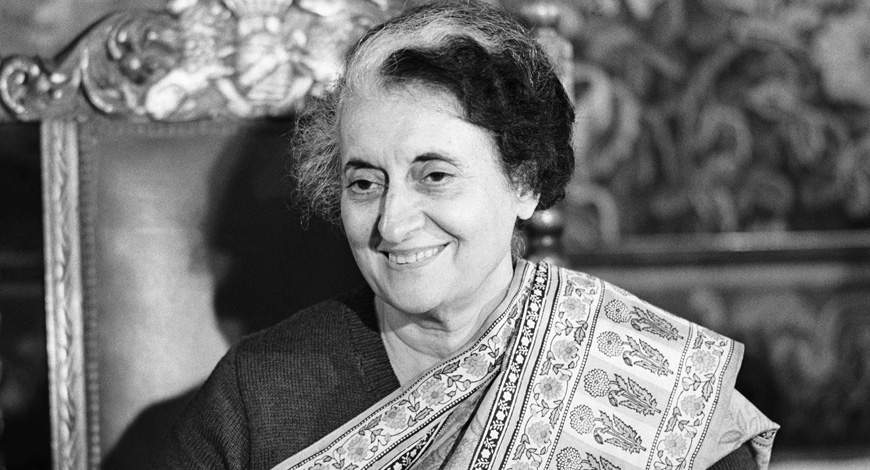
The journey of first woman Prime Minister of India, Indira Gandhi in politics began at an early age and was influenced by her family's central role in the political landscape of India. The Nehru household in Allahabad, where she grew up, was a hub of national political activity, frequented by leaders like Mahatma Gandhi. Her active involvement in politics started after returning to the country, as she joined the Indian National Congress and became acquainted with Feroze Gandhi, then a journalist and an active member of the Youth Congress.
After the independence of the country and her father becoming the first Prime Minister, Indira moved to Delhi to assist him, leaving Feroze Gandhi behind in Allahabad to continue his work with ‘The National Herald’ newspaper. During this time, her political career started to take shape.
Indira as Congress President
Her political stature rose significantly in 1959 when she was elected President of the Indian National Congress Party. This position marked a crucial stage in her political career, elevating her to a more prominent role within the party and the national political arena. As Congress President, she was not only a key political figure but also a close advisor to her father, Prime Minister Jawaharlal Nehru, contributing significantly to policy-making and party strategies.
Death of Pandit Nehru
Her role further expanded after Nehru's death in 1964, when she was appointed as the Minister of Information and Broadcasting under Prime Minister Lal Bahadur Shastri. In this role, Indira Gandhi played a vital part in shaping and disseminating government policies and information to the public. Her tenure in this ministry was notable for the way she handled media and public communication, particularly during critical national events.
Her political awareness and ability to shape public perception were evident during the Indo-Pakistani War of 1965. Despite security warnings, she stayed in a hotel in Srinagar close to insurgent activity, drawing significant media attention.
First Term as Prime Minister of India
Following the death of Lal Bahadur Shastri', the second Prime Minister of India in 1966, Indira emerged as a surprise choice for Prime Minister by the Congress high command, who initially saw her as a figurehead. However, she quickly dispelled this notion, demonstrating strong political leadership. Her tenure as Prime Minister was marked by significant moves like the abolition of Privy Purse, nationalisation of major banks and oil companies, addressing food shortage issues, and leading India into the nuclear age with its first underground detonation in 1974.
Indo-Pakistan War of 1971
Indira Gandhi's time as a leader was strongly highlighted during the 1971 war between India and Pakistan. This war was important because it helped Bangladesh become its own country. Indira played a big part in this war.
One smart decision she made was to sign a treaty of friendship with the Soviet Union before the war. This treaty ensured that India received both political and military support during the conflict, which was crucial for the success of the Indian forces. Her decision to support the people fighting for Bangladesh's freedom also showed her commitment to justice and freedom. This war made her look like a strong leader to the world.
Indira Gandhi Achievements
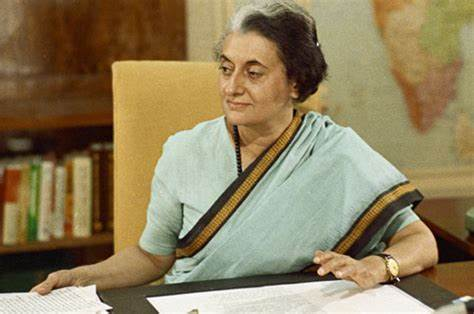
Indira Gandhi, a central figure in India's history, made significant contributions to the country's progress and development. Here are some of the major Indira Gandhi achievements:
Contributions to India National Movement
Indira Gandhi was actively involved in the India freedom struggle from a young age. She participated in the Indian National Congress, the primary movement fighting for India's independence. Her involvement in political activities during this time laid the foundation for her future political career.
Indira Gandhi’s First Stint as the Prime Minister
Her first term as Prime Minister saw several key initiatives. She focused on improving India's self-reliance, particularly in the agricultural sector, which led to the Green Revolution. This revolution was crucial in making India self-sufficient in food grains and reducing the country's dependence on imports.
Major Achievements and Contributions
- Twenty Point Programme: Introduced in 1975, this program aimed at improving living standards. It focused on fighting poverty, improving healthcare, and expanding education.
- Economic Reform: Indira Gandhi initiated major economic reforms, including the nationalisation of banks in 1969. This step was taken to ensure more control of the economy by the government and to better serve the financial needs of the country's developing sectors.
- Operation Blue Star: In 1984, she ordered Operation Blue Star to remove Sikh militants who were hiding in the Golden Temple in Amritsar. This operation was controversial and led to her assassination.
- Facilitating Foreign Policy: Indira Gandhi played a pivotal role in shaping foreign policy of India. She navigated complex international relations during the Cold War era and established India as a significant non-aligned nation.
Her tenure as Prime Minister was marked by these and many other initiatives that had a lasting impact on the social and economic landscape. Her policies and decisions, often bold and controversial, have left an indelible mark on the country's history.
Motivational Indira Gandhi Quotes

Now, let’s read some of the popular Indira Gandhi Quotes that will inspire the youth of the country.
- My father was a statesman, I am a political woman. My father was a saint. I am not.
- On the one hand, the rich look askance at our continuing poverty - on the other, they warn us against their own methods.
- People tend to forget their duties but remember their rights.
- My grandfather once told me that there were two kinds of people; those who do the work and those who take the credit. He told me to try to be in the first group; there was much less competition.
- You can't shake hands with a clenched fist.
- Winning or losing the election is less important than strengthening the country.
- Ability is not always gauged by examination.
- Popularity is not a guarantee of quality.
- The purpose of life is to believe, to hope, and to strive.
- You must learn to be still in the midst of activity and vibrantly alive in repose.
- Forgiveness is a virtue of the brave.
- Opportunities are not offered. They must be wrested and worked for. And this calls for perseverance and courage.
- There are two kinds of people, those who do the work and those who take the credit. Try to be in the first group; there is less competition there.
- To be liberated, a woman must feel free to be herself, not in rivalry to man but in the context of her own capacity and her personality.
- I learned very soon to get along by myself.
- Whenever you take a step forward, you are bound to disturb something.
- Every new experience brings its own maturity and a greater clarity of vision.
- You must learn to be still in the midst of activity and to be vibrantly alive in repose.
- To become capable, one must have faith in oneself.
- Women sometimes go too far, it is true. But it is only when you go too far that others listen.
Summarise with AI:
Did you like this article? Leave a rating!

 Loading...
