
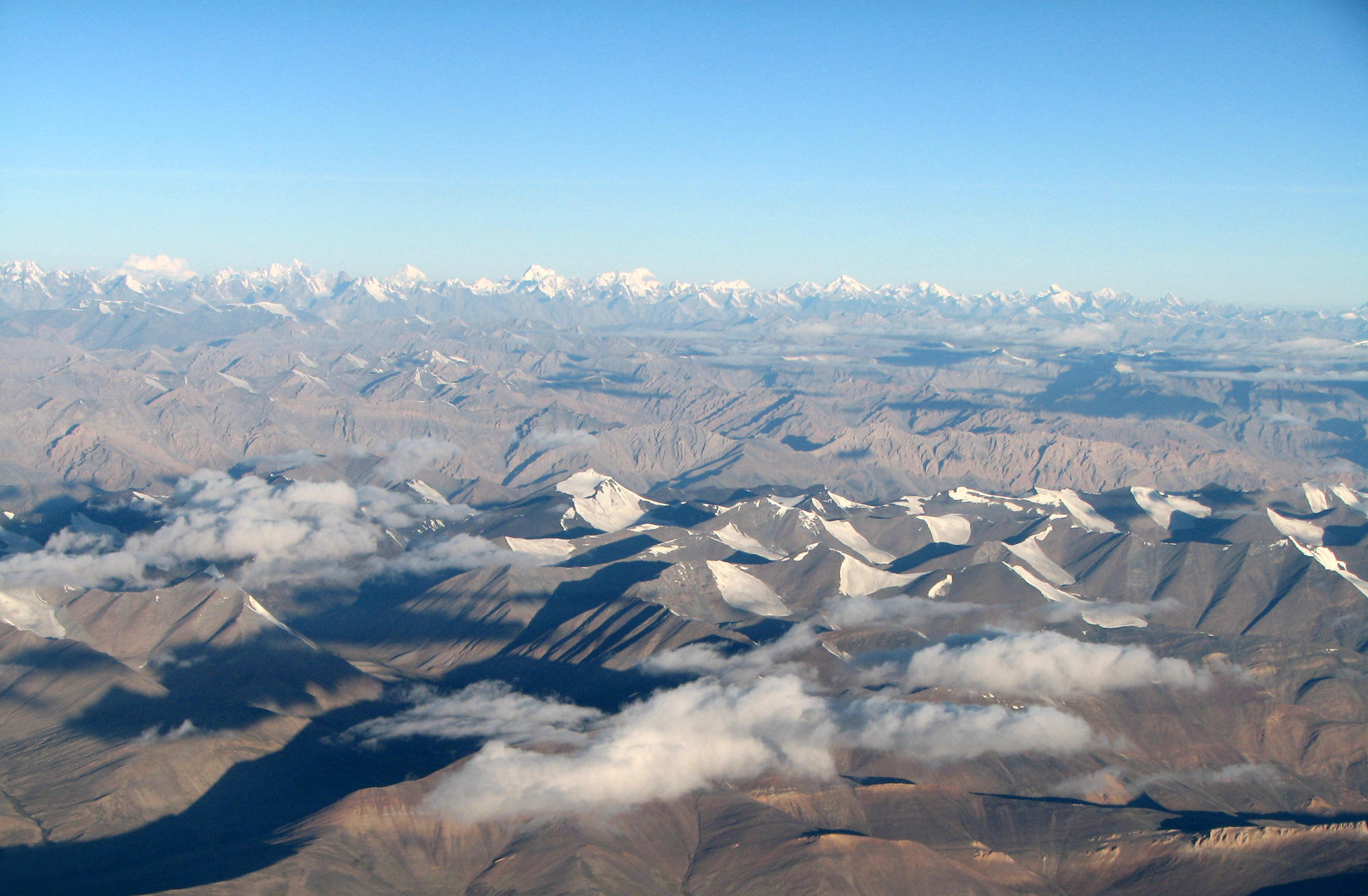

Mountains are some of the most magnificent places on Earth: visually striking, difficult to ascend, and sometimes barren and inhospitable. Being at the mountain summits exposes you to the environment to a greater extent, making it more hard. A mountainous region refers to a geographical area consisting of a group of mountains that are connected by elevated ground. Mountain ranges consist of a collection of peaks formed by the same process during the same geological age.
India is a topographically diverse nation with an intricate geological past. The nation is situated directly on the Indian plate, which is a segment of the wider Indo-Australian plate. The recent geological history of the nation is mostly shaped by the ongoing collision between the Indian and Eurasian Plates.
This collision has created a convergence zone along the northern border of the country, specifically in the Himalayas and Karakoram regions.


List of Mountains in India
India is a unique land that is home to seven Mountain Ranges, all of which boast peaks exceeding an altitude of 1,000 meters. The Himalayan range is the highest and most renowned mountain range in India. The mountain ranges include the Himalayan mountains, the Karakoram and Pir Panjal ranges, the Purvanchal range (also known as the eastern mountain range), the Vindhya and Satpura ranges, the Aravali range, the Eastern Ghats, and the Western Ghats.
Himalayan Mountains
The Mountain ranges are commonly known as the most recent, tallest, and highest mountains in the world. The Himalayan Mountain range has the majority of the world's tallest peaks, with over 100 summits surpassing an average elevation of 7200 meters.
The summit of Mt. Everest, standing at an elevation of 8848 meters, holds the distinction of being the highest point on Earth. The location of the place is amid the formidable Himalayas of Nepal. Several major river systems, including the Ganges, Brahmaputra, and Indus, have their origins in the Mountains.
Karakoram Range
The Karakoram Mountain range spans over the Line of Control with China, making it the westernmost range. Additionally, it holds the distinction of being the second-tallest mountain range on Earth. The Karakoram Mountains, spanning a mere 500 kilometers, are host to several of the planet's loftiest summits.
The Karakoram Range has K2, which stands as the second-highest peak globally, reaching an elevation of around 8,611 meters. The Hindu-Kush Range in Afghanistan is considered to be an extension of the Karakoram Range. The Karakoram region possesses the highest number of ice sheets, excluding the Polar Regions. Tibet is home to the Biaflo and Siachen glaciers, which rank as the second and third-largest glaciers in the world, respectively.
Purvanchal Range
The huge mountain range covers around 94,800 square kilometers. It comprises India's eastern border region. The Himalayan Range is expanded by the mountain ranges of India to its east. The Purvanchal Region, also known as the Eastern Mountainous Region or Mizo Hill, comprises the Patkai-Bum Mountain, Lushai Hill, and Garo-Khasi-Jaintia Hill. Despite the presence of these hills, Mawsynram in the state of Meghalaya remains the most precipitation-heavy location on Earth. It is located inside the Khasi Hill region. The region in question encompasses all of the eastern states of the country, together referred to as the Seven Sisters.
Vindhya and Satpura Ranges
The Satpura and Vindhya mountain ranges are located in Northern India, bordering the peninsular plateau of India. The Satpura range is the longest of the two and serves as the origin of significant rivers such as the Narmada and the Brahmaputra. Satpura and Vindhya mountain ranges are predominantly located in the states of Madhya Pradesh and Maharashtra, with a few dispersed areas in Gujarat, Chattisgarh, and Uttar Pradesh.
Aravalli Range
This mountain summit is among the oldest in India. The ranges extend across about 800 kilometers. The term "Aravalli" in the local tongue translates to "a series of mountain peaks." It covers the regions of Rajasthan, Delhi, Haryana, and Gujarat. India's sole desert is attributed to the Aravalli Mountains. It acts as a barrier that blocks rain-carrying winds from reaching the Thar Sands.
Western Ghats
The Western Ghats span a distance of 1500km, extending from the state of Gujarat to the town of Kanyakumari in Tamil Nadu. This location has been designated as a UNESCO World Heritage Site because of its remarkable diversity. The Anaimalai Hills, situated in Kerala, is the highest peak in this range, reaching an elevation of 2695 meters.
Eastern Ghats
The Indian Peninsula in the east is surrounded by these lofty mountains. They have a non-linear trajectory and possess a lower altitude. The Eastern Ghats play a crucial role in Indian agriculture since they serve as the drainage basin for four major Indian rivers - the Mahanadi, Krishna, Godavari, and Kaveri - which ultimately flow into the Bay of Bengal through the Eastern Ghats. This results in a broad and fertile region that is well-suited for the growth of rice.

Discover who won what in the recently-concluded Lok Sabha elections in India.
Highest Peaks in India
Kanchenjunga is renowned as the highest mountain peak in India. This peak ranks as the third highest in the world. It has a significant height of 8,586 meters (28,169 ft). Kanchenjunga derives its literal meaning as "The Five Treasures of Snows," referring to the treasures of gold, silver, jewels, grain, and sacred texts.
| Peak | Altitude | State | Description |
| Kangchenjunga | 8586 m | Sikkim | Highest mountain peak in India; third-highest mountain peak in the world |
| Nanda Devi | 7816 m | Uttarakhand | Second-highest peak in India; situated in the Garhwal Himalayas, in the Chamoli district of Uttarakhand, close to Tibet |
| Kamet | 7756 m | Uttarakhand | The second-highest peak in the Garhwal Himalayas; |
| Saltoro Kangri | 7742 m | Jammu & Kashmir | The highest peak of Saltoro Mountain Ramges, a sub-range of Karakoram; is home to Siachen Glacier, one of the longest glaciers in the world |
| Saser Kangri | 7672 m | Jammu & Kashmir | Part of five regal peaks; 35th highest mountain peak in the world |
| Momostong Kangri | 7516 m | Jammu & Kashmir | The highest peak in the sub-ranges of Rimo Muztagh of the Karakoram Range |
| Rimo | 7385 m | Jammu & Kashmir | A part of the Karakoram Range; comprises four peaks |
| Hardeol | 7151 m | Uttarakhand | Situated in the Kumaon Himalayas; the eighth-highest peak in India |
| Chaukamba | 7138 m | Uttarakhand | The highest mountain in the Gangotri group; located in the Garhwal Himalaya region |
| Trisul | 7120 m | Uttarakhand | Trisul is a constituent peak within a specific cluster of summits located in the hilly areas of Kumaon. The group derives its name from the Trishul, a sword associated with Lord Shiva. |
Importance of Mountains in India
Mountains serve as the primary sources of freshwater for our planet, acting as the world's "water towers" and supplying 60-80% of all global freshwater supplies. Approximately 50% of the global population relies on the services provided by mountain ecosystems for their survival, including not just water but also food and renewable energy.
Nevertheless, all existing records unequivocally demonstrate that glaciers in mountain ranges around the globe are receding and vanishing as a direct consequence of climate change. Over the past several decades, a minimum of 600 glaciers have entirely vanished, leading to a significant impact on the water resources that billions of people downstream depend on.
The mountains of India play a crucial role in sustaining not only India but also the world ecology due to the following reasons:
- These are water storage facilities.
- The water sourced from the mountains is also employed for irrigation and the generation of hydroelectric power.
- They are also beneficial for crop development, such as farming on patios and similar areas.
- Mountains serve as the primary sources of freshwater for our planet, supplying around 60 to 80 percent of all global freshwater resources.
- Mountains have a crucial role in reducing the probability of catastrophes due to their ability to mitigate the effects of climatic changes. Avalanches, mudflows, and landslides are causing significant damage to deforested areas and resulting in the flooding of nearby villages and populations.
- Mountains play a crucial role in the tourism industry since they draw in 15-20% of worldwide tourists and possess abundant cultural variety, expertise, and tradition. They provide tourists with a pristine and untouched location.
- Mountains serve as crucial hubs of agricultural biodiversity and are the primary origins of certain staple commodities such as rice, potatoes, quinoa, tomatoes, and barley.
- Mountains are significant for young people due to the formidable landscape and the difficulties they face, especially for those living in rural areas. Additionally, mountains have great importance for indigenous groups since they serve as homes for ancient indigenous societies that have safeguarded invaluable information, customs, and languages.
- Mountains play a crucial role in maintaining biodiversity since they house 50% of the world's biodiversity hotspots and sustain about 25% of terrestrial biological diversity.
Mountains are geological formations that consist of high areas of the Earth's crust. They are created by the displacement of tectonic plates, including processes such as uplift, subsidence, faulting, and volcanic activity. Mountains have a highly important impact on our ecology. These areas have important glaciers that generate year-round rivers, shape agriculture via fertile soil, block moist winds that provide rainfall, offer recreational opportunities for humans, serve as tourist attractions, and support diverse ecosystems.
Summarise with AI:
Enjoyed this article? Leave a rating!

 Loading...
