
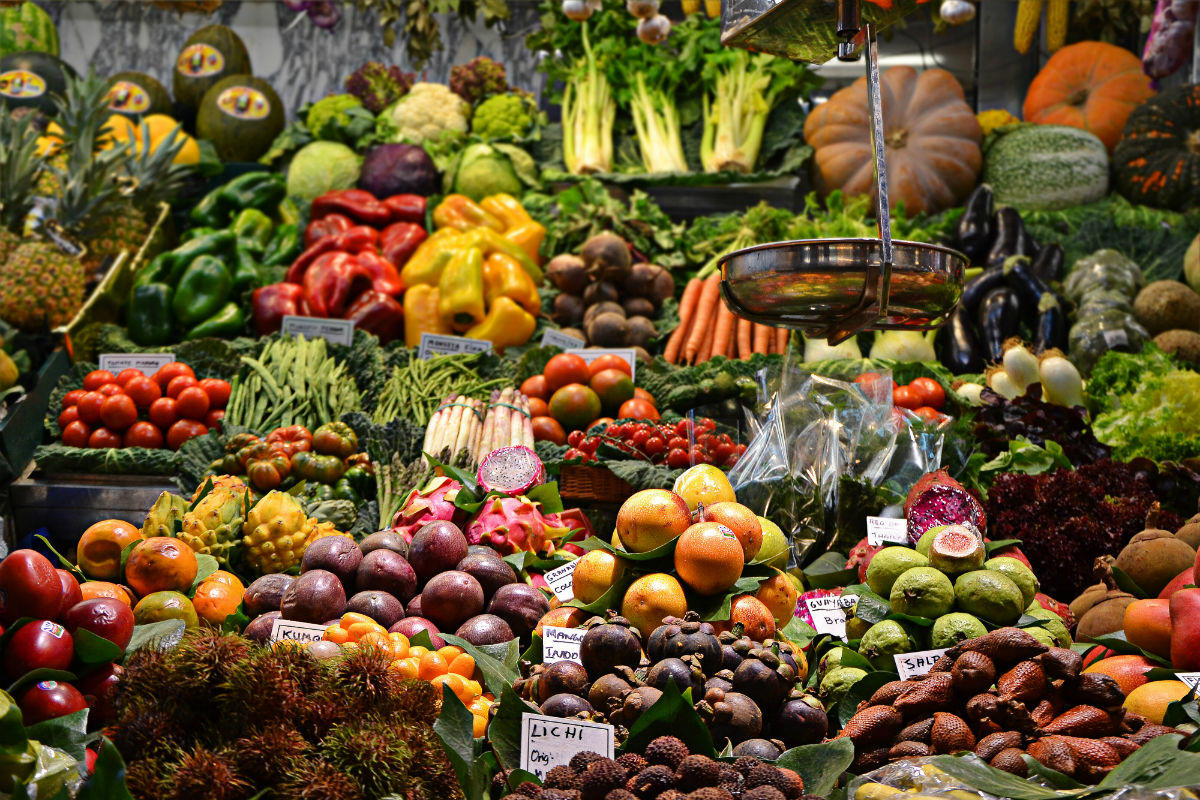

Fruit and vegetables are one of the 5 major food groups. Fruits and vegetables, an important part of our daily diet, contain essential vitamins and minerals, such as vitamins A (beta-carotene), C and E, magnesium, zinc, phosphorous and folic acid that help to keep us healthy. They also help protect against some diseases.
Fruits and vegetables are low in fat, salt, and sugar and are a good source of dietary fiber. A high intake of fruits and vegetables in a balanced, regular diet can lead to the maintenance of a healthy, active lifestyle by:
- Reducing obesity
- Maintaining a healthy weight
- Lowering cholesterol
- Lowering blood pressure


Know the Food Pyramid
The Food Pyramid shows how much of what you eat overall should come from each shelf to achieve a healthy, balanced diet. The shape of the Food Pyramid shows the types of foods and drinks people need to eat most for healthy eating. It is divided into 6 shelves, each shelf proving us with the range of nutrients and energy needed for good health.
Healthy eating is all about choosing the right amounts from each shelf.
The Food Pyramid is a visual representation of how different foods and drinks contribute towards a healthy balanced diet. The Pyramid allows individuals the flexibility to choose foods and drinks from each shelf depending on their food preferences.
Enrol in nutrition courses online with a Superprof teacher to learn everything about a healthy diet!
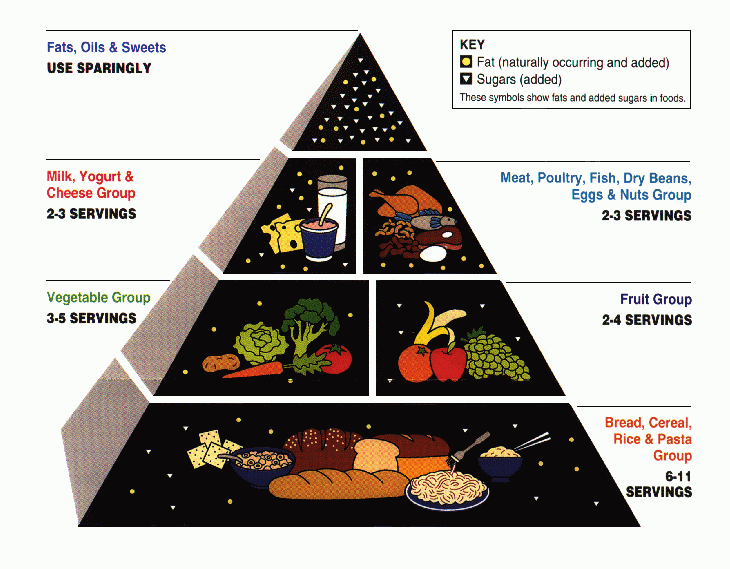
The 6 shelves, starting from the most important shelf on the bottom, are as follows:
- Shelf 1: Vegetables, salad, and fruit (at least 5 to 7 servings a day); base your meals on these and enjoy a variety of colors. Limit fruit juice to unsweetened, once a day.
- Shelf 2: Wholemeal cereals and bread, potatoes, pasta, and rice (3–5 servings a day, up to 7 for teenage boys and men age 19–50); wholemeal and wholegrain cereals are best.
- Shelf 3: Milk, yogurt, and cheese (3 servings a day and 5 from the age of 9 to 18); choose reduced-fat or low-fat varieties. Choose low-fat milk and yogurt more often than cheese.
- Shelf 4: Meat, poultry, fish, eggs, beans, and nuts (2 servings a day); choose lean meat, poultry (without skin), and fish; eat oily fish up to twice a week. Choose eggs, beans, and nuts. Limit processed salty meats such as sausages, bacon, and ham.
- Shelf 5: Fats, spreads, and oils (in very small amounts); choose mono or polyunsaturated reduced-fat or light spreads. Choose rapeseed, olive, canola, sunflower, or corn oils. Limit mayonnaise, coleslaw, and salad dressings as they also contain oil. Always cook with as little fat or oil as possible – grilling, oven-baking, steaming, boiling, or stir-frying.
- Top Shelf: This shelf is separated from the rest of the pyramid. The Top Shelf includes foods and drinks high in fat, sugar, and salt. These are not needed for good health and should not be consumed every day. Very small amounts once or twice a week maximum is sufficient.
Foods in Vegetable Group
Any vegetable or 100% vegetable juice counts as part of the Vegetable Group. Vegetables may be raw or cooked; fresh, frozen, canned, or dried/dehydrated; and may be whole, cut-up, or mashed. Vegetables are available in many varieties and can be classified into biological groups or ‘families’, namely:
- Leafy green – lettuce, spinach, and silverbeet
- Cruciferous – cabbage, cauliflower, Brussels sprouts, and broccoli
- Marrow – pumpkin, cucumber, and zucchini
- Root – potato, sweet potato, and yam
- Edible plant stem – celery and asparagus
- Allium – onion, garlic, and shallot
The daily intake of vegetables depends on your age, sex, height, weight, and level of physical activity. For women, the amount can also depend on whether they are pregnant or breastfeeding. In general, 1 cup of raw or cooked vegetables or vegetable juice, or 2 cups of raw leafy salad greens can be considered as 1 cup from the Vegetable Group.
Foods in Fruit Group
Fruit is the sweet, fleshy, edible part of a plant. It generally contains seeds. Fruits are usually eaten raw, although some varieties can be cooked. They come in a wide variety of colors, shapes, and flavors. Any fruit or 100% fruit juice counts as part of the Fruit Group. Fruits may be fresh, frozen, canned, or dried/dehydrated, and maybe whole, cut-up, pureed, or cooked. At least half of the recommended amount of fruit should come from whole fruit, rather than 100% fruit juice. Common types of fruits include:
- Apples and pears
- Citrus – oranges, grapefruits, mandarins, and limes
- Stone fruit – nectarines, apricots, peaches, and plums
- Tropical and exotic – bananas and mangoes
- Berries – strawberries, raspberries, blueberries, kiwifruit, and passionfruit
- Melons – watermelons, rockmelons, and honeydew melons
- Tomatoes and avocados
The amount of fruit you need to eat depends on your age, sex, height, weight, and level of physical activity. For women, the amount can also depend on whether you are pregnant or breastfeeding. In general, 1 cup of fruit or 100% fruit juice, or ½ cup of dried fruit can be considered as 1 cup from the Fruit Group.
How Much of Fruits and Vegetables is Enough?
Any chart or article on tips for a balanced diet will invariably include a sizeable portion of fruits and vegetables. Find a dietitian near me to consult before you decide on the right amounts of fruits and vegetables, dairy products, and other types of essential nutritious foods to consume every day. Here is a breakdown of the different types of fruits and vegetables and their portion sizes, as recommended by leading food and nutrition organizations of the world.
Green Vegetables
A portion is 2 broccoli spears or 4 heaped tablespoons of cooked kale, spinach, spring greens, or green beans.
Cooked Vegetables
A portion is 3 heaped tablespoons of cooked vegetables, such as carrots, peas, or sweetcorn, or 8 cauliflower florets. Green peas are also a rich source of essential proteins.
Salad Vegetables
A portion is 1.5 full-length celery sticks, a 5 cm piece of cucumber, 1 medium tomato, or 7 cherry tomatoes.
Tinned and Frozen Vegetables
The portion size is roughly the same quantity as you would eat for a fresh portion. For example, 3 heaped tablespoons of tinned or frozen carrots, peas, or sweetcorn count as 1 portion each. For tinned, choose those canned in water with no added salt or sugar.
Pulses and Beans
A portion is 3 heaped tablespoons of baked beans, haricot beans, kidney beans, cannellini beans, butter beans, or chickpeas. Remember, however much you eat, beans and pulses count as a maximum of 1 portion a day.
Potatoes
Potatoes are classified nutritionally as starchy food, because when eaten as part of a meal they're usually used in place of other sources of starch, such as bread, rice, or pasta. Potatoes are a rich source of carbohydrates for the body.
Small-sized Fresh Fruit
A portion is 2 or more small fruit – for example, 2 plums, 2 satsumas, 2 kiwi fruit, 3 apricots, 6 lychees, 7 strawberries, or 14 cherries.
Medium-sized Fresh Fruit
A portion is 1 piece of fruit, such as 1 apple, banana, pear, orange, or nectarine.
Large Fresh Fruit
A portion is half a grapefruit, 1 slice of papaya, 1 slice of melon (5cm slice), 1 large slice of pineapple, or 2 slices of mango (5cm slices).
Tinned or Canned Fruit
A portion is roughly the same quantity of fruit that you would eat for a fresh portion, such as 2 pear or peach halves, 6 apricot halves, or 8 segments of tinned grapefruit. Choose fruit canned in natural juice, rather than syrup.
Dried fruit
A portion of dried fruit is around 30g. This is about 1 heaped tablespoon of raisins, currants, or sultanas, 1 tablespoon of mixed fruit, 2 figs, 3 prunes, or 1 handful of dried banana chips. But dried fruit can be high in sugar and can be bad for your teeth. Try to swap dried fruit for fresh fruit, especially between meals. To reduce the risk of tooth decay, dried fruit is best enjoyed as part of a meal – like a dessert, for example, not as a between-meal snack.
Learn more about nutrition from a dietician in Bangalore or your city.
Health Benefits of Fruits and Vegetables
Fruit and vegetables are a critical part of a balanced diet that helps you maintain a healthy lifestyle. Here are the most visible health benefits of fruits and vegetables.
Source of Vitamins and Minerals
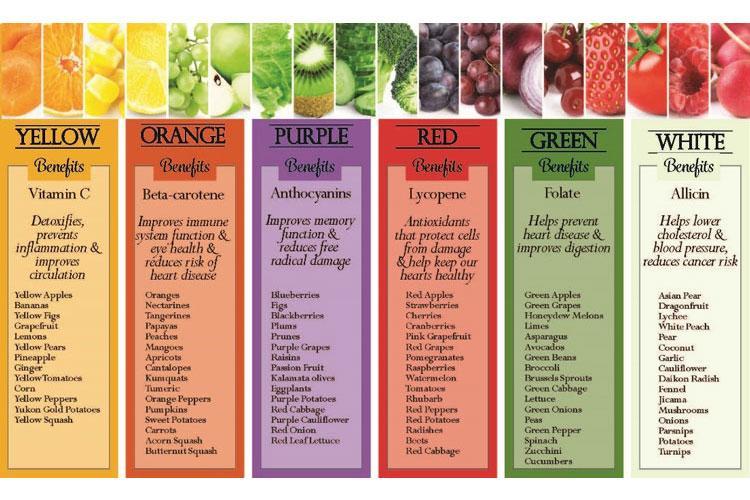
Fruits and vegetables are loaded with vitamins A, C, and E, as well as magnesium, zinc, phosphorous, and folic acid. For potassium, one of the most important minerals for your health, eat plenty of avocados, sweet potatoes, bananas, prunes, and even tomato paste puree.
Low Sodium and Cholesterol Content
Fresh fruits and veggies contain only trace amounts of sodium. Cholesterol doesn’t exist in fruits and veggies at all.
Rich Source of Fiber
Most fruits and vegetables have plenty of fiber to make you feel full and boost gut health, but some have more than others. Fiber-rich vegetables include artichokes, green peas, broccoli, and cauliflower. High-fiber fruits include raspberries, pears, apples, and pumpkin.
Low Calorie and Fat Content
On average, fruits and especially vegetables are very low in calories and fat, which means you can eat more to keep you feeling full without worrying about extra calories or fat. You can save more than 200 calories by eating half a cup of grapes! However, there are exceptions, such as avocados, olives, and coconuts.
Helps to Fight Diseases
Many vegetables and fruits contain phytochemicals, which are biologically active substances that help protect against some diseases. In other words, such fruits and vegetables help to lower your risk of type 2 diabetes, stroke, heart disease, high blood pressure, and cancer by adding them into your diet. Specifically, cruciferous veggies, such as broccoli, cabbage, collards, and watercress, have been linked to reducing cancer risks.
You can learn more about nutrition and how to make a healthy meal plan with an online dietitian on Superprof.
Summarise with AI:
Did you like this article? Leave a rating!

 Loading...
