
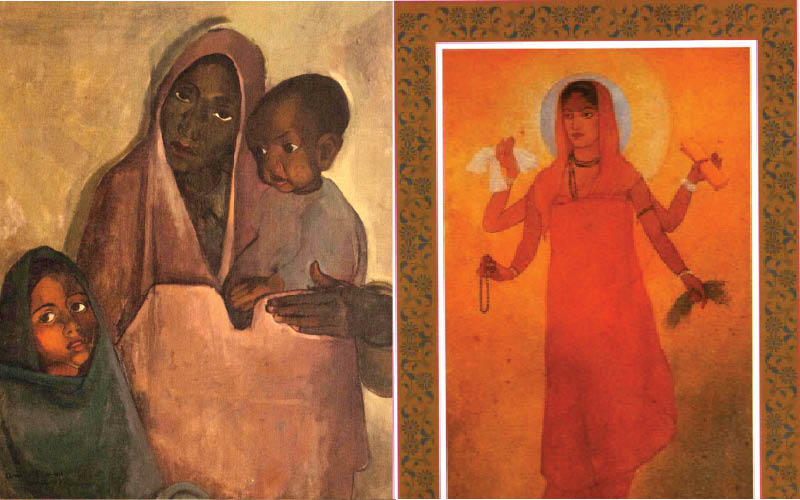

Painting as an art form in India has a long and vibrant history, with masterpieces that reflect mythology, spirituality, culture, and the lives of ordinary people. To give readers an immediate sense of India’s artistic legacy, here are some of the most iconic paintings and the artists behind them:
- “Bharat Mata” – Abanindranath Tagore
- “Shakuntala” – Raja Ravi Varma
- “Bindu Series” – S. H. Raza
- “Three Pujarins” – Jamini Roy
- “Horses” – M. F. Husain
- “Glow of Hope (The Woman with the Lamp)” – S. L. Haldankar
- “The Village Scene” – Amrita Sher-Gil
- “Benaras Ghat” – Ram Kumar
- “Mahishasura” – Tyeb Mehta
- “Mother Teresa Series” – M. F. Husain
India, with its rich cultural legacy, has generated countless artistic prodigies that have had a lasting impact on the world art landscape. Indian artists have demonstrated their expertise across several mediums. From traditional to contemporary, their paintings have garnered global acclaim. In India, nature-inspired art occupies a distinctive position among other artistic pursuits, reflecting a profound connection to the natural environment.
Indian painters have had a significant impact on the world art landscape with their varied and deep creations. These artists inspire generations, and their art exemplifies the lasting potency of creativity and expression.





10 Famous Indian Paintings and Where to Find Them
- “Bapuji” by Nandalal Bose: Mahatma Gandhi is recognized as a prominent freedom warrior, although few realize that several contemporary artists, such as Nandalal Bose, drew inspiration from him. Bose's 1930 linocut titled 'Dandi March,' inscribed with 'Bapuji, 1930,' serves as a testament to his profound reverence for Gandhi and is permanently shown in the National Gallery of Modern Art in Delhi.
- Where to find: The Art Institute of Chicago
- “Shakuntala” by Raja Ravi Varma: Raja Ravi Varma, regarded as the father of contemporary Indian painting, created "Shakuntala," a magnum opus influenced by Kalidasa's renowned drama. This evocative oil-on-canvas work showcases Ravi Varma’s mastery as he reimagines Shakuntala searching for Dushyanta from the Mahabharata. Shakuntala pretends to remove a thorn from her foot while secretly looking for her lover, as her companions chat nearby and a hooded figure walks in the distance. The painting’s delicate sensuality and poetic composition enhance its warm, vibrant atmosphere.
- Where to find: Sree Chitra Art Gallery, Thiruvananthapuram
- “Mother India” by Amrita Sher-Gil: Amrita Sher-Gil, sometimes likened to India’s Frida Kahlo, created “Mother India,” a compelling depiction of the maternal archetype symbolizing the nation's energy and perseverance. This artwork represents India's cultural identity. The expressions of her subjects during this period are imbued with melancholy and characterized by prominent, sorrowful eyes.
- Where to find: National Gallery of Modern Art, New Delhi
- “The Last Supper” by Francis Newton Souza: Souza’s interpretation of The Last Supper reflects his bold artistic style and his interest in themes of spirituality, sexuality, and human relationships. His related works—such as Crucifixion (1959) and Deposition (1963)—capture the agony and aftermath of Christ’s final moments. Throughout the 1950s and early 1960s, Souza often returned to the Last Supper in still-life compositions featuring Eucharistic symbols. His later depictions reaffirm the event’s central role in Catholic tradition and in his own creative vision.
- Where to find: Sotheby's

- “Self Portrait” by Amrita Sher-Gil: Amrita Sher-Gil's "Self Portrait" exemplifies her contemplative manner remarkably. This self-portrait symbolizes her introspection and sensitivity as an artist. Beginning in 1930, Amrita Sher-Gil created a series of self-portraits that depicted her many emotions. The alluring and vibrant atmosphere she has encapsulated is somewhat uncommon in her collection of self-portraits.
- Where to find: Kiran Nadar Museum of Art. New Delhi
- “Untitled (Falling Figure)” by Tyeb Mehta: Tyeb Mehta’s Falling Figure reflects deep existential anxiety and the emotional turmoil of a rapidly changing society. The work is rooted in a traumatic childhood memory from the 1947 Partition riots, when Mehta witnessed a man being mutilated and killed from his window on Mohammed Ali Road, as recalled by poet Dilip Chitre. Mehta later said that this single violent event shaped his lifelong doubts about India—its independence, communal tensions, and the fragility of human life.
- Where to find: Christie's
- “Untitled (Bird in Space)” by S.H. Raza: S.H. Raza, a trailblazer of Indian contemporary art, produced “Untitled (Bird in Space),” embodying his “Bindu” concept. The artwork combines abstract and spiritual aspects, highlighting unity and transcendence.
- Where to find: Arts Fiesta Online
- “Jallianwala Bagh” by Satish Gujral: Satish Gujral’s Jallianwala Bagh captures the grief and brutality of the 1919 massacre. Deeply shaped by the violence of the 1947 Partition—which he witnessed firsthand while helping refugees—Gujral created powerful works reflecting human suffering. He later said, “I did not depict Partition, but my own anguish.” His marriage to Kiran brought renewed colour and inspiration to his later paintings.
- Where to find: Partition Museum, Town Hall, Amritsar
- ”Self-Portrait” by Rabindranath Tagore: Tagore’s early visual work began as doodles and markings in his poetry manuscripts. At 67, he turned to painting more seriously, producing thousands of sketches from 1928 onward. His style featured bold, simple forms and a rhythmic flow, often depicting animals, human figures, and sculptural women. This self-portrait shows the bearded artist in a frontal pose, set against a rough background. The absence of colour and use of strong pencil lines give the figure a flat, elevated, almost otherworldly presence.
- Where to find: Victoria and Albert Museum, London
- “Krishna and Radha” by Nandalal Bose: Nandalal Bose was a pioneer of modern Indian paintings and a prominent player in Contextual Modernism. Bose, a disciple of Abanindranath Tagore, was recognized for his "Indian style" of painting. He assumed the role of principal of Kala Bhavan, Santiniketan in 1922. Nandalal Bose’s “Krishna and Radha” is a captivating depiction of heavenly love. This artwork elegantly integrates traditional Indian art styles with a contemporary flair.
- Where to find: Invaluable
Famous Indian Artists in 2026
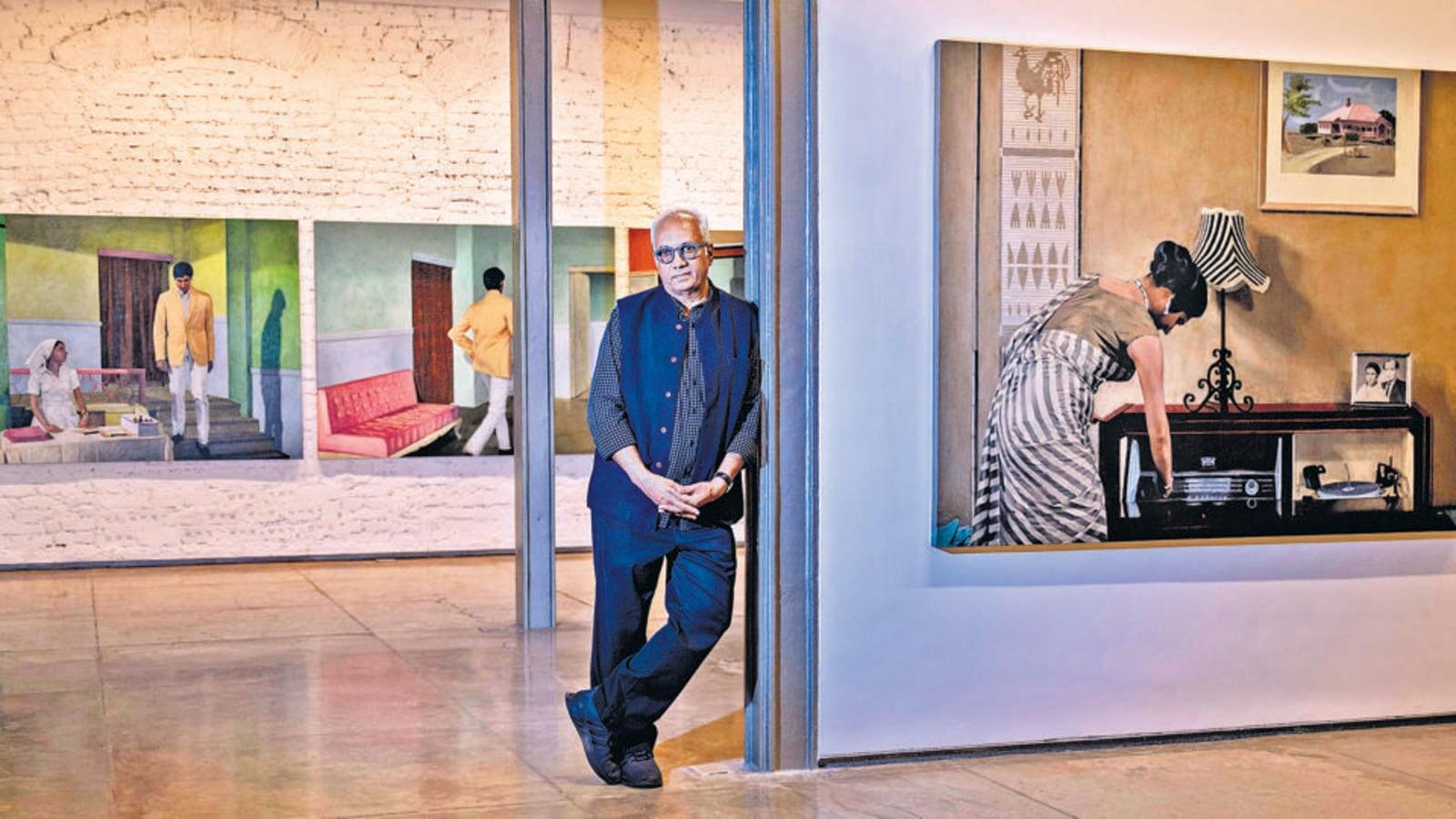
Here are five famous Indian artists in 2026, including prominent women artists who have significantly contributed to the contemporary art landscape. These artists represent the vibrant diversity of Indian contemporary art in 2026, pushing boundaries with their unique styles and socio-political commentaries.
1. Nalini Malani
A pioneering figure in contemporary Indian art, Nalini Malani is known for her multimedia work that blends painting, video, and installation. Born in Karachi in 1946, her art often explores themes of feminism, violence, and political strife. One of the earliest Indian artists to incorporate video art, Malani's thought-provoking works challenge traditional narratives about womanhood and society. She has won several prestigious awards, including the Kyoto Prize, and continues to exhibit globally in museums like the Tate Modern and the Centre Pompidou.
2. Bharti Kher
Bharti Kher is a London-born artist renowned for her sculptures, paintings, and installations, which often explore identity, gender, and mythology. Her use of the bindi as a recurring motif symbolizes cultural intersections and femininity. Kher's works blend surrealism and magical realism, inviting viewers to contemplate human experiences through hybrid creatures and fantastical landscapes. She has exhibited widely across the globe, and her contributions to contemporary Indian art have earned her accolades like the Padma Shri and the Fukuoka Asian Culture Prize.
3. Atul Dodiya
Atul Dodiya is a prominent figure in Indian contemporary art known for his eclectic style and versatility in incorporating various materials and techniques. Born in 1959 in Maharashtra, his work often combines modernist approaches with traditional Indian references. Dodiya’s art spans painting, installation, and sculpture, focusing on themes of history, politics, and urban life. One of his notable works, "Re-Imagining Bapu," reinterprets Mahatma Gandhi’s legacy, showcasing his ability to mix personal, political, and national histories.
4. Seema Kohli
Seema Kohli is a Delhi-based artist whose works delve into themes of femininity, spirituality, and mythology. Her intricate paintings and sculptures often incorporate detailed patterns and vivid imagery that celebrate the female form and cosmic narratives. Kohli’s use of gold leaf, pigments, and acrylics creates visually captivating pieces that evoke mythological symbolism. She is recognized not only for her artistic achievements but also for her contribution to preserving Indian cultural traditions through modern artistic expressions.
5. Nikhil Chopra
Nikhil Chopra is an innovative contemporary artist who blends performance, painting, drawing, and photography. Born in Kolkata in 1974, Chopra’s works often address themes of identity, history, and colonialism. His live performances, such as "Yog Raj Chitrakar: Memory Drawing IX," involve transforming spaces and embodying characters that evoke historical and personal narratives. By merging traditional Indian aesthetics with modern global concerns, Chopra has established himself as a dynamic force in the international art world.
India's rich artistic heritage is reflected in these iconic paintings, each representing a unique blend of culture, history, and creativity. From the timeless masterpieces in museums to the vivid murals found in prestigious auction houses across the world, these artworks offer a window into the nation's diverse artistic traditions.
Summarise with AI:
Enjoyed this article? Leave a rating!

 Loading...
