
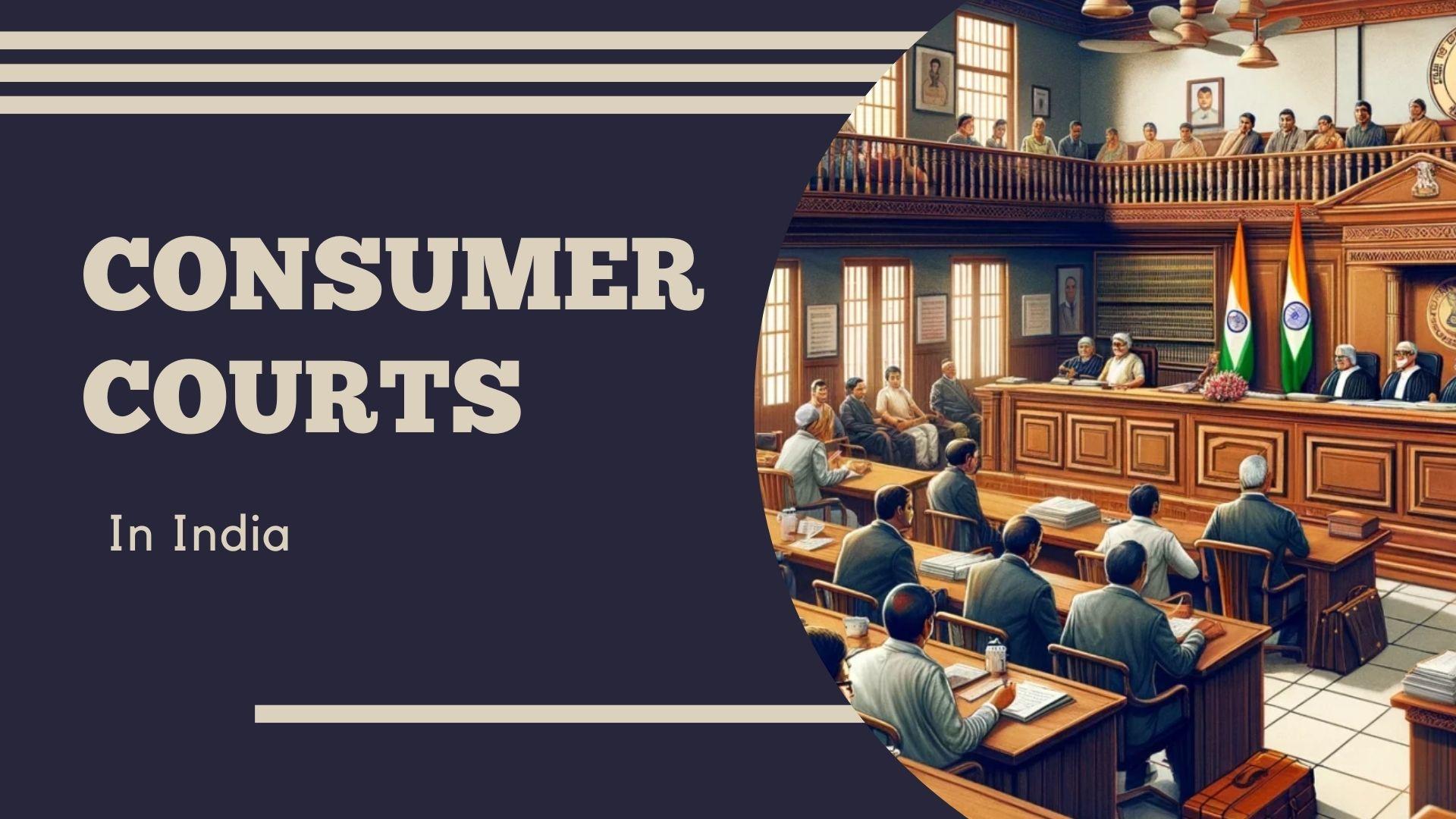

Consumer courts are special judicial bodies established to address consumer grievances and complaints against businesses, companies, and service providers. Their purpose is to provide a quick, accessible, and cost-effective mechanism for consumers to seek redressal for any unfair trade practices, defective products, or unsatisfactory services they may have experienced.
In India, consumer courts operate under the Consumer Protection Act of 2019, which replaced the earlier 1986 Act. This updated act ensures that consumers are empowered with greater rights and that complaints can be resolved fairly and expeditiously.


Types of Consumer Courts in India
India’s consumer court system is organized into a three-tier structure to ensure efficient handling of complaints based on the monetary value of the claim and the nature of the grievance. Here’s a closer look at the types of consumer courts in India:
District Consumer Disputes Redressal Commission (DCDRC)
The District Consumer Disputes Redressal Commission, commonly known as the District Consumer Court, is the first level in the consumer court hierarchy. It operates at the district level and is intended to handle smaller claims efficiently.
- Jurisdiction: The DCDRC has the authority to handle cases where the total value of the goods or services in question, along with the compensation claimed, does not exceed ₹1 crore.
- Purpose: This level is primarily meant for individuals who face issues with goods or services that fall within a smaller claim range, making it an accessible option for common consumer grievances.
Consumers can file a complaint with the DCDRC in the district where the cause of action (such as the purchase of a product or provision of a service) occurred, or in the district where they reside or work.
State Consumer Disputes Redressal Commission (SCDRC)
The State Consumer Disputes Redressal Commission operates at the state level and addresses complaints involving larger claims.
- Jurisdiction: The SCDRC can handle cases where the value of goods or services, including compensation claimed, ranges from ₹1 crore to ₹10 crores.
- Appellate Function: In addition to handling new complaints within its jurisdiction, the SCDRC also serves as an appellate court for decisions made by the District Consumer Courts. Consumers who are dissatisfied with a DCDRC ruling can appeal to the SCDRC within the same state.
The SCDRC’s role is to cater to cases requiring more detailed attention due to the higher claim value, ensuring that consumers seeking significant compensation have a dedicated forum for their grievances.
National Consumer Disputes Redressal Commission (NCDRC)
The National Consumer Disputes Redressal Commission is the apex body for consumer disputes in India. Located in New Delhi, it handles cases with the highest monetary claims.
- Jurisdiction: The NCDRC deals with complaints where the value of goods or services, along with the compensation claimed, exceeds ₹10 crores.
- Appellate Authority: The NCDRC also serves as an appellate court for cases appealed from the State Consumer Courts. If a consumer or business is dissatisfied with an SCDRC ruling, they can appeal to the NCDRC for a final decision.
- Supreme Authority: As the highest consumer court, the NCDRC’s rulings are binding. However, any party still dissatisfied with an NCDRC ruling can make a final appeal to the Supreme Court of India.
Why File a Complaint in Consumer Courts?
Consumers face various issues, from defective products and false advertisements to unsatisfactory services. Filing a complaint in a consumer court ensures that you receive fair treatment and, when justified, compensation for the inconvenience or loss incurred. Additionally, it encourages businesses to uphold high standards, contributing to a safer, more transparent marketplace. Knowing your rights as a consumer is critical to making informed decisions, ensuring fair practices, and protecting yourself from exploitation.
India celebrates National Consumer Rights Day on December 24th every year, marking the day in 1986 when the Consumer Protection Act was first enacted. This day raises awareness about consumer rights and encourages people to exercise them.
Common Consumer Complaints Addressed by Consumer Courts
By filing a complaint in a consumer court, you can legally address issues in these and other categories, such as misleading or fraudulent food labels, ensuring that your rights as a consumer are upheld.
| Category | Examples |
| Defective Products | Electronics, home appliances, automobiles |
| Unsatisfactory Services | Telecom services, banking, insurance, travel |
| Unfair Trade Practices | False advertising, misleading discounts, hidden charges |
| Health & Safety | Faulty medical devices, substandard food and drugs |
| Real Estate | Delays in property possession, construction issues, hidden charges |
Steps to File a Complaint in Consumer Courts
Filing a complaint in a consumer court in India follows a structured process, designed to be accessible and straightforward. Here’s a step-by-step guide on how to proceed:
No, consumer courts in India allow you to file a complaint without hiring a lawyer. This makes the process accessible and affordable, enabling consumers to represent themselves and seek justice for grievances independently.
Step 1: Understanding the Eligibility
Before filing a complaint, ensure that you meet the basic eligibility criteria:
- The complainant must be a consumer who has purchased goods or services for personal use, not commercial purposes.
- The complaint must pertain to a deficiency in service, defective product, or unfair trade practice.
- The complaint must be filed within two years from the date of the incident.
Step 2: Gather All Necessary Documents
Having a strong case requires comprehensive documentation. Here are essential documents to keep handy:
- Purchase Receipts/Invoices: Proof of purchase or service.
- Warranty/Guarantee: If applicable, these documents validate product/service claims.
- Correspondence Records: Any email or written communication with the service provider or seller.
- Bank Statements: To demonstrate payment for the product/service.
- Legal Notice: A copy of the formal notice sent to the opposing party, demanding resolution.
For claims up to ₹5 lakh, there is no filing fee. Above ₹5 lakh and up to ₹10 lakh, a fee of ₹200 is required.
Filing fees for consumer complaints can range from ₹100 to ₹4,000, depending on the claim value and the forum. Aside from filing fees, litigation charges of ₹15,000 to ₹20,000 may also be incurred during the process
Step 3: Sending a Legal Notice
Before moving forward with a court case, it is advised to send a legal notice to the concerned party. This step serves as an attempt to resolve the issue amicably without court intervention. The notice should include the following:
- Details of the grievance: Clear description of the issue faced.
- Action Required: Specific actions you expect the other party to take to rectify the issue.
- Deadline for Response: Provide a reasonable timeline for the other party to respond (usually 15 to 30 days).
If the opposing party fails to respond satisfactorily within the given time frame, you may proceed to file a formal complaint in the consumer court.
Step 4: Drafting the Complaint
Your complaint should clearly outline your grievances, substantiated by evidence. A well-drafted complaint includes:
- Heading: Title with the name of the consumer court and complaint number.
- Details of Complainant and Opponent: Full name, address, and contact information.
- Description of Goods/Services: Information about the product or service, including purchase details.
- Alleged Deficiency: Clear description of the issue, such as defect, damage, or poor service.
- Relief Claimed: Specify the compensation or action you expect, such as product replacement, refund, or monetary compensation.
- Signatures: The complainant’s signature with the date.
Step 5: Submitting the Complaint and Paying Fees
File the complaint in the appropriate consumer court jurisdiction based on the amount claimed. Along with the complaint, you’ll need to pay a nominal fee, which varies according to the value of the compensation claimed.
Fee Structure for Consumer Courts in India
| Compensation Claimed | Fee (₹) for DCDRC | Fee (₹) for SCDRC | Fee (₹) for NCDRC |
| Up to ₹5 lakh | 200 | NA | NA |
| ₹5 lakh to ₹10 lakh | 400 | NA | NA |
| ₹10 lakh to ₹20 lakh | 500 | NA | NA |
| ₹20 lakh to ₹50 lakh | 2000 | 2500 | NA |
| ₹50 lakh to ₹1 crore | 4000 | 5000 | NA |
| Above ₹1 crore to ₹10 crores | NA | 7500 | NA |
| Above ₹10 crores | NA | NA | 10000 |
Step 6: Appearing in Court
Once your complaint is filed, you may be required to attend hearings in the consumer court. At this stage, both parties will present their cases, and evidence will be reviewed by the judge. Having a lawyer is optional but can be beneficial if the case is complex. The court may summon witnesses, review evidence, and make a decision based on the merits of the case.
Step 7: Receiving the Verdict
The consumer court will issue a verdict after reviewing all relevant evidence and arguments. If the decision is in your favor, the court may order compensation, product/service replacement, or any other relief claimed.
Important Rights as a Consumer in India
It is crucial to know your rights as a consumer when engaging with goods and services. The Consumer Protection Act provides a comprehensive list of rights aimed at protecting Indian consumers from unethical practices:
- Right to Safety: The act protects hazardous goods and services.
- Right to Information: Access to accurate information about products/services.
- Right to Choose: Availability of diverse options in the market without coercion.
- Right to Be Heard: Assurance that consumer grievances will be acknowledged.
- Right to Redressal: Fair compensation and resolution for grievances.
- Right to Consumer Education: Knowledge about consumer rights and responsibilities.
Understanding these rights empowers you to make informed choices, avoid exploitation, and seek justice in case of unfair practices.
Advantages of Filing a Complaint in Consumer Courts
Filing a complaint in consumer courts in India provides several benefits:
- Speedy Resolution: Consumer courts are specifically designed to handle cases swiftly, making them more efficient than traditional courts.
- Cost-Effective: Nominal filing fees ensure that justice is affordable for all consumers.
- Consumer-Friendly Processes: Courts are designed to be accessible to consumers, even without legal representation.
- Promotes Accountability: Businesses are encouraged to maintain ethical standards due to the potential consequences of consumer complaints.
- Transparency: The formal documentation and open court procedures offer a transparent process.
Tips for a Successful Complaint Process
- Maintain All Evidence: Always keep receipts, invoices, and any communication records.
- Follow Timelines: Ensure that your complaint is filed within two years of the incident.
- Stay Informed: Know your rights and be aware of the processes involved in consumer complaints.
- Consider Legal Help: For complex cases, consult a legal professional for guidance.
- Be Clear and Concise: Draft your complaint accurately and provide detailed but concise descriptions.
Common Pitfalls to Avoid
- Incomplete Documentation: Lack of sufficient evidence can weaken your case.
- Missed Deadlines: Filing after the deadline can invalidate your complaint.
- Ambiguous Relief Claims: Specify exactly what you expect as compensation or relief.

Empower Yourself: Use Consumer Courts Wisely
Consumer courts in India are an invaluable resource for consumers facing issues with products or services. By understanding how to file complaints to consumer courts and being aware of your rights, you can protect yourself from unethical practices and demand accountability from businesses. This proactive approach not only secures your interests but also contributes to a more transparent and consumer-friendly marketplace.
Whether dealing with a faulty product or an unsatisfactory service, consumer courts offer a structured, effective, and fair pathway for addressing grievances. Empower yourself by staying informed, organized, and diligent, and exercise your rights as a consumer to ensure justice is served. Take action today—know your rights, and don't hesitate to reach out to consumer courts when needed.
Summarise with AI:
Did you like this article? Leave a rating!

 Loading...
