
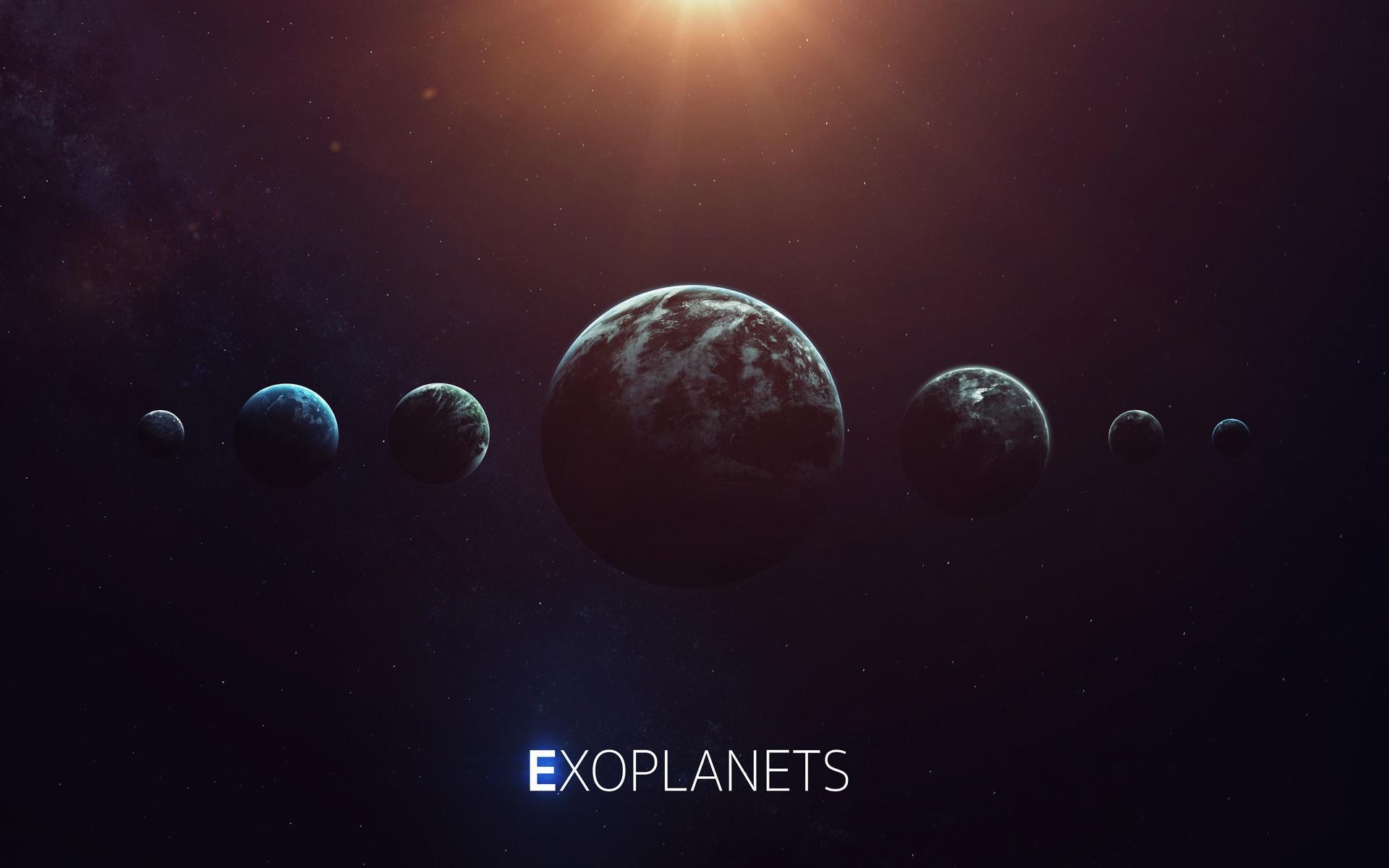

Exoplanets, short for 'extrasolar planets,' are planets located outside our solar system, and they vary greatly in size, from massive gas giants larger than Jupiter to small, rocky planets comparable to Earth or Mars. These planets can have extreme conditions, ranging from scorching temperatures capable of melting metal to frigid, icy environments. Some orbit their stars so closely that a year only lasts a few days, while others orbit two stars simultaneously. There are even exoplanets known as "rogue planets," drifting through space without orbiting any star, remaining in perpetual darkness.




Types of Exoplanets
One key discovery from humanity's exploration of the universe is that planets exist in a far more diverse range of types and categories than what we observe in our solar system. Exoplanets come in an even broader array of forms.
- Gas giants are planets comparable in size to Saturn or Jupiter, the largest planet in our solar system, but they can also be significantly larger. Within this broad category, there is even more diversity. For example, hot Jupiters were among the first types of exoplanets discovered—gas giants that orbit extremely close to their stars, with temperatures reaching thousands of degrees (in both Fahrenheit and Celsius).
- Neptunian planets, similar in size to Neptune or Uranus, likely have varied interior compositions, but all share hydrogen- and helium-dominated outer atmospheres and rocky cores. Researchers have also discovered mini-Neptunes, which are smaller than Neptune but larger than Earth. Interestingly, there are no planets of this size or type in our solar system.
- Super-Earths are larger than Earth but less massive than Neptune. These planets are usually rocky and may or may not have atmospheres.
- Terrestrial planets are Earth-sized or smaller and are primarily composed of rock, silicate, water, or carbon. Ongoing research will determine if any of these planets have atmospheres, oceans, or other characteristics that could indicate potential habitability.
- Neptune-sized planets present a puzzle for astronomers because so few have been found close to their stars. This scarcity of "hot Neptunes" with very short orbital periods, typically around four days or less, is known as the "hot Neptunian desert." One explanation for this phenomenon is that the intense radiation from their stars may strip away the atmospheres of these planets if they lack sufficient mass, potentially transforming them into super-Earths over time.
- Rogue planets, also called isolated planetary-mass objects or free-floating planets, are celestial bodies that exist outside of any star system and are not gravitationally bound to a star. These planets roam the Milky Way alone, without a parent star. One theory suggests that rogue planets originally form within planetary systems but are ejected due to gravitational interactions with other planets or encounters with a neighboring star system. Another, less likely but possible theory is that rogue planets could form independently, without ever being part of a planetary system.
Discovery of Exoplanets
The discovery of exoplanets began in the early 1990s, with the first significant breakthrough being 51 Pegasi b in 1995—a “hot Jupiter” located 50 light-years away, orbiting a Sun-like star. This discovery marked a turning point, and since then, thousands of exoplanets have been identified.
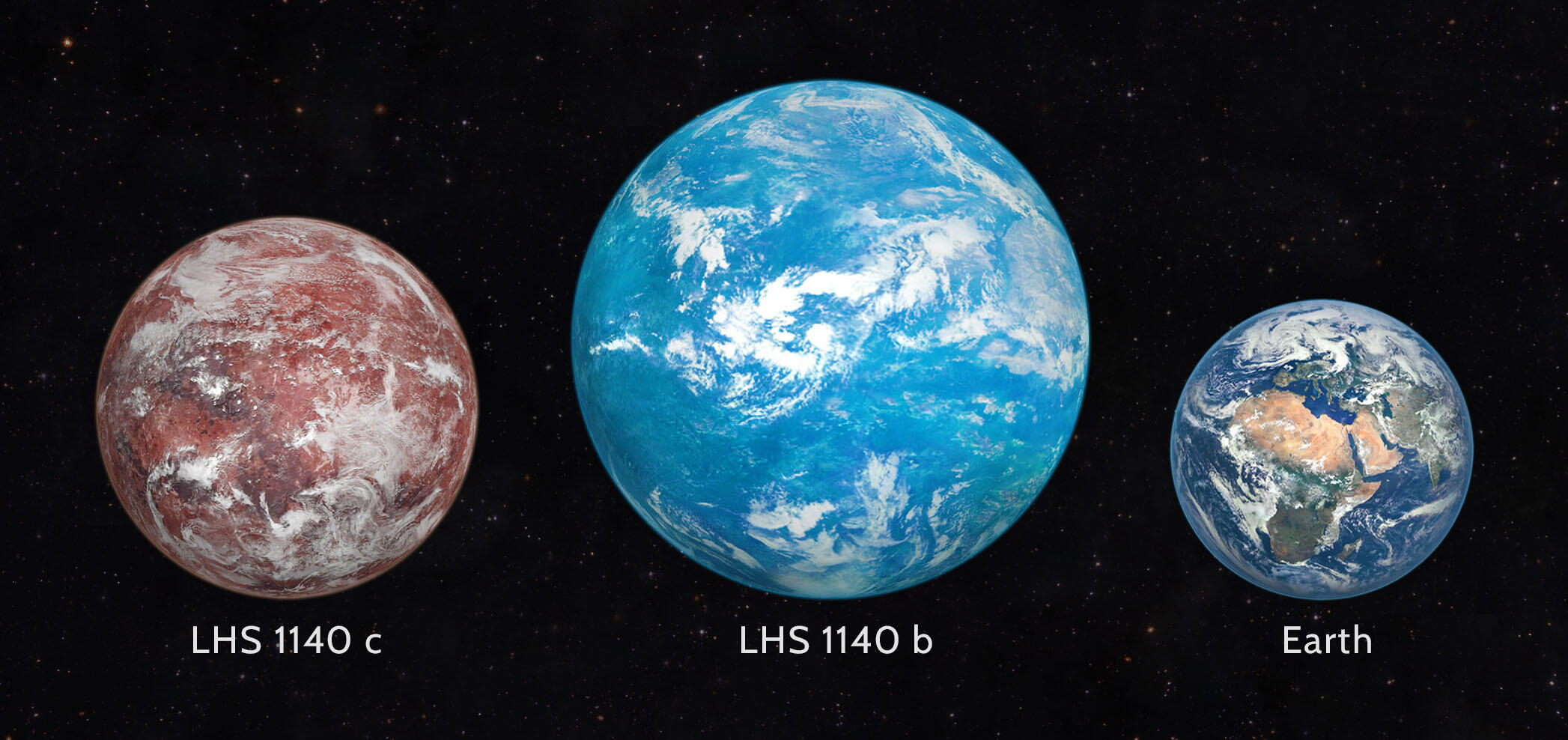
Before the 1990s, humans had never directly observed a planet outside our solar system, and the existence of such worlds remained unconfirmed. However, in the three decades since the first exoplanet discovery, NASA's exoplanet catalog has grown substantially. By 2023, the catalog lists over 5,500 confirmed exoplanets, with nearly 10,000 more potential candidates awaiting verification.
Exoplanets located in the "habitable zone"—the area around a star where conditions are just right for liquid water to exist—are key targets in the search for life beyond our solar system.
As early as the 16th century, people speculated about the existence of planets orbiting distant stars in our vast universe. However, the mystery remained unsolved for much of human history, right up until the final decade of the 20th century. In 1992, astronomers at the Arecibo Observatory in Puerto Rico made a groundbreaking discovery, identifying two planets orbiting the pulsar PSR B1257+12. Just a few years later, in 1995, Swiss astronomers Michel Mayor and Didier Queloz discovered the first planet orbiting a sun-like star, 51 Pegasi. Today, the number of confirmed exoplanets stands at nearly 5,500, spread across more than 4,000 planetary systems.
The most widely used methods for detecting exoplanets include the transit method, which detects the subtle dimming of a star's light as a planet crosses in front of it, and radial velocity, a technique that measures tiny movements of the star and planet around their shared center of mass. These and other detection techniques allow astronomers to not only find potential exoplanets but also gather information about their size, composition, orbits, and more—all from vast distances.
Most Earth-like Planets
For a planet to be considered potentially habitable, it needs to be small, rocky, and located within the "Goldilocks" or habitable zone of its star, where conditions allow liquid water to exist. As technology improves, additional factors such as the planet's atmospheric makeup and the activity of its star are also evaluated.
| Gliese 667Cc | Gliese 667Cc, located 22 light-years away, is at least 4.5 times the mass of Earth. This exoplanet orbits its cooler red dwarf star in just 28 days and is believed to lie within the star’s habitable zone. |
| Kepler-22b | Kepler-22b, found 600 light-years away, was the first Kepler planet identified in the habitable zone of its star. However, at 2.4 times the size of Earth, its composition remains uncertain—whether rocky, liquid, or gaseous. |
| Kepler-69c | Kepler-69c, 2,700 light-years away, is about 70 percent larger than Earth. It completes an orbit in 242 days, similar to Venus in our solar system, but its star is 80 percent as luminous as the sun, suggesting the planet resides in the habitable zone. |
| Kepler-62f | Kepler-62f, 40 percent larger than Earth, has a 267-day orbit around a star much cooler than our sun. Despite this, it is positioned within the habitable zone. The planet orbits closer to its red dwarf star than Earth does to the sun, but the star emits far less light. |
| Kepler-186f | Kepler-186f, roughly 10 percent larger than Earth, lies at the outer edge of its star’s habitable zone, receiving about a third of the energy that Earth gets from the sun. Located 500 light-years away, it orbits a red dwarf, making it not a true Earth twin. |
| Kepler-442b | Kepler-442b is about 33 percent larger than Earth and completes an orbit every 112 days. Located 1,194 light-years away, Kepler-442b was announced in 2015 as a potential candidate for hosting life. |
| Kepler-452b | Kepler-452b, discovered in 2015, is the first near-Earth-size planet found orbiting a star similar to our sun. It is 60 percent larger than Earth, and its star, Kepler-452, is about 10 percent larger than the sun. Kepler-452b lies in the habitable zone, 1,400 light-years away, and its size suggests a "better than even chance" of being rocky. The planet takes just 20 days longer than Earth to complete an orbit around its star. |
| Kepler-1649c | When scientists revisited data from NASA's Kepler Space Telescope, they identified Kepler-1649c, an exoplanet that is similar in size to Earth and resides within its star's habitable zone. Originally, a computer algorithm had mistakenly classified the object during the initial analysis, but in 2020, it was confirmed to be a planet. Kepler-1649c is located 300 light-years away and is just 1.06 times the size of Earth. In terms of the light it receives from its star, researchers determined that it gets about 75 percent of the sunlight that Earth receives from the sun. |
| Proxima Centauri b | Proxima Centauri b, discovered in 2016, is the closest known exoplanet to Earth, located only four light-years away, according to NASA. This exoplanet has a mass approximately 1.27 times that of Earth and orbits within the habitable zone of its star, Proxima Centauri. However, due to its close proximity to the star, Proxima Centauri b is subjected to intense ultraviolet radiation, as it completes its orbit in just 11.2 days. |
| TRAPPIST-1e | Proxima Centauri b, discovered in 2016, is the closest known exoplanet to Earth, located only four light-years away, according to NASA. This exoplanet has a mass approximately 1.27 times that of Earth and orbits within the habitable zone of its star, Proxima Centauri. However, due to its proximity to the star, Proxima Centauri b is subjected to intense ultraviolet radiation, as it completes its orbit in just 11.2 days. |
Exoplanets Closest to Earth Chart
| Exoplanet | Distance (Light Years) | Type | Star Type | Orbit Period (Days) |
| Proxima Centauri b | 4.24 | Super-Earth | Red Dwarf | 11.2 |
| Barnard’s Star b | 6 | Super-Earth | Red Dwarf | 233 |
| Ross 128 b | 11 | Temperate Super-Earth | Red Dwarf | 9.9 |
| Teegarden’s Star b | 12.5 | Earth-Sized | Red Dwarf | 4.9 |
| Luyten b | 12 | Super-Earth | Red Dwarf | 18.6 |

Why Exoplanet Exploration Matters
Humanity's search for exoplanets will bring us closer to discovering a true mirror of Earth: a small, rocky planet with clouds, oceans, and an atmosphere containing potential signs of life. These signs may come in the form of gases like oxygen, carbon dioxide, and methane, which, when detected together, could be strong indicators of life.
NASA's Exoplanet Program aims to uncover definitive evidence of life on other planets. By analyzing the atmospheres of exoplanets, scientists hope to reveal the telltale signs of life hidden within the skies of distant worlds.
For a planet to host life as we know it, liquid water on its surface is essential, though the planet itself might not resemble Earth. Such a world would likely reside in the "habitable zone," or the "Goldilocks zone," of its star—where conditions are just right for water to exist over long periods, and where its atmosphere might contain the necessary gases to support life.
NASA's search for extraterrestrial life is a multidisciplinary effort, involving scientists studying our solar system, ancient life forms, and even extreme environments on Earth. The search includes missions exploring Mars, Europa (one of Jupiter's moons), and Saturn's moon Enceladus, as these worlds may also harbor life. Understanding how life originated on Earth or studying "extremophiles" (organisms that thrive in extreme conditions) can help inform the search for life on exoplanets. Additionally, a deeper understanding of stars, including our own Sun, is crucial to comprehending the environments of distant planets.
Summarise with AI:
Did you like this article? Leave a rating!

 Loading...
