
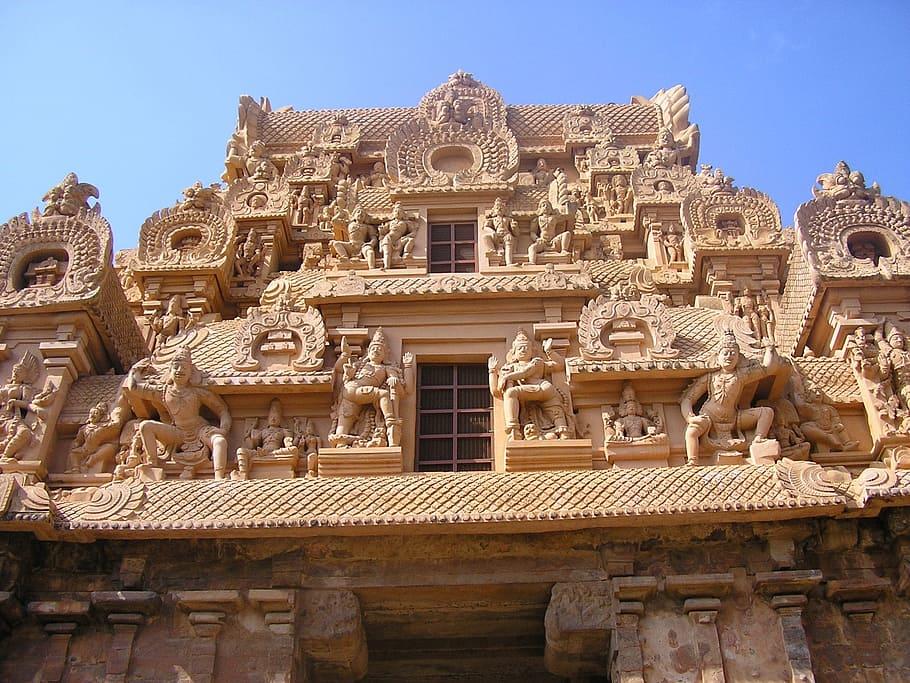

In the southern Indian state of Tamil Nadu, all that remains of the once-grand city of Gangaikondacholapuram is a temple surrounded by rice fields. However, it was the capital of one of the world's oldest and longest-ruling dynasties of South India, and it served as the hub of medieval Southeast Asia. The Chola dynasty (300 B.C.–A.D. 1279) used a complex marine trading network that stretched from India throughout Southeast Asia and even to China to exert its dominance over religion, culture, and architecture for nearly 1500 years.
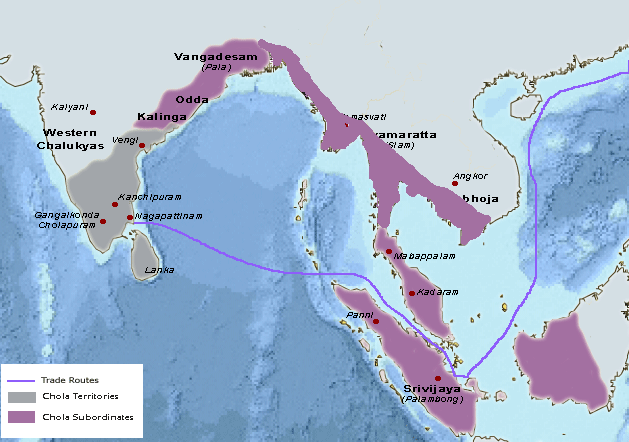
The Kaveri River Valley, which flows southeast through Tamil Nadu, Karnataka, and the southern Deccan Plateau before ending at the Bay of Bengal, served as the capital of the Chola Empire. The Maldives were under the Chola Empire's authority during its height, in addition to southern India and Sri Lanka. The Chola Empire acquired important maritime commercial posts from the Srivijaya Empire in modern-day Indonesia, facilitating a rich cross-cultural exchange, and it dispatched trade and diplomatic expeditions to China's Song Dynasty (960–1279 CE).
However, the Cholas remained a mystery for decades despite the kingdom's vast network of trade routes and influence, while other invaders like the Mughals and British rose to prominence in India's greater intellectual and cultural history. Today, a record-breaking Indian film, technology-backed excavations, and personalized Chola heritage tours have reignited interest in the Cholas and given visitors the chance to contribute to the resolution of one of history's greatest mysteries.




A Brief History of the Cholas
History has forgotten the Chola Dynasty's origins. Nonetheless, the kingdom appears in early Tamil writings and on one of Ashoka's Pillars (273–232 BCE). Additionally, it can be found in Ptolemy's Geography (c. 150 CE) and the Greco-Roman Periplus of the Erythraean Sea (c. 40–60 CE). The Tamil ethnic group produced the reigning family.
The Cholas began to wane around 300 CE as the Pallava and Pandya Kingdoms consolidated their rule over the majority of southern India's Tamil heartlands. Under the new powers, they probably functioned as sub-rulers, but they maintained enough prestige that their daughters frequently wed into the Pallava and Pandya households.
The Cholas During the Medieval Period
The Cholas took advantage of the opportunity when conflict broke out between the Pallava and Pandya kingdoms in approximately 850 CE. After taking control of Thanjavur (now Tanjore), King Vijayalaya abdicated his position as Pallava emperor and established himself as the new ruler. This signalled the beginning of the Chola era in the Middle Ages and the height of Chola dominance.
Aditya I, the son of Vijayalaya, defeated the Pallava Kingdom in 897 CE and the Pandyan Kingdom in 885. In 925, his son succeeded in conquering Sri Lanka, and by 985, the Chola Dynasty had taken control of all of the southern Indian territories that spoke Tamil. The empire was subsequently expanded by the following two monarchs, Rajaraja Chola I (r. 985–1014 CE) and Rajendra Chola I (r. 1012–1044 CE).
Expansion of Chola Domain
The Chola Empire began to take shape as a multiethnic trading powerhouse under Rajaraja Chola's reign. To seize control of the Maldives and the wealthy Malabar Coast located on the southwest coast of the subcontinent, he forced the empire's northern border from Tamil lands to Kalinga in northeastern India. Important locations along the Indian Ocean trading routes were these territories.
By 1044, Rajendra Chola had overthrown the kings of Bengal and Bihar, extended the boundaries north to the Ganges River (Ganga), and captured important ports in the Malay Peninsula, Indonesian archipelago, and coastal Myanmar (Burma). It was the first real Indian maritime empire. Even Siam (Thailand) and Cambodia were subject to tribute demands made by the Chola Empire under Rajendra. Indochina and the Indian mainland were mutually influenced in both directions in terms of culture and the arts.
Matching the Vijayanagara Empire in style and magnificence, the Chalukyas also maintained a rich tradition of temple architecture.
But there was one significant thorn in the Cholas' side during the Middle Ages. Periodically, the Chalukya Empire attempted to overthrow the Cholas on the western Deccan Plateau. In 1190, after decades of sporadic fighting, the Chalukya kingdom fell. But the Chola Empire did not survive its gadfly for very long.
Chola Kings List
- Vijayalaya Chola (850-871): Founder of the Chola dynasty
- Aditya I (871-907): Son of Vijayalaya Chola and second king of the Chola dynasty
- Parantaka I (907-950): Son of Aditya I and third king of the Chola dynasty
- Gandaraditya (950-957): Son of Parantaka I and fourth king of the Chola dynasty
- Arinjaya (957-1014): Son of Gandaraditya and fifth king of the Chola dynasty
- Rajaraja Chola I (1014-1044): Son of Arinjaya and one of the greatest kings of the Chola dynasty
- Rajendra Chola I (1012-1044): Son of Rajaraja Chola I and one of the most successful kings of the Chola dynasty
- Rajadhiraja Chola (1044-1052): Son of Rajendra Chola I and eighth king of the Chola dynasty
- Virarajendra Chola (1063-1070): Son of Rajendra Chola I and the last king of the Chola dynasty
Chola Administration
The entire southern region was unified under the rule of a single political entity during the Chola era. The Cholas maintained a long-lasting monarchy. The present-day regions of Tiruchirapalli, Tiruvarur, Perambalur, Ariyalur, Nagapattinam, Pudukkottai, Vridhachalam, Pichvaram, and Thanjavur districts in Tamil Nadu were part of the Chola Empire. In this instance, the vast kingdom was split up into mandalams, or regions. For every mandalam, there were independent governors in charge.
All of the South Indian dynasties of the Sangam era were celebrated patrons of art and architecture, led by the mighty Vijayanagara Empire.
Tehsils made up the districts known as nadus. During the Chola dynasty, the system of governance was such that every hamlet functioned as an independent entity. The Cholas were known for their passionate support of poetry, drama, art, and literature. The government was observed funding the building of several temples and complexes that featured paintings and sculptures. The king would continue to be the supreme power, presiding over all significant decisions and governing.
Collapse of Chola Empire
It was an old enemy that ultimately dealt the Cholas a fatal blow. The Pandya family assembled its forces and made several attempts to gain independence in their ancestral regions between 1150 and 1279. The Cholas, led by Rajendra III, vanished from existence in 1279 after falling under the Pandyan Empire.
The nation of Tamil Nadu is well endowed by the Chola Empire. It witnessed a golden age of Tamil literature and poetry, magnificent artwork, especially notably elegant bronze sculpture, and architectural marvels like the Thanjavur Temple. All of these cultural attributes also made their way into Southeast Asian literature and art, affecting religious writing and art from Java to Cambodia.
Chola Art and Architecture
The Chola dynasty made significant contributions to the Dravidian temple architecture and carried on the Pallava dynasty's temple-building legacy. Numerous Shiva temples were constructed by them beside the Kaveri River. The designs for these and other temples were created by Palantaka and Aditya I. The Pallava dynasty left behind rich traditions in architecture, which the Chola temples are renowned for for their magnificence and exquisite workmanship.
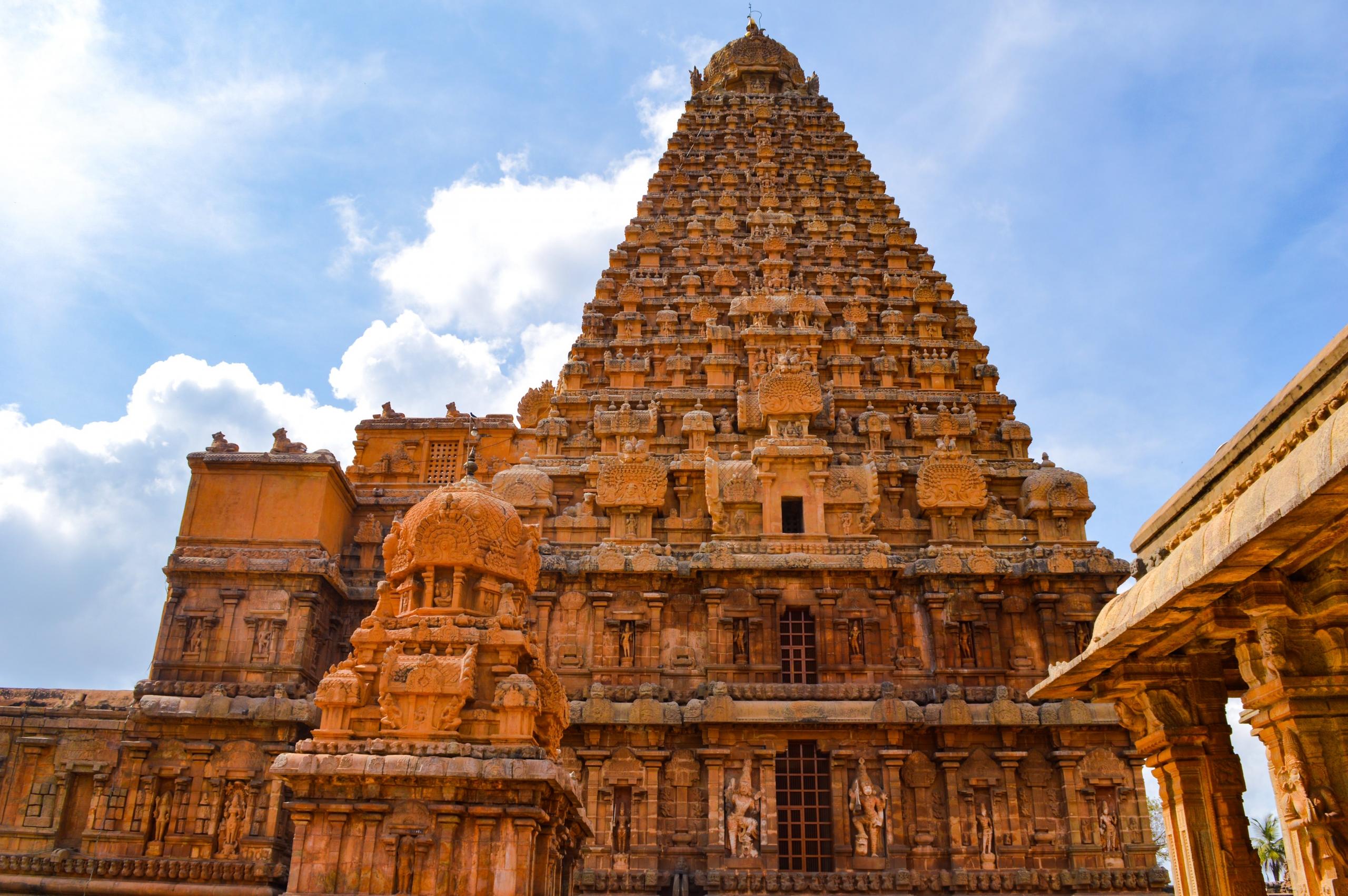
The addition of enormous gates, known as gopurams, to temple enclosures was a novel development of Chola art that typified later Dravidian architecture. These gates progressively gained shape and reached maturity under the Pandya dynasty. Southeast Asia also saw the introduction of Chola art, which had an impact on the region's architecture and art. The conquests, brilliance, and son Rajendra Chola I's construction were the main sources of inspiration for the temple.
Thanjavur and Gangai Konda Cholapuram are two temples that exemplify the elegance and maturity of Chola architecture. Constructed approximately in 1009, the beautiful Shiva Temple in Thanjavur serves as a worthy monument honouring the material accomplishments of the Rajaraja era. At the height of South Indian architecture, it is the biggest and tallest Indian temple of its day. The Gangai Konda Chorisvaram Temple in Gangai Konda Cholapuram was built to surpass its predecessor. Rajendra Chola founded it. It was finished in the same manner in 1030, only twenty years after the Thanjavur temple. The richness of the Chola empire under Rajendra is demonstrated by the intricacy of its appearance.
Known as the Great Living Chola Temples, Brihadeeswara Temple, Gangai Konda Korisvaram Temple, and Airavatesvara Temple in Dharaslam are all UNESCO World Heritage Sites. Bronze sculptures and other works from the Chola era are equally noteworthy. Shiva is shown in many different forms in the surviving pieces found in South Indian temples and museums, including Shaivist saints and Lord Vishnu and his spouse, Lord Lakshmi. While sculptors in the 11th and 12th centuries worked with considerable freedom to create classical beauty and grandeur, they nonetheless largely followed the iconographic rules set by long-standing tradition. bottom. Nataraja, the holy dancer, is the finest illustration of this.
Uncover the history of the dynasty that gave the world the mesmerizing Ellora cave architecture - the Rashtrakutas.
The Chola emperors actively promoted the growth of temple hubs and utilized them to increase the extent of their regal authority. To highlight the positive parts of the temples' function, they built hospitals and educational facilities nearby and portrayed the royal family as extremely strong yet kind individuals. During the time of Virarajendra Chola, there are records of schools and hostels being maintained within the temple for students to learn the Vedas, Shastras, Grammar, Rupavatara, and Jananamandapa. We gave food, puppy oil, and Saturday bath oil to the pupils. There were fifteen beds in Virasolan Hospital for the sick. Rice, two patient-care attendants, a surgeon, a doctor, and a general hospital worker are among the expenses especially allocated for their welfare.
Chola Dynasty UPSC: FAQs
Who was the founder of the Chola Dynasty?
Vijayalaya, a former Kanchian feudatory of the Pallavas, founded the Chola Empire. Tanjore was taken by him in 850 A.D.
What was the Chola Empire known for?
At the height of their dominance, the Cholas controlled a far wider territory between the latter part of the ninth century and the start of the thirteenth. Between 907 and 1215 CE, they united peninsular India south of the Tungabhadra River and ruled the region as a single power for three centuries.
Summarise with AI:
Enjoyed this article? Leave a rating!


 Loading...
